DbcultAccessing Vault...
5.8/10
Senior Film Conservator
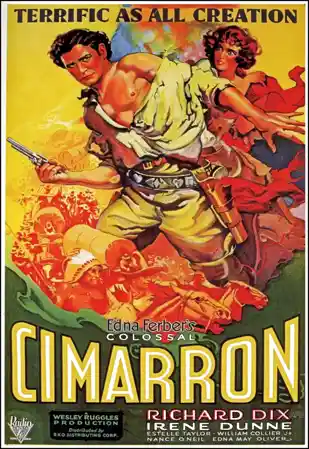
A definitive 5.8/10 rating for a film that redefined the boundaries of cult cinema. Cimarron remains a cornerstone of transgressive art.
If you have a couple of hours and want to see how they used to make 'Big' movies, Cimarron is worth a look. Especially for that opening.
But honestly? Most people today will probably find it pretty exhausting.
It’s definitely for the folks who love film history or want to see where the Western epic really started.
If you hate over-the-top acting or movies that feel like a stage play exploded into a desert, you’ll probably want to skip this one. 🌵
Let’s talk about the land rush scene right at the start.
It is genuinely insane.
There are hundreds of wagons, horses, and people just charging into the empty dirt.
You can see the dust clogging up the air. It doesn't look like a movie set; it looks like a disaster.
I noticed one guy on a bicycle—yes, a bicycle—pedaling for his life in the middle of all those horses.
I kept wondering if he actually made it or if he got flattened by a buckboard.
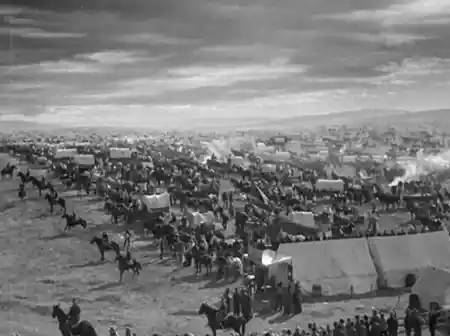
It’s the kind of scale you don’t see anymore without a bunch of computers.
The camera is right in the middle of the mess. It’s shaky and fast.
For a movie from 1931, it feels weirdly modern for about ten minutes.
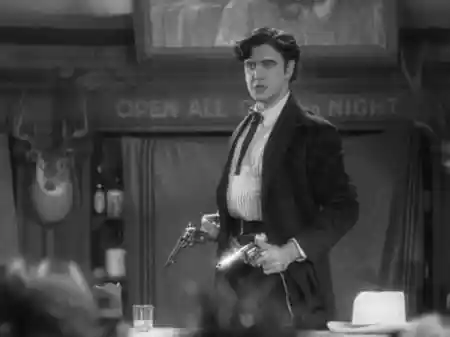
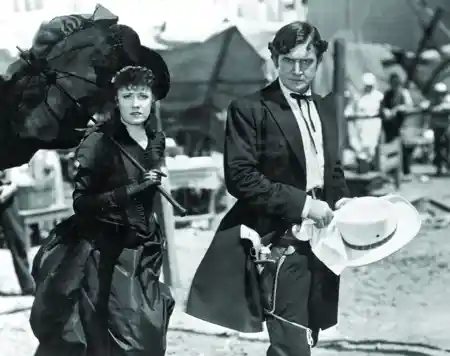
Then we meet Yancey Cravat, played by Richard Dix.
He is... a lot to take in.
He has this booming voice that sounds like he’s trying to shout over a thunderstorm even when he’s just standing in a kitchen.
His acting is very 'theatrical.' Like he’s worried the people in the very back row of a theater can’t hear his eyebrows moving.
And that hat. It’s massive.
It’s a white cowboy hat that seems to get bigger every time he has a heroic speech.
He’s a strange character because the movie thinks he is a saint, but he basically abandons his family every time he gets an itch to go wandering.
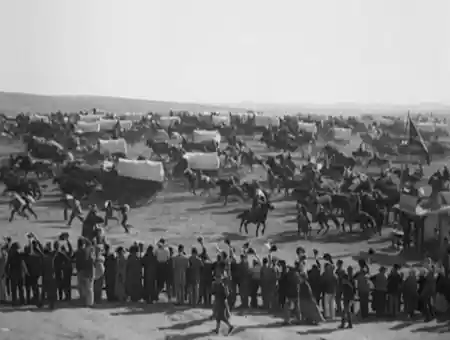
He just leaves! For years!
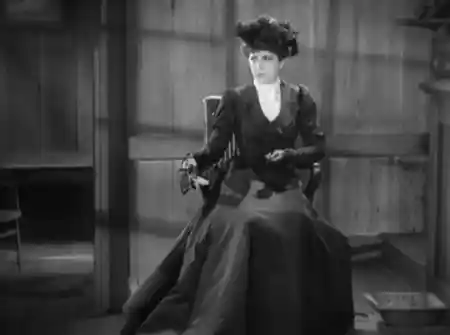
I found myself feeling really bad for his wife, Sabra.
Irene Dunne plays her, and she’s actually the best part of the whole thing.
She starts out as this terrified girl from the city who hates the dirt and the violence.
But while Yancey is off playing hero in other states, she stays and runs the newspaper.
She’s the one who actually builds the town.
The movie skips through time a lot.
One minute it’s 1889 and everyone is living in tents.
The next minute there are brick buildings and everyone is wearing fancy suits.
There is a scene in a makeshift church—it's just a big tent—where a guy starts shooting during the sermon.
Yancey just pulls out his own gun and keeps preaching while holding it.
It’s meant to be cool, but it’s actually kind of funny.
The sound quality is a bit rough in places, which is expected for an early talkie.
Sometimes there is this loud hissing in the background that makes it sound like it’s raining when it’s clearly sunny.
I also noticed how clean Yancey’s hair stays despite all the mud.
It’s perfectly slicked back even after he’s been riding through a dust storm.
It reminds me of the stiff acting in Disraeli, though that one was much more of a 'room' movie.
The makeup they use to make the characters look older is... well, it's a choice.
They mostly just put white powder in their hair and gave the men weirdly shaped beards.
Irene Dunne ages pretty gracefully, but Richard Dix just looks like he’s wearing a very itchy wig toward the end.
The movie tries to cover so many years that it loses its breath.
It goes from being a gritty Western to a political drama about the oil industry.
It’s like two different movies smashed together.
The middle part drags quite a bit.
There are lots of scenes of people sitting in offices talking about the 'future' of Oklahoma.
I found myself missing the horses and the chaos.
If you like movies that focus on how a place changes, like Pursued does with its atmosphere, you might appreciate the town's growth here.
But the pacing is definitely clunky.
It’s easy to see why this won Best Picture back then.
It’s huge. It’s ambitious. It’s trying to tell the story of America in two hours.
But man, it’s also very loud and some of the side characters are pretty uncomfortable to watch now.
The way it portrays the Native American characters and the black servant boy is... yikes.
It’s very much a product of 1931.
I’m glad I watched it once, mostly for that land rush.
I don’t think I’ll ever need to watch it again.
It’s a bit like a giant statue in a park.
You respect how much work went into it, but you don't want to stand there staring at it all day. 🏛️
One last thing—the ending is incredibly dramatic.
It involves a giant statue and a lot of crying.
It felt a bit unearned, but that’s old Hollywood for you.
IMDb 6.8
1931
Community
Log in to comment.