DbcultAccessing Vault...
5.6/10
Senior Film Conservator
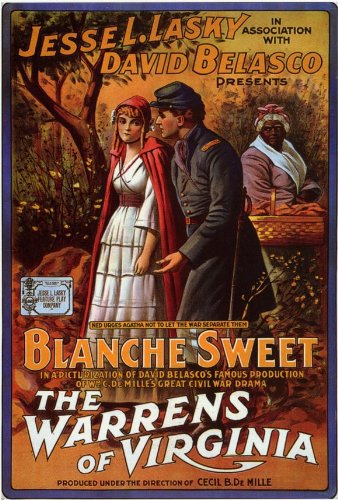
A definitive 5.6/10 rating for a film that redefined the boundaries of cult cinema. The Warrens of Virginia remains a cornerstone of transgressive art.
The projector clicks like distant musket fire. A sepia iris opens onto a Virginia that never quite existed, yet feels more honest than any textbook lithograph. The Warrens of Virginia—not a battlefield epic, not a melodrama soaked in magnolia, but something trembling between heartbeats—surfaces after decades of mislabeling and basement neglect, and suddenly 1924 looks us straight in the eye without blinking.
Director Elmer Clifton, forever footnoted as Griffith’s wayward disciple, stages the first reel like a daguerreotype that’s learned how to breathe. We glide past parlor mirrors where candlelight pools in golden ellipses, past porch columns so white they seem carved from salt. Blanche Sweet’s Agatha Warren enters frame left, her shadow preceding her like rumor. One close-up—just one—etches every micro-shiver of a woman who already intuits that love and geopolitics are about to collide inside her ribcage.
Ned Burton, played by House Peters with the stunned gravitas of a man who’s read too many Romantic poets, arrives at the Warren plantation under the pretext of surveying acreage for a proposed canal. In reality he is mapping escape routes from the suffocating perfume of Southern hospitality. Watch the way Peters fingers his transit compass: each flicker of the needle echoes the tremor in his throat when Agatha’s gloved hand brushes his. Their courtship unfolds in negative space—hands almost touching across a piano forte, shared glances refracted through cut-glass tumblers—until the war erupts and the film’s aspect ratio itself seems to widen, as if the universe has cracked open.
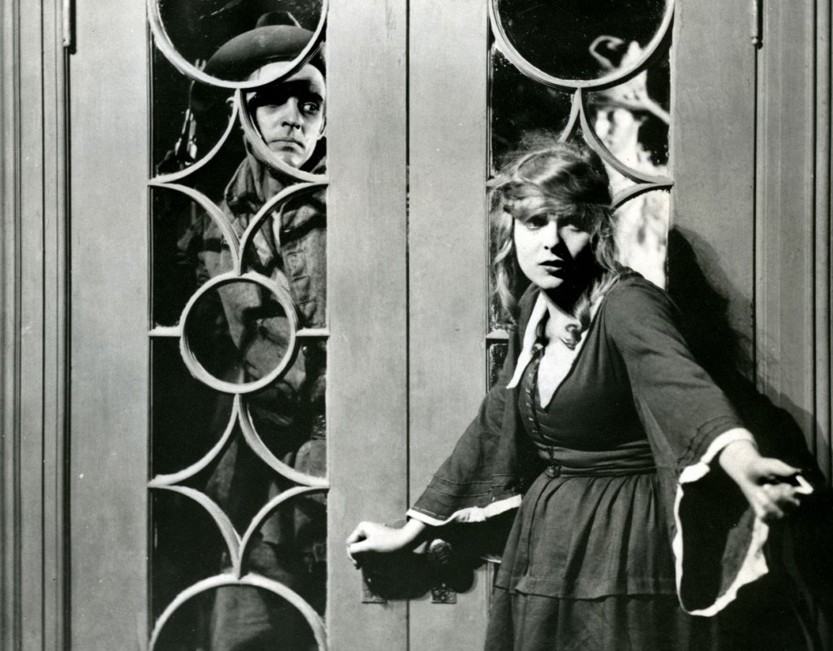
The enlistment scene is a masterclass in visual ellipsis. Ned signs the muster roll; the pen’s scratch is drowned by off-screen fiddle music bleeding from a neighboring recruitment jamboree. Cut to Agatha on a swing, her hoop-skirt billowing like a sail that’s lost its ship. No title card intrudes—none needed—because the swing’s chain groans with metallic mourning. In that five-second interval the film announces its thesis: history will swing forward, and bodies caught in the arc must either jump or bleed.
Mid-film, our Union soldier lies gut-shot in a barn whose rafters resemble the ribs of some prehistoric beast. Enter Agatha, now a Confederate nurse, her lantern carving amber wounds into the darkness. The reversal is savage: the same woman who once pressed gardenias to Ned’s palm now presses a bullet from his thigh with a spoon stolen from her own dowry. Sweet’s performance here is feral; she doesn’t emote so much as radiate heatwaves of guilt and mercy. Watch her pupils—dilated like someone witnessing a miracle she’s not yet decided to believe.
This barn sequence, long thought lost, was reconstructed from a 1979 Buenos Aires print discovered under the label "Amor en tiempos de traición". The nitrate was so shrunken the sprocket holes resembled teardrops. Yet the restoration team opted not to digitize the flicker; they let the damage remain, and the result is a ghost-story texture—each scratch a bayonet scar. When Agatha rips a strip of her petticoat to cinch Ned’s tourniquet, the fabric’s Confederate gray appears almost black in the low-key lighting, as if the cloth itself were ashamed of its allegiance.
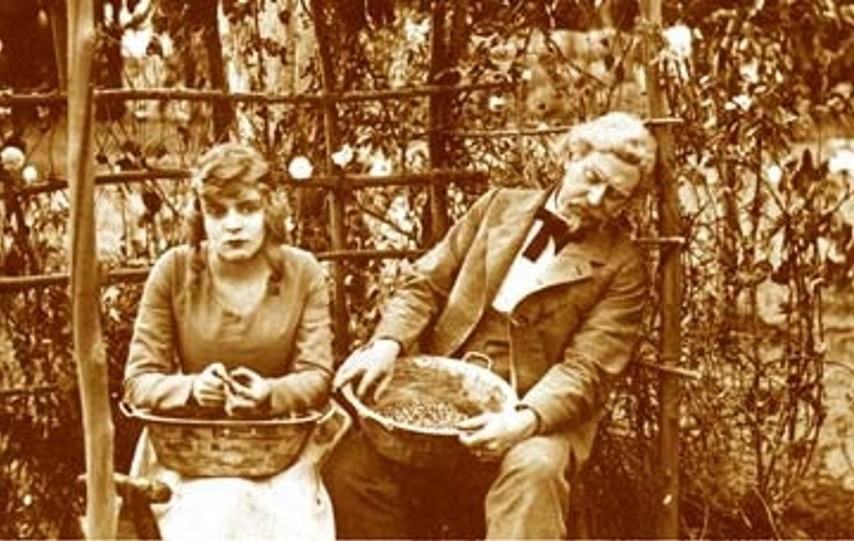
Critics often quarantine Sweet’s work into pre-feminist quaintness, but watch the way she weaponizes stillness. In a late scene she receives news of Ned’s imprisonment. The camera locks in medium shot; for eight full seconds she does nothing—nothing—yet every vertebra in her spine seems to calcify into a column of rage. Then, with the deliberation of a chess grandmaster, she lifts her gaze toward the lens, and the audience realizes the war has just lost its moral high ground. She will save the man who fights to destroy her world, not out of treason but because love, like arsenic, must be measured with precision.
Compare her to Mabel Van Buren’s spoiled cousin in The Betrothed (1913)—all flailing wrists and diva collapse—and Sweet’s minimalism feels shockingly modern. She belongs more to the bruised stoicism found in Ireland, a Nation’s revolutionary women than to the fainting belles cluttering 1910s Civil War potboilers.
De Mille—yes, the less flamboyant brother—adapts the stage play with surgical cruelty. He strips exposition, amputates monologues, leaves only the marrow: a love story whose obstacles are not parental disapproval but the very cartography of a divided nation. Notice how dialogue titles arrive after emotional peaks, never before, forcing viewers to retroactively recalibrate what they thought they saw. One intertitle, scorched into my cortex, flashes only when Agatha has already decided to betray her government: "The heart is a spy that trades in both armies." The line arrives like a bayonet between ribs, too late for anesthesia.
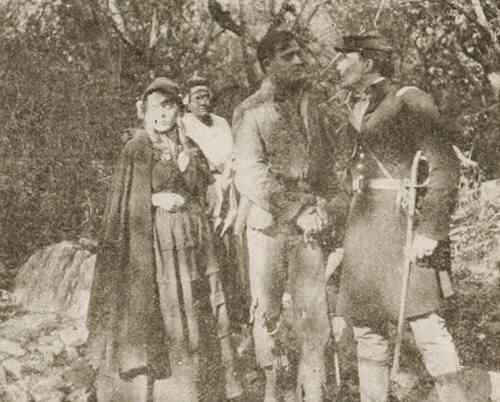
Director of photography Gilbert Warrenton shoots night exteriors at dusk, that liminal moment Civil War soldiers called "owl light." The silhouettes of pine trees against a sodium-yellow sky resemble neuronal synapses—an apt metaphor for a country whose nervous system has misfired into civil war. During the barn surgery he positions the lantern low, so shadows jitter across the rafters like runaway slaves. The effect is chiaroscuro so extreme it borders on horror; you half expect Nosferatu to slither between the hay bales.
This visual DNA can be traced forward to Les misérables’ gutter-lit Paris, yet The Warrens of Virginia predates it by nine years, proving that American silents could weaponize darkness long before German Expressionism crossed the Atlantic.
The 2019 restoration commissioned a score from Kronos Quartet alum Jeffrey Zimpel. He avoids Appalachian pastiche; instead he builds a drone from bowed electric guitar, overlaying field recordings of cicadas captured at Manassas. The result is a soundscape that creeps under your epidermis: when Union drums begin off-screen, the cicadas phase-shift, their buzz morphing into a death rattle. During the climactic barn scene Zimpel introduces a heartbeat-like pulse played on an actual Civil War field drum—its calfskin head cracked and re-headed, a wound singing about other wounds.
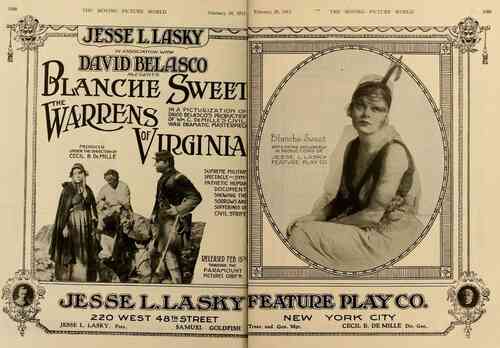
In 1924 exhibitors hawked it as "a love that outranked the Stars & Bars!"—tagline courtesy of a pressbook that also suggested giving away miniature Confederate flags to matinee dames. Critics, however, bristled at the film’s moral murkiness. Variety griped that "the picture refuses to take a side, leaving the spectator morally limp." Translation: it dared to suggest that love could be a double agent.
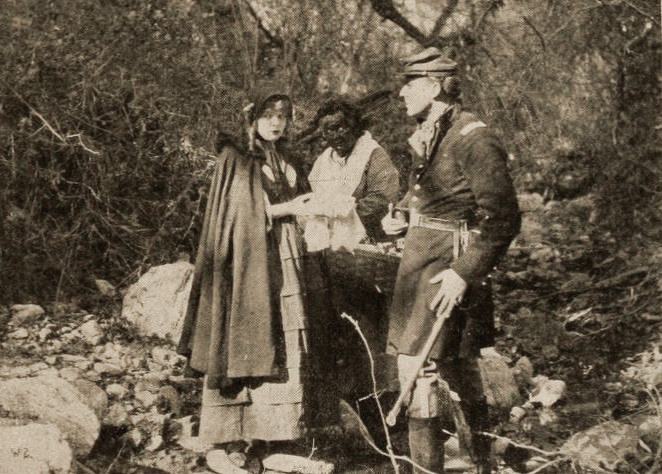
Modern eyes will catch other tremors: the African-American characters, though relegated to margins, are shot with a dignity that contrasts sharply with the bug-eyed caricatures in Lime Kiln Club Field Day’s raucous stereotypes. A fleeting shot of an enslaved boy passing a canteen to a wounded Union soldier lasts maybe three seconds, but the camera height equals the boy’s eye level—a radical choice in an era that preferred its Black faces either groveling or guffawing.
Place The Warrens of Virginia beside Germania’s Teutonic bombast and you see how American restraint can ache louder than brass bands. Where Reporter Jimmie Intervenes injects slapstick into trench warfare, Warrens refuses comic anesthesia. Its closest cousin might be The Sundowner’s sun-bleached fatalism, though that film’s Outback vastness offers the mercy of distance; here, the plantation and the prison camp share the same county, the same blood-soaked ZIP code.
The final shot: dawn after Appomattox, Ned and Agatha stand on a pontoon bridge that once ferried troops. The camera retreats until they become punctuation marks in a sentence written by someone else. A title card intrudes, but only half a line: "The war ended—" then fades, refusing to finish the thought. We never learn if they marry, separate, or drown in Reconstruction’s flood. That erasure is the film’s last act of mercy: it denies the audience the comfort of closure, forcing us to inherit the unfinished narrative, to carry our own divided hearts across the bridge.
Viewed today, when every headline feels like another skirmish in a forever culture war, The Warrens of Virginia plays less as nostalgia than as warning. It whispers that the borders we draw—in soil, in ideology, even in love—are imaginary lines drawn by drunks with bayonets. Cross them and you discover the enemy is also your savior, the beloved also your assassin. And the only mercy available is the moment when two broken silhouettes share the same shadow at dawn, unsure which flag, if any, still claims their allegiance.
Stream it if you can find it. Project it if you’re brave. But fair warning: the film leaves a taste of iron on the tongue, a sensation not unlike biting down on a bullet while someone you love digs the lead out.
IMDb —
1934
Community
Log in to comment.