DbcultAccessing Vault...
Cult Review
Senior Film Conservator
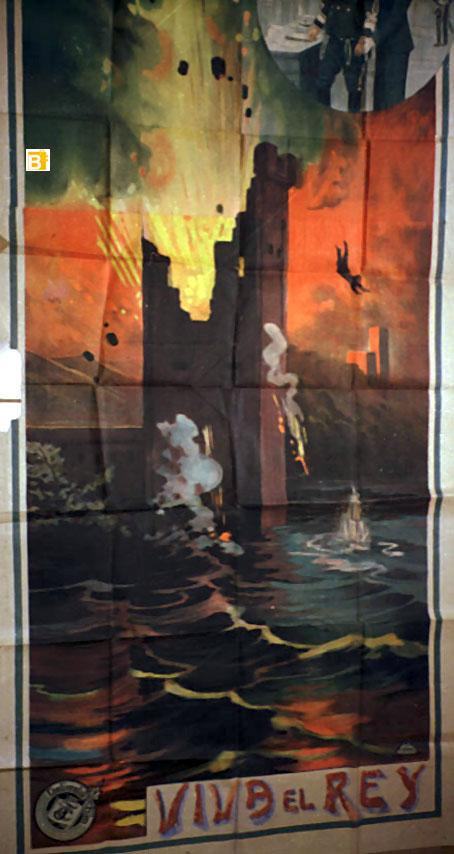
To approach Long Live the King is to step into a meticulously curated vacuum where the conventions of early 1920s cinema are both celebrated and subverted. Bud Fisher, a name synonymous with the pioneering spirit of American comic strips, pivots here toward a medium that demands a different kind of kinetic energy. Unlike the ephemeral nature of daily newsprint, this film attempts to capture the permanence of a legacy. Fisher doesn't merely inhabit his role; he colonizes the frame, bringing a graphic sensibility to the screen that feels startlingly modern even a century later. The film functions as a bridge between the illustrative past and the cinematic future, a feat that few of his contemporaries managed with such idiosyncratic flair.
The narrative structure of the film avoids the linear simplicity found in works like Algie's Romance. While the latter leans heavily into the tropes of the effete dandy finding his footing, Fisher’s work is preoccupied with the weight of the crown—both literal and metaphorical. There is a palpable sense of gravity here that one might find missing in the more whimsical productions of the era. The cinematography utilizes a chiaroscuro effect that highlights the isolation of the protagonist, a visual choice that echoes the psychological depth seen in In His Brother's Place, yet Fisher injects a sardonic wit that prevents the film from descending into pure melodrama.
The mise-en-scène of Long Live the King is a masterclass in atmospheric storytelling. Every interior set, from the cavernous halls of the palace to the cramped quarters of the revolutionary cells, is designed to reflect the internal state of the characters. Fisher’s background as a cartoonist is evident in the way he utilizes negative space; the screen often feels like a moving canvas where the placement of figures conveys more than the intertitles ever could. This visual economy is reminiscent of the starkness found in The Tide of Death, though Fisher replaces that film's existential dread with a more nuanced exploration of social stratification.
Consider the scene where the King first steps out of his royal vestments. The transition is not merely a change of costume; it is a ritualistic shedding of a public persona. The camera lingers on the discarded silk and velvet, treating them as artifacts of a dying age. This level of symbolic density is what elevates the film above standard fare like Be Reasonable, which, while charming, lacks the thematic ambition to tackle the dissolution of the ego. Fisher’s performance is understated, relying on subtle shifts in posture and gaze to communicate a lifetime of repressed longing. It is a performance that demands the viewer's full attention, rewarding those who look past the surface-level plot.
In comparing Fisher’s magnum opus to Her Life and His, one notices a fascinating divergence in how domestic spheres are portrayed. While the latter focuses on the intimate struggles of the hearth, Long Live the King treats the entire nation as a domestic space, where the King’s private failures have public consequences. The stakes are inherently higher, yet Fisher manages to maintain a sense of personal intimacy that is often lost in grand historical epics. This balance is also found in The Heart of Midlothian, but where that film relies on literary prestige, Fisher relies on the raw power of the image.
Furthermore, the romantic subplots in the film serve as a sharp contrast to the lightheartedness of The Match-Breaker. In Fisher’s world, love is a political liability, a dangerous deviation from the path of duty. The chemistry between the leads is tempered by the knowledge that their union is an impossibility within the framework of their society. This tension creates a sense of yearning that permeates every frame, similar to the atmospheric longing found in Mysteries of Paris, yet without the sensationalist trappings of the feuilleton tradition.
Technically, the film is a marvel of its period. The editing, handled with a rhythmic precision that suggests a deep understanding of musicality, moves the viewer through the palace’s corridors with a fluidity that was rare for 1923. Fisher’s writing ensures that the pacing never falters, even during the more philosophical interludes. Unlike Ruth of the Rockies, which relies on the external momentum of the chase, Long Live the King derives its energy from internal conflict. The tension is built not through physical peril, but through the threat of discovery and the existential dread of being 'found out' as merely human.
The film also engages with the concept of the 'new woman' through its female characters, albeit within the constraints of its setting. While not as overtly progressive as The Amateur Wife, the women in Fisher’s narrative possess a quiet agency that often dictates the direction of the plot. They are the silent navigators of the court, steering the King through a sea of advisors and sycophants. This nuanced portrayal of gender dynamics adds another layer of sophistication to a film that is already brimming with intellectual curiosity.
As we look back at the canon of silent cinema, Long Live the King stands as a testament to the versatility of its creator. Bud Fisher managed to transition from the slapstick humor of his earlier work to a sophisticated drama that speaks to the universal desire for freedom. The film’s exploration of the 'gilded cage' motif would go on to influence countless stories of royal rebellion, yet few have matched the specific visual language Fisher established here. It shares a certain thematic DNA with Pariserinnen in its fascination with the artifice of high society, but it remains uniquely American in its skepticism of inherited authority.
In the final act, the film reaches a crescendo of emotional resonance that is as powerful today as it was a century ago. The resolution is neither a simple happy ending nor a tragic collapse; it is a bittersweet acknowledgement of the compromises required by civilization. It echoes the moral complexity of Someone Must Pay, leaving the audience to ponder the true cost of leadership. Fisher doesn't provide easy answers, and that is perhaps the film’s greatest strength. It invites us to look at the institutions we uphold and ask if they are worth the humanity we sacrifice to maintain them.
While contemporaries like Daring Hearts or Why Not Marry explored the romantic entanglements of the era with varying degrees of success, Long Live the King remains a singular achievement because of its sheer audacity. It is a film that dares to be slow in an age of speed, and thoughtful in an age of sensation. Fisher’s transition from the world of cartoons to the world of high drama was not just a career move; it was an artistic breakthrough that mirrors the protagonist’s own journey toward self-actualization, much like the transformative arc found in En kunstners gennembrud.
To watch Long Live the King today is to engage with a piece of history that still feels alive. It is a reminder that the themes of power, identity, and the search for truth are timeless. Bud Fisher may have been a man of his time, but in this film, he created something that transcends it. The King is dead; long live the King—not as a symbol of authority, but as a symbol of the enduring human spirit that refuses to be defined by the titles we are given. This is essential viewing for anyone who wishes to understand the foundations of cinematic narrative and the enduring power of the silent image.
IMDb —
1918
Community
Log in to comment.