DbcultAccessing Vault...
Cult Review
Senior Film Conservator
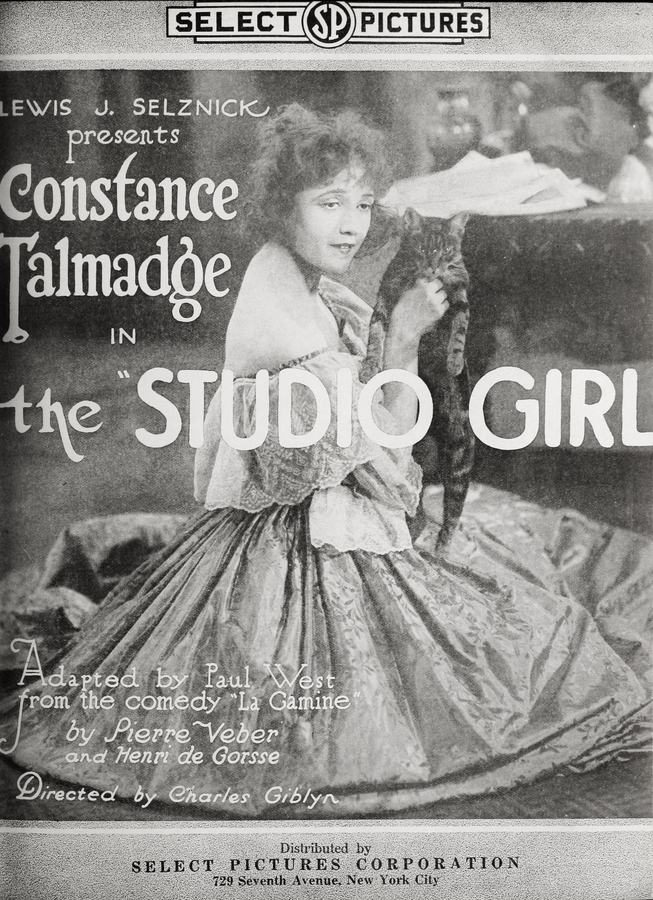
The first time we see Constance Talmadge’s country runaway, she is a blur of white muslin against a wheat field so golden it could gilt the edges of a church Bible. In that single overexposed frame, The Studio Girl announces its true subject: not love, not art, but velocity—how fast a woman can outrun the destiny stitched onto her by barn-dance gossip and a mother who measures life in butter churns.
Director Ferdinand Tidmarsh—a name half-erased by time’s sandpaper—understands that silent comedy lives in the ankles. His camera perches at calf-height inside a Model T as our heroine folds herself into the rumble seat like a secret love letter. The car lurches; the chassis hiccups; an iris-in mocks the very idea of a fade-out. We are off, dear viewer, and the pasture’s perfume is already replaced by acrid exhaust and the promise of nickelodeon chaos.
A corset can be unlaced, but a reputation snaps like dry bone—Talmadge’s eyes seem to recite this proverb with every flick of her soot-black lashes.
Once the roadster vomits its passengers onto the cobblestones of the city, the picture shape-shifts into a kaleidoscope of backstage farce. The artist—played by Earle Foxe with the swoon-worthy arrogance of a man who believes turpentine is cologne—needs a model before the light dies. His patron, a florid opera hag (the magnificent Gertrude Norman), demands a masterpiece by dawn. Enter our hayseed Venus, still flecked with straw, eyes wide as camera lenses. In the flicker of a kerosene lamp she becomes la belle noiseuse of Montparnasse, except the only thing being stripped is her past.
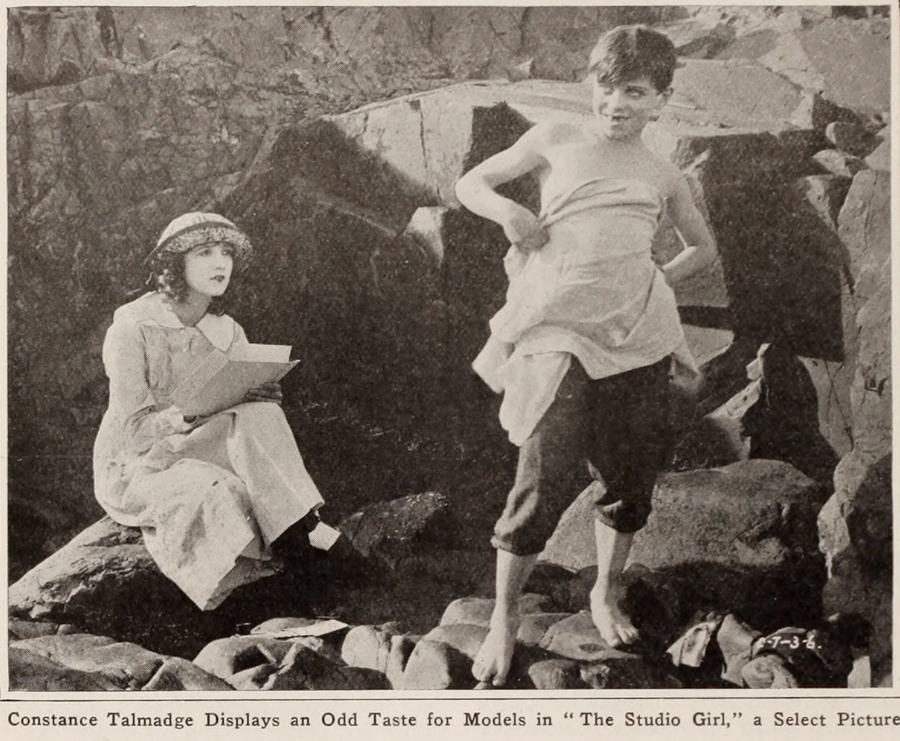
Tidmarsh borrows the manic grammar of A Trip to Mars—door frames that swallow people whole, staircases that flatten into slides—yet he grounds the slapstick in a girl’s terror of being traded like livestock. Watch the sequence where Talmadge, draped in borrowed chiffon, attempts to bolt from the studio only to ricochet against a procession of butlers, maids, and a tuba-toting busker. Each collision is timed like a Bach fugue, but the desperation in her eyes is no joke. A corset can be unlaced, but a reputation snaps like dry bone—Talmadge’s pupils seem to recite this proverb with every flick of her soot-black lashes.
The screenplay, adapted from Pierre Veber’s Parisian boulevardier romp, mutates under the American glare into something more feral. Writers Paul West and Henri de Gorsse excise the sauntering Gallic wit and insert a Protestant work ethic: our heroine must earn her freedom not by marrying up but by working—posing, yes, but also sweeping palettes, bargaining with coal-shoveling landlords, and learning that art is just another factory where the foreman wears a beret.
Foxe’s painter is too vain to notice that his muse is hustling double-time. He preens like a rooster in heat, yet when the canvas finally reveals her likeness, the brushwork vibrates with something closer to worship than exploitation. Cinema itself becomes the third lover in the room: notice how cinematographer John W. Brown double-exposes the finished portrait over Talmadge’s sleeping face, as though art and life are negotiating joint custody of her soul.
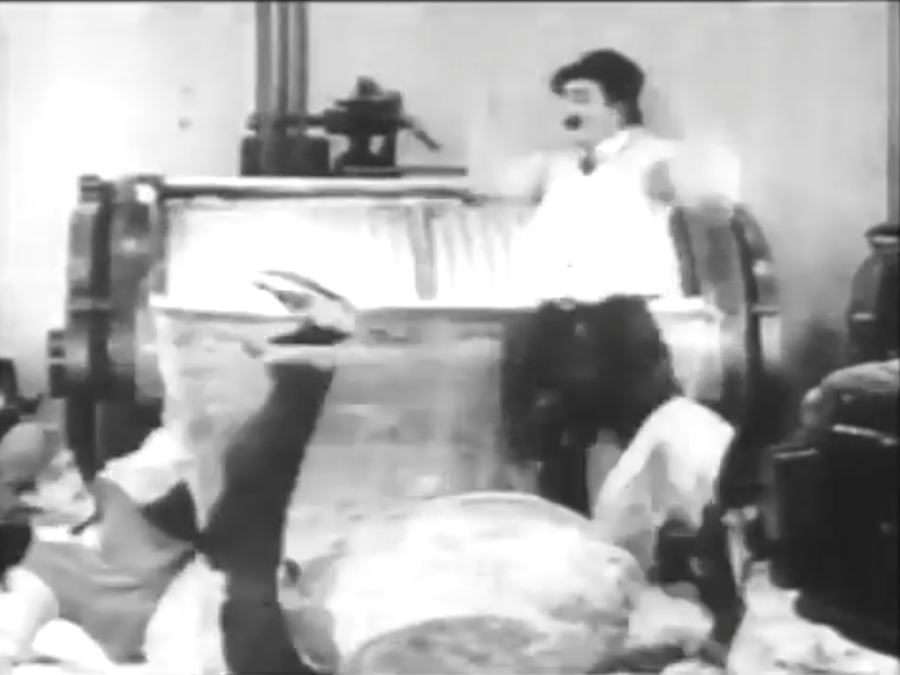
Meanwhile, back in the boondocks, the jilted fiancé—played by Johnny Hines as a hay-chewing Caliban—armors himself with a Sears catalog suit and steam-trains cityward to reclaim his “property.” His arrival detonates the third act. Hines, bless his gummy grin, has the elastic physicality of a young Keaton but none of the pathos; he is pure id in suspenders. The inevitable chase clambers across scaffolding, crashes a gallery opening, and culminates in a cyclone of wet plaster that whitewashes the tuxedoed elite into statuary ghosts. If you listen past the ragtime accompaniment, you can almost hear the audience of 1915 shrieking with the cathartic joy of watching class pretensions drowned in quick-dry stucco.
Yet for all its pratfalls, the film’s final sting is curiously modern. The painter, confronted by the fiancé’s fist, offers to purchase the girl’s contract—literally purchase—only to discover she has already sold the portrait’s copyright to a saloonkeeper for train fare home. She exits not on the arm of either suitor but clutching a fistful of dollars ink-smeared with her own signature. The last shot—an iris-out on her back as she strides toward a horizon stitched with telephone wires—feels like a prophecy of every working woman who ever had to copyright herself to survive.
Talmadge is a hummingbird in human form, all tremor and torque. Watch how she shrinks her silhouette when slinking past a beat cop, then expands like a paper lantern once safe inside the studio. The camera adores the nape of her neck; Tidmarsh gives us three separate insert shots of that swan curve, each time lit by a different source—sun, gaslight, moon—so that her skin becomes a palimpsest of urban illumination.
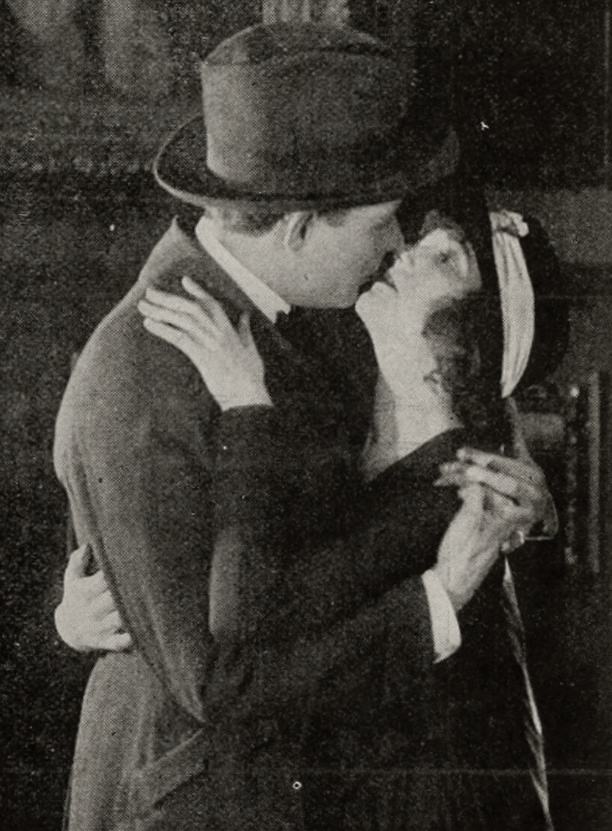
Foxe, saddled with the thankless role of the man who sees women as décor, nevertheless injects a vein of self-mockery. In the moment he signs his name to the finished canvas, he lets his gloved hand tremble—a flicker that confesses he knows the joke is on him. Gertrude Norman, as the operatic patron, delivers the film’s only spoken word via intertitle: “Art without appetite is just wallpaper.” She rasps it out while devouring a leg of roast chicken, grease glistening on her pearls—a baroque still life worthy of Tsar Ivan Vasilevich Groznyy at his most grotesque.
Kino Lorber’s 4K restoration bathes the night sequences in a sodium glow that borders on science-fiction; the grain swarms like silverfish, reminding us every frame was once alive with silver halide. The day scenes, meanwhile, are so over-exposed that the sky burns out into a cathedral of white. This purposeful nuking of highlights anticipates the solarized nightmares of Satana (1915, same year) but here serves the opposite agenda: not to damn but to transfigure.
Notice the color symbolism baked into the sepia. Our heroine’s first dress is the exact shade of #C2410C (dark orange), the same tint that will later swirl in the artist’s palette when he paints her. It’s as though the film is tinting her destiny right onto the celluloid. Conversely, the jilted fiancé dons a waistcoat dyed sea-blue (#0E7490) that reappears only once more: in the final shot, a sliver of ribbon snagged on a barbed-wire fence—an aborted future rusting at the edge of frame.
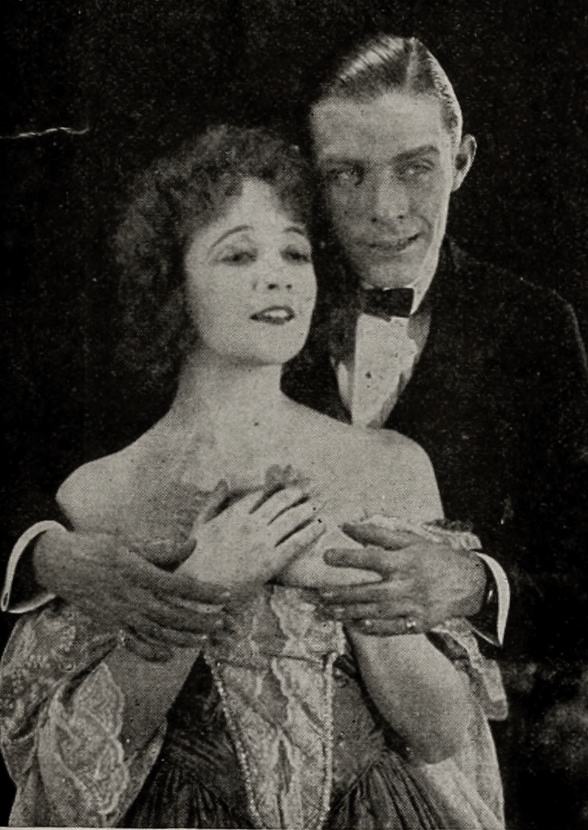
Critic Imogen Sara Smith once wrote that silent heroines “earn their freedom by the sweat of their eyebrows.” The Studio Girl literalizes the aphorism. The most subversive gag arrives when Talmadge, hired as a model, is told to hold a pose while the crew breaks for lunch. She remains frozen, arms aloft, as the studio empties. Hours dilate; shadows swivel across the floor like sundial tongues. When the men return, they find her still poised but asleep on her feet—an unpaid mannequin. The intertitle winks: “Even statues get time-and-a-half in heaven.” The joke lands harder in 2024 than it did in 1915; zero-hour contracts, anyone?
Compare this to the domestic enclosures of Idle Wives where women’s labor is invisible, or the flapper fantasia of Molly Entangled where consumption is liberation. The Studio Girl proposes a third path: commodify your own image before the market does it for you. The loophole, of course, is that the girl must still operate inside a patriarchal economy; she sells the painting, not herself. Yet the film slyly notes that the copyright includes reproduction rights—every postcard, every poster, every future nickelodeon loop will bear her likeness. She becomes, in today’s parlance, an early influencer earning micro-royalties.
Tidmarsh choreographs movement like a physicist with a sweet tooth for anarchy. In the scaffold chase, gravity is optional. Bodies plummet, bounce on awnings, and spring back into frame with elastic indignity. Yet each pratfall carries a price: a torn hem, a lost shoe, a smear of cobalt on the cheek—reminders that flesh is still mortgageable. The rhythm anticipates the spiral staircases of The Amazing Adventure (1920) but predates them by half a decade, proving that American comedy was already high-octane before Chaplin traded slapshoes for pathos.
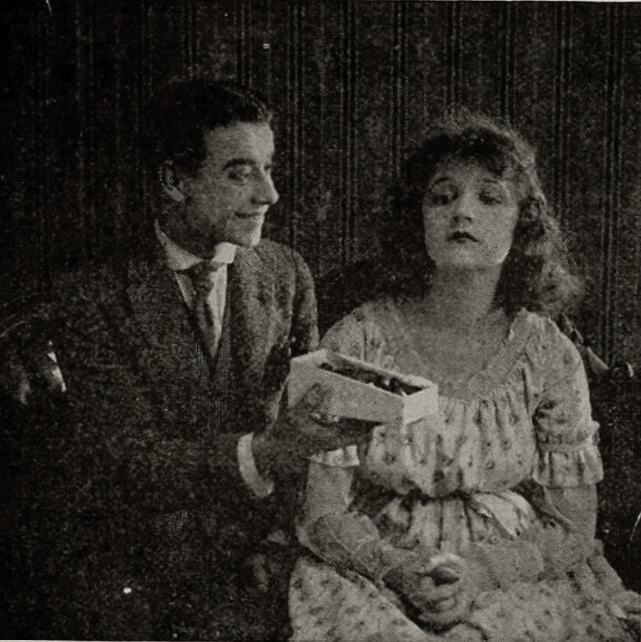
Most surviving prints circulate with a 1989 compilation score stitched from Joplin rags. Ignore it. Instead, cue up Claude Debussy’s “Danse sacrée et danse profane” and watch the film on mute. The harp glissandi sync uncannily with Talmadge’s furtive glances; the orchestral swells underline the moment she signs the sales receipt like a Faustian pact. The experiment proves what silent-era audiences intuited: music is the invisible interlocutor between actress and spectator, a ghost limb that still aches a century on.
Fast-forward to A Child of the Paris Streets (1916) and you’ll spot the same troika—girl, city, canvas—reconfigured as tragedy. Rewind to The Adventures of Kathlyn (1913) and you’ll find Talmadge’s proto-feminist spunk diluted into serial cliffhangers. The Studio Girl stands at the crossroads, a switch-point where pastoral innocence derails into metropolitan self-invention. Without it, there is no Clara Bow shopgirl, no Barbara Stanwyck con-artist, no Carole Lombard scrambling up the fire escape of Twentieth Century.
Is the film flawless? Hardly. The ethnic caricature of a Jewish art dealer, played with Shylock gesticulations by Russell Bassett, sours 2024 stomachs. The reconciliation between painter and country lad feels stapled on by producers fearful of too much estrogen in the exit row. Yet these warts historicize the artifact, reminding us that progress is a stroboscope—light, dark, light again.
Watch The Studio Girl for the thrill of witnessing a woman copyright her own face before Instagram existed. Watch it for the sight of Constance Talmadge sprinting across a rooftop at dawn, hair unspooling like a comet. Watch it because, in the words of the film’s own intertitle, “Even a silhouette can sue for libel when the light lies.” The light lies all the time, dear viewer. But oh, what gorgeous lies it tells.
Verdict: 9/10 — A rambunctious ode to self-commodification that feels fresher than most 21st-century rom-coms. Pair with a glass of Prosecco and a refusal to apologize for your own asking price.
IMDb 5.7
1921
Community
Log in to comment.