DbcultAccessing Vault...
5.5/10
Senior Film Conservator
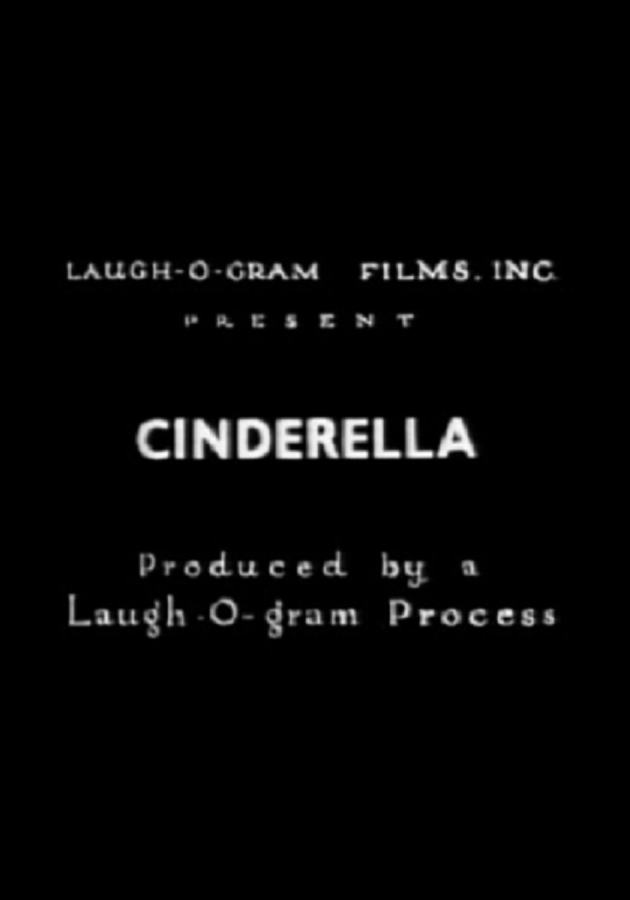
A definitive 5.5/10 rating for a film that redefined the boundaries of cult cinema. Cinderella remains a cornerstone of transgressive art.
Twelve brittle minutes of celluloid—scarcely longer than a modern trailer—yet the 1922 Cinderella crackles with the voltage of myth-in-progress. Watch it once and you taste chimney soot; twice and you hear the glass slipper’s fracture echo through a century of fairy-tale retellings.
Walt Disney, not yet the household sigil of anthropomorphic mice, serves here as impresario of shadows: his name above the title on a Laugh-O-Gram short that bankrupted its studio yet birthed a kingdom. Charles Perrault’s 1697 narrative is filleted to the marrow—no fairy-tale godmothers in pastel gauze, but a phosphorescent matron who steps out of the kitchen’s dark core like a German Expressionist apparition, all elbows and starlight. The stepsisters, drawn with jagged ink strokes, resemble gothic gargoyles more than Disney’s later ditzes; their laughter is the sound of scissors snapping corset laces.
Visually, the film is a lantern-slide phantasmagoria. Backgrounds waver between Midwestern domesticity and a forest primeval where the prince hunts bears with the fervor of a young Ulysses. The juxtaposition is savage: one moment our future monarch wades through crimson puddles, the next he pirouettes beneath chandeliers that drip like stalactites of ice. This oscillation between bloodsport and ballroom forecasts Disney’s lifelong dialectic—innocence clawing at experience, never sure which is predator.
The metamorphosis sequence, a whirlwind of chalky sparks, prefigures the pixie-dust logic of later Tinker Bells. A pumpkin balloons into a baroque carriage whose wheels spin like astrolabes; mice balloon into horses whose eyes are bottomless obsidian. It is alchemy on a shoestring budget, yet the elasticity of the imagery—drawn, erased, redrawn—creates a visceral frisson that CGI still strains to replicate. When the fairy taps her wand, the frame itself seems to inhale.
Then comes midnight. No Grandfatherly clock here—only a dissolve that peels the gown from Cinderella’s shoulders as if time itself were a jealous lover. She bolts, leaving behind the slipper: not Disneyfied crystal but a shard of milk-glass, fragile enough to refract moonlight yet sturdy enough to cleave a kingdom. The chase that follows is a staccato montage of boots hammering cobblestones, doors slamming like guillotines, and silhouetted towers that loom like verdicts. The prince’s quest becomes a census of desire: every foot in the duchy measured against the zero-degree of Cinderella’s absence.
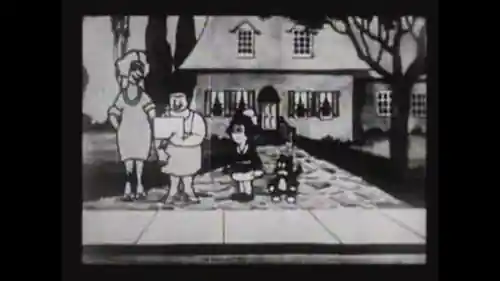
Sociologically, the short is a pocket mirror of post-WWI America. The ash-strewn hearth is less Grimm than Dust-Bowl; the prince’s bear hunt a testosterone ledger after the emasculating trenches of France. Cinderella’s rags-to-riches arc whispers of Horatio Alger while winking at the new consumerism—glass slippers as limited-edition commodity. Even the fairy godmother operates like a flapper with credit: magic now, pay later in narrative consequences.
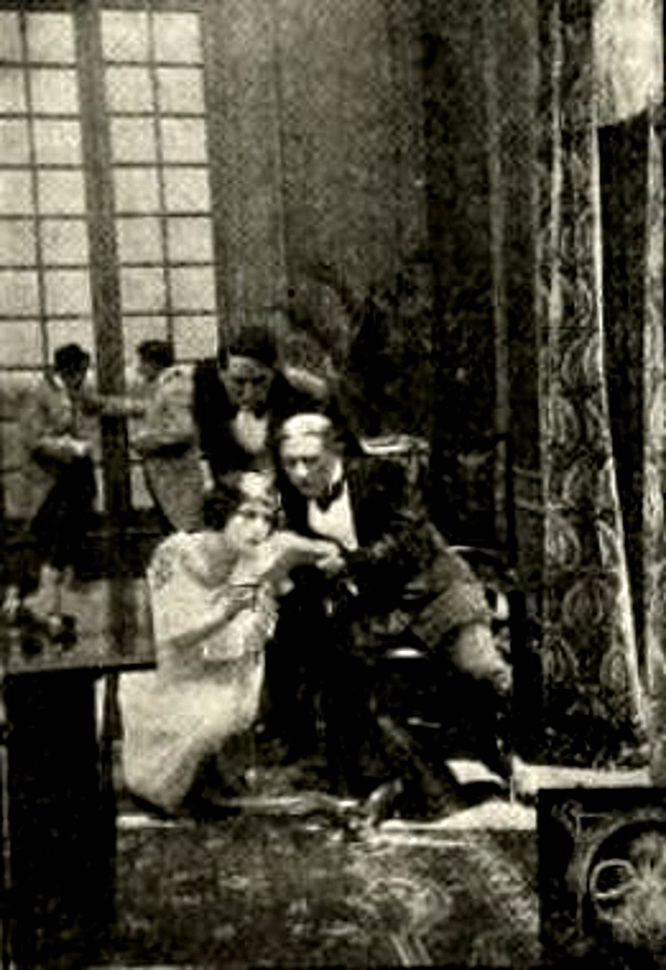
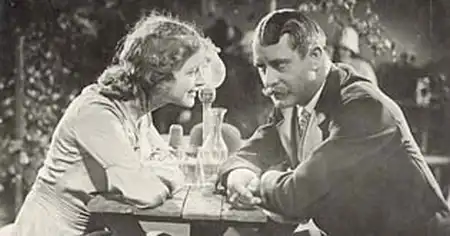
Compare it to contemporaneous silents: Prométhée… banquier mythologizes finance through Prometheus; The Law’s Outlaw queers justice itself. Yet none distilled the folk-tale archetype into such volatile concentrate. Where Ten Dollars or Ten Days wrestles with carceral time and Beach Birds anthropomorphizes surf, Cinderella weaponizes wish-fulfillment into a twelve-minute sugar-rush that ends with a wedding ring glinting like a sheriff’s badge.
Animation historians sometimes dismiss the short as crude—characters jitter, backgrounds shimmy. But crudity here is ethos, not error. The tremulous line work mirrors the instability of class mobility; the flicker of candlelight against Cinderella’s cheek is the same flicker that haunts nickelodeon screens, reminding viewers that both fortune and film are fugitive projections. When the slipper fits, the close-up is so severe you can count the dust motes on her instep, as if the camera itself were kneeling.
Sound, though absent, is implied. The fairy’s wand lands with a thud you hear in your clavicle; the ballroom’s violins saw at frequencies only dogs and dreamers register. This phantom audio invites the viewer to become co-creator, filling the gap with personal memory—perhaps your grandmother’s music-box, perhaps the crackle of 78-rpm shellac. Thus the short survives reboots: it is a shell that whistles differently in every century’s wind.
Gender politics? Problematic by any decade’s yardstick. Cinderella’s value is calibrated to foot size and facial symmetry; the prince’s love is literally proportional. Yet within the corset of 1922, the narrative sneaks in subversion: the fairy godmother is an older woman wielding unregulated power, the stepsisters are punished for performative femininity rather than ugliness, and Cinderella herself chooses midnight exile—she runs, not he captures. The gaze, though male, is disrupted by her vanishing act, a proto-cinematic version of la fuite that would make later femme fatales proud.
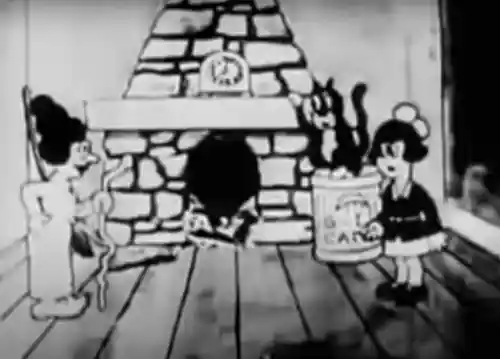
Technically, the Laugh-O-Gram studio’s insolvency seeps into the frames. Cels warp, causing characters to ripple as if underwater; ink bleeds, giving the forest a hemorrhagic aura. These artifacts, once liabilities, now read as patina—like craquelure on a Renaissance panel, they authenticate the relic. Restorationists face ethical quandaries: scrub the flicker and you erase the struggle; preserve it and you risk obscuring narrative legibility. The 4K scans on YouTube opt for compromise, stabilizing without Botox, leaving just enough tremor to remind us of sweatshop desks in Kansas City where artists inked dreams on cafeteria napkins.
Legacy? Think of it as the Big-Bang singularity for the Disney cosmos. Without this fiscal fiasco, no Prince and the Pauper moral symmetry, no Peggy, the Will O’ the Wisp flirtation with ethereal feminity. The 1950 animated feature borrows shot-for-shot DNA: the gown shimmer, the stepmother’s menacing eyebrow arch, even the panic-stricken horse’s eyeball-white. Yet the feature elongates melancholy—its Cinderella hums “A Dream Is a Wish Your Heart Makes” while scrubbing stairs; the 1922 iteration has no time for lament, only locomotion.
Critics of auteur theory might scoff: how can a bankrupt twelve-minute short bespeak authorship? But look closer: the gestural economy, the vaudeville snap of metamorphosis, the belief that desire can redraw physics—all are embryonic Disney trademarks. The same wrist that conjured this fairy-tale would later freeze Walt’s own corpse beneath Disneyland, or so urban legend whispers. Myth devours its maker, then regurgitates him as logo.
Viewing tips? Kill the lights, project it on a white bedsheet, let the projector’s mechanical heartbeat sync with your own. Pair with Satie’s Gymnopédies for melancholy counterpoint, or with early Duke Ellington for Harlem pizzazz. The short is a Rorschach: children see wish-fulfillment; Marxists see labor alienation; cinephiles see the birth of a vertical empire. Like the lost slipper, it fits whoever dares to wedge their identity inside its translucent contours.
In the final frame, the just-married couple waves from a palace balcony. The image freezes, cracks appear—an artifact of nitrate decay—and for a split second Cinderella’s smile seems to buckle, as if foreseeing every merchandise plush, every straight-to-video sequel, every feminist critique. Yet the wave continues, looped by digital eternity. We are her descendants, hunting our own glass slippers in the ash-heaps of streaming platforms, praying that when the clock strikes now, some benevolent glitch will pause the story long enough for us to slip away unshod into legend.
IMDb —
1915
Community
Log in to comment.