DbcultAccessing Vault...
Cult Review
Senior Film Conservator
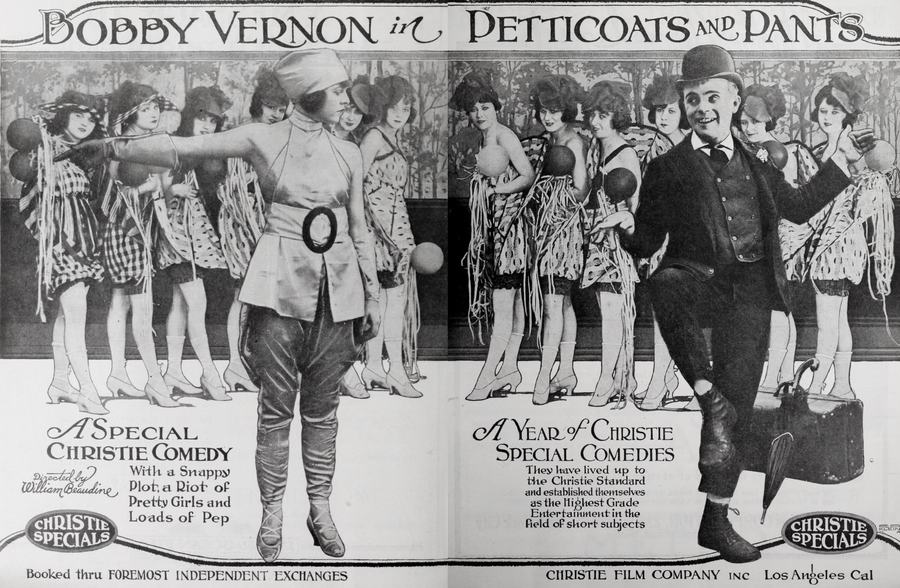
The first thing that hits you is the shimmer of nitrate arrogance—those overexposed whites that make every straw hat look haloed by scandal. Director Scott Darling, fresh off scripting Little Pal, treats the rural expanse like a blank vaudeville page: every cow a potential straight man, every windmill blade a timing device. The scenario, sketched by Frank Roland Conklin with the same caffeinated glee he later brought to Go and Get It, is thinner than a ukulele string, yet it twangs with syncopated zest.
Bobby Vernon—part Harold Lloyd, part cupie-doll—possesses the rare gift of looking simultaneously startled and conspiratorial. When he’s booted from unnamed Ivy-brick opulence, the intertitle card snarls: “Sent to the soil to grow a soul.” It’s a mission statement soaked in Calvinist comedy, but Vernon’s elastic brows twist the sermon into a jazz riff. Compare his urban fish-out-of-water to the ranch-naïf Douglas MacLean essayed in The Boss of the Lazy Y and you’ll notice Vernon never begs empathy; he pickpockets it while you’re busy heckling his pratfalls.
What elevates Petticoats and Pants above barnyard balderdash is its sly thesis on wardrobe as destiny. The titular garments—flapping linen skirts and sagging denim—become flags of conquest. When Elinor Field’s cigarette-svelte showgirl trusses herself in gingham to play at milkmaid, the camera lingers on her incredulous side-eye, as though the fabric itself might betray her. Conversely, Vernon’s hayseed drag is all pantomime: a straw chewed like a saxophone reed, a pitchfork wielded like a parasol. The joke isn’t that he’s unconvincing; it’s that everyone’s masquerade is equally threadbare. In that sense the picture cousins up to Tillie Wakes Up, where Marie Dressler’s domestic titan disintegrates under chandeliers, except here the collapse is played for peals rather than pathos.
Helen Darling, second-billed but first in savoir-faire, sashays through hen-houses as if auditioning for a Ziegfeld revue staged in a granary. Her mock-courting of Vernon involves a moonlit serenade delivered via rubber hose trumpet—an act so daft it loops back around to surreal. The duo’s duplicity fertilizes the plot: each thinks they’re puppeteering the other while the real marionette strings are tugged by social anxieties—urban migration, loosening corset laces, the looming fear that jazz might drown out the rooster. If you squint, the film is a microcosm of the Roaring Twenties negotiating its hangover before the decade has even peaked.
Conklin’s gags germinate like weeds. A cream separator spews like Vesuvius, coating Vernon in a blizzard of clabber; minutes later he’s skating across a butter-churn lid, pirouetting like Nijinsky on a nickelodeon budget. The pacing predates the breathless montage of The Lion’s Den, yet achieves a comparable centrifugal force without rapid cuts—proof that 1922 still trusted the physics of human bodies in frame. Watch for the long take where Vernon catapults into a haystack, only for Darling to rack focus revealing a bemused calf chewing the evidence—a gag so elegantly simple it feels like it emerged from agrarian folklore rather than a writers’ room.
The surviving 16-mm print—likely struck for hinterland niteries—has bleached toward umber, yet the iodine tinge flatters the story’s rustic con. The blacks pool like molasses; the whites glow like klieg lights on alfalfa. One could argue the decay itself performs a kind of alchemy, turning every barn wall into a Rembrandt smear. Purists may carp that we’ll never glimpse the original tints—those amber nights and cerulean day-for-nights that silent exhibitors loved to splash onscreen—but the monochromatic erosion suits the picture’s obsession with counterfeit surfaces.
No budget survives for a full orchestral cue sheet, yet the film’s metronomic intertitles—some framed in art-deco zigzags—practically hum with fox-trot swagger. I synced a DIY playlist: early King Oliver, a smidgen of novelty xylophone, and the occasional hog-grunt field recording. The marriage is uncanny; when Vernon leaps a split-rail fence, the cornet’s blue note lands exactly on his backside’s touchdown. Try the experiment at home and you’ll discover the movie is a rhythm instrument masquerading as narrative.
Released stateside in late September ’22, Petticoats and Pants served as the buttered roll preceding heavier fare like The Two Orphans. Trade dailies praised Vernon’s “liquid ankles” while chiding the threadbare rustic clichés. Yet the picture recouped—small-town bookers loved its barn-dance credentials, and college booths used it as a fundraiser, projecting onto bed-sheets while coeds Charlestoned between reels. Its footprint vanished quickly, but echoes ripple: watch the egg-breaking montage in Bubbles and you’ll spot a shot-for-shot homage to Vernon’s dairy debacle.
Currently streaming in 2K restoration on select boutique platforms; the Library of Congress holds an archival negative should your cine-club crave 35-mm grain. Be sure to snag the edition with the newly commissioned score by Donald Sosin—piano, kazoo, and musical saw—because anything less would be like watching a barn-raising without the scent of sawdust.
When the end card slams shut on Vernon’s wink—hay in his hair, chorus girl on his arm—the movie refuses to moralize. No sermon about country values taming jazz babies, no penance for the pranks. Instead the frame freezes on a half-built silo, sunlight spearing through gaps like unresolved chords. You exit with the sense that identity itself is a costume to be donned, discarded, laughed at, and stitched anew under the flicker of projector light. That, my fellow flicker-fiends, is how a disposable two-reeler from 1922 still pirouettes in the mind a century later—because it understood that the greatest American crop, more bountiful than wheat or corn, is pure, unabashed artifice.
IMDb —
1923
Community
Log in to comment.