DbcultAccessing Vault...
Cult Review
Senior Film Conservator
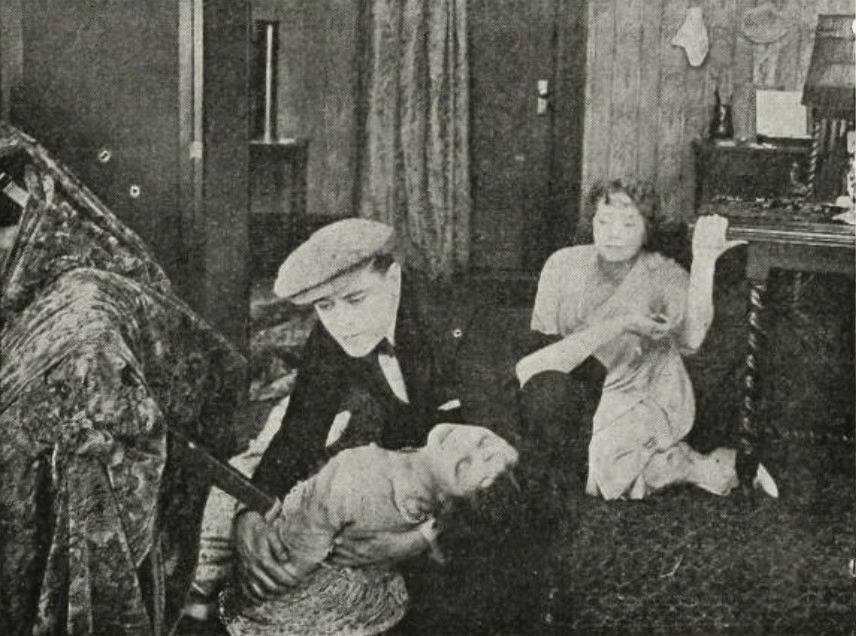
Stepping back into the annals of early cinema, one encounters a peculiar charm, a nascent artistry that, while perhaps lacking the polished sheen of later eras, often compensates with an unbridled enthusiasm for storytelling. ‘The Inspirations of Harry Larrabee’ emerges from this period as a fascinating artifact, a narrative propelled by a concept both whimsical and utterly captivating: the power of intuition manifest as dramatic, life-altering 'inspirations.' It’s a film that, despite its age, still manages to weave a tapestry of romance, suspense, and detective work with a distinctive flair, inviting us to ponder the very nature of insight and the subtle currents that guide human destiny.
At its core, the film introduces us to Harry Larrabee, portrayed with a commendable blend of earnestness and intellectual vivacity by Clifford Grey. Harry is not merely a playwright; he is a vessel for these enigmatic inspirations, a man whose mind seems to operate on a different frequency, perceiving patterns and connections invisible to the mundane eye. He shares a studio apartment house with Carolyn Vaughn, brought to life by Winifred Greenwood, a painter of miniatures whose delicate artistry mirrors her own nuanced character. Their initial interactions are steeped in a gentle, unfolding romance, a quiet counterpoint to the dramatic machinations soon to engulf them. This budding affection forms the emotional anchor of the narrative, giving stakes to the ensuing peril and grounding the more fantastical elements of Harry's abilities. The writers, Douglas Bronston and Howard Fielding, skillfully establish this tender dynamic before plunging their protagonists into a maelstrom of criminal intrigue.
The tranquility of their artistic existence is shattered by the return of a figure of profound menace: 'The Wolf.' This criminal mastermind, whose very name evokes primal fear and cunning, was believed by all to be dead, a ghost from a dangerous past. His resurrection from the shadows injects a potent dose of noir into the proceedings, transforming a charming romantic drama into a tense thriller. 'The Wolf,' whose presence is chillingly conveyed through the performance of an uncredited actor, communicates with his unsuspecting wife, a friend of Carolyn’s, and her brother. This manipulative coercion, turning family against friend, adds a layer of tragic betrayal to the criminal enterprise. The plot he meticulously engineers is one of calculated avarice: to rob Carolyn of her invaluable jewels. This isn't merely a petty theft; it's a grand scheme, meticulously planned, and executed with a ruthless efficiency that belies the calm surface of their bohemian neighborhood.
It is precisely at this juncture that Harry's extraordinary faculties come to the fore. His 'inspirations' are not mere hunches or logical deductions; they are flashes of profound understanding, almost clairvoyant in their clarity, which pierce through the veil of deception. One such inspiration strikes him, revealing the insidious machinations unfolding around Carolyn. The film portrays these moments with a certain dramatic emphasis, perhaps through visual cues or the actor's intense focus, communicating the weight of these sudden realizations. Without hesitation, Harry springs into action, his playwright's imagination now applied to the real-life drama unfolding before him. He rescues Carolyn, a scene undoubtedly crafted for maximum tension, and spirits her away in a taxicab, a symbol of their hurried escape from the clutches of danger. This sequence, with its rapid pace and immediate stakes, stands in stark contrast to the film's initial, more leisurely establishment of character, demonstrating a commendable shift in narrative gears.
The immediate aftermath, however, presents Harry with a new set of challenges. His heroic intervention, paradoxically, casts him under suspicion. The web of circumstance, spun by 'The Wolf’s' intricate plot, ensnares Harry, making him appear a plausible culprit. This twist adds a compelling layer of dramatic irony, as the very act of saving Carolyn places him in legal jeopardy. Yet, Harry remains remarkably undisturbed by this entanglement. His resolve is unwavering, his belief in his own unique method of perception absolute. It is this steadfastness, coupled with the continued surge of his wonderful inspirations, that provides him with the crucial keys to unlock the conspiracy. Each inspiration acts as a narrative stepping stone, guiding him through the labyrinthine plot, revealing the hidden motives and connections that led to the attempted crime. The film effectively uses this device to maintain suspense, as the audience is privy to Harry’s unique insights, allowing us to follow his mental journey of detection alongside him.
The performances across the board, particularly from Clifford Grey as Harry, lend a certain gravity and charm to the unfolding events. Grey imbues Harry with an intellectual curiosity and a quiet determination that makes his extraordinary abilities believable within the film's world. Winifred Greenwood, as Carolyn, portrays a character who is initially vulnerable but possesses an inner strength that emerges as the narrative progresses. The supporting cast, including Frank Brownlee, Charles Blaisdell, William Ehfe, Margaret Landis, and Tom Morgan, contribute to the tapestry of the story, each playing their part in the intricate dance of deception and revelation. The direction, while perhaps constrained by the technological limitations of the era, manages to convey the urgency and emotional weight of the story, using close-ups and clever editing to build tension and highlight key moments of inspiration and confrontation.
The narrative structure, with its focus on a protagonist whose unique mental faculties drive the plot, differentiates ‘The Inspirations of Harry Larrabee’ from more straightforward crime dramas of the period. While films like The Tide of Death might rely on conventional police procedural elements or overt action, Harry Larrabee’s story foregrounds the internal, the intuitive, and the power of the mind to perceive beyond the obvious. It suggests a fascination with the subconscious and the extraordinary capabilities of human thought, a theme that resonates even in contemporary storytelling. The film’s exploration of how a seemingly ordinary individual can possess such an extraordinary gift adds a layer of fantasy to its otherwise grounded suspense. This blend of the mundane and the miraculous is handled with a delicate touch, preventing the 'inspirations' from feeling like a mere plot device and instead presenting them as an integral aspect of Harry’s character.
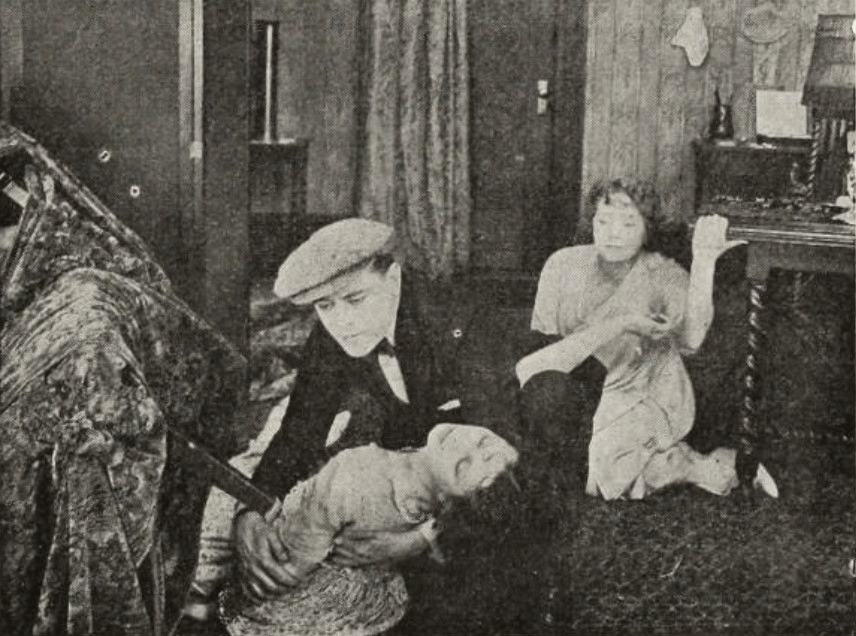
What truly elevates this picture, however, is its unusual and powerful finale. The climax is not merely a straightforward capture of the villains by the authorities, but a more visceral, almost Shakespearean unraveling. The guilty parties, their bonds of criminality and shared greed dissolved by rising tension and mutual suspicion, turn violently upon themselves. This internal strife, a furious struggle for spoils and self-preservation, culminates in a chaotic, desperate fight. The spectacle of villains consuming each other, driven by their own moral bankruptcy, provides a deeply satisfying, albeit grim, triumph of justice. It’s a powerful statement on the self-destructive nature of evil, a thematic resolution that speaks volumes without needing overt exposition. This exciting climax, far from feeling contrived, feels like a natural, albeit heightened, consequence of their nefarious actions, echoing the dramatic payoffs one might find in more complex stage plays or literary thrillers. The writers, Bronston and Fielding, deserve particular commendation for devising such a memorable and impactful resolution, eschewing convention for something far more dramatically resonant.
The film’s portrayal of the criminal underworld, while perhaps not as gritty as later noir offerings, nonetheless establishes a palpable sense of danger. 'The Wolf' is a truly menacing figure, not just for his actions but for his ability to manipulate those around him, turning them into unwitting or unwilling accomplices. This psychological dimension of villainy adds depth to the narrative, making the threat feel more insidious and personal. The stakes are consistently high, not just for Carolyn’s jewels, but for her safety and the very fabric of the community. Harry’s journey from a contemplative artist to an accidental detective is compelling, demonstrating a hero who relies on intellect and intuition rather than brute force. His character arc is subtle but significant, showing how extraordinary circumstances can awaken hidden potentials within an individual.
Looking at the broader cinematic landscape of its time, ‘The Inspirations of Harry Larrabee’ stands out for its unique premise. While films like His Daughter's Second Husband might delve into domestic drama or God's Law and Man's explore moral dilemmas through more conventional narratives, Harry Larrabee offers a protagonist with an almost supernatural gift. This makes it feel surprisingly modern in its approach to the detective genre, predating many of the tropes that would become standard. The film manages to blend romance, suspense, and a touch of the fantastical into a cohesive and engaging whole, a testament to the imaginative storytelling prevalent in early cinema. The careful pacing allows for both character development and plot progression, ensuring that the audience is invested in both the individuals and the unfolding mystery.
The technical aspects of the film, considering its vintage, are executed with a surprising degree of sophistication. The cinematography, while perhaps not groundbreaking, effectively frames the action and captures the emotional nuances of the performances. The use of light and shadow, even in its early form, contributes to the mood, particularly during the more suspenseful sequences involving 'The Wolf.' The editing maintains a good rhythm, building tension where necessary and allowing quieter moments to breathe. These elements combine to create a visually coherent and narratively compelling experience, proving that even with rudimentary tools, filmmakers of this era were capable of crafting engaging stories that resonated with audiences. The careful attention to detail in Carolyn's miniature painting, for instance, serves as a subtle visual motif, contrasting with the grand, dangerous scope of the criminal plot.
Ultimately, ‘The Inspirations of Harry Larrabee’ is more than just a relic; it is a vibrant piece of cinematic history that showcases the ingenuity and narrative ambition of its time. It invites viewers to suspend disbelief and embrace the notion that some mysteries are solved not by logic alone, but by a deeper, more intuitive understanding of the world. The film’s blend of romance, crime, and a touch of the uncanny makes it a compelling watch, even for contemporary audiences. It reminds us of a time when storytelling was perhaps simpler in its execution but no less profound in its impact. The enduring legacy of films like this lies in their ability to transport us to a different era, offering not just entertainment, but a glimpse into the evolving art form of cinema and the timeless appeal of a good mystery. Harry Larrabee's journey, fraught with peril and illuminated by flashes of brilliance, remains a testament to the power of inspiration, both within the narrative and in the very creation of such an imaginative film.
The character development, while perhaps not as explicit as in modern cinema, is effectively conveyed through action and reaction. Harry's growth from a contemplative artist to a proactive hero is a central thread, showing his capacity to rise to extraordinary challenges. Carolyn, too, evolves beyond a damsel in distress, demonstrating resilience and a quiet strength. The moral landscape of the film is clearly delineated, with the forces of good and evil engaged in a stark, uncompromising struggle. This clarity provides a satisfying emotional arc for the audience, reinforcing the belief in eventual justice. The film's ability to maintain a consistent tone, oscillating between romantic tenderness and thrilling suspense, is a credit to the careful craftsmanship of its creators.
In conclusion, for those with an appreciation for the foundational works of cinema, for stories that dare to blend the fantastic with the familiar, ‘The Inspirations of Harry Larrabee’ offers a delightful and engaging experience. It’s a film that not only entertains but also prompts reflection on the nature of intuition and the intricate dance between fate and human agency. Its unique premise, strong performances, and memorable climax ensure its place as a noteworthy entry in the pantheon of early cinematic thrillers. It’s a testament to the enduring power of a well-told story, regardless of the era in which it was conceived. The film leaves a lasting impression, much like one of Harry's own profound inspirations, lingering in the mind long after the final frame has faded.
IMDb —
1917
Community
Log in to comment.