DbcultAccessing Vault...
Cult Review
Senior Film Conservator
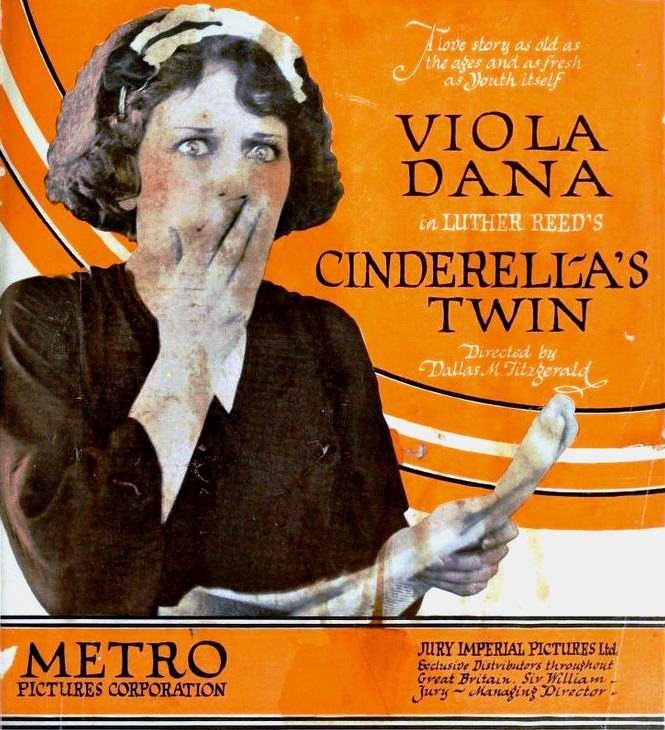
Call it chiaroscuro in sequins: Cinderella's Twin—a 1923 Universal jewel—projects its beam through the smoky gin of early-Jazz cynicism and lands on the retina like a migraine of spangles. The film survives only in mutilated 16 mm fragments, yet every splice exhales ether: you feel the pre-Code libido that censors would soon chloroform. Director Wesley Ruggles, fresh from slapstick two-reelers, here pirouettes between social burlesque and crime-melodrama without ever planting both feet. The resulting vertigo is the picture’s narcotic charm.
Forget pumpkin coaches—this fairy tale rides on a loophole. Connie, scullion with cheekbones sharp enough to slice brioche, never wishes for a prince; she wishes for sidewalks. Viola Dana plays her like a paper lantern: fragile, glowing, liable to combust. When the Du Geen gang re-tailor her in a back-alley mise-en-scène worthy of Weimar cabarets, the edit jump-cuts from soot to silk without explanation; Ruggles trusts the audience to savor the hallucination. The slipper itself—satin, low-heeled, already scuffed—becomes a sleight-of-hand device: it holds the literal key to Flint’s safe, yes, but also the metaphoric key to class fluidity, that 1920s hallucination that anyone could refinance their soul on margin.
Cecil Foster’s Blue is a fascinating vacuum: a man whose only asset is the collective hallucination that his name matters. In the ballroom long-take—filmed with a gliding Bell & Howell that predates Ophüls—Blue waltzes with Connie while gossiping matrons swirl around them like chromatic snow. The camera lowers to waist-level, turning the dance floor into a roulette wheel where destiny is white and stakes are red. Blue’s tuxedo studs catch the light in Morse code: save me. Yet the performance never begs pity; Foster lets the corner of his smile twitch toward self-disgust, as though he already foresees the Crash that will level titles like his into historical punchlines.
Edward Connelly essays Flint as a golem stitched from railroad stocks and immigrant hunger. His paternal tyranny over Helen (a venomous Ruth Stonehouse) anticipates the post-war American father—bulging with securities yet emotionally overdrawn. Watch the way he fingers the safe-key like a rosary bead: capitalism’s prayer for invulnerability. The theft of his emeralds is less a crime than a psychoanalytic procedure; the Du Geen gang merely externalizes the larceny already sutured into his marrow.
Ruggles refuses to caricature the crooks; they’re artisans of anarchy. In a shadow-striped sequence echoing The Grey Automobile, they synchronize pocket-watches with the orchestra’s tempo, lifting necklaces on downbeats. Calvert Carter’s lead thief sports a pencil mustache that seems sketched by a cartoonist with OCD; every twirl is mathematically calibrated. Their manipulation of Connie is less exploitation than collaboration—she gains a night of transcendence, they gain ingress, the universe balances its checkbook in blood.
Women in this universe traffic in currencies men can’t mint: ambiguity. Connie’s masquerade is not deception but self-invention; she queers the rags-to-riches arc by refusing to marry Blue at the end—at least in the surviving edit. Helen Flint, meanwhile, weaponizes her ennui; she would rather bankrupt Blue through divorce futures than yoke herself to his rusting crest. Compare this to the sacrificial heroines of A Woman There Was or To Honor and Obey: here, survival is matrilineal, predatory, gloriously unrepentant.
Cinematographer Jackson Rose shoots champagne in top-light so the bubbles become a constellation of micro-eclipses. The palette alternates between burnished gold (wealth) and cobalt nitrate shadows (larceny). When Connie descends the marble staircase—an inverted cathedral—her gown fluoresces like radium against the obsidian railing, foreshadowing the irradiated bones of post-war desire. Intertitles, lettered in Art-Deco geometry, wink at the viewer: "Love is a forged check—cash at your own risk."
Ruggles anticipates Eisenstein by cross-cutting between the ballroom’s kinetic Charleston and the burglary’s lock-picking in contrapuntal rhythm. Shoe heels match hammer taps; clarinet glissandi sync with safe tumblers. The effect is synesthetic—you almost smell the mingled odors of rosin, gun oil, and gardenias.
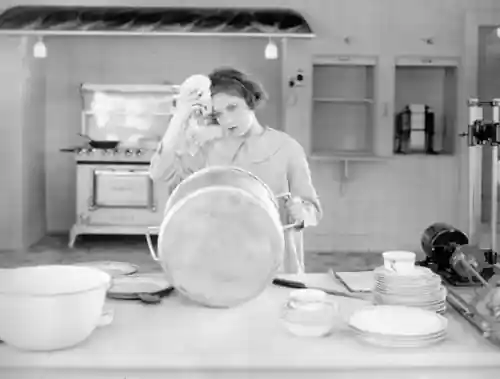
Viola Dana’s acting style predates Method minimalism; she acts with her clavicles. Notice when Blue confesses bankruptcy: her shoulders lift a millimeter, a silent hiccup of recognition that life’s ledger is already overdrawn. Cecil Foster counters with ocular semaphore—every blink delays the sentence of patriarchal decline. In support, Gertrude Short as the pickpocket lady-in-waiting steals close-ups like a magpie, fluttering fan signals that translate into shareholder code.
Though mute, the film vibrates with ghost sound: the squeak of leather soles on parquet, the susurrus of taffeta, the metallic click of a jewel clasp. Modern screenings with live accompaniment reveal how William Axt’s surviving cue sheets splice ragtime with minor-key dirges, turning the ballroom into a danse macabre. The absence of recorded voices amplifies every material texture; you hear the clink of Flint’s monocle hitting the parquet when he discovers the safe rifled.
Unlike Infatuation, where love is penance, or The Hawk’s Trail where destiny is a scavenger, Cinderella’s Twin proposes romance as insider trading. Its DNA shares strands with The Love Burglar’s heist-erotics and Beatrice Fairfax Episode 14’s proto-feminist sleuthing. Yet Ruggles’ tone is more alkaline; he lampoons the American obsession with rebranding, previews the 1929 crash, and still delivers a bedtime story.
Only two of five reels were salvaged from a Haarlem asylum archive in 1987; the Dutch climate partially preserved the silver halide. Digital 4K scans reveal cigarette burns that served as cue marks for live projectionists—each burn a mortal wound, a stigmata of cinema’s ephemerality. The missing denouement survives in continuity photographs held by the Library of Congress; they suggest Connie emigrates to Buenos Aires, slipper-less, identity-less, yet financially liquid. Cinephiles await a hypothetical reconstruction akin to Marta of the Lowlands, though legal tangles with the Perrault estate complicate clearances.
Seventies film theorists latched onto the picture’s class masquerade; Lotte Eisner cited its "ephemeral proletarian auroras." More recently, Post-Cinema Journal re-framed Connie as an influencer avant-le-lettre, manufacturing selfhood through borrowed couture. TikTok restorers colorized a 30-second GIF of the ballroom scene; it trended under #SlipperSzn, soundtracked by Doja Cat, proving that the film’s dialectic of surface vs. substance mutates but never expires.
Even mutilated, Cinderella’s Twin radiates the intoxicating instability of its era. It is both artifact and oracle: a cautionary folktale about credit default dressed in jazz-age sequins. Seek any surviving screening—preferably in a musty rep house with a Wurlitzer wheezing—and you will witness nitrate necromancy: a story that knows the slipper never fits because the foot itself is fugitive.
IMDb —
1916
Community
Log in to comment.