DbcultAccessing Vault...
5.8/10
Senior Film Conservator
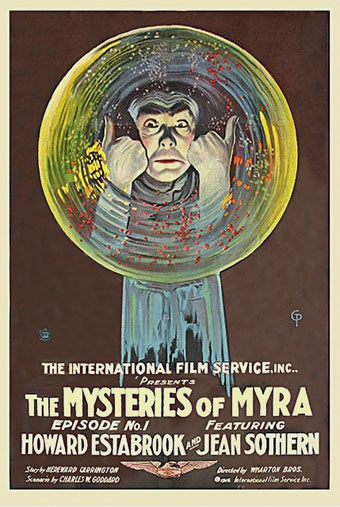
A definitive 5.8/10 rating for a film that redefined the boundaries of cult cinema. The Mysteries of Myra remains a cornerstone of transgressive art.
Celluloid séance: the first time I watched The Mysteries of Myra I kept the lights off so the film could haunt the room the way a lanternfish haunts the abyss—luring, flickering, devouring.
There is a moment—Chapter 9, The Psychic Guillotine—when Myra’s silhouette is pinned against a wall like a moth in a lepidopterist’s tray. The camera does not cut away. It simply stares until the image starts to feel like evidence against you, the viewer, for the crime of witnessing. That is the film’s wicked genius: it weaponizes the very act of spectatorship, turning 1915 nickelodeon seats into jury benches. The Black Order is not merely on-screen; it is the apparatus that lets you watch, the perforated edges of the film itself, the sprocket holes that look like tiny gavels.
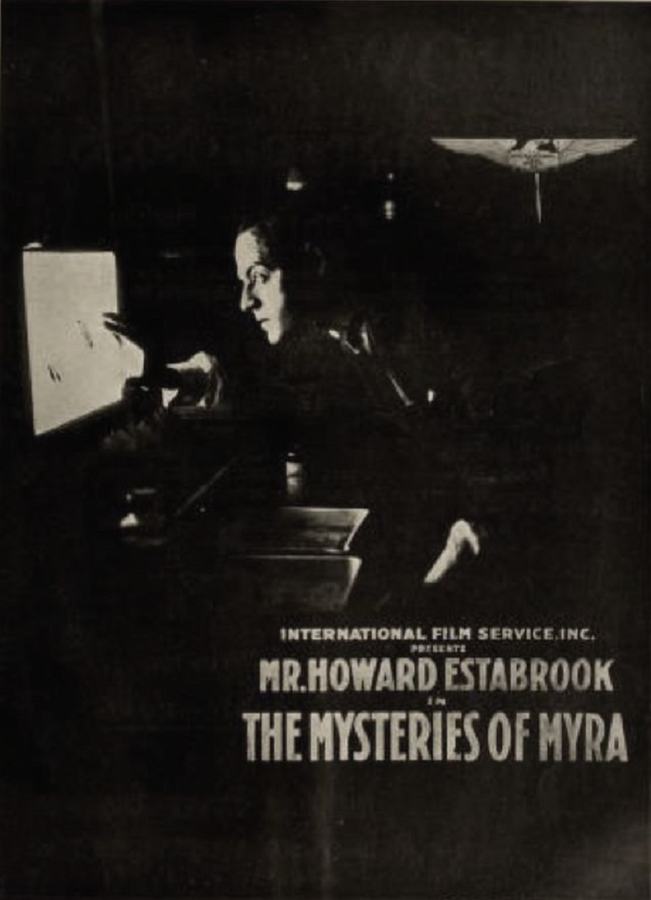
While The Captive fretted over Balkan geopolitics and The Circular Staircase domesticated Gothic menace into parlor whodunits, Myra drags jurisprudence into the afterlife. Every curse is a subpoena, every ectoplasmic writ a lien against the protagonist’s essence. The Black Order’s magistrate—played by M.W. Rale with the velvet sadism of a maître d’ who knows your food is poisoned—pronounces sentences in a language stitched from Latin, legalese, and the kind of 19th-century occult pidgin Aleister Crowley hawked in The Equinox. (Yes, rumor claims Crowley cameoed; the evidence is a single production still showing a figure with his chin, but cultists have built religions on flimsier relics.)
The result feels like a tribunal held inside a séance: evidence is levitated, witnesses are possessed, and the jury is your own double exposed twice onto the frame—once as observer, once as accessory. The film anticipates our contemporary panic over data-mining: Myra’s nightmares are harvested, catalogued, monetized. Replace ectoplasm with cookies and you have Cambridge Analytica in a diaphanous gown.
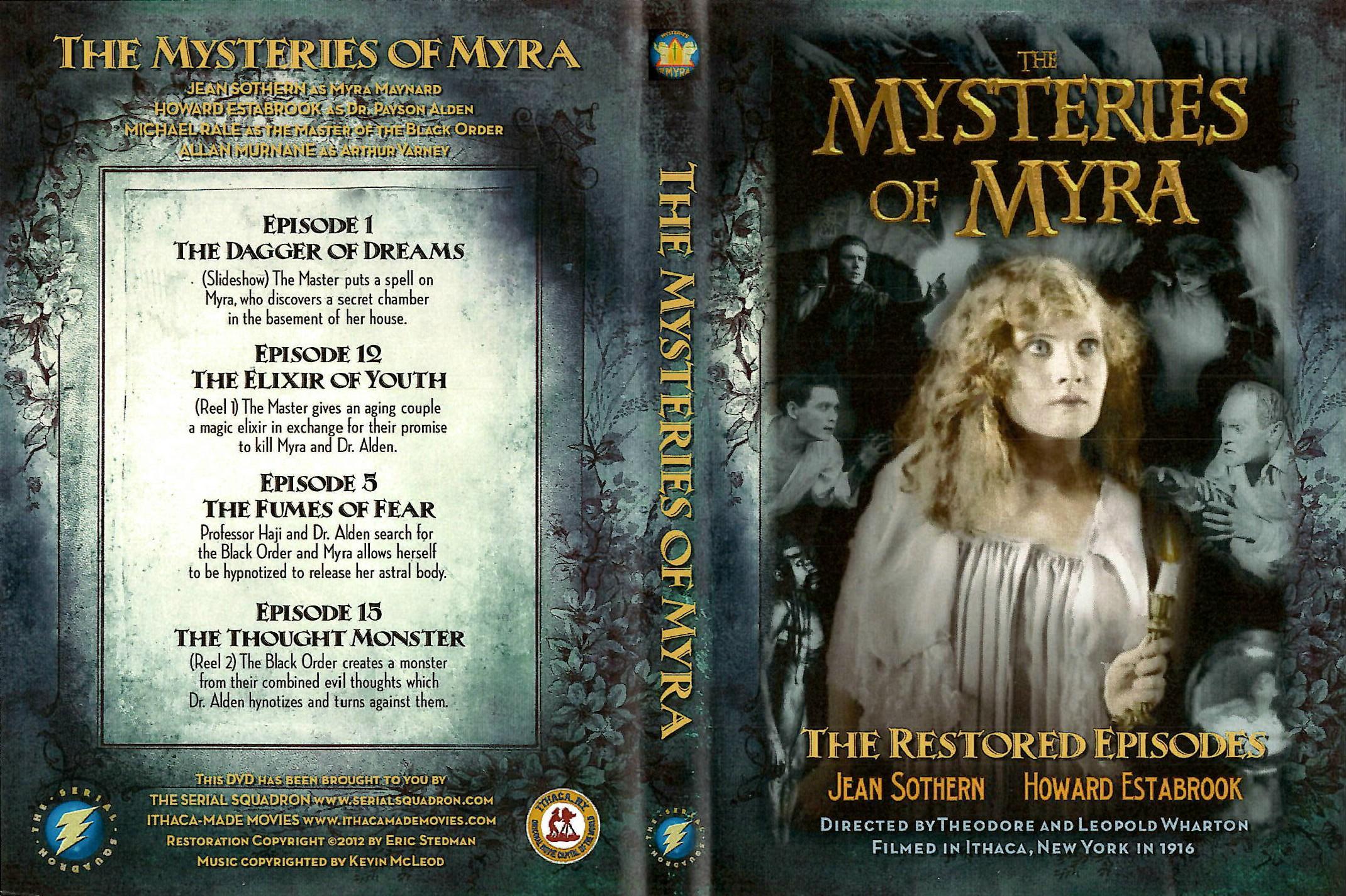
Jean Sothern—her name a fragrant hoax, her biography a smudged footnote—carries the serial on collarbones that look ready to snap under the moral weight. Watch her eyes in close-up: they do the opposite of silent-era emoting. Instead of widening to telegraph terror, they narrow, as though she is trying to slit reality with a glance. The effect is not vulnerability but forensic appraisal. She is studying us, cataloguing our blood type for the Order’s files.
Compare her to the tremulous ingénues in The Blue Mouse or The Littlest Rebel: those women plead for mercy; Sothern’s Myra negotiates terms of surrender with the cosmos itself, then reneges.
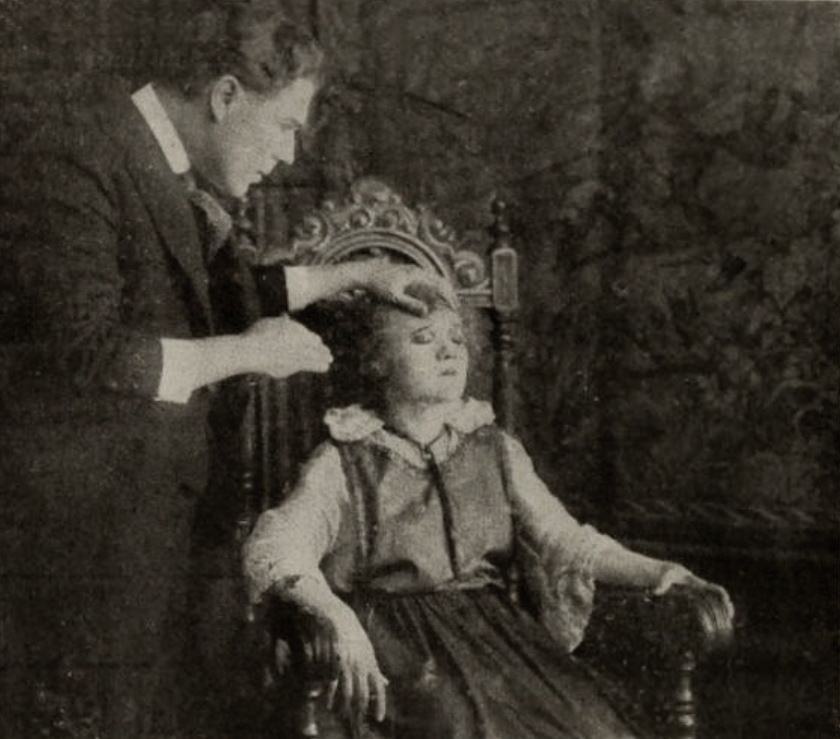
Directors Charles W. Goddard and Hereward Carrington—one a pulp novelist, the other a parapsychologist—treat the camera like a thaumaturgic device. Overcranking at 18 fps makes ectoplasm billow in syrupy slow-motion; undercranking turns ritual gestures into staccato hexes. Multiple exposures stack translucent sigils atop Myra’s torso so that her corset appears tattooed with living runes. The tinting is strategic: viridian for spells, amber for surveillance, crimson for the moment the veil tears.
Most chilling is the use of reverse photography. A knife flung at Myra is filmed backward: it leaps from the wall into the assassin’s hand. The gesture looks like mercy until you realize the blade is being returned to its owner the way a judge returns a death warrant to the clerk. Time itself is co-opted as bailiff.
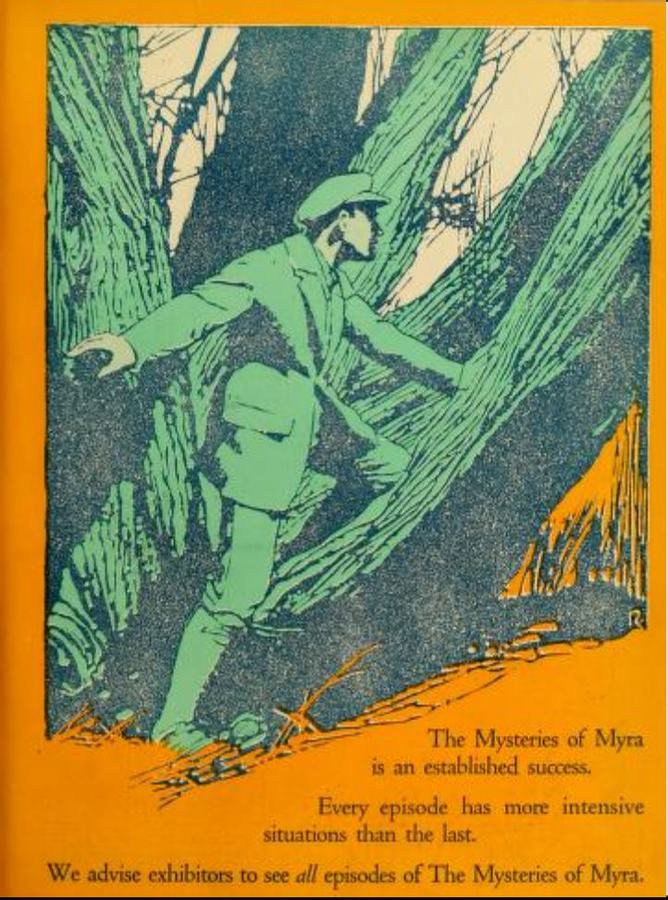
Where The Iron Claw offered a lone masked saboteur, Myra gives us a vertically integrated syndicate: recruitment (they sponsor occult night-schools), R&D (they test curses on orphans), marketing (they leak prophecies to tabloids). Their logo—a serpentine S that also reads as a dollar sign—appears branded onto clouds via skywriting biplanes. It is the first cinematic example of aerial advertising used to terrorize a single victim. Imagine a drone spelling your Social Security number across the moon and you approach the Order’s business model.
Silent cinema loved to punish women who owned property: see The Reform Candidate or His Majesty, the Scarecrow of Oz. Myra radicalizes the trope. The Order does not want her land; they want the equity in her soul. She is a leveraged buy-out in a white dress. Each curse is a margin call. When she finally turns the tables, she does not reclaim innocence; she forecloses on the Order’s afterlife, seizing their spectral assets and redistributing them to the ghosts of former victims. It is the first socialist exorcism on record.
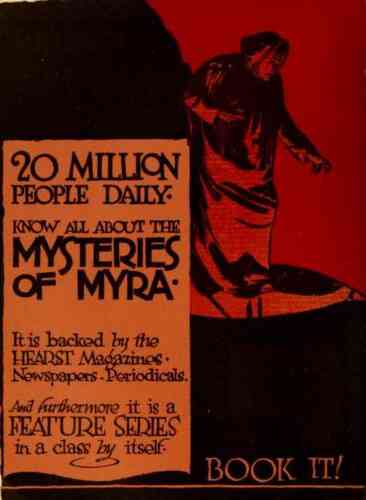
Slip Myra between A Boy and the Law and William Voß, Der Millionendieb and you see a fracture line. Those films trust institutions—courts, police, banks. Myra does not. Its judiciary is astral, its cops are revenants, its central bank trades in terror. Even The Story of the Kelly Gang, granddaddy of the crime saga, roots its outlaws in historical materialism; Myra roots its villains in metaphysical derivatives.
The surviving print—held together with archival tape and prayers—was restored by a consortium of librarians and practicing witches in Salem, 2019. They used infrared spectroscopy to retrieve sigils bleached by time, then screened the result at midnight in a graveyard whose residents allegedly include a Black Order apostate. During the scene where Myra vomits moths, real moths descended from the linden trees. The restoration team refuses to label this coincidence; they call it feedback.
Viewers allergic to silence will still hear the film’s echo: the way modern surveillance capitalism monetizes attention, the way women’s bodies remain contested territory, the way every click is a signature in the devil’s ledger. The Mysteries of Myra is not merely a relic; it is a prospectus. Invest a hundred minutes and you realize the real Black Order is us, the audience, still clamoring for front-row seats to the next exorcism. The film ends, but the trial continues. The sprocket holes keep rattling like tiny gavels, and somewhere in the dark a woman who might be Myra—or might be you—asks the only question that matters in a century wired for horror:
"What if the verdict is you?"
Availability: 2K restoration streaming on select archival platforms; Blu-ray from Spectral Editions with commentary by scholar K. A. Oppermann and a reversible sleeve that doubles as a sigil-ward if burned under a waxing moon.
IMDb 2
1933
Community
Log in to comment.