DbcultAccessing Vault...
6.1/10
Senior Film Conservator
A definitive 6.1/10 rating for a film that redefined the boundaries of cult cinema. Claude Duval remains a cornerstone of transgressive art.
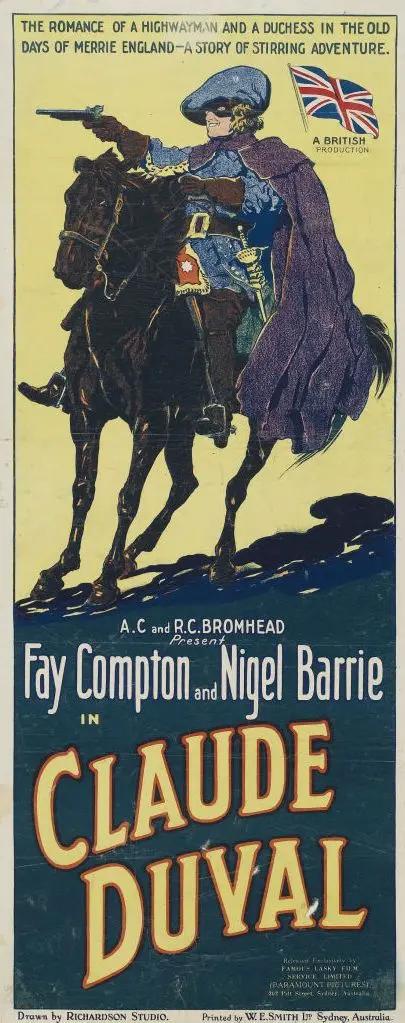
The 1924 cinematic rendition of Claude Duval stands as a towering testament to the silent era's fascination with the 'gentleman rogue,' a figure who bridges the gap between the visceral thrill of criminality and the refined aesthetics of the aristocracy. Directed with a keen eye for period authenticity, this production transcends the typical swashbuckler tropes to offer a meditation on the volatility of reputation. Nigel Barrie breathes life into Duval, imbuing the Frenchman with a mercurial charm that makes his descent into the life of a highwayman feel less like a fall from grace and more like a necessary evolution in a world governed by deceit.
The narrative engine is ignited not by a desire for gold, but by the cold machinations of the duchess’s cousin. In many ways, the film’s exploration of a legal system manipulated by the powerful mirrors the thematic weight found in Life Story of John Lee, or The Man They Could Not Hang, where the individual is crushed by institutional indifference. When Duval is accused of murdering a title blackmailer—a man who held the secrets of the elite in a stranglehold—the irony is palpable. The very system designed to protect the innocent becomes the weapon used to excise a man of honor from polite society. This segment of the film is shot with a claustrophobic intensity, utilizing shadows to emphasize the narrowing options available to our protagonist.
Louis Stevens and Mary Bennett’s screenplay avoids the pitfalls of repetitive melodrama by focusing on the psychological toll of Duval’s exile. Unlike the broad strokes of The Birth of a Nation, which sought to define a national identity through grand, often problematic scale, Claude Duval finds its power in the intimate betrayal. The duchess’s cousin is not merely a villain; he is a symbol of the rot within the monarchy, a theme that resonates through the film’s visual language. The set design transitions from the ornate, stifling interiors of the manor to the expansive, liberating, yet dangerous landscapes of the open road, signaling Duval’s internal shift from a caged bird to a bird of prey.
Nigel Barrie’s performance is nothing short of magnetic. In an era where silent acting often veered into the hyperbolic, Barrie maintains a grounded, almost stoic elegance. His Duval is a man who understands the theatre of his new profession. The famous scene where he insists on dancing a coranto with a lady he has just robbed is executed with a fluidity of motion that justifies his legendary status. It is a moment of pure cinematic joy that contrasts sharply with the darker undertones of the plot. This duality—the thief who is also a dancer—creates a complex protagonist that rivals the psychological depth seen in The Wolf Man, though Duval’s transformation is social rather than supernatural.
The supporting cast, including the luminous Fay Compton and the formidable James Lindsay, provides a sturdy framework for Barrie’s central performance. Compton, in particular, captures the agonizing conflict of a woman caught between her social obligations and her burgeoning respect for the man the world calls a monster. Their interactions are filmed with a soft-focus romanticism that provides a necessary counterpoint to the rugged action sequences. While The Misleading Lady dealt with romantic deception in a more contemporary setting, Claude Duval elevates the stakes by tethering the romance to the threat of the gallows.
Visually, the film is a triumph of 1920s British filmmaking. The use of natural light during the exterior highway scenes creates a sense of realism that was often missing from Hollywood’s more sanitized versions of the era. The costumes are meticulously crafted, reflecting the rigid class distinctions that Duval so effortlessly flouts. One cannot help but compare the visual richness here to The Volcano, where environmental factors play a key role in the narrative's tension. In Duval’s world, the environment is the night itself—the cloak of darkness that allows him to execute his 'taxation' of the wealthy.
The editing pace is surprisingly modern, particularly during the chase sequences. The tension built as the authorities close in on Duval’s hideout is palpable, utilizing cross-cutting techniques that were still being perfected at the time. This rhythmic urgency is reminiscent of the structural precision found in Revelj, where the timing of every movement feels critical to the protagonist's survival. The film understands that for a highwayman, time is the ultimate currency, and every second spent in the open is a gamble with death.
What separates Claude Duval from contemporary fare like The Girl of My Dreams is its refusal to provide easy moral answers. Duval is a victim of a crime, yes, but he becomes a criminal in response. The film asks the audience to consider if a 'just' crime exists. This exploration of circumstantial morality is a precursor to the themes found in Chains of Evidence, where the truth is often obscured by the very people sworn to uphold it. Duval’s refusal to shed blood unless absolutely necessary becomes his defining characteristic, a code of ethics that he clings to even as his world collapses.
Even the lighter moments, such as the interactions with characters played by Tom Coventry or A.B. Imeson, serve to highlight the absurdity of the social hierarchy. There is a satirical edge to the way the film portrays the bumbling local constabulary, a trope that would later be explored in comedies like The Man from Mexico or A Studio Rube. However, in Claude Duval, the humor is always tinged with the threat of violence. The laughter is nervous, born from the knowledge that the man on the horse holds the power of life and death in his gloved hands.
As the film reaches its crescendo, the inevitability of Duval’s fate begins to loom. The duchess’s cousin, a character whose villainy is as deep as the one in The Evil Thereof, remains a persistent shadow. The final confrontation is not just a battle of swords, but a battle of legacies. Does Duval die a common thief, or does he live on as a symbol of resistance? The film leans heavily into the latter, suggesting that while the man may be mortal, the legend of the gallant rogue is indestructible. This myth-making quality is what gives the film its lasting power, elevating it above mere historical reenactment.
In the broader context of 1920s cinema, Claude Duval represents a peak in British silent storytelling. It lacks the cynicism of later noir films but possesses a sophisticated understanding of human frailty. It is a film that demands to be seen not just as an artifact, but as a living piece of art. Whether compared to the high-society dramas of Lombardi, Ltd. or the rugged frontier justice of The Border Legion, Duval carves out a unique space for itself. It is a story of a man who lost everything but his dignity, and in doing so, gained immortality on the silver screen.
Ultimately, the film succeeds because it understands the visceral appeal of the outsider. We root for Duval because his struggle is universal—the fight against a system that has pre-judged us. His flair, his gallantry, and even his eventual reckoning are handled with a level of care that ensures the audience remains emotionally invested until the final frame. In a world of Black and Tan Mix Up-style chaos, Duval offers a structured, albeit illegal, sense of justice. It remains a essential viewing for any serious student of cinema history, a flickering candle of heroism in the dark corridors of the past.
IMDb 4.2
1933
Community
Log in to comment.