DbcultAccessing Vault...
Cult Review
Senior Film Conservator
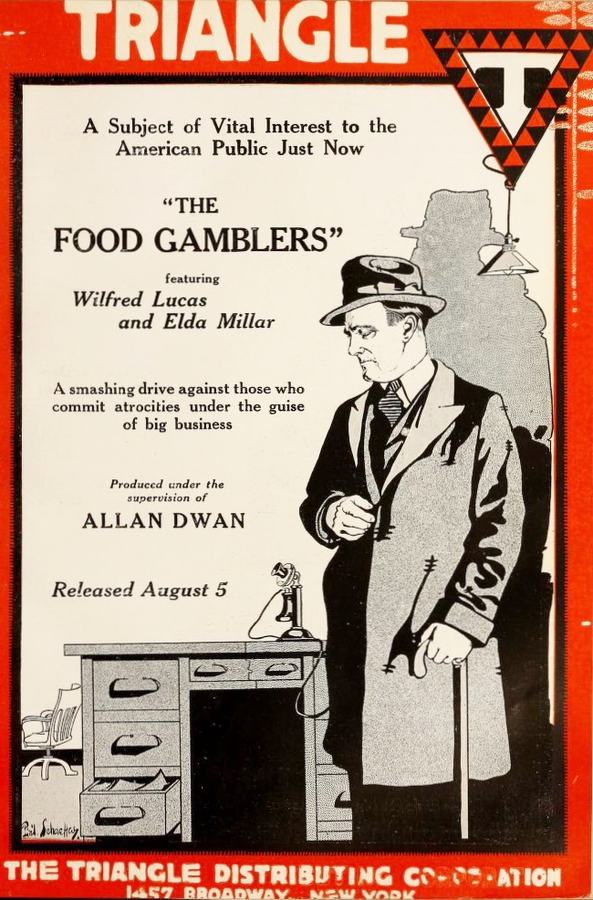
In the pantheon of early American social realism, few films capture the jagged intersection of domestic desperation and corporate clinicalism as effectively as 1917’s The Food Gamblers. Directed with a keen eye for the burgeoning muckraker aesthetic, the film functions less as a simple melodrama and more as a cinematic manifesto against the artificial inflation of survival. We are introduced to June Justice, a protagonist whose very name suggests a heavy-handed allegorical weight, yet who is portrayed with a nuanced grit that defies the era’s penchant for two-dimensional heroines. Unlike the ethereal suffering found in The Painted Soul, June’s struggle is rooted in the tangible, the caloric, and the economic.
The film opens not in the gilded halls of the elite, but in the sweltering, claustrophobic tenement districts. Here, the camera—unusually mobile for the period—captures the frantic energy of the food riots. These sequences are remarkable for their verisimilitude; they do not feel like staged background action but like a documentary capture of a society on the precipice of collapse. The women of the neighborhood, traditionally relegated to the domestic sphere, are seen here as political agents, their rebellion against retailers serving as the catalyst for the entire narrative arc. This depiction of female-led grassroots activism provides a fascinating contrast to the more traditional romantic entanglements seen in Tangled Hearts.
As June Justice peels back the layers of the food supply chain, the film transitions from the visceral to the cerebral. We see the retailers, themselves squeezed by the middlemen, who in turn are mere puppets for the food speculators. This structural analysis of capitalism is surprisingly sophisticated for a film of this vintage. It echoes the industrial critiques found in The Mill on the Floss, though it swaps the rural tragedy for an urban, systemic rot. The villainy here isn't a mustache-twirling individual but an entire apparatus—the 'Food Trust.'
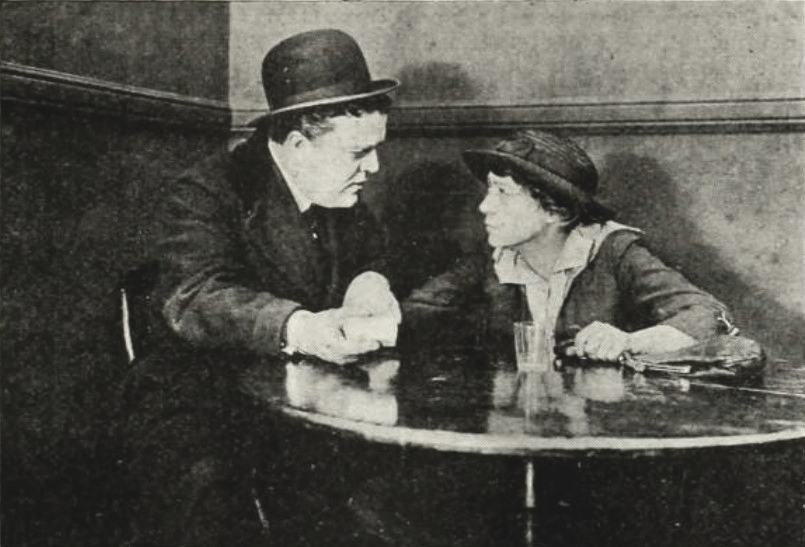
Enter Henry Havens, played with a chillingly calm detachment that eventually melts into something far more complex. Havens is the face of the trust, a man who views the hunger of thousands as a mere fluctuation in a ledger. His initial interaction with June is a masterclass in power dynamics. He doesn't threaten her with violence; he attempts to colonize her integrity with a bribe. This moment is the film’s fulcrum. It moves the conflict from the streets to the soul. While films like The Dead Alive deal with the resurrection of the physical or the forgotten, The Food Gamblers deals with the resurrection of a conscience.
The cast is a fascinating assembly of early Hollywood stalwarts. Hedda Hopper, long before she became the feared doyenne of gossip, provides a performance that hints at the sharp-edged intelligence that would define her later career. Wilfred Lucas and Russell Simpson bring a gravity to the proceedings that anchors the film’s more didactic moments. There is a sense of earnestness here that avoids the saccharine pitfalls of The Saleslady, opting instead for a somber, almost liturgical tone as the true cost of Havens’ policies is revealed.
The transformation of Havens under June’s influence is handled with a psychological delicacy that predates the more overt mental explorations of Spellbound. It isn't a sudden epiphany but a slow erosion of his defenses. He is forced to look at the human wreckage his 'speculations' have wrought. The scenes where June leads him through the districts he has impoverished are haunting, utilizing shadows and stark lighting to emphasize the moral chasm he must cross. This visual storytelling is as potent as the gothic atmosphere in The Ghost of Old Morro, though its ghosts are the living specters of starvation.
Stylistically, The Food Gamblers occupies a unique space. It lacks the surrealist leanings of Vampyrdanserinden, preferring a gritty, American pragmatism. However, it shares a certain thematic DNA with The Lipton Cup in its fascination with the titans of industry, though it views them through a much more critical lens. While The House of Temperley explores the codes of honor among the sporting elite, this film interrogates the lack of honor among the financial elite.
The pacing of the film is relentless. Robert Shirley’s script doesn't waste time on extraneous subplots. Every scene is a brick in the wall of June’s argument. Even the burgeoning romance between June and Havens is framed through the lens of political awakening. It is a 'love or justice' scenario where the two are not mutually exclusive but rather interdependent. In fact, one might compare the moral weight of their decisions to the pivotal choices in Love or Justice, where the personal and the judicial are inextricably linked.
The final act of the film, involving the push for legislation to dissolve the food trust, is perhaps its most daring segment. It moves the drama into the legislative halls, a setting that could easily have become dry or pedantic. Instead, the director maintains the tension by keeping the stakes personal. We see the weight of the decision on Havens’ face—the realization that he is dismantling his own empire to save his soul. It is a redemption arc that feels earned, unlike the somewhat more perfunctory resolutions in Lost in Transit or Mr. Dolan of New York.
The film’s conclusion is not a simple 'happily ever after' but a sober recognition of the work still to be done. It is a call to arms for the audience of 1917, a reminder that the price of bread is a political issue. This level of engagement with contemporary social issues makes it a precursor to the great protest films of the 1930s. It lacks the romanticized escapism of The Bushranger's Bride, choosing instead to confront the viewer with the uncomfortable realities of their own dinner table.
To watch The Food Gamblers today is to witness the birth of the investigative thriller. It possesses a narrative urgency that many of its contemporaries lack. The chemistry between the leads, the starkness of the cinematography, and the boldness of its political message combine to create a work of lasting significance. It avoids the melancholic passivity of Le crépuscule du coeur, opting for an active, vibrant pursuit of reform.
In the end, June Justice remains one of the most compelling figures of the silent era—a woman who used her pen and her presence to topple giants. The film stands as a testament to the power of the individual to effect systemic change, provided they have the courage to face the 'gamblers' head-on. It is a cinematic meal that is as nourishing today as it was over a century ago, providing a stark reminder that the struggle for basic human needs is a perennial conflict, staged on the battlefield of the free market. For those interested in the evolution of social drama, this is essential viewing, a bridge between the Victorian moralizing of the past and the hard-boiled realism of the future.
Technical Note: The restoration of this film highlights the incredible depth of field achieved by the cinematographers of the era, particularly in the riot scenes where the layering of characters creates a sense of overwhelming scale. The use of natural light in the tenement interiors provides a somber, authentic texture that serves as a silent witness to the poverty depicted.
IMDb 7.1
1923
Community
Log in to comment.