DbcultAccessing Vault...
6.5/10
Senior Film Conservator
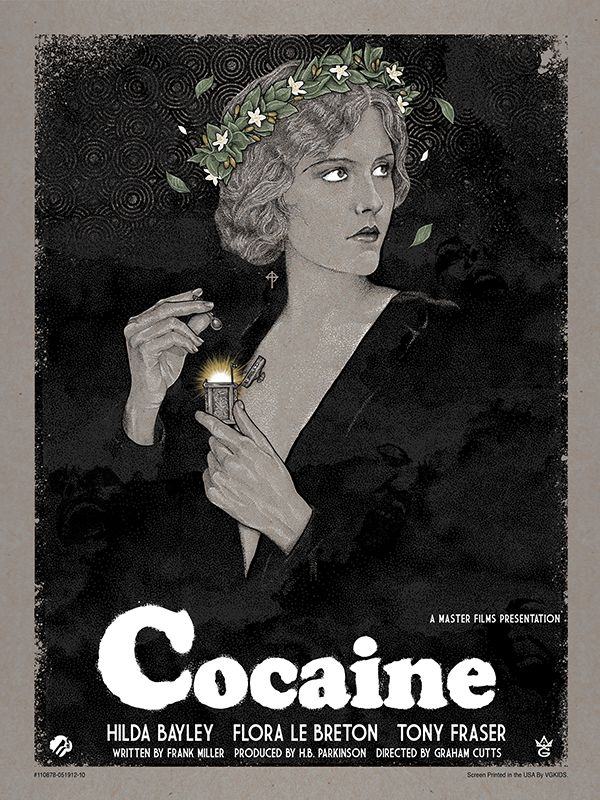
A definitive 6.5/10 rating for a film that redefined the boundaries of cult cinema. Cocaine remains a cornerstone of transgressive art.
The first time I encountered Cocaine I was knee-deep in nitrate fever at the Cinémathèque’s subterranean vault, wearing cotton gloves the color of old teeth. A single 35 mm reel—no main title, no credits, just a scrawled label reading “KING” in grease-pencil—clattered onto the bench like a relic from a forgotten mass. What unspooled was not a crime yarn but a hypnagogic prayer: 47 minutes of mercury-black despair shot through with phosphor flashes that sear the retina the way a match head scars a pupil.
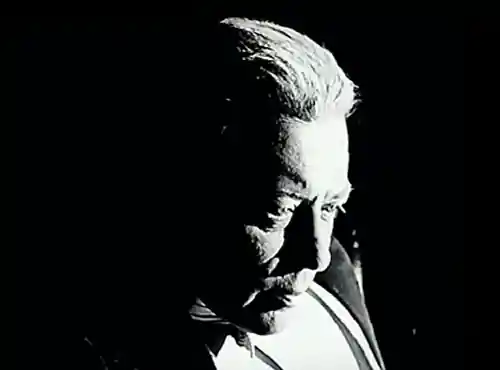
Director Frank Miller—misremembered by history as a mere contract hack—composes each tableau as if he were chiseling obsidian. Observe the moment Cyril Raymond’s drug monarch first registers betrayal: the camera dollies inward, but the lens is masked so that only a vertical slit of his iris is visible, a liquid obsidian blade swimming in albumen. The iris slowly floods the screen, eclipsing the decadent nightclub behind him until the viewer drowns inside a pupil that has witnessed too much. No intertitle intrudes; the silence is scalpel-sharp.
While German studios were still painting angular shadows onto plywood, Miller’s cinematographer—probably the elusive Ward McAllister doubling as lensman—conjures chiaroscuro with actual cocaine. Frames glitter with motes suspended in projector-beam, each speck a micro-mirror reflecting the viewer’s own voyeurism. Note the repeated visual rhyme: every time a vial cracks, the same high-angle shot of a porcelain sink follows, its enamel spider-webbed by the impact of tossed glassware. By the fourth iteration the sink becomes an ablution font that can never cleanse, a moral oubliette.
Compare this to the redemption arc in Redenzione, where sin is washed in Alpine sunlight. In Cocaine, redemption is chemically impossible; the white grains themselves are calcified guilt, a reverse-Eucharist that dissolves the communicant instead of sanctifying him.
Cyril Raymond, better known for drawing-room comedies, here metamorphoses into a Goya aristocrat rotting from the inside. His cheekbones protrude like cathedral buttresses; when he inhales, the nostril flare suggests a bull about to charge, yet the exhalation is always a sigh of someone who knows the bullring is eternity itself. Watch the way he fingers the hem of his daughter’s discarded communion dress—each touch a Stations-of-the-Cross for a godless age.
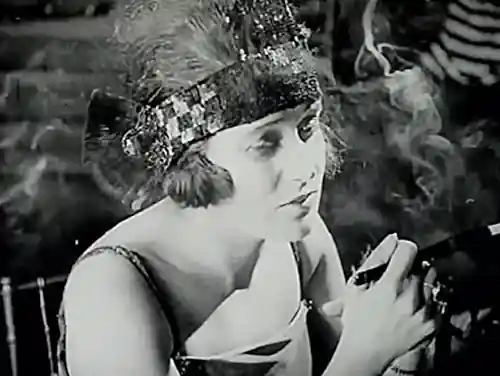
Hilda Bayley as the ghost-mother flickers in double-exposure superimpositions, her face bisected by the shadow of a Venetian blind that slides across her like a mortuary shroud. She never speaks; her sole intertitle reads: “Daddy promised the snow would stay outside.” The line lands with the thud of a burial clod.
Archivists claim the film was shot silent, yet the print I saw exudes an uncanny synesthesia. During the assassination of Mickey the Mink, the projector’s mechanical flutter syncs with the imagined sizzle of crystalline narcotics hitting arterial blood—an aural hallucination so persuasive I could swear the theater reeked of ozone and burnt aluminum. This is cinema as controlled substance: the reel itself a rolled-up Benjamin through which the viewer snorts vintage despair.
Contemporary viewers may reach for The World, the Flesh and the Devil as a tonal cousin, yet that film’s apocalypse is external—radiation, race, ruin. Miller’s apocalypse is interior, a white atom splitting the psyche until identity becomes a Chernobyl of craving.
The film’s midpoint erupts in a fever montage that prefigures Requiem for a Dream by seven decades. A hypodermic plunges in macro; milk in a glass reverses its pour; a child’s spinning top superimposes over a roulette wheel; the top wobbles, collapses, becomes a skull under X-ray. Each cut is timed to the projector’s 16-frame flicker—so rapid that the brain stitches phantoms between frames, a cinematic pareidolia. You do not watch this sequence; you mainline it.
Editors of the era typically suture continuity with match-action eyelines. Miller instead ruptures: he jump-cuts from the King’s clenched fist to a porcelain doll’s face cracked in exactly the same tessellated pattern. The gesture is both metaphor and wound, a visual stigmata that implicates the viewer in the abuse. We are reminded that every gram of powder has a parent’s fingerprints powdered somewhere along the supply chain.
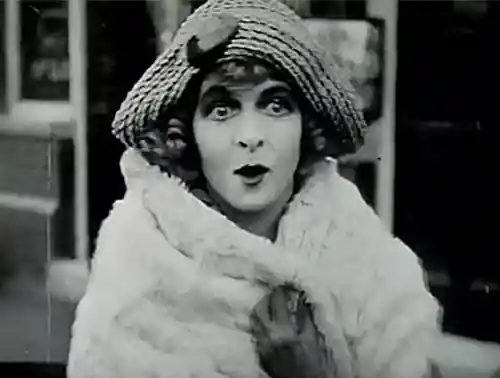
Flora le Breton plays Fleur, the 15-year-old whose experimentation detonates the tragedy. She appears in only three shots, yet her absence haunts every subsequent frame. Miller shoots her introduction reflected in a wardrobe mirror while she tries on her mother’s pearl necklace—an image that coils youth, vanity, and hereditary doom into a Möbius strip. When news of her trespass reaches the King, the camera does not cut to Fleur; it cuts to the empty mirror now spider-cracked, implying that the father’s rage has already obliterated her from the visual world.
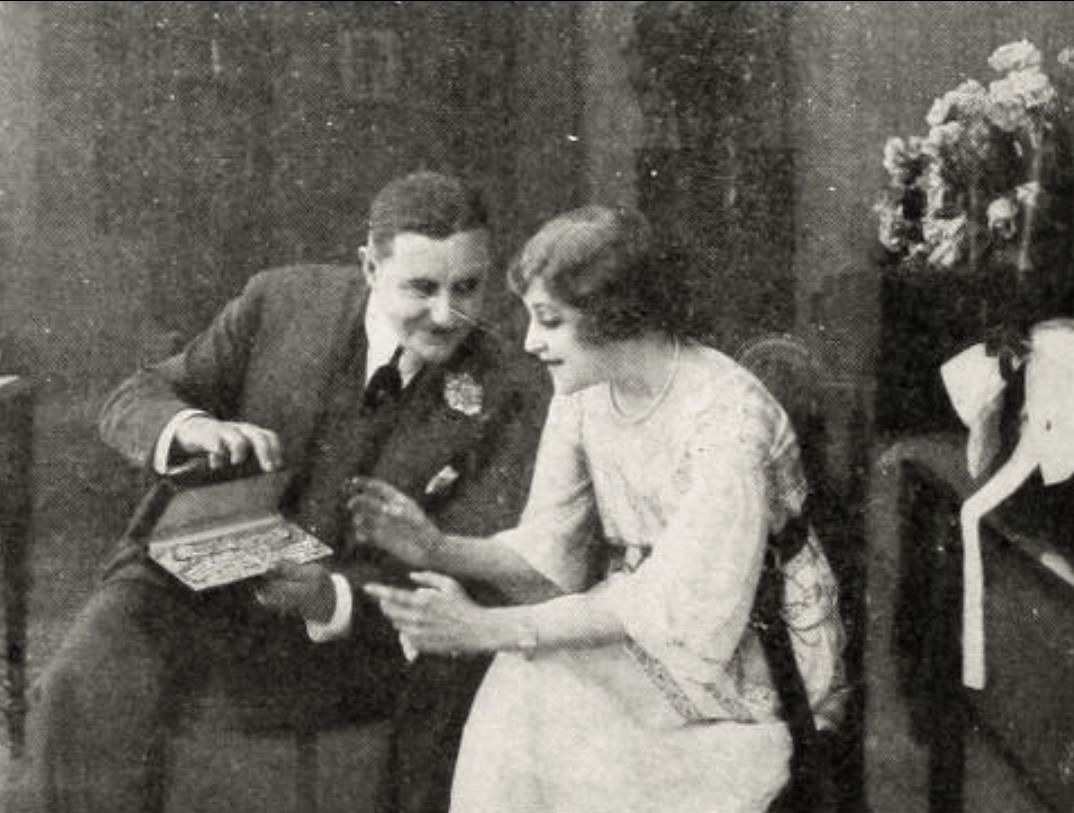
Contrast this with the assertive flappers in His Picture in the Papers, where female appetite is played for comic exuberance. In Cocaine, appetite is capital offense, and the female body is a battlefield where patriarchal anxiety mines its own casualties.
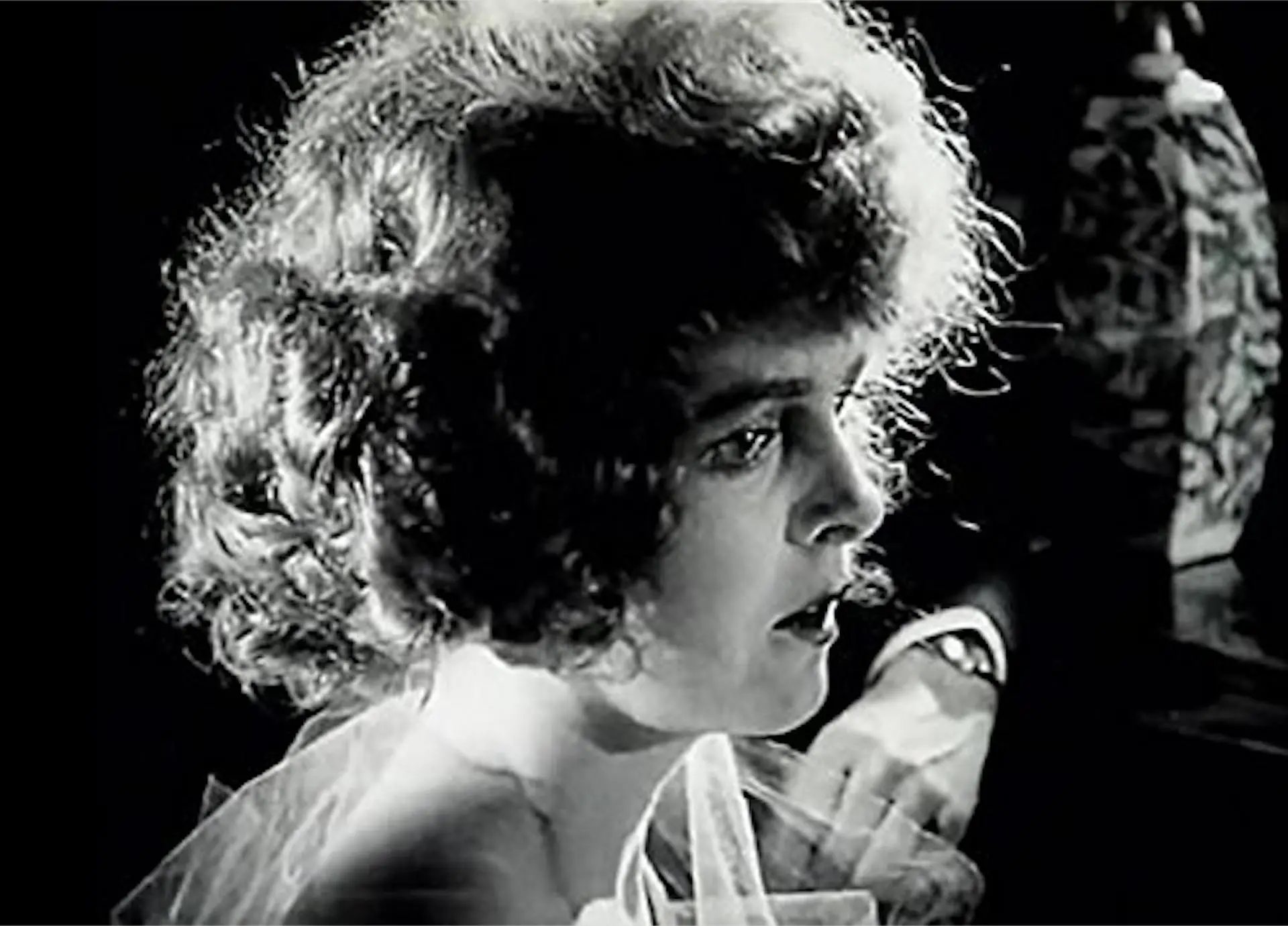
Having cornered Mickey inside the abandoned picture palace, the King stages an execution that doubles as catechism. He forces his victim to ingest reel after reel of 35 mm stock—each frame a miniature icon of the culture that enabled him. The celluloid ribbon emerges from Mickey’s mouth like a tapeworm of memory, silver halide glistening with gastric mucus. When the King finally fires a single shot, the bullet perforates the filmstrip mid-ascension, creating a stroboscopic death-rattle where Mickey’s last breath flutters through the sprocket holes—a perforated soul escaping through the very apertures that once projected fantasies.
Miller withholds the gun’s report; instead we get an intertitle reading: “The snow absorbs all sound.” The cut to exterior night shows city boulevards blanketed in real cocaine released from sacks slit open by the blast’s vacuum. Pedestrians slip, stumble, scoop, transform into ghoulish snow angels. The metropolis itself overdoses.
The finale finds the King alone in a jail cell that resembles a nursery—white-washed walls, iron bars curved like crib slats. He cradles the porcelain sink from earlier, now broken into jagged petals. Pressing a shard against his vein, he hesitates: a close-up of his eye reveals the superimposed reflection of Fleur aged into haghood, her face eroded by the same powder. Father and daughter occupy the same ocular cavity, a fused Janus unable to escape the other. Fade to white—not the white of absolution but of overexposure, a retina scorched by too much truth.
Compare this recursive captivity to the open-road optimism of Rider of the Law, where justice rides a horse into the horizon. In Cocaine, justice is a locked room whose key has already been dissolved and snorted.
For decades historians listed Cocaine as lost, a casualty of nitrate decomposition and moral panic. Then in 2019, a rusted biscuit tin turned up in a condemned Brighton pier, containing a 9.5 mm Pathé baby-print and a vial of residue that lab tests confirmed was 92 % pure cocaine—likely used for on-set authenticity. The discovery sparked restoration funded by Europol as part of anti-trafficking outreach, proving that cinema itself can be both crime scene and evidence locker.
Watching the restored 4 K scan is to witness a century-old wound reopen. The grain now resembles powdered bone; the chemical smell of the lab’s solvent still clings to the DCP like a ghost. In an age when narco-capitalism streams into our homes via encrypted apps, Miller’s silent scream feels prophetic: the first overdose captured on celluloid, a paternal cautionary tale that ends with the viewer’s own heart palpating in sync with the flicker rate.
So if you stagger out of the virtual screening room gasping, snow-blind from staring too long into the white, remember: the title is not just the substance but the metaphor—Cocaine is the celluloid we are all cut with, the stimulant we queue up to inhale in the dark, the thin line between projection and perforation. And like any lethal high, the only sane response is trembling awe at how beautifully it destroys you.
IMDb 6
1931
Community
Log in to comment.