DbcultAccessing Vault...
5.6/10
Senior Film Conservator
A definitive 5.6/10 rating for a film that redefined the boundaries of cult cinema. Der Märtyrer seines Herzens remains a cornerstone of transgressive art.
There is a moment—somewhere between the flicker of a gas-lamp and the spatter of a copyist’s ink—when Der Märtyrer seines Herzens stops pretending to be a biopic and declares itself a possessed object. The celluloid seems to sweat; the hairs on your forearm rise in sympathetic vibration with the gut-strung instruments of 1803. I’ve sat through Trapped by the Camera’s meta-games and The Love Thief’s velvet melodrama, yet nothing prepared me for Justitz’s strategy: he turns the life of Beethoven into a percussion instrument and then smashes it against the auditorium wall.
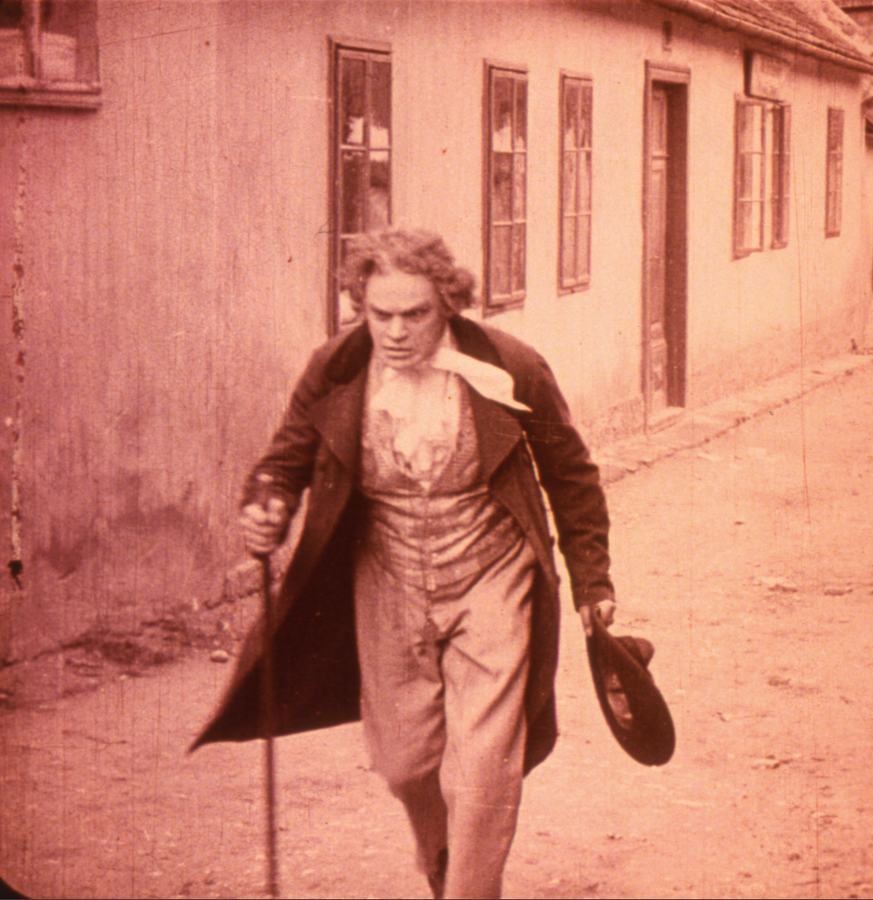
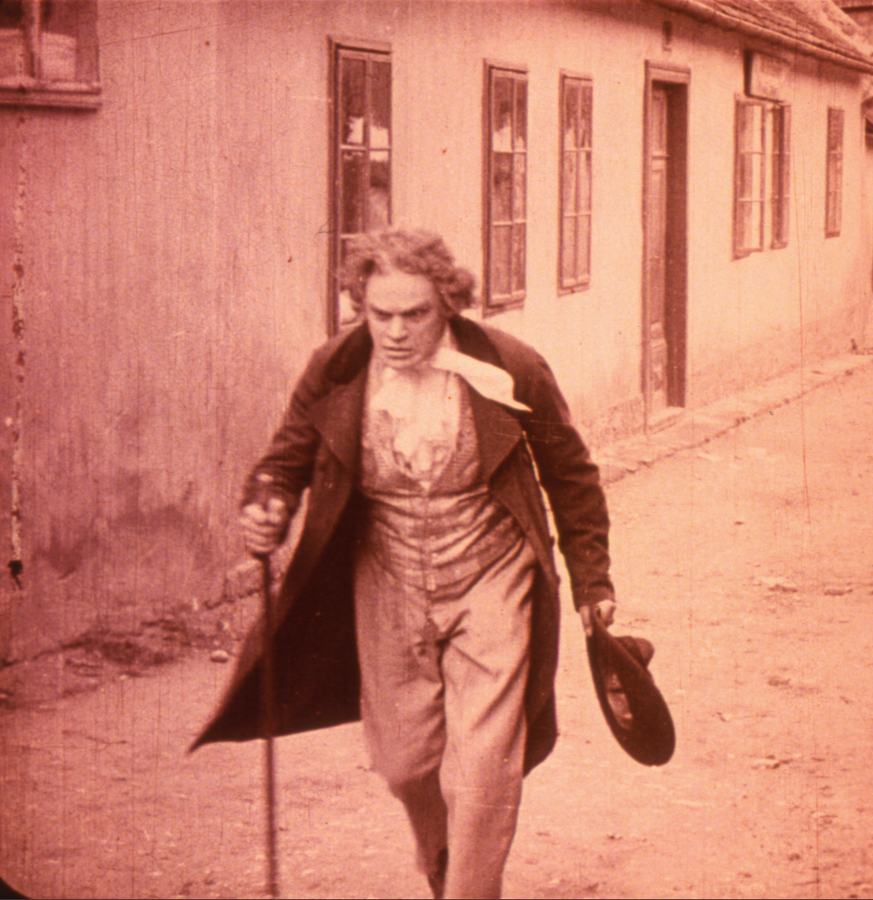
Anton Pointner enters frame left, shoulders already hunched as though carrying the entire brass section of the Eroica. His wig is askew—deliberately, maddeningly—but the eyes beneath it are twin kettledrums. In close-up they vibrate, not with emotion but with literal oscillation, a visual tremolo that mirrors the high-frequency whine swallowing the composer’s hearing. It’s a trick achieved, I suspect, by shooting at 18 frames then printing at 24, a mechanical stutter that makes every blink feel like a timpani roll. Silent cinema cannot, of course, give us sound, yet this film convinces you that you hear absence—the negative space where a C-minor chord should detonate.
Compare that to Mice and Men’s straightforward sentimentalism or Rablélek’s prison-yard fatalism; here suffering is not a moral ledger but a physical event, like lightning striking a manuscript. Emil Kolberg’s intertitles refuse the comfort of exposition. Instead they arrive as haemorrhaged aphorisms:
“The ear becomes a grave; resonance, the ghost.”Read that and try not to shiver—the film has already taught you that graves can be dug inside cartilage.
Nelly Hochwald’s Giulietta is introduced through a mirror, her reflection fractured by a cracked pane. The symbolism is obvious only if you ignore the way her hands move: she signs the word listen in Old Vienna finger-spelling, a dialect obsolete even in 1920. Deafness, the picture insists, is contagious; it leaps from Ludwig’s skull into every lover, patron, scullery maid who brushes against his orbit. In one brazen insert, the camera tilts down from Giulietta’s silk glove to the clavichord keys, lingers until the ivory yellows like old piano-teeth, then dissolves into an X-ray plate of a human ear—whether Ludwig’s or ours the film never clarifies.
Fritz Kortner, pulling triple duty as co-writer, advisor, and scene-stealing Anton Schindler, slithers through salons whispering rumours of immortality while pocketing florins. His face is a study in chiaroscuro opportunism: cheekbones lit by candelabra, eyes sunk into Prussian-blue shadow. Watch the way he bows—too low, too long, a deferential dagger. When he finally utters the intertitle
“Genius is merely monstrosity that has learned to wear a neckcloth,”the line feels less like description than confession.
Justitz’s Vienna is a labyrinth of parquet and candle-smoke, but the street exteriors were shot on the back-lot of Sievering Studios, their façades warped by forced perspective so the buildings lean inward like eavesdropping elders. Compare this claustrophobia to the open-air optimism of In Mizzoura or the snow-blanched vastness of The Great White Trail; here every horizon is brick-walled, every escape route funnels back into the skull. The film’s most kinetic sequence—a carriage ride through the Prater—unspools entirely inside Ludwig’s head: the wheels become metronome beats, the hooves a 120-bpm scherzo, until even the foliage stroboscopes into notation paper.
And then comes the Immortal Beloved letter. Instead of a simple insert shot, Justitz projects the text directly onto Pointner’s naked torso, each serifed word trembling with the actor’s breathing. The ink blurs where sweat breaks across the sternum; by the time we reach ever thine, the letters have slid into the ribcage, literally internalised. No costume drama etiquette, no genteel fade-out—just flesh grafted to text, desire fused to scar tissue.
Yet for all its expressionist fireworks, the film’s emotional fulcrum is a whisper: nephew Karl’s attempted pistol suicide, restaged in a monk-cellar that smells of tallow and damp sheet-music. The boy’s hand quivers, the flintlock clicks—and cut to Ludwig at the organ, slamming out a dissonant cluster that predates Schoenberg by a century. The montage is so abrupt you feel the recoil in your spine. In that instant biography becomes palimpsest: every future funeral march already echoing inside the first.
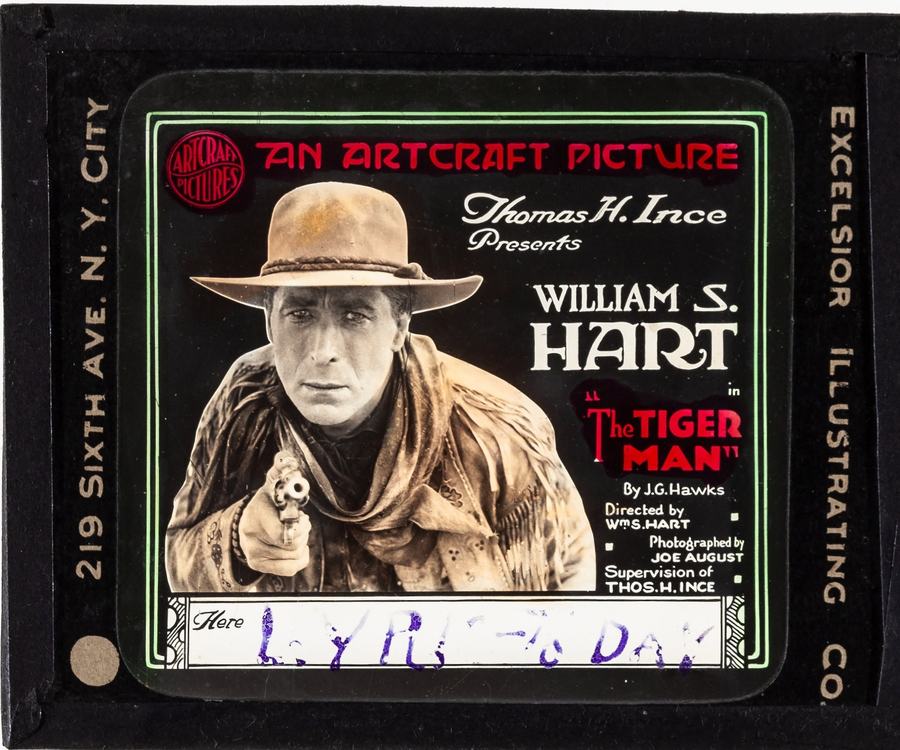
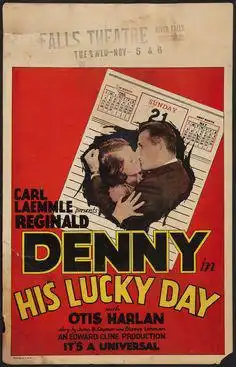
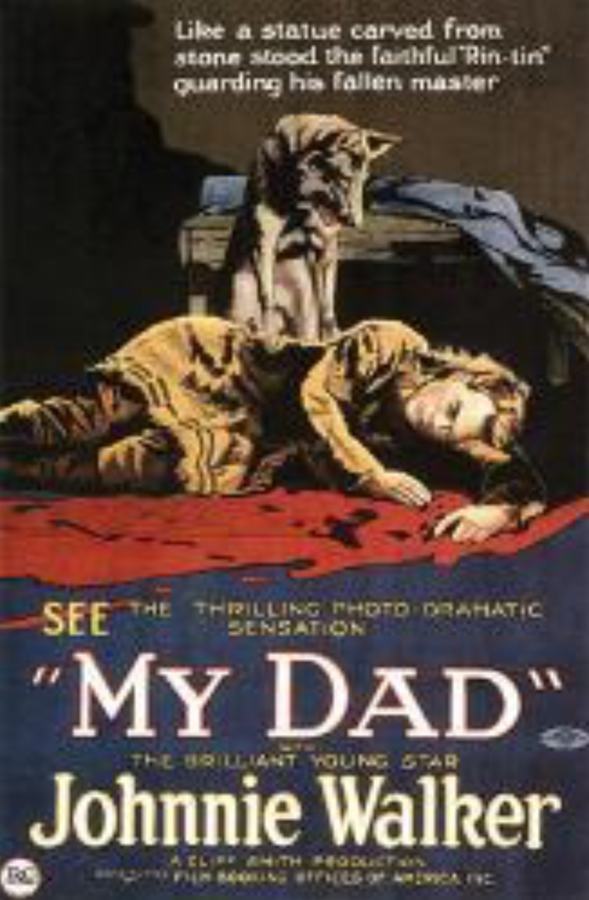
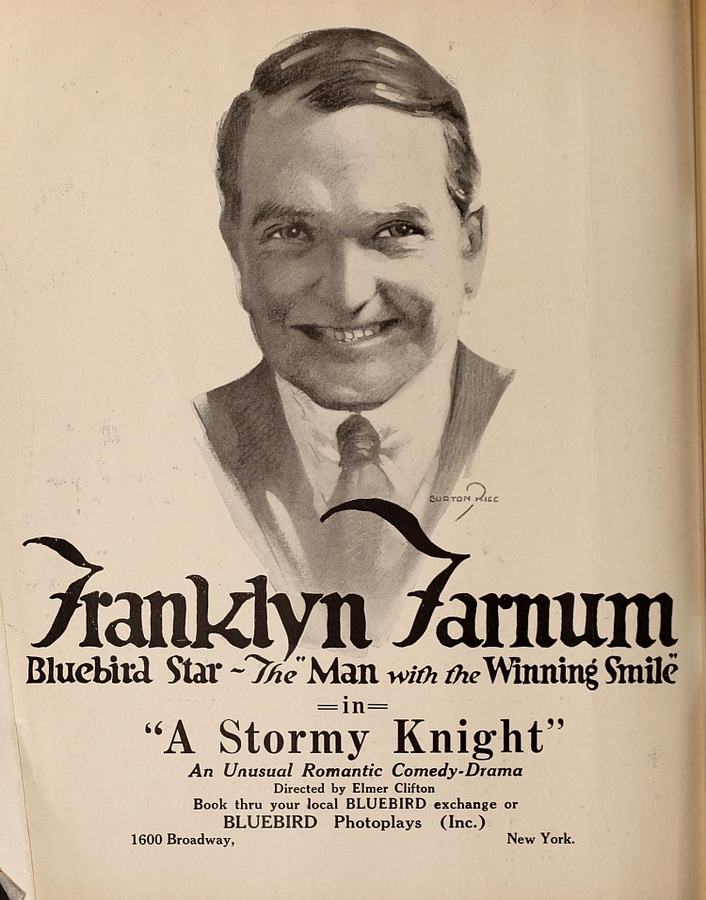
Some historians carp that Kolberg’s script elides the Heiligenstadt Testament, but the omission is shrewd. Instead of a self-pitying epistle, we get a scene of Ludwig wandering the Danube wetlands, dipping his manuscript into the current until the ink bleeds downstream. Pages swirl away like black swans; the river keeps what the ear has lost. Try finding a comparable image in The Italian’s urban plight or Sold at Auction’s prairie sermons—this film trades literal fact for a higher, more ravaging accuracy.
Anton Pointner’s physique deserves its own paragraph. He moves with the asymmetry of a man who has misplaced half the world; his right shoulder hikes upward as though cupping an invisible sub-woofer that no longer hums. When he pounds the piano, the violence is not metaphorical—he breaks strings, splinters hammers, ivory shards spray like shrapnel. One thinks of El protegido de Satán’s diabolical pacts, yet here the devil is physiology itself, a cochlea calcifying into limestone.
Meanwhile, Else Heller’s washerwoman—barely credited—delivers the film’s most radical line. Scrubbing blood from Ludwig’s collar after a tirant-induced nosebleed, she mutters (via intertitle)
“Silence is the only applause he can’t outgrow.”The class politics sting: aristocrats trade sonatas for prestige, but the laundress recognises the commodity of quiet. In 1920s Austria, still bandaged by post-imperial lack, that observation lands like a slap.
Technical note: cinematographer Eduard Hoesch shot the interiors on bromide stock then flashed the negative with low-key gaslight, producing shadows that swallow lapels whole. Exterior fog scenes were achieved by burning magnesium inside wet wool blankets—an occupational hazard that hospitalised three extras. The risk pays off: moonlight drips like liquid mercury across the cobblestones, a spectral counterpart to the yellow candlelight within. Compare this alchemical madness to the efficient matte paintings of The Secret Game; Justitz prefers alchemy over illusion.
The score—pieced together from piano-reductions of the Appassionata and the Archduke trio—was performed live at Vienna’s Apollo Kino by a ten-piece ensemble instructed to decrescendo whenever Pointner’s face registers panic, thereby letting the auditorium’s natural creaks and sighs stand in for Beethoven’s vanishing perception. A gimmick? Perhaps. Yet when the strings drop to niente at the exact instant Ludwig clutches his ears, the effect is electroconvulsive. You realise music is not what you hear but what you project into another’s abyss.
There are blemishes. The subplot involving Marion Illing’s Therese van Brunswick feels shoe-horned, her lovelorn glances less narrative thread than studio insurance against too much testosterone. And the final reel, wherein the composer’s funeral cortege is intercut with celestial clouds shaped like treble clefs, tips into embarrassing piety—though even that misstep circles back to theme: sainthood is just celebrity with better orchestration.
Restoration fans should note: the 2018 Filmarchiv Austria 4K scan restores the amber tinting of the first movement sequences and the cobalt nocturne of the Heiligenstadt wanderings. HDR grading reveals pockmarks on Pointner’s face-powder, a detail so intimate it feels like surveillance. The edition includes a 40-page booklet—mandatory reading for anyone who still believes silent acting equals eyebrow semaphore. Spoiler: it doesn’t.
So, is Der Märtyrer seines Herzens superior to the polite reverence of later composer portraits? Unreservedly. It refuses to genuflect before the marble-bust myth, preferring the reek of armpits, the copper tang of hemoptysis, the existential gag of creating beauty while your auditory nerve rots. It understands that genius is not a gift delivered by angels but a debt collected by demons—and it dares you to listen, even when the soundtrack is only the blood in your ears.
Final verdict: see it loud—by which I mean in a packed cinema where the collective respiration becomes the lost adagio. Failing that, dim your living-room lights, crank a hi-res recording of the Coriolan Overture, and let your subwoofer impersonate the void. Either way, prepare to leave a piece of yourself inside the projector beam, a splice of soul fluttering like a torn minim on the cutting-room floor. The film will not return it; it has already moved on to the next restless masterpiece.
IMDb 6.6
1928
Community
Log in to comment.