DbcultAccessing Vault...
Cult Review
Senior Film Conservator
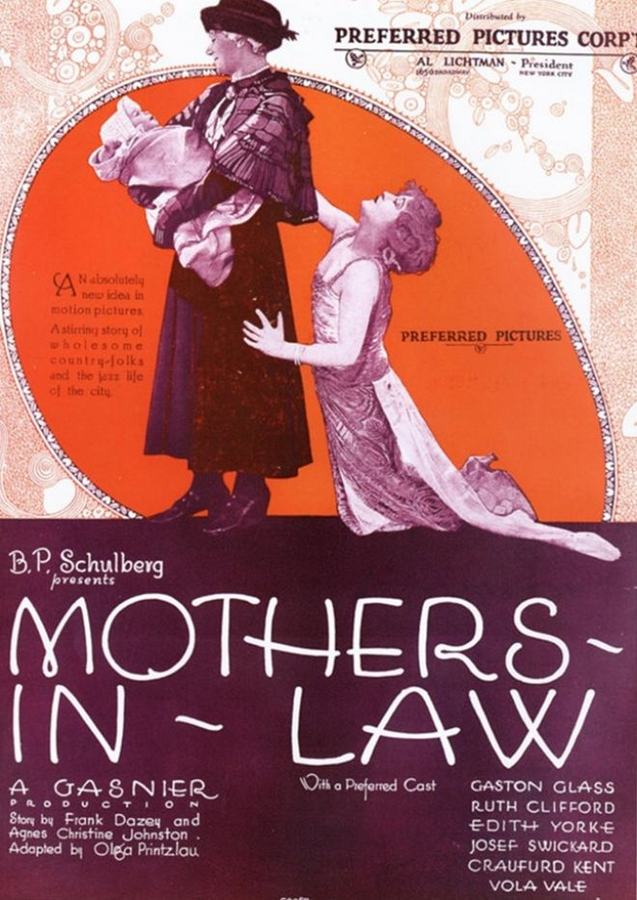
Stepping back into the cinematic annals of 1923, one encounters Mothers-in-Law, a silent film that, despite its somewhat prosaic title, delves with surprising acuity into the perennial tensions that can ripple through a marriage, particularly when external forces—and internal desires—pull at its very fabric. This is not merely a quaint relic of a bygone era; it's a narrative that, through its stark portrayal of character and conflict, speaks to enduring human predicaments. The film, penned by the collaborative efforts of Olga Printzlau, Frank Mitchell Dazey, and Agnes Christine Johnston, crafts a domestic drama that hinges on the clash of lifestyles and the often-misguided interventions of well-meaning, yet overbearing, relatives.
At its core, Mothers-in-Law presents a quintessential 'fish out of water' scenario. We are introduced to David Wingate, portrayed by Crauford Kent, a farmer's son whose very essence is rooted in the quiet dignity of agrarian life. His world, one imagines, is defined by sunrises over fields and the steady rhythm of the seasons. His choice of bride, Vianna Courtleigh, brought to vivacious life by Ruth Clifford, couldn't be more diametrically opposed. Vianna is a creature of the city, accustomed to its dazzling lights, its social whirl, and its ceaseless pursuit of novelty. Their union, born perhaps of an initial infatuation that blinded them to their fundamental incompatibilities, immediately sets the stage for friction. David's parents, with the sagacity often attributed to those deeply embedded in tradition, voiced their objections, a foreboding chorus to a marriage destined for turbulence. This initial conflict echoes themes explored in films like An Uneven Match, where disparate backgrounds often prove insurmountable obstacles to lasting happiness.
Vianna's father, perhaps attempting to bridge the chasm between their worlds, offers David a position within his company, a move designed to provide stability but also to pull David further from his roots. This translocation, coupled with the arrival of their baby, should, by all societal conventions, solidify their bond and usher in an era of domestic contentment. Yet, the film astutely observes that external circumstances rarely mend internal fissures. David's profound desire for a quiet, home-centered existence clashes incessantly with Vianna's ingrained love for excitement, for the social clamor that defines her very being. This isn't merely a disagreement; it's a fundamental disparity in their visions of happiness, a silent battle waged over the very soul of their shared life. The film effectively uses this dynamic to explore the societal pressures on women of the era, who were often expected to seamlessly transition from independent 'city girl' to devoted 'homemaker,' a transformation not always easily achieved.
The arrival of David's mother, played with formidable presence by Edith Yorke, following the death of her husband, introduces the titular 'mother-in-law' dynamic into an already precarious situation. Grieving and perhaps feeling a renewed sense of protectiveness over her son, she observes the escalating unhappiness between David and Vianna. Her perspective, clouded by her own biases and a traditional understanding of marital roles, quickly attributes blame solely to Vianna's perceived flightiness and lack of domestic devotion. This is a classic narrative trope, yet Mothers-in-Law manages to imbue it with a certain gravitas, painting the mother not as a caricature, but as a woman convinced of her righteous intervention. Her decision to 'teach Vianna a lesson' is born, in her mind, of love for her son, however misguided its execution might be. It’s a stark reflection of the era's patriarchal undertones, where a woman's value was often measured by her commitment to home and hearth.
The drastic measure she employs—kidnapping her own grandchild—is where the film truly plunges into melodramatic territory, yet it serves as a powerful catalyst for change. This act, audacious and morally questionable, is a desperate gamble designed to force Vianna into a profound self-assessment. It's a testament to the writers' willingness to push boundaries, to explore the extremes of maternal intervention. The baby, innocent and vulnerable, becomes a pawn in a high-stakes game of emotional manipulation, highlighting the devastating collateral damage that can occur when personal conflicts escalate unchecked. This dramatic tension, while extreme, forces the audience to confront the ethical dimensions of intervention, even when seemingly motivated by love. One might draw parallels to the intense familial conflicts depicted in films like Told in the Hills, where family loyalty and personal desires often collide with explosive results.
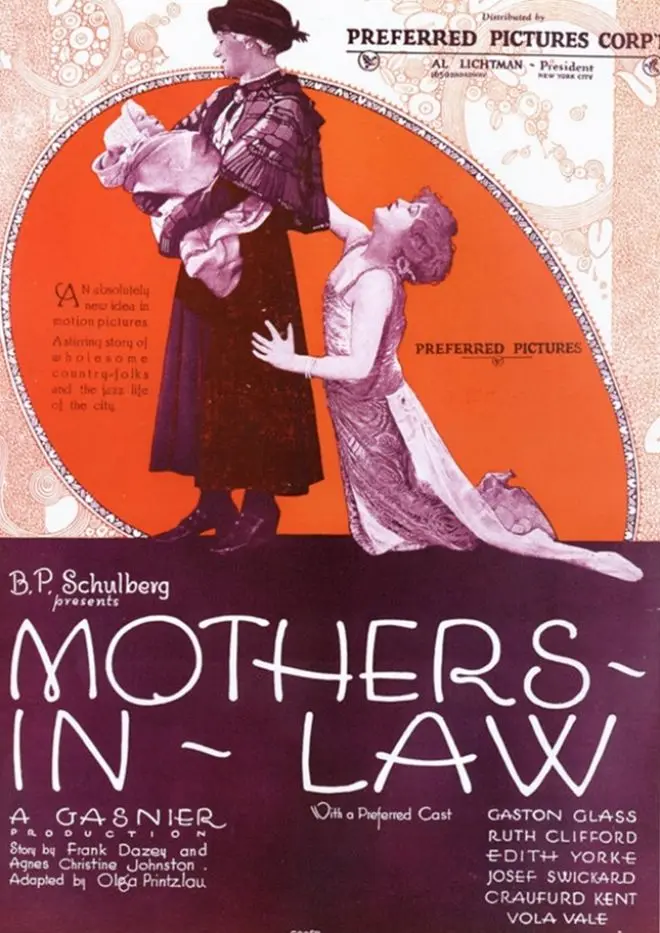
The performances, even in the silent era, would have been crucial in conveying the nuanced emotions of such a fraught narrative. Crauford Kent, as David, would have needed to project a quiet weariness, a longing for something he can't quite grasp, his internal conflict evident in his posture and expressions. His character's passivity in the face of his wife's restlessness and his mother's drastic actions is a significant element, perhaps reflecting a societal expectation for men to be stoic, even when their domestic lives are in turmoil. Ruth Clifford, as Vianna, would have been tasked with portraying a journey from carefree vivacity to a woman confronted with the consequences of her choices. Her transformation needed to be believable, her eventual 'reformation' not merely a plot device but a genuine emotional turning point. And Edith Yorke, as the formidable mother, would have dominated the screen with a mixture of stern resolve and underlying maternal concern, making her character complex rather than purely villainous. The silent film's reliance on exaggerated gestures and expressive facial contortions would have been paramount in communicating these intricate emotional landscapes without the benefit of spoken dialogue.
The narrative arc culminates in Vianna's epiphany, her realization of the 'folly of her ways.' This moment, while perhaps appearing simplistic by modern standards, was a common resolution in films of the era, often designed to reinforce prevailing social norms concerning a woman's role within the domestic sphere. The film suggests that true happiness for Vianna lies not in the superficial allure of societal excitement but in the quiet fulfillment of family life and devotion to her husband. Her seeking forgiveness from David signifies not just a personal humbling but a societal reaffirmation of patriarchal structures, where the wife ultimately conforms to the husband's desired lifestyle. This is where the film's historical context becomes vital; it's a window into the prevailing gender expectations and moral frameworks of the early 1920s. While a contemporary audience might question the validity or fairness of such a 'reformation,' it's essential to view it through the lens of its time.
One cannot overlook the broader social commentary inherent in Mothers-in-Law. It subtly reflects the anxieties of a society grappling with changing roles for women, the allure of urban modernity versus the stability of rural tradition, and the evolving dynamics within the nuclear family. The film implicitly asks: What constitutes a 'good' wife? What are the boundaries of parental interference? And how does one navigate the often-conflicting desires for personal freedom and marital harmony? While the answers offered by the film lean heavily towards traditional values, the questions themselves remain pertinent. The writers, Olga Printzlau, Frank Mitchell Dazey, and Agnes Christine Johnston, crafted a story that, despite its melodramatic flourishes, touched upon very real societal debates of its time. Their collaboration likely brought diverse perspectives to the table, enriching the characterizations and the dramatic unfolding of events.
The film's exploration of domestic strife and the yearning for an idealized home life finds resonance in other cinematic works of the period. For instance, the themes of mismatched expectations and the challenges of early marriage are often explored in romantic dramas like Young Romance, which also grappled with the realities that often follow the initial blush of infatuation. However, Mothers-in-Law distinguishes itself with the extreme nature of the mother-in-law's actions, elevating it beyond a simple marital drama into a more intense psychological study of manipulation and redemption. The film doesn't shy away from depicting the messy, sometimes unethical, lengths to which individuals will go in pursuit of what they perceive as the 'right' outcome for their loved ones.
In terms of its artistic merit, Mothers-in-Law, like many silent films, would have relied heavily on visual storytelling—the nuances of setting, costume, and particularly, the actors' ability to convey complex inner lives through expression and gesture. The contrast between Vianna's fashionable city attire and David's more rustic sensibilities would have been a constant visual reminder of their differing worlds. The depiction of the city versus the home, the bustling social scene versus the quiet domestic sphere, would have been skillfully rendered through cinematography and set design, creating a palpable sense of the forces pulling at the young couple. The director, whose vision would have brought the writers' script to life, would have orchestrated these visual cues to heighten the emotional stakes and ensure the audience understood the motivations and transformations of the characters, even without spoken words.
Ultimately, Mothers-in-Law serves as a fascinating cultural artifact, a snapshot of early 20th-century American values wrapped in a compelling, if somewhat morally ambiguous, narrative. It's a film that, despite its age and the silent medium, manages to tap into universal themes of love, expectation, sacrifice, and the often-fraught dynamics of family. While some might find Vianna's ultimate 'reformation' a problematic endorsement of traditional gender roles, it undeniably provokes thought about how societal pressures shape individual choices and the lengths to which family members will go, for better or worse, to influence the lives of those they care about. The film's lasting impact lies not just in its dramatic plot, but in its ability to spark contemplation on the enduring conflicts between personal desire and collective harmony, a conversation that continues to resonate today. The performances of Crauford Kent, Ruth Clifford, and Edith Yorke, alongside supporting cast members like Josef Swickard, Marie Curtis, Gaston Glass, Doris Stone, and Vola Vale, would have been instrumental in conveying this intricate domestic tapestry, ensuring that the audience connected with the characters' struggles and triumphs. The film, in its quiet, powerful way, reminds us that the battle for domestic bliss is often fought on multiple fronts, sometimes with unexpected and extreme tactics. It's a testament to the enduring power of narrative to capture the complexities of the human heart, even a century later.
IMDb 6.1
1923
Community
Log in to comment.