DbcultAccessing Vault...
Cult Review
Senior Film Conservator
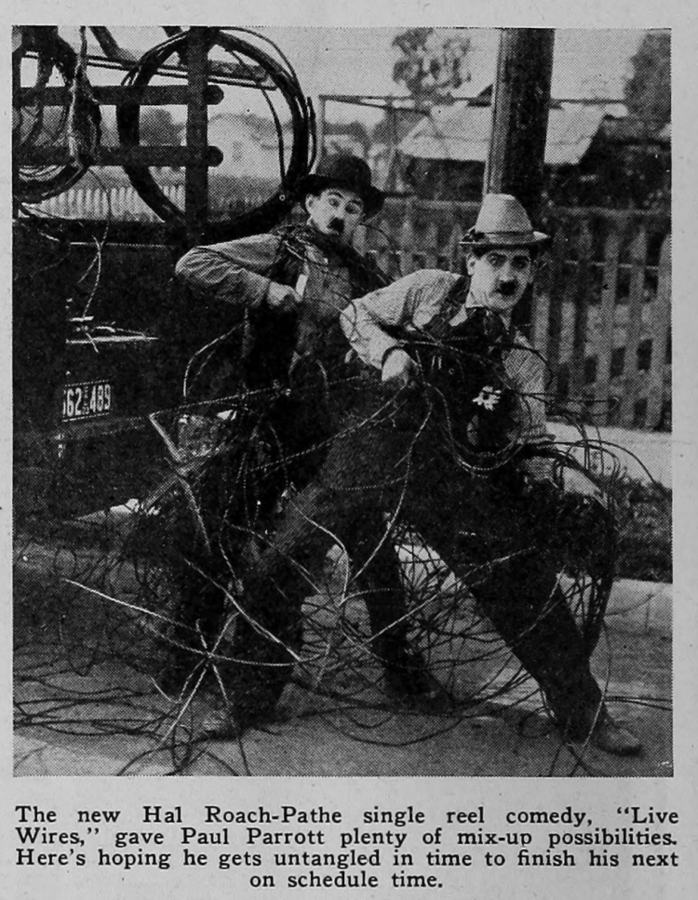
The 1920s represented a peculiar intersection of Victorian architectural sensibilities and the aggressive intrusion of the machine age. In Live Wires (1923), directed by the prolific Hal Roach, we find a paradigmatic example of how early cinema harnessed the anxieties of technological transition for the sake of pure, unadulterated slapstick. James Parrott, performing under the moniker Paul, embodies the everyman whose overconfidence in the face of modern complexity leads to a spectacular, albeit hilarious, systemic collapse. This film is not merely a collection of gags; it is a kinetic exploration of man’s struggle against the invisible forces of the 20th century.
Hal Roach’s studio was a crucible of comedic innovation, often standing in stark contrast to the more rigid, gag-focused structures of Mack Sennett. In Live Wires, the comedy is derived from a logical progression of errors. Paul is not a fool in the traditional sense; he is a casualty of his own optimism. When he steps into the frame to wire a house, he represents the burgeoning middle class’s desire to master the tools of modernity. However, as any aficionado of the era knows, the tools often have a mind of their own. The film shares a thematic DNA with Buster Keaton’s The 'High Sign' (1921), where the environment itself becomes a character—a labyrinthine trap that punishes the protagonist for every misstep.
The brilliance of Parrott’s performance lies in his physical commitment to the disaster. Unlike the more stoic Keaton, Parrott’s Paul is a whirlwind of frantic energy. His interactions with Noah Young and George Rowe create a tripartite of comedic timing that keeps the pace breathless. Noah Young, often the 'heavy' in these Roach productions, provides the perfect foil—a looming presence of authority that is inevitably undermined by Paul’s electrical incompetence. The house, initially a symbol of domestic stability, is quickly rendered a hazardous zone of scorched surfaces and unpredictable shocks.
There is a recurring motif in silent comedy regarding the fragility of the home. We see this explored with varying degrees of melodrama and farce in films like Glass Houses. In Live Wires, the house is not just a setting but a victim. The act of wiring—threading the 'nerves' of the building—is treated with a slapdash irreverence that borders on the surreal. When Paul begins his work, the audience is invited into a world where cause and effect are severed. A switch flipped in the kitchen might result in a deluge in the parlor; a lamp plugged into the wall might trigger a mechanical collapse in the basement.
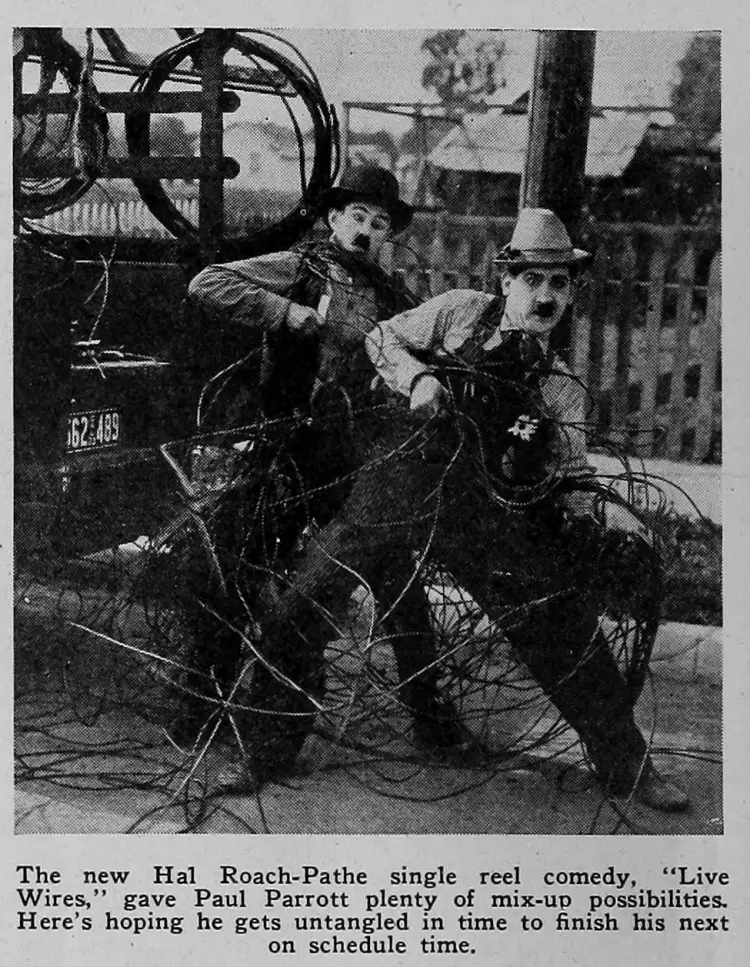
This subversion of domestic expectations was a powerful tool for 1923 audiences. At a time when electrification was still a luxury for many, the fear of the 'invisible fire' was palpable. Roach and Parrott tap into this collective subconscious, turning a genuine social anxiety into a source of cathartic laughter. The lexical diversity of the visual gags is staggering; we move from simple pratfalls to complex, multi-layered sequences involving pulleys, live currents, and the inevitable intervention of the local constabulary. It is a masterclass in how to sustain a single premise—man versus wire—for the duration of a short film without ever feeling repetitive.
James Parrott, the younger brother of Charley Chase, often lived in the shadow of his brother’s more refined 'man-about-town' persona. However, in Live Wires, Parrott proves he was a titan of physical comedy in his own right. His face is a canvas of shifting emotions: from the smug confidence of the 'expert' to the wide-eyed terror of a man who has just realized he is holding a live 220-volt cable. This expressive range is vital in an era without dialogue, where the nuance of a furrowed brow can convey more than a page of script.
The supporting cast, including the luminous Marie Mosquini, adds a layer of social grounding to the absurdity. Mosquini often played the role of the observant, often exasperated female lead, and her presence here provides the necessary 'straight' element to Paul’s spiraling madness. While films like Why Change Your Wife? dealt with the complexities of marital dynamics through a sophisticated lens, Live Wires approaches the domestic sphere with a sledgehammer and a pair of pliers. It is raw, energetic, and unapologetically populist.
Technically, the film is a marvel of its time. The 'electrical' effects—achieved through clever editing, double exposures, and physical pyrotechnics—possess a tactile quality that modern CGI cannot replicate. There is a weight to the chaos. When a fuse blows or a motor spins out of control, the smoke and debris are real, grounding the fantasy in a gritty, industrial reality. This commitment to physical realism is what makes the comedy land so effectively. We laugh because we recognize the danger, however exaggerated it may be.
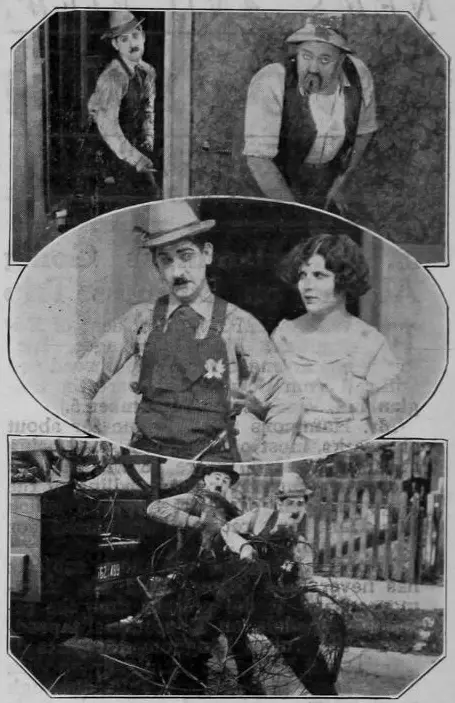
Consider the framing of the scenes. Roach utilizes deep focus to allow multiple gags to occur simultaneously. In the foreground, Paul might be struggling with a tangled coil of wire, while in the background, Noah Young is slowly approaching an electrified doorknob. This layered approach to comedy requires precision timing and a deep understanding of audience psychology. It forces the viewer to remain engaged, scanning the frame for the next potential disaster. It is a sophisticated use of the medium that predates the more celebrated 'deep focus' techniques of the 1940s.
To truly appreciate Live Wires, one must view it within the broader context of 1923 cinema. This was the year of grand dramas and sweeping epics, yet the short-form comedy remained the heartbeat of the nickelodeon and the movie palace alike. While films like A Daughter of the Sea explored the mythic and the maritime, and The Chechahcos took audiences to the frozen frontiers, Roach’s comedy focused on the immediate, the local, and the mundane. There is something profoundly human about Paul’s failure. He is not a hero on a quest; he is a man trying to earn a paycheck in a world he doesn't quite understand.
Even when compared to more somber works like Bolshevism on Trial or the moralistic weight of The Majesty of the Law, Live Wires holds its own by refusing to be anything other than a celebration of the 'laughable results' of human error. It avoids the heavy-handedness of A Wise Fool or the tragic overtones of A Naked Soul. Instead, it embraces the beautiful absurdity of existence. It suggests that while we may try to wire our lives for perfection, the universe—much like a faulty circuit breaker—has a tendency to intervene with a spark and a bang.
In the final analysis, Live Wires is a testament to the enduring power of the silent short. It distills the essence of comedy into a pure, visual form. There is no need for intertitles to explain the humor when a man is being propelled across a room by a malfunctioning vacuum cleaner. The film’s influence can be seen in everything from the works of The Three Stooges to the modern 'cringe' comedy of the 21st century. It captures a moment in time when the world was changing faster than we could keep up with, and it reminds us that the best response to such overwhelming change is to laugh at the chaos.
Whether you are a scholar of the Hal Roach era or a casual viewer looking for a vintage thrill, Live Wires (1923) offers a shocking amount of entertainment. It is a vibrant, crackling piece of celluloid history that refuses to stay in the past. Like the eponymous wires, the film remains 'live'—pulsing with an energy and a wit that continues to illuminate the screen a century later. It stands alongside other gems of the era like Dollar for Dollar and False Feathers as a crucial component of the silent film canon, proving that sometimes, the best way to see the light is to blow a few fuses first.
Note: For those exploring the broader reaches of 1920s cinema, consider the tonal shifts between this comedy and the dramatic weight of Exile or the whimsical charm of A Little Princess. The diversity of the era is truly boundless.
IMDb —
1917
Community
Log in to comment.