DbcultAccessing Vault...
5.3/10
Senior Film Conservator
A definitive 5.3/10 rating for a film that redefined the boundaries of cult cinema. The Only Son remains a cornerstone of transgressive art.
The flickering nitrate reels of The Only Son arrive like a séance summoned from 1921, exhaling kerosene and mountain pine. What begins inside a hand-hewn cabin—where Jane Darwell’s matriarch hums over cast-iron while her husband claws riverbeds for glitter—balloons into a Gilded-Age panorama of chandeliers that weigh more than conscience. Director Winchell Smith, better known as Broadway’s Midas, here sculpts silence into a thunderclap: every iris-in feels like a fingertip pressed to a pulse, every intertitle a haiku bruised by experience.
Smith refuses the pickaxe clichés of frontier fortune. Instead, the strike arrives off-frame, whispered through a cut that jumps from a snowy cradle to a marble foyer. One moment Brainerd Sr. (Thomas W. Ross) kneels beside a sluice; the next he is swaddled in fur-trimmed coats signing syndicate papers. The ellipsis is brutal—time itself conspires against tenderness. Cinematographer J.P. Wild backlights the nouveau-riche parlor so that father and offspring appear separated by bars of light; wealth becomes prison glass.
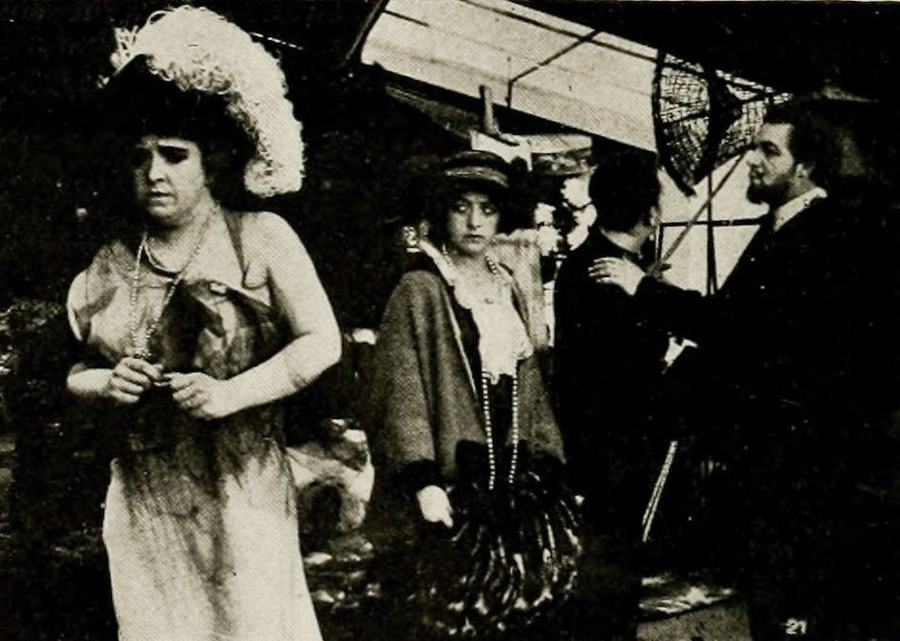
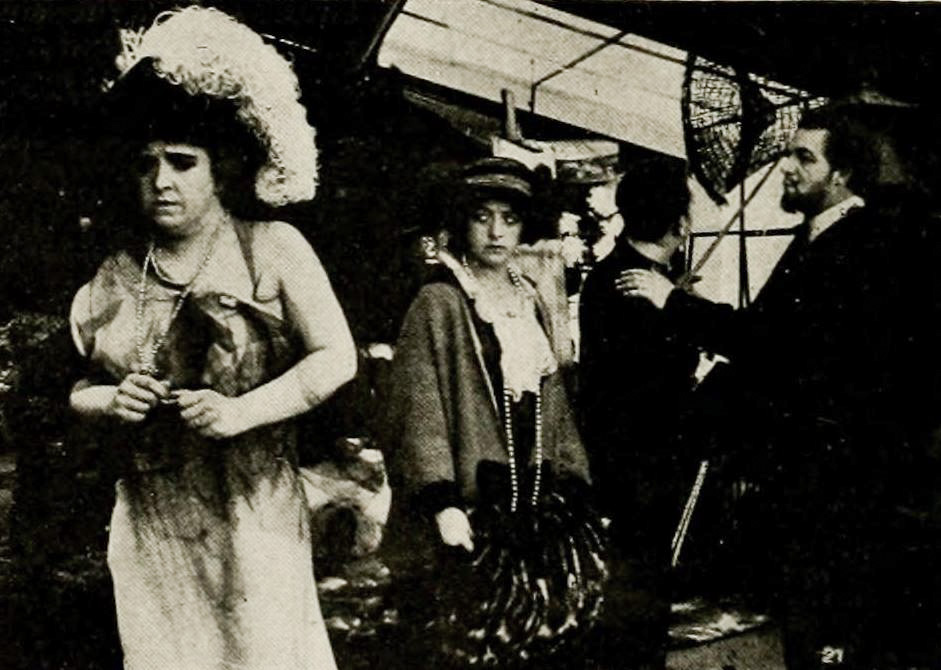
Darwell’s Mrs. Brainerd—never graced with a first name—ages not in years but in candle stubs. Her close-ups grow grainier, as though the emulsion itself mourns. When the artist, played by Arthur Collins with a boulevardier’s wilted carnation, requests a sitting, the camera dollies until her silhouette fills a gilt mirror: a woman split between portrait and person. The affair is never carnal; it is transactional—she trades ennui for pigment, loneliness for the illusion of being seen.
Modern viewers, seduced by synchronized sound, forget how loudly silent film can roar. Here, the absence of dialogue is a character. When the husband discovers the unfinished canvas, Smith cuts to a medium shot of Ross standing in a doorway; the lack of orchestral cue births a vacuum so abrupt one hears imaginary heartbeats. The husband does not rant—he simply pockets his gloves, an act more indicting than any soliloquy. The intertitle that follows contains only eight words: “You will leave this house by dawn.” Its austerity devastates more than pages of rhetoric.
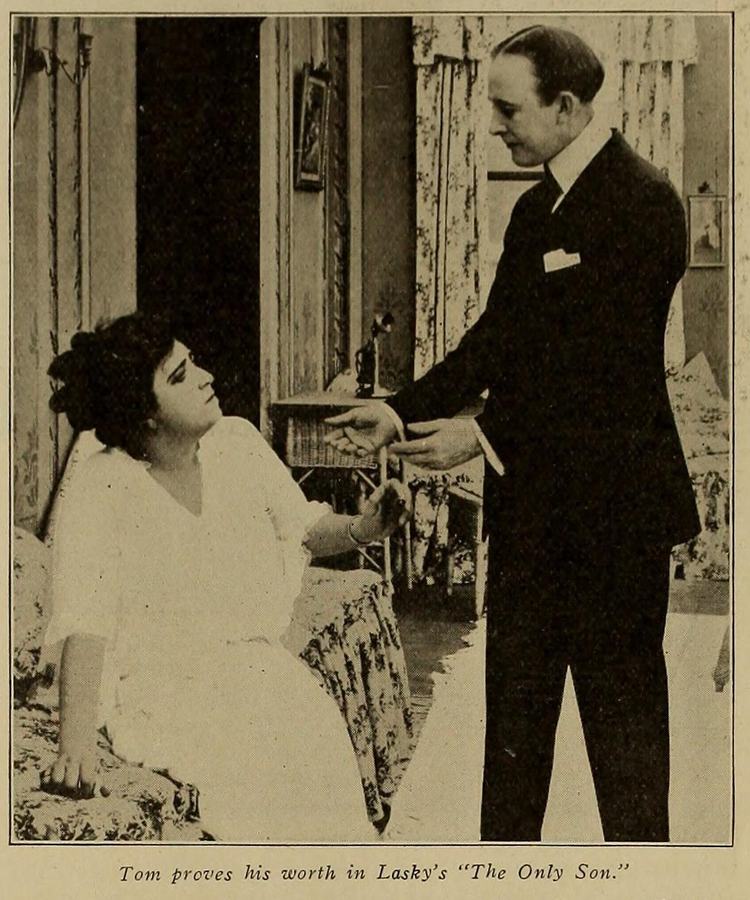
Enter Milton Brown as Thomas Jr.—a flaneur with a gambling cuff and eyes lacquered in cynicism. Banishment becomes crucible. Mother and son board a westbound train whose billowing steam serves as baptismal fog. In the subsequent reel, Brown sheds his tuxedo for a leather apron, colludes with Fred Starr’s penniless inventor amid clangorous forges, and births a revolutionary turbine. The montage is Soviet in rhythm yet American in mythos: sweat, blueprints, molten steel, sunrise.
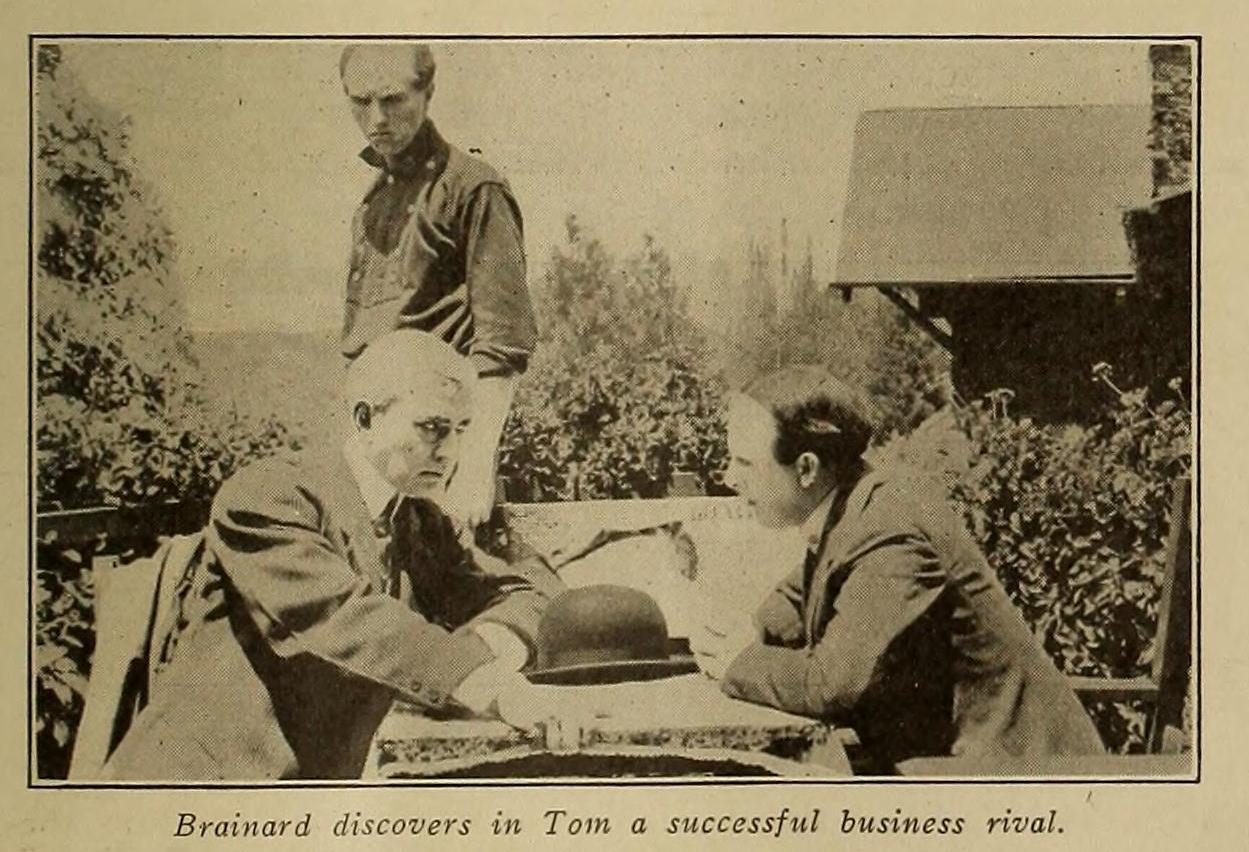
Crucially, the film never insinuates that virtue equals poverty; rather, it proposes that purpose is the antonym of decadence. When Thomas sells the patent to his estranged father at a 400% premium, the transaction is both filial triumph and capitalist revenge—he beats the old man at his own ledger. The boardroom handshake is filmed in low angle: skyscraper windows dwarf the pair, yet the son now occupies foreground, a visual coup d’état.
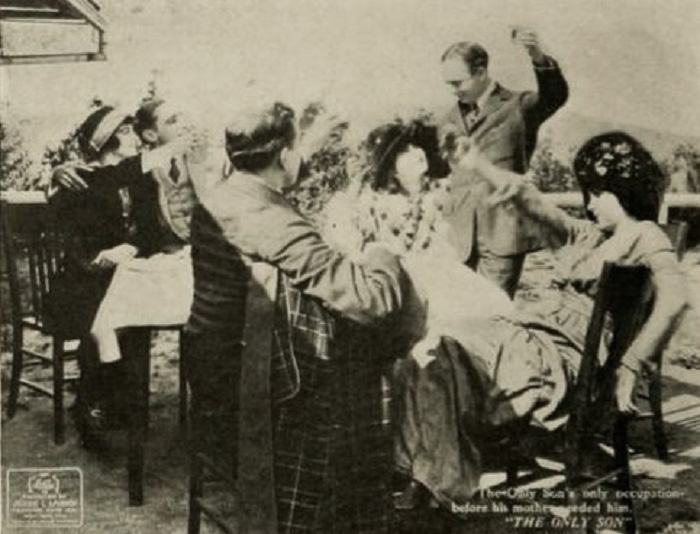
Unlike East Lynne or even Tess, where fallen women suffer eternal exile, The Only Son grants its heroine restitution without contrition. The final tableau—husband and wife reuniting in an office overlooking Manhattan’s newborn skyline—feels earned because the husband, not the wife, is the one who has journeyed farthest emotionally. Darwell’s hesitant step across the threshold carries the moral mass of an entire epic; her forgiveness of him outweighs his of her.
Though shot on orthochromatic stock, Smith’s palette is conceptual. He drapes Darwell in dove-grey lace so sheer it registers spiritual; the artist’s studio is chiaroscuro, his smeared vermilion rag a foreshadow of spilled blood. The final shot—golden ticker tape fluttering past an open window—transforms the b&w frame into a gilded dust storm, a reminder that wealth is only glitter suspended in air.
Where Le nabab luxuriates in operatic excess and For the Queen’s Honor wallows in imperial pomp, The Only Son opts for interior cataclysm. Its scale is intimate, yet the emotional tectonics rival any battlefield. Meanwhile, Lime Kiln Club Field Day shares its year and a reparative spirit, but Smith’s narrative is more dialectical—capitalism both wounds and heals.
Long before her Oscar-garlanded Ma Joad, Darwell sculpts quietude. Watch her fingers tremble as she signs the modeling consent; the quill quivers more than any eyelash. Ross, a veteran of Broadway drawing-room farce, underplays until the climax, allowing a single tear to glide parallel to his starched collar—an image so understated it feels documentary.
Smith penned barn-burner stage hits like Brewster’s Millions; here he trades footlights for iris diaphragms. His theatrical DNA survives in the symmetrical blocking, yet cinematic verbs—cross-cutting, extreme close-up—liberate the tale from proscenium. The result is a hybrid organism, a missing-link between melodrama and modern character study.
Thought lost in the 1965 MGM vault fire, a 35mm nitrate print surfaced at a Des Moines flea market in 1988, mislabeled Only a Son. Thanks to MoMA’s painstaking photochemical rescue, we now savor details down to the herringbone texture of Brainerd’s morning coat. The new 4K scan premiered at Pordenone in 2019, accompanied by a score that blends Appalachian dulcimer with Philip Glass minimalism—an aural mirror to the film’s dialectic between frontier and metropolis.
In an era when startup founders swap family dinners for Series-B pitches, The Only Son reads like prophecy. Its warning—that fortune devours the very marrow it promises to fortify—lands sharper than any TED talk. Simultaneously, it refuses to demonize ambition; redemption lies not in retreat but in recalibrated priorities.
Each viewing peels another veneer. Notice, on second pass, how the cabin’s stone hearth reappears as an office mantelpiece—an architectural ghost. Spot the inventor’s bandaged hand, hinting at self-sacrifice long before dialogue confirms it. Realize that the titular “only son” might also reference America itself—an adolescent nation bargaining birthright for bullion.
So dim the lights, silence your phone, and let the 95-minute flicker remind you that every empire begins with a whispered promise and ends with a question: what, in this brief traverse between cradle and ticker-tape, will you choose to carry—gold, or the weight of being seen?

IMDb 6.1
1935
Community
Log in to comment.