DbcultAccessing Vault...
4.4/10
Senior Film Conservator
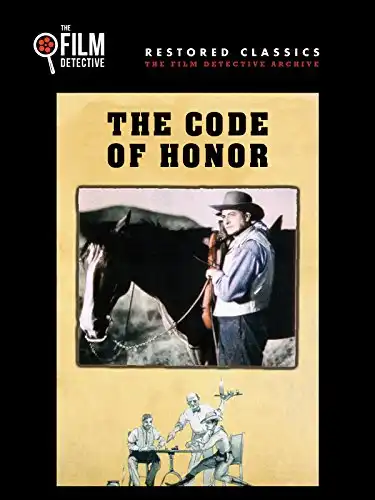
A definitive 4.4/10 rating for a film that redefined the boundaries of cult cinema. Code of Honor remains a cornerstone of transgressive art.
If you are looking for something to watch on a lazy Sunday afternoon while the rain is hitting the window, Code of Honor might be the thing. It is not a masterpiece. Do not expect that. It is for people who love those old, slightly creaky Westerns where the hero wears his hat just right and the villain is easy to spot from a mile away. If you hate slow pacing or the scratchy audio of 1930, you will probably want to skip this one.
Stanley Taylor plays Jack Cardigan. He is a cardsharp. That is a fancy way of saying he is really good at cheating or just winning at poker. He has this look on his face most of the movie like he knows a secret you don't. It is a bit charming, honestly.
The story starts when Jack meets Doris Bradfield. Doris is played by Doris Hill, and she is fine, though she doesn't have a lot to do besides look worried. Jack decides he is done with the gambling life for her. He wants to go straight. We have seen this a million times, but it still works here because Taylor makes Jack feel like a real guy who is just tired of the smoke and the noise.
But then there is the brother. Tom. Every one of these movies has a brother like Tom. He is the weak link. He goes and gambles away the family land-grant title to a guy named Jed Harden. Jed is played by Blackie Whiteford, and he is just... mean. He doesn't need a reason to be mean, he just is.
I noticed something weird about the card scenes. The way they handle the cards feels very deliberate. In some movies, they just shuffle and move on, but here, you can see the tension in their fingers. It feels like the director, J.P. McGowan, actually cared about the gambling part more than the horse riding.
There is one shot where Jack is looking at his hand and the camera just lingers. It stays there for maybe five seconds too long. You start to wonder if the actor forgot his line or if the film jammed. It’s awkward. But it also makes you feel the sweat in the room.
The sets are pretty basic. It looks like they used the same dusty street for every town. I swear I saw the same barrel in three different scenes. But that is part of the charm of these 1930s B-movies. They were making them fast and cheap.
Jack has to use his "talents" to get the land back. It’s a bit of a moral mess if you think about it. He’s going straight, but to save the day, he has to be a cardsharp again. The movie doesn't really dwell on that contradiction. It just wants to get to the part where the bad guy loses.
I kept thinking about The Chinese Parrot while watching this. Not because they are similar stories, but because they both have that same weird, early-sound energy. Everything feels a bit stiff. People talk like they are reading from a grocery list sometimes.
Tom, the brother, is so frustrating. You just want to shake him. He loses everything and then acts surprised. It’s the kind of performance that makes you appreciate the stoic heroes more.
There is a scene in a saloon where the background noise is just a constant hum. I don't think they had the tech to balance the audio back then. It sounds like a beehive is living inside the microphone. You get used to it after twenty minutes, though.
Is it better than Torrent? Probably not. That one has a bit more soul. But Code of Honor has a certain grit. It feels like a movie made by people who knew exactly what their audience wanted: a card game, a girl, and a guy in a white hat winning the day.
Jack’s vest is a bit too small for him. It bunches up every time he sits down to play cards. I couldn't stop looking at it in the second act. Also, Jed Harden has a way of squinting that makes him look like he’s trying to read a very small sign far away.
The pacing is uneven. The beginning takes forever to get going. Then, the ending happens so fast you might blink and miss the resolution. Jack wins, the land is saved, and suddenly it’s over. It feels like they ran out of film and just decided to stop shooting.
"I’m through with the cards, Doris. For good." - Jack says this with zero conviction, and it's hilarious because we know he's going back to them in ten minutes.
It’s a short movie, which is a blessing. It doesn't overstay its welcome. If you like seeing how Westerns started to change when sound came in, give it a look. It’s better than Who's Hooligan? but that isn't saying much.
The chemistry between Jack and Doris is... well, it's there. They stand near each other. They look at each other. It’s very polite. You don't really feel the "passion" Jack is supposed to have that makes him want to change his whole life. He seems more excited about the cards than the girl, if I’m being honest.
I liked the way the shadows hit the wall in the final gambling scene. It looked like a noir movie for a split second. Then someone moved and the lighting went back to being flat and boring. A missed opportunity for style.
Overall, it’s a fine way to spend an hour. It’s dusty, it’s simple, and it has a guy named Blackie in the cast. What more do you really need from a 1930 Western? Just don't go in expecting high drama. It's just a guy playing cards in the dirt.
I’ll probably forget the plot by next week, but I’ll remember Jack’s smug face when he flips over that winning card. That was a good moment.
IMDb —
1930
Community
Log in to comment.