DbcultAccessing Vault...
Cult Review
Senior Film Conservator
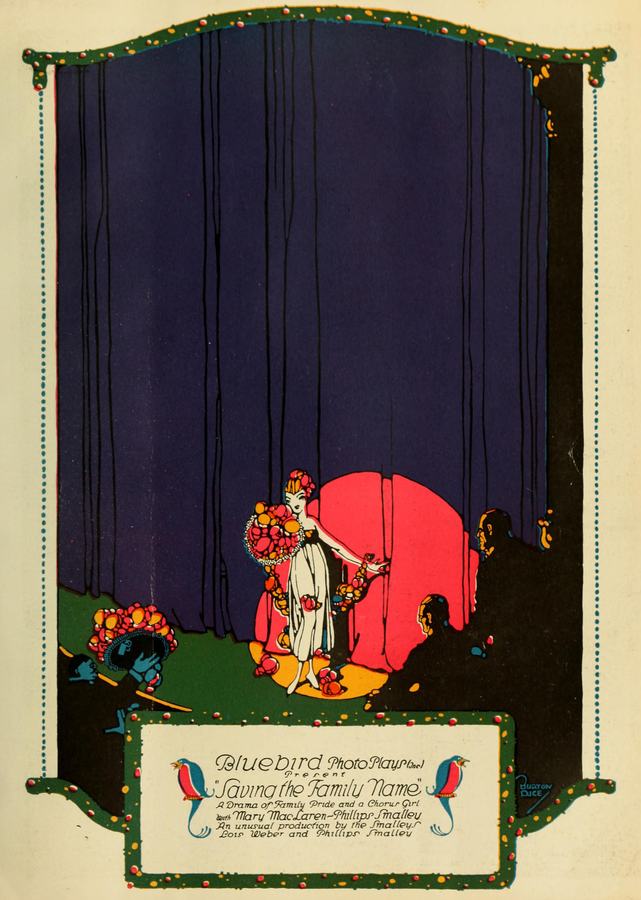
In the nascent days of cinema, when the flickering images on screen began to capture the collective imagination, a select few filmmakers dared to use this nascent art form not merely for spectacle, but as a potent instrument of social commentary. Among these pioneers, Lois Weber stands as a towering figure, her work often characterized by an incisive, unflinching gaze into the moral complexities and societal hypocrisies of her era. 'Saving the Family Name' (1916), a film that, even a century later, retains a startling resonance, serves as a quintessential example of Weber’s audacious vision. It's a cinematic journey that plunges headfirst into the murky waters of media manipulation, class prejudice, and the often-destructive power of public perception, all while crafting a love story born from the most improbable of circumstances.
The film opens with a tragedy that immediately sets its somber, critical tone: the suicide of Wally Dreislin. His despair is not born of personal failing in the conventional sense, but from an unbearable pressure exerted by his family, whose rigid adherence to social standing and decorum cannot countenance his romance with Estelle Ryan, a chorus girl. This initial act of self-destruction is not merely a plot device; it's a stark indictment of a society that values reputation and class distinction above individual happiness and, indeed, human life. Wally's death, rather than burying the scandal, ignites it, turning a private anguish into a public spectacle. The newspapers, those voracious arbiters of public opinion, seize upon the story with gleeful abandon. They dissect every detail of the ill-fated affair, not to report, but to sensationalize, to titillate, and ultimately, to construct a narrative. Estelle Ryan, an ordinary woman caught in an extraordinary tragedy, is transformed by the press's relentless machinery into a national celebrity, her name synonymous with scandal, her image meticulously sculpted into that of a dangerous 'vamp.' This manufactured persona, ironically, only amplifies her allure, a testament to the perverse fascination society holds for those deemed transgressive.
Weber's portrayal of the press here is exceptionally prescient. Long before the age of twenty-four-hour news cycles and social media pile-ons, she understood the power of the media to not just reflect reality, but to actively create it. Estelle's reputation as a 'vamp' is not earned through her actions, but through the narrative spun by eager journalists, eager to sell papers. This theme resonates powerfully even today, making 'Saving the Family Name' feel remarkably modern in its critique of media ethics and the construction of public personas. We see parallels in how public figures are still, to this day, reduced to caricatures by the relentless gaze of tabloids and gossip columns.
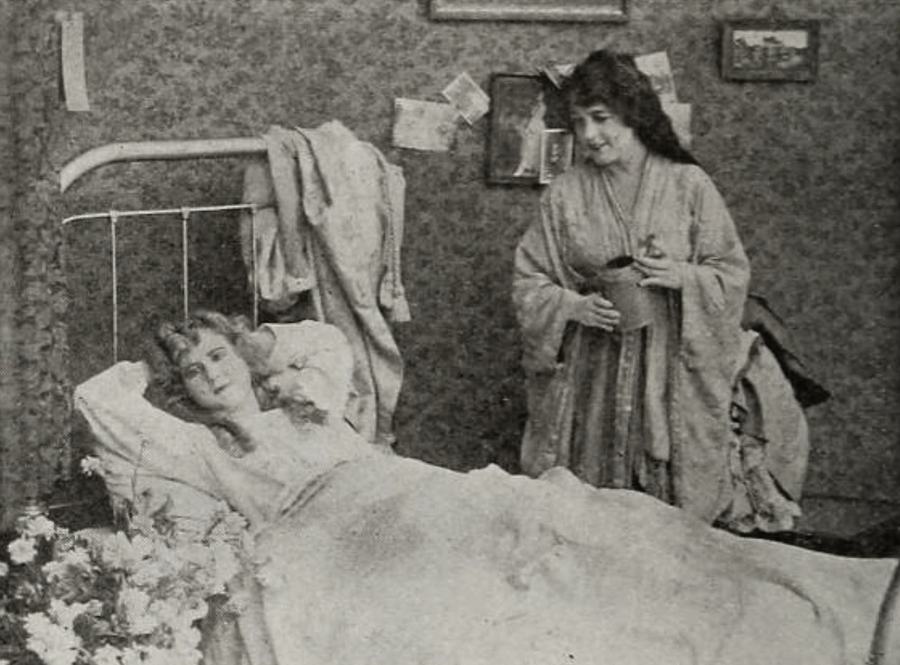
True to the nature of a manufactured celebrity, Estelle's fame, however dubious its origins, only enhances her magnetic pull. She soon finds herself entangled in another romance, this time with Jansen Winthrop, a young man who, like the ill-fated Wally, hails from an affluent, 'respectable' family. The cycle of disapproval threatens to repeat itself. Jansen's mother, a formidable figure embodying the entrenched class snobbery of the era, perceives Estelle not as a woman, but as a threat to her family's esteemed name and social standing. Her alarm is palpable, her desperation leading her to implore her other son, Robert, to intervene. Robert, dutiful and perhaps a touch naive, accepts this weighty charge. His solution is drastic, even by silent film standards: he kidnaps Estelle, spiriting her away to a remote hunting lodge, intent on holding her captive until she agrees to relinquish her claim on Jansen. This act, while morally questionable, is presented not as malicious villainy, but as a misguided attempt to 'save' his family from what he perceives as a social contagion.
The kidnapping, a bold narrative stroke, serves as the crucible in which the film's most profound transformations occur. Removed from the clamor of the city, the judgmental gaze of society, and the distorting lens of the press, Estelle and Robert are forced into an intimate, isolated coexistence. This period of enforced solitude becomes a slow-burn revelation. Robert, initially convinced of Estelle's 'vampish' nature, gradually sheds his preconceived notions. He witnesses a woman who is not the siren of the tabloids, but a complex individual, perhaps wounded, certainly misunderstood, and undeniably resilient. He begins to discern the vast chasm between the sensationalized headlines and the authentic person before him. This realization is a powerful commentary on the destructive nature of judgment based on hearsay and manufactured reputations.
After several weeks, the transformation is complete. Robert, disabused of his prejudices, acknowledges the profound injustice done to Estelle by the press and, by extension, by his own family's initial judgment. In a gesture of newfound understanding and perhaps burgeoning respect, he sends for Jansen, intending to reunite him with Estelle. The stage is set for a conventional resolution, a restoration of the 'correct' order. However, Weber, ever the subversive storyteller, delivers a final, deeply satisfying twist. When Jansen arrives, full of expectation, Estelle, now a woman transformed by her experience and her connection with Robert, unequivocally announces that she has fallen in love with her abductor. The very man who sought to separate her from one wealthy family's son has now become the object of her affection, effectively 'saving' her in a way no one, least of all Robert himself, could have anticipated.
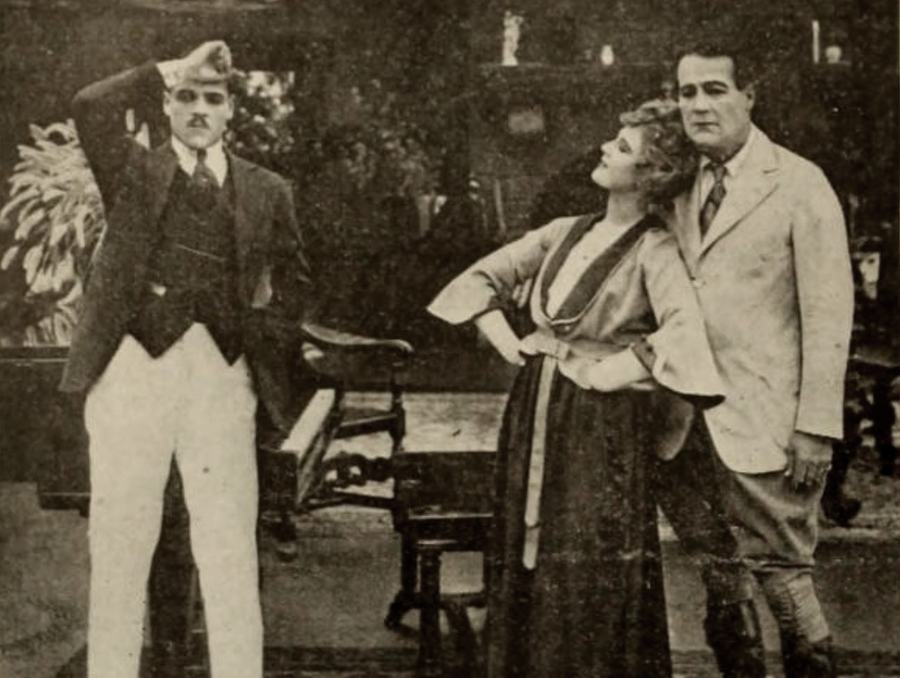
This unexpected romantic pivot is not merely a melodramatic flourish; it's a profound statement on the nature of love, agency, and societal expectations. Estelle, initially a victim of circumstance and societal labeling, reclaims her power, choosing her own path and her own partner, regardless of what society might dictate. It's a testament to the idea that genuine connection can blossom in the most unlikely of places, transcending the superficial boundaries of class and reputation. The ending, far from being a simple 'happily ever after,' is a nuanced victory for individual truth over collective prejudice.
Lois Weber's directorial prowess is evident throughout 'Saving the Family Name.' She masterfully navigates complex emotional terrain without resorting to overt sentimentality, a common pitfall of the era. Her camera work, while perhaps not as overtly experimental as some of her contemporaries, is always purposeful, drawing the viewer into the characters' internal struggles. Weber's strength lies in her ability to craft narratives that are both compelling dramas and searing social critiques. She consistently challenged the prevailing norms, advocating for women's rights, critiquing class divides, and exposing societal hypocrisy. In this film, she deftly dissects the double standards applied to men and women, particularly in matters of reputation and romance. Wally's family is concerned with their 'name,' while Estelle is publicly shamed for merely being associated with him.
The performances, particularly from Mary MacLaren as Estelle and Jack Holt as Robert, are nuanced and compelling. MacLaren, with her expressive eyes and subtle gestures, conveys Estelle's journey from a publicly maligned figure to a woman asserting her newfound love and independence. Holt, in turn, skillfully portrays Robert's initial rigidity and subsequent awakening, making his transformation believable and empathetic. The entire cast, including Gail Hawksworth and Gerard Alexander, contribute to a cohesive and emotionally resonant ensemble.
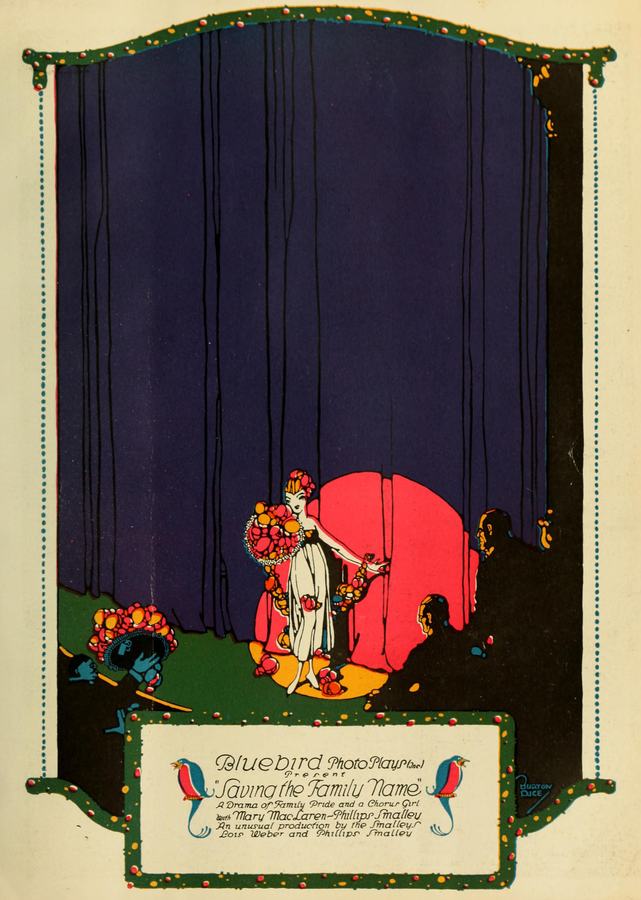
'Saving the Family Name' finds its place within a broader cinematic landscape that grappled with similar themes. One might draw comparisons to films like Sapho or The Daughters of Men, which also explored the trials faced by women in rigid social structures, often condemned for their perceived moral failings or unconventional choices. However, Weber's unique strength lies in her direct and often confrontational approach to social issues. While other films might hint at injustice, Weber lays it bare, offering little in the way of easy answers.
Her work frequently explored the plight of women in a patriarchal society, much like her contemporary efforts in Gloria's Romance, which also features a strong female lead navigating complex relationships and societal expectations. But 'Saving the Family Name' distinguishes itself by placing the sensationalist press at the very heart of the conflict, making it a powerful early commentary on the fourth estate's influence. It's a narrative that feels remarkably prescient, anticipating the modern era's obsession with celebrity and the devastating consequences of trial by media.
In its exploration of reputation, class, and the manipulative power of the media, 'Saving the Family Name' remains startlingly relevant. The film challenges us to look beyond headlines, to question the narratives we are fed, and to recognize the human cost of societal judgment. It's a powerful reminder that a 'family name' can be saved not by upholding a facade of respectability, but by embracing truth and genuine connection, even if it defies convention.
Lois Weber, as both writer and director, crafted a work that transcends its silent film origins. It's a testament to her unique voice and her unwavering commitment to using cinema as a tool for social inquiry. The film doesn't offer simplistic resolutions; instead, it invites contemplation on the enduring battles between individual authenticity and societal pressure, between the manufactured image and the complex reality. For cinephiles and social historians alike, 'Saving the Family Name' is not merely a historical artifact, but a vibrant, vital piece of filmmaking that continues to provoke thought and conversation. It underscores the profound realization that true character often emerges not in the absence of scandal, but in the crucible of its aftermath, and that sometimes, the most unexpected paths lead to genuine liberation and love. Its narrative, while rooted in a bygone era, speaks volumes to the contemporary challenges of perception, truth, and the relentless scrutiny of the public eye. It's a film that truly 'saves' its own name by bravely confronting the very issues it depicts.
IMDb —
1914
Community
Log in to comment.