DbcultAccessing Vault...
Cult Review
Senior Film Conservator
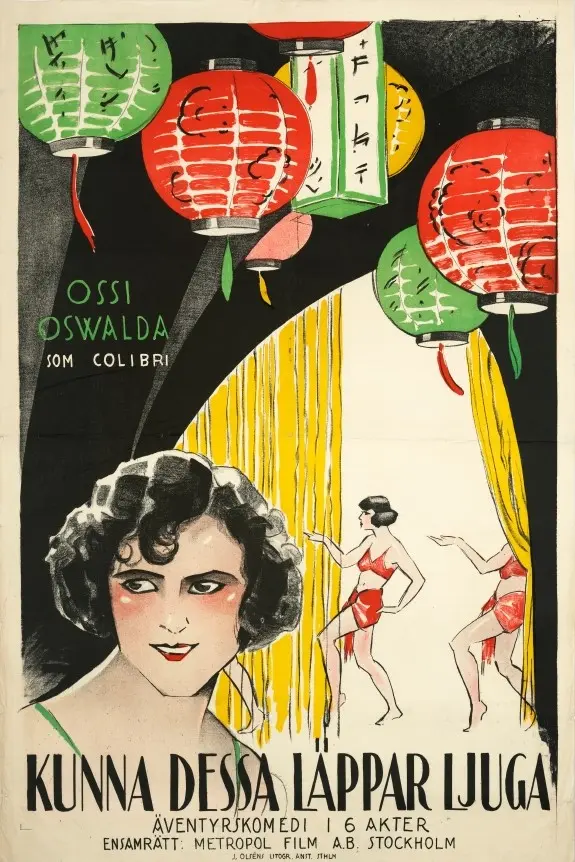
Stepping back into the flickering shadows of early 20th-century German cinema, one discovers a treasure trove of forgotten narratives, and among them, the beguiling Colibri emerges as a particularly vibrant specimen. This cinematic gem, a dramatic tapestry woven by the pens of Franz Rauch and Paul Frank, and brought to life by a stellar ensemble cast, offers a potent cocktail of romance, intrigue, and societal critique. It’s a film that demands a contemporary re-evaluation, not merely as an artifact of its time, but as a testament to the enduring power of silent storytelling.
At its core, Colibri unfurls the tumultuous saga of its titular character, a dancer of unparalleled grace and charisma, portrayed with exquisite sensitivity by the luminous Ossi Oswalda. Her performances, a kaleidoscope of movement and emotion, captivate the opulent yet morally ambiguous society of the era. Oswalda, a veritable icon of the German silent screen, imbues Colibri with a compelling blend of fragility and resilience, making her a protagonist whose journey resonates long after the credits have faded. The plot, a meticulously constructed edifice of melodrama and suspense, revolves around Colibri's entanglement with two distinctly different men: the magnetic, yet ultimately manipulative, Baron von Zeisig, played with chilling suavity by Bruno Kastner, and the earnest, romantically inclined artist, Erich, brought to life with genuine warmth by Hans Lipschütz. This classic love triangle, however, is merely the initial spark for a far grander narrative inferno.
The true catalyst for the film's spiraling drama is the mysterious 'Colibri Diamond,' a family heirloom whose re-emergence serves as a potent MacGuffin, propelling the characters into a labyrinthine quest for truth and justice. This jewel, far from being a mere bauble, becomes a symbol of hidden legacies, forgotten identities, and the corrosive power of greed. As the film progresses, the narrative skillfully peels back layers of deception, revealing a complex web of familial secrets and societal machinations. The writers, Rauch and Frank, demonstrate a masterful command of dramatic pacing, allowing the tension to build organically, punctuated by moments of breathtaking suspense and heartfelt emotional revelation. Their script, though silent, speaks volumes, relying on visual storytelling and the nuanced performances of the cast to convey its intricate plot points and character motivations.
Ossi Oswalda's portrayal of Colibri is nothing short of transcendent. Her expressive eyes and graceful movements convey a spectrum of emotions, from the joyous abandon of her stage performances to the profound despair of personal betrayal. She navigates the character's complex emotional landscape with an authenticity that defies the limitations of silent film. Her chemistry with Bruno Kastner, whose Baron von Zeisig is a portrait of elegant villainy, is palpable, creating a tension that crackles across the screen. Kastner, a master of subtle menace, projects an aura of sophisticated danger that makes his character both alluring and terrifying. His interactions with Oswalda are central to the film's dramatic thrust, embodying the perilous allure of a forbidden, destructive love.
The supporting cast, too, delivers performances of remarkable depth. Paul Bildt, as the benevolent, world-weary mentor figure, provides a grounding presence amidst the escalating chaos. His quiet dignity and unwavering loyalty to Colibri offer a poignant contrast to the moral ambiguity surrounding her. Hugo Döblin, in a role that allows for both intellectual rigor and unexpected warmth, portrays a detective whose pursuit of the truth is as relentless as it is empathetic. His character's meticulous investigation serves as a crucial narrative device, gradually unearthing the film's deeper conspiracies. Lydia Potechina, as the mysterious Countess, embodies an enigmatic rival, her veiled motives adding another layer of intrigue to the already convoluted plot. The ensemble, including Hans Junkermann, M.O. Schiller, Mara Markhoff, Reinhold Hintze, Victor Janson, Erich Walter, Tschunka Tschen, Wilhelm Chandron, and Franz Egenieff, collectively crafts a richly textured world, each performance contributing to the film's immersive atmosphere and narrative complexity.
While the director's name is not explicitly mentioned in the provided details, the visual language of Colibri speaks volumes about a guiding artistic vision. The cinematography is often breathtaking, capturing the stark contrasts between the glittering opulence of society balls and the shadowy recesses where secrets fester. Lighting is employed not just for illumination, but as a narrative tool, sculpting faces and spaces to heighten emotional impact and dramatic tension. The set designs are meticulously detailed, transporting the audience to a bygone era of grand European architecture and intimate, gaslit interiors. From the plush velvet of cabaret stages to the austere grandeur of aristocratic estates, every frame is imbued with a sense of place and period authenticity. The costume design, too, is exquisite, with Colibri's stage ensembles dazzling and her everyday attire reflecting her evolving circumstances, while the formal wear of the elite characters underscores their societal standing and often, their moral decay. The visual storytelling is so compelling that it transcends the need for spoken dialogue, allowing the audience to infer complex emotions and intricate plot developments through gesture, expression, and mise-en-scène.
Colibri is more than just a melodramatic romance; it's a shrewd commentary on the societal fault lines of its time. The film deftly explores themes of class disparity, the perilous pursuit of social mobility, and the deceptive nature of appearances. Colibri, as a working-class performer, navigates a world dominated by the wealthy elite, highlighting the inherent power imbalances and the vulnerability of those without inherited status. The 'Colibri Diamond' itself becomes a symbol of this class struggle, representing both illicit gain and legitimate heritage, forcing a confrontation between old money and new ambition. The film also delves into the complexities of identity, as Colibri grapples with revelations about her past that challenge her understanding of who she is and where she belongs. This journey of self-discovery, set against a backdrop of betrayal and intrigue, elevates Colibri beyond
IMDb 6.2
1924
Community
Log in to comment.