DbcultAccessing Vault...
Cult Review
Senior Film Conservator
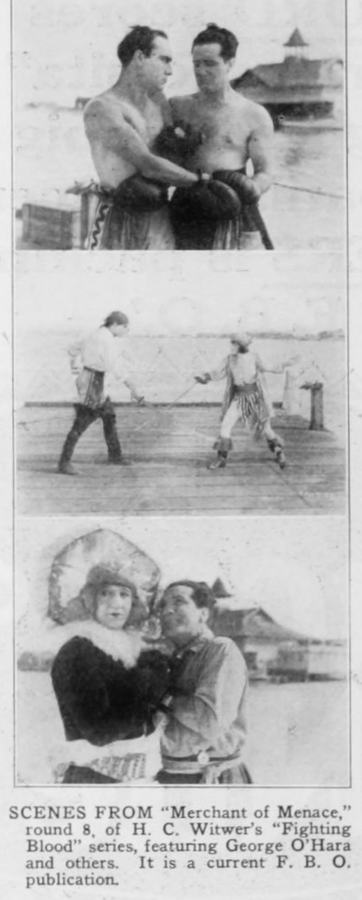
The cinematic landscape of the late 1920s was a volatile crucible of experimentation, where the silent medium was reaching its zenith of expressive power just before the seismic shift to sound. Within this milieu, Merchant of Menace emerges not merely as a two-reel pugilistic distraction, but as a visceral artifact of a bygone era's fascination with physical struggle. Directed with a keen eye for the kinetic, this entry in the 'Fighting Blood' series showcases a raw, unadulterated masculinity that feels remarkably modern in its execution. The film centers on Gale, played with a wiry, nervous energy by George O'Hara, whose journey through the ranks of the boxing world serves as a microcosm for the American dream—bruised, battered, yet stubbornly persistent.
The centerpiece of this narrative is the barge fight, a sequence that stands as a masterclass in spatial tension. Unlike the grand, sprawling vistas of The Covered Wagon, which utilized the vastness of the American frontier to dwarf human endeavor, Merchant of Menace opts for a suffocating intimacy. The barge becomes a floating island of lawlessness, isolated from the mainland by a thin strip of murky water. This setting isn't just a backdrop; it’s a character. The swaying motion of the vessel adds a layer of unpredictability to the combat, forcing the actors to navigate a shifting floor that mirrors the instability of their own lives.
The lighting, though limited by the technology of 1928, utilizes the natural chiaroscuro of the waterfront. Shadows dance against the rusted hull of the barge, and the spray of the water catches the light in a way that feels almost ethereal amidst the brutality. This aesthetic choice reminds one of the maritime grit found in Hearts of Oak, though here the focus is less on the majesty of the sea and more on the grime of the industrial river. The camera work is surprisingly agile, capturing the staccato rhythm of the punches and the heavy breathing of the combatants with a proximity that must have been jarring for contemporary audiences.
At its core, the film is a meditation on the working-class hero. George O'Hara’s Gale is not a polished athlete; he is a man of the docks, a product of his environment. His opponent, Red Mack (played with menacing physicality by Bob Perry), represents the immovable object against which Gale’s irresistible force must collide. This isn't the stylized, almost operatic violence seen in The Queen of Sheba. Instead, it is a meat-and-potatoes brawl, stripped of artifice and focused on the endurance of the human spirit. The stakes feel higher because they are so grounded; this isn't for a kingdom, but for the right to exist in a world that constantly tries to push you under.
The script, penned by Beatrice Van and H.C. Witwer, excels in its economy. Witwer, a former boxing manager himself, brings an undeniable authenticity to the proceedings. He understands the vernacular of the ring, the smell of the resin, and the desperate hope of the underdog. Van’s contribution ensures that the narrative doesn't devolve into a mere series of highlights; she weaves a thread of emotional urgency through the fisticuffs. We see echoes of this narrative drive in other works of the period, such as Until They Get Me, where the chase is as much internal as it is external.
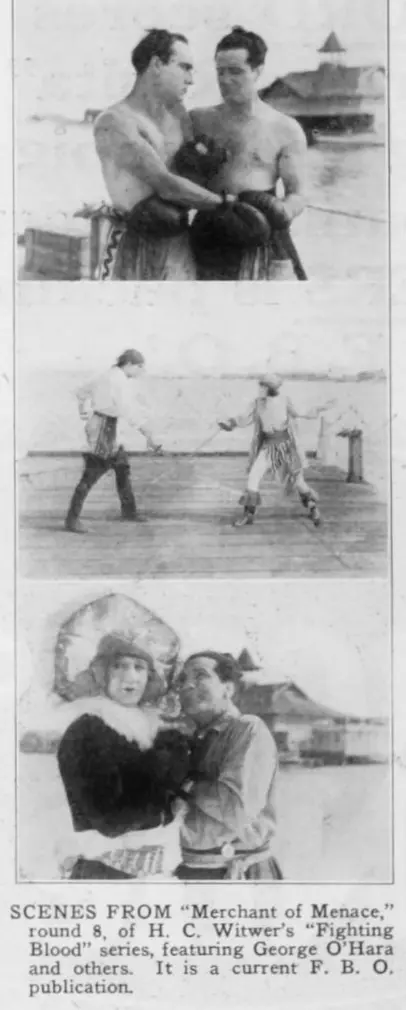
The climax of the film—the police raid—is a fascinating study in social dynamics. Just as the fight reaches its peak of visceral engagement, the sirens (implied by the frantic intertitles and the sudden shift in character movement) shatter the illusion of the barge as a sovereign territory. This intrusion of the 'law' serves as a reminder that the proletariat’s recreations are often viewed as transgressions. While films like No Mother to Guide Him deal with moral failings on a domestic level, Merchant of Menace addresses the systemic policing of the male body and its displays of strength.
The scramble that follows the police arrival is choreographed with a chaotic brilliance. George O’Hara’s athleticism is on full display here, not as a boxer, but as a man fleeing the consequences of his environment. The supporting cast, including Mary Beth Milford and Louise Lorraine, provide the necessary emotional anchors, their reactions grounding the frantic action in a sense of community and shared risk. They are the witnesses to Gale’s struggle, the ones left to pick up the pieces when the spectacle is forcibly concluded.
Why does a film like Merchant of Menace still resonate? Perhaps it is because it captures a moment of pure, unadulterated conflict before the cinema became obsessed with the complexities of sound. There is a purity in the silence, a focus on the body that is often lost in modern blockbusters. When Gale throws a punch, you don't need a sound effect to feel the impact; you see it in the ripple of muscles and the snap of his opponent's head. It shares a certain thematic DNA with Vengeance Is Mine!, dealing with the primal urge to settle scores through physical might.
Furthermore, the film serves as a vital bridge between the pulp fiction of the era and the burgeoning medium of film. H.C. Witwer’s stories were the 'content' of their day, consumed by millions in magazines like Collier's. Seeing these characters leap from the page to the screen was a transformative experience for the 1920s audience. It was the birth of the sports movie as we know it—a genre that would eventually give us everything from 'Raging Bull' to 'Rocky'. Yet, there is a specific, localized energy here that is rarely replicated. It feels like a secret shared between the filmmakers and the audience, a glimpse into a world that was already disappearing as the film was being made.
In comparison to the exoticism of South of Suva, Merchant of Menace is refreshingly pedestrian—and I mean that as the highest compliment. It finds the extraordinary within the ordinary. It finds the drama in a barge, the hero in a dockworker, and the climax in a police raid. It doesn't need the historical weight of IV. Károly király koronázása to feel important; its importance is self-contained in the sweat and the struggle of its protagonists.
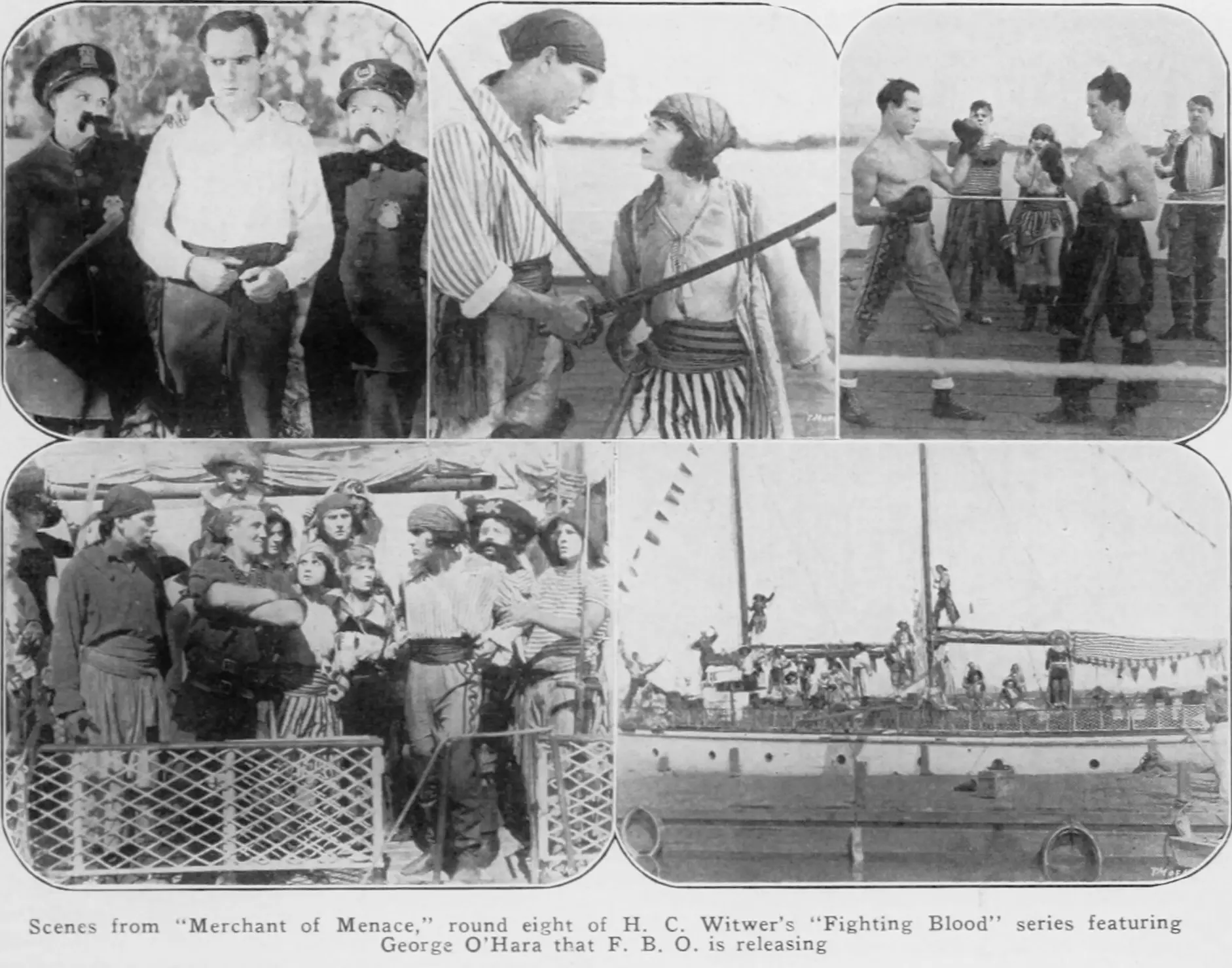
One must applaud the editing of this short. The pacing is relentless. There is a staccato quality to the cuts during the fight scene that anticipates the rapid-fire editing of modern action cinema. It’s a far cry from the more deliberate, stage-like pacing of The World and His Wife. The filmmakers understood that to capture the essence of a fight, the film itself must feel like it’s in the ring. Every frame is used to heighten the tension, every close-up designed to emphasize the toll the fight is taking on Gale’s face.
The use of intertitles is also noteworthy. Rather than being mere expository crutches, they often mirror the punchy, aggressive style of Witwer’s writing. They add a rhythmic punctuation to the visual storytelling, acting like a referee’s count or the ringing of a bell. This synergy between text and image is what makes the silent era so unique; it requires the viewer to engage their imagination to fill in the gaps, creating a more participatory experience than the passive consumption of modern sound films.
Even when compared to European imports like Das Gelübde der Keuschheit, which often leaned into melodrama and heavy symbolism, Merchant of Menace remains stubbornly American in its pragmatism. It is about the job at hand. It is about the physical reality of the moment. There is no room for existential dread when Red Mack is trying to knock your block off.
While it may not have the sprawling ambition of Diane of the Follies or the moral complexity of Beating Cheaters, Merchant of Menace stands as a testament to the power of simple, effective storytelling. It is a film that understands its limitations and turns them into strengths. The confined space of the barge, the short runtime, and the silent medium all work together to create a concentrated burst of cinematic energy.
George O'Hara’s performance remains a highlight of the era. He possessed a physical charisma that was perfectly suited for these types of roles—a blend of vulnerability and toughness that made him relatable to the masses. Alongside the capable direction and Witwer’s sharp writing, he helped define a subgenre that continues to thrive today. If you want to understand where the DNA of the modern action movie comes from, look no further than this barge in the middle of a silent river.
In the end, Merchant of Menace is more than a fight film; it’s a snapshot of a world where the only thing you truly owned was your ability to stand your ground. It’s a gritty, unwashed, and utterly compelling piece of history that deserves its place in the pantheon of silent cinema. Whether you're a fan of boxing or just a student of film history, this is a merchant whose wares are well worth the price of admission.
IMDb 6.3
1916
Community
Log in to comment.