DbcultAccessing Vault...
Cult Review
Senior Film Conservator
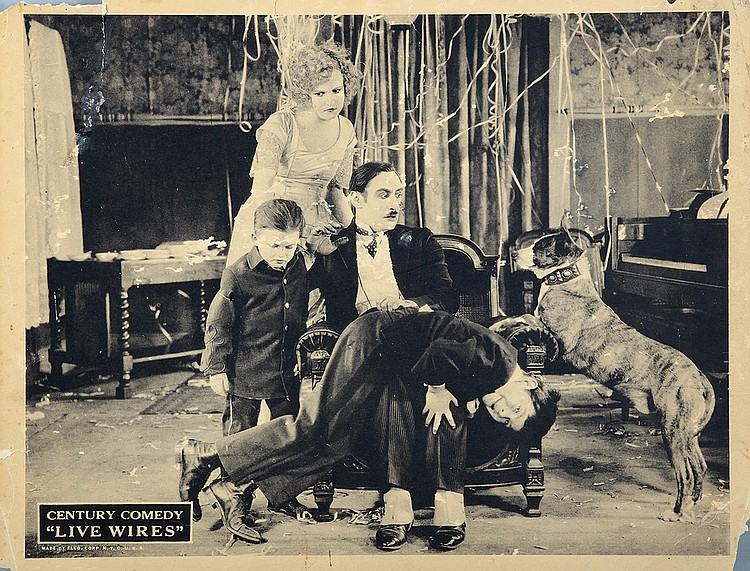
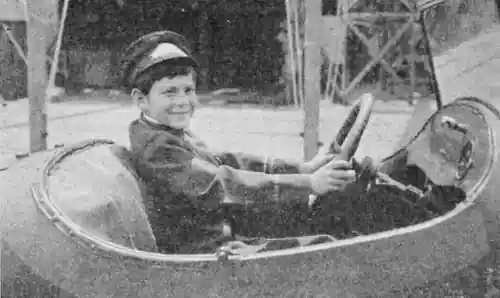
Cinema in 1922 was a medium grappling with its own adolescence, much like the protagonists of Alfred J. Goulding’s Live Wires. This film, a quintessential example of the short-form comedy that fueled the silent era’s nickelodeons, transcends its simple premise through a sophisticated understanding of physical space and social anxiety. Jackie and Johnny, played with a raw, unpolished energy by Jack Morgan and Johnny Fox, represent the 'messenger boy' archetype—a figure ubiquitous in the early 20th-century urban sprawl. They are the connective tissue of a pre-digital society, the human conduits of news, gifts, and, in this case, a birthday cake that carries the weight of a child's happiness.
Unlike the more ethereal themes found in D.W. Griffith’s The Love Flower, which leans into the romanticism of the natural world, Live Wires is firmly rooted in the asphalt and the grit of the street. Goulding’s direction is surgical, capturing the inherent danger and humor of the boys' environment. The city is not just a backdrop; it is a character that conspires against their success. The pacing is relentless, reflecting the 'live wire' energy promised by the title, a term that in 1922 signified both electrical danger and a person of boundless vitality.
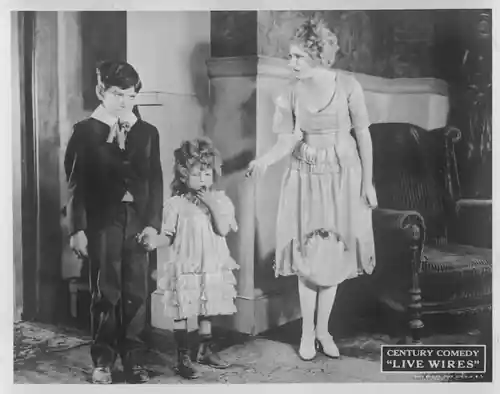
The central conflict—the crushing of a birthday cake—might seem trivial by modern standards, but within the microcosm of Goulding’s narrative, it is a tragedy of Shakespearean proportions. The cake is more than flour and sugar; it is a symbol of the boys' professional integrity and the little girl’s emotional peak. When the boys return to the party with the flattened remains, the shift from comedic momentum to static disappointment is palpable. This sequence mirrors the thematic weight found in Os Fidalgos da Casa Mourisca, where the decay of tradition and the loss of status create a similar sense of inevitable melancholy, albeit in a far more dramatic context.
The performance of Junior Delameter and Ena Gregory provides a necessary contrast to the boys' antics. Gregory, in particular, manages to convey a depth of anticipation that makes the eventual reveal of the ruined cake genuinely heartbreaking. It is this balance between the slapstick and the sentimental that elevates Live Wires above its contemporaries like Vamps and Scamps, which often prioritized the 'scamp' over the heart.
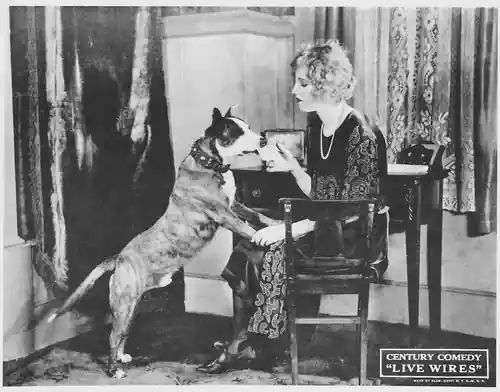
In the pantheon of early cinematic animals, Brownie the Dog occupies a unique space. Far from being a mere prop, Brownie acts as a silent observer and occasional catalyst for the chaos. His presence adds a layer of spontaneity to the film that is often missing in more rigid productions like Integritas. There is a specific kind of magic in the way Goulding integrates the dog’s movements with the boys’ choreography. It requires a level of patience and directorial vision that is frequently overlooked in discussions of silent comedy. Brownie’s reactions to the unfolding disaster provide a surrogate for the audience’s own disbelief, grounding the absurdity in a recognizable, albeit canine, reality.
When we examine the mechanical humor of A Flivver Wedding, we see a reliance on the novelty of the automobile and the clumsiness of courtship. Live Wires, however, opts for a more visceral, human-centric disappointment. The 'flivver' represents a technological hurdle, but the 'cake' represents a social one. Similarly, while Beauty's Worth focuses on the aesthetic and the superficialities of high society, Goulding’s work is obsessed with the utility of the working class. Jackie and Johnny are cogs in a machine that they don't fully understand, yet they are the ones who suffer when the gears grind to a halt.
The film’s structure is episodic, yet it maintains a tight narrative arc that culminates in the party scene. This is a far cry from the sprawling, often disjointed adventure of The Lost City. In Live Wires, the stakes are contained within a single cardboard box, making the impact of the climax far more concentrated and effective. It reminds one of The Money Mill in its depiction of the relentless pursuit of an objective, though the boys’ goal is far more wholesome than the industrial greed depicted in the latter.
Alfred J. Goulding’s visual language in 1922 was already showing signs of the mastery he would later bring to his work with Harold Lloyd. The use of depth of field to show the boys approaching from the distance, unaware of the obstacles in their path, creates a delightful sense of dramatic irony. We see the impending doom before they do. This technique is used to a different effect in Kidnapping Caroline, where the tension is derived from the unknown; here, the tension is derived from the inevitable.
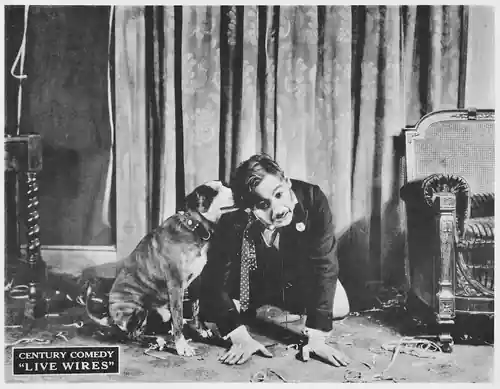
The lighting, though limited by the technology of the day, effectively distinguishes between the harsh sunlight of the streets and the softer, more inviting interior of the birthday party. This visual dichotomy reinforces the film’s theme: the world outside is a place where things break, while the world inside is where we try to keep them whole. Even in films like Hair Trigger Stuff, where the action is more explosive, the emotional resonance rarely hits the same chord as the sight of a weeping child looking at a ruined dessert.
Live Wires also serves as a fascinating sociological document. In the early 20s, the messenger boy was a symbol of modern efficiency. Films like Hobbs in a Hurry played with this concept of speed and the pressure of the clock. But Goulding subverts this by showing the human error that speed induces. The boys are 'live wires'—sparking, dangerous, and unpredictable. They are not the efficient couriers the system demands; they are children playing at being men, and the result is a beautiful, messy failure.
This failure is what makes the film enduring. We don't remember the successful deliveries of history; we remember the crushed cakes. The vulnerability shown by Johnny Fox and Jack Morgan is a precursor to the more nuanced child performances we would see in The Big Adventure. There is a sense of genuine panic in their eyes when the box is opened—a moment of 'The Man Who Lost Himself' (The Man Who Lost Himself) where their identity as 'good boys' is suddenly stripped away by a simple stumble.
To watch Live Wires today is to step into a time capsule of 1922 Hollywood. It lacks the self-importance of European epics like La sagra dei martiri, but it possesses a vitality that those grander films often lack. It is a film of small moments—the wag of a tail, the smudge of frosting, the frantic pedaling of a bicycle. It captures the essence of a world that was moving too fast for its own good, much like the characters in Come Out of the Kitchen who find themselves overwhelmed by domestic expectations.
Ultimately, Live Wires is a testament to the power of the short-form narrative. It doesn't need ninety minutes to tell us that life is precarious and that even our best intentions can be crushed by a sudden jolt. It is a masterclass in economy, performance, and the enduring comedy of the human condition. Alfred J. Goulding may not be the first name mentioned in film history books, but with this film, he proved that he was a conductor of cinematic electricity, managing the 'live wires' of his cast and crew to create something that still hums with energy over a century later.
IMDb 6.7
1923
Community
Log in to comment.