DbcultAccessing Vault...
Cult Review
Senior Film Conservator
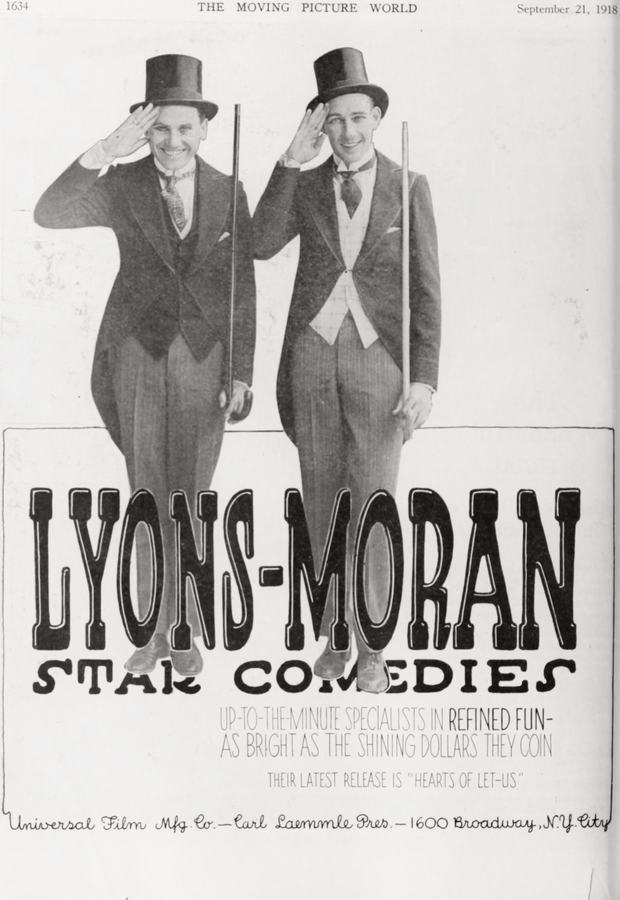
In the grand, often boisterous tapestry of early 20th-century cinema, certain threads, though seemingly modest, possess an enduring charm and an unexpected depth that compel us to revisit them. One such delightful, yet poignant, example is the 1919 silent comedy, Hearts and Let Us. This cinematic confection, penned by its very stars, Eddie Lyons and Lee Moran, offers a fascinating glimpse into the comedic sensibilities of its era, while simultaneously delivering a narrative that, despite its lighthearted façade, touches upon the universal pangs of unrequited affection and the often-farcical nature of human romantic endeavors. It’s a film that, even a century later, manages to elicit genuine chuckles and a quiet empathy for its lovelorn protagonists.
The premise is disarmingly simple, yet it serves as a robust scaffold for a series of escalating comedic set pieces. We are introduced to Eddie, played with an endearing earnestness by Eddie Lyons, a grocer boy whose daily routine of weighing produce is punctuated by wistful glances towards the object of his desire. His rival in love is Lee, portrayed by Lee Moran with a contrasting, perhaps more boisterous, charm as a butcher boy, whose brawn and confidence are as prominent as his cleaver. Both men, quintessential archetypes of their working-class milieu, find themselves hopelessly smitten with the same captivating young woman, Gladys Tennyson, whose portrayal here is less about complex character development and more about serving as the radiant, albeit ultimately unattainable, focal point of their affections. The stage is thus set for a classic comedic rivalry, a veritable pas de deux of romantic one-upmanship.
What truly elevates Hearts and Let Us beyond a mere historical curiosity is the palpable chemistry and distinct comedic styles of its leading men. Eddie Lyons, a veteran of countless shorts, brings a nuanced vulnerability to his character. His Eddie is the underdog, the slightly awkward suitor whose grand gestures often unravel into amusing mishaps. There's a particular scene where his attempt to impress with a basket of fresh fruit culminates in a cascade of rolling apples, a moment that perfectly encapsulates his character's well-meaning but often clumsy efforts. This type of physical comedy, rooted in relatable human imperfection, finds echoes in later comedic traditions, demonstrating a timeless appeal. His performance, in its quiet desperation and sudden bursts of misguided bravado, is a masterclass in silent film acting, relying heavily on expressive facial contortions and exaggerated body language to convey a rich inner world without a single spoken word.
Conversely, Lee Moran's Lee offers a delightful counterpoint. He embodies a more assertive, almost swaggering masculinity, confident in his abilities, both as a butcher and as a potential paramour. His advances are bolder, his attempts at charm more direct, often bordering on the audacious. Yet, even his robust efforts are destined for comedic failure, highlighting the film's overarching theme that sheer force of will, no matter how well-intentioned, cannot always dictate the unpredictable course of love. Moran’s comedic timing, particularly in his reactions to Eddie’s blunders or to his own thwarted ambitions, is impeccable. Together, Lyons and Moran create a dynamic duo, their contrasting personalities fueling the film's humor and preventing the narrative from ever feeling stagnant. Their interplay reminds one of the competitive spirit seen in films like Rip Roaring Rivals, though here, the stakes are purely romantic, not professional.
Gladys Tennyson, as the object of their dual affections, navigates her role with a delicate balance. She is not a mere prop but an active, if somewhat passive, participant in the romantic charade. Her reactions to the suitors' antics, often a mix of amused tolerance and polite bewilderment, provide a crucial grounding for the comedy. She embodies the ideal of feminine grace prevalent in the era, a figure of purity and desirability whose ultimate choice is presented as both logical and, for our protagonists, heartbreakingly inevitable. Her performance, while not as overtly comedic as her male counterparts, is essential in lending credibility to the fervent devotion she inspires. In a way, her character’s journey, however subtle, parallels the quiet resilience often seen in female roles of that period, much like some of the nuanced portrayals in films such as Peggy, the Will O' the Wisp, where the female lead navigates complex social landscapes.
The genius of Hearts and Let Us lies not just in its performances but in the intricate comedic writing by Lyons and Moran themselves. They understood the mechanics of escalating humor, building each romantic advance and subsequent failure into a more elaborate and amusing spectacle. The narrative doesn't rely on cheap gags but on character-driven comedy, where the humor springs naturally from the personalities and predicaments of the protagonists. This meticulous approach to scripting ensures that even without dialogue, the story flows with a rhythmic precision, each scene contributing to the overall comedic arc. Their collaborative writing process must have been a fascinating blend of their individual strengths, creating a cohesive vision that feels both personal and universally engaging. This keen understanding of narrative progression and character motivation is a hallmark of truly great screenwriting, irrespective of the era, a trait that sets it apart from more rudimentary efforts and aligns it with more sophisticated silent narratives like The Car of Chance, which also boasts a clever, unfolding plot.
Visually, the film is a testament to the burgeoning artistry of silent cinema. While information on specific cinematographers might be scarce for such early shorts, the direction clearly prioritizes clarity of action and emotional expression. The use of wide shots to establish the bustling street scenes and tighter framing for the characters' reactions ensures that the audience is always connected to the narrative and its emotional undercurrents. The sets, though likely minimal, effectively convey the atmosphere of a working-class neighborhood, providing a believable backdrop for the romantic comedy. The editing, crucial in silent films for pacing and comedic timing, is brisk and effective, allowing the gags to land with maximum impact without lingering too long. This efficiency in visual storytelling is a hallmark of well-executed silent comedies, a skill that was continually refined throughout the era, much like the visual poetry often found in films like Das wandernde Licht, albeit with a different thematic focus.
The thematic resonance of Hearts and Let Us extends beyond its immediate comedic appeal. It delves into the universal experience of unrequited love, a feeling that transcends time and cultural boundaries. The film beautifully captures the earnest hope, the foolish optimism, and the eventual, quiet despair that accompanies such an experience. It’s a gentle reminder of the capricious nature of affection, where sometimes, despite one’s best efforts and most heartfelt intentions, love simply isn’t reciprocated. The arrival of the third, unheralded suitor, who effortlessly captures the maiden's heart, serves as a poignant, almost philosophical, commentary on the unpredictability of human connection. This narrative twist, while comedic in its immediate impact, leaves a lingering sense of melancholy, a bittersweet echo that elevates the film beyond mere slapstick. It shares this thematic exploration of romantic disappointment with films like The Red-Haired Cupid, though with a distinct comedic lens.
Moreover, the film offers a subtle critique, or perhaps simply an observation, of societal expectations surrounding courtship in the early 20th century. The competitive nature of the two suitors, vying for the affection of a single woman, reflects a period where romantic pursuits were often public and performances of desirability were expected. Yet, the film also gently subverts these expectations by having neither of the primary, more visible suitors succeed, suggesting that genuine connection might often arise from unexpected quarters, or perhaps that the most overt displays of affection are not always the most effective. This exploration of social dynamics, albeit light-hearted, provides a fascinating parallel to the more direct social commentary found in films like A World Without Men, though the latter approaches its subject with a far more critical eye.
In the broader context of silent cinema, Hearts and Let Us holds a significant, if perhaps understated, place. It exemplifies the craftsmanship of short-form comedies that were the backbone of early film programs. These shorts, often dismissed as mere filler, were in fact crucial laboratories for comedic talent, narrative innovation, and technical experimentation. The film's enduring appeal lies in its ability to transcend its historical trappings and speak to universal human experiences with wit and charm. It reminds us that even in an era devoid of sound and color, filmmakers were capable of crafting rich, engaging stories that resonated deeply with audiences. Its straightforward narrative, focusing on character and comedic timing, also brings to mind the directness of storytelling in films such as Salainen perintömääräys, which also prioritizes clear, impactful plot progression.
Comparing it to other works of the period offers further insight into its unique qualities. While films like His Brother's Wife might explore the complexities of love triangles with dramatic gravitas, Hearts and Let Us tackles similar themes through the lens of pure, unadulterated comedy. The contrast is striking, demonstrating the versatility of cinema even in its nascent stages to approach similar human dilemmas from wildly different angles. The film’s light touch and focus on the absurdities of romantic pursuit differentiate it from more serious dramas of the time, such as Den Vanærede or Forbandelsen, which delved into darker human emotions and societal failings. Even compared to other comedies, such as the more overtly slapstick The Kid Is Clever, Hearts and Let Us maintains a gentler, more character-driven humor that relies on situational irony as much as physical gags.
The film's exploration of ambition and its ultimate futility also draws interesting parallels with narratives that deal with grander struggles. While the stakes in Hearts and Let Us are personal and romantic, the underlying theme of persistent effort meeting an unyielding fate is universal. One might even draw a thematic, albeit superficial, comparison to a film like The Price of Tyranny, where grand ambitions are tested, though of course, the scale and genre are vastly different. Here, the 'tyranny' is merely the whimsical, unpredictable nature of love itself. Furthermore, the theme of individuals striving against external forces, even if those forces are simply romantic fate, can be seen as a comedic inversion of the more serious struggles depicted in films like The Man Who Stood Still, where a character's resolve faces different kinds of immovable obstacles.
Ultimately, Hearts and Let Us stands as a compelling argument for the enduring power of silent comedy. It is a film that, despite its age, feels remarkably fresh and relevant in its depiction of human foibles and romantic aspirations. The performances of Eddie Lyons and Lee Moran are a joy to behold, their comedic partnership a testament to their individual talents and collaborative synergy. Gladys Tennyson, as the unwitting catalyst, provides the necessary emotional anchor. It's a film that reminds us that laughter, even when tinged with a touch of melancholy, is a universal language, and that the simple stories of everyday life, when told with wit and heart, can resonate across generations. For anyone with an appreciation for the foundational works of cinema, or simply a desire for a genuinely charming and amusing viewing experience, this film is an absolute must-see. Its artistic merit, combined with its sheer entertainment value, solidifies its position as a minor classic, a small but radiant jewel in the crown of early Hollywood, much like the understated elegance one might find in Rose o' Paradise or the subtle artistry in När konstnärer älska, each contributing uniquely to the rich tapestry of cinematic history.
IMDb —
1915
Community
Log in to comment.