DbcultAccessing Vault...
5.7/10
Senior Film Conservator
A definitive 5.7/10 rating for a film that redefined the boundaries of cult cinema. Zeb vs. Paprika remains a cornerstone of transgressive art.
Step into a time capsule, back to an era when laughter was purely visual, a symphony of exaggerated gestures and improbable scenarios. We're talking about the silent film epoch, a period brimming with inventive storytelling and the nascent stages of cinematic comedy. Amidst this vibrant landscape emerges Zeb vs. Paprika, a delightful, if often overlooked, gem from 1924, featuring none other than the inimitable Stan Laurel in one of his many formative roles before his legendary partnership with Oliver Hardy. This isn't merely a film about a horse race; it's a transatlantic comedic clash, a cultural collision wrapped in a narrative of sporting ambition and, naturally, Laurel's signature brand of endearing ineptitude. It’s a testament to the universal appeal of humor, transcending spoken language with its sheer physical eloquence and the charming absurdity of its premise.
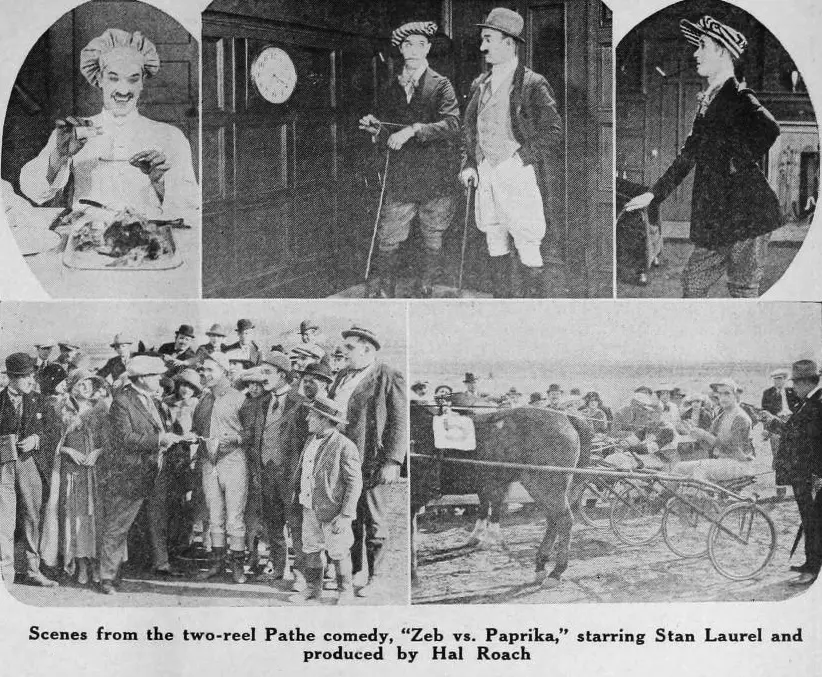
The narrative engine of Zeb vs. Paprika is elegantly simple, yet ripe for comedic exploitation. Imagine the grandeur and tradition of British horse racing, personified by a triumphant Derby Stakes winner. Its owner, a character undoubtedly imbued with a healthy dose of national pride and perhaps a touch of hubris, decides to embark on an audacious venture: take his champion steed across the vast ocean to challenge America's finest. The target? The formidable victor of the Kentucky Derby. This setup instantly establishes a compelling rivalry, not just between two horses, but between two nations, two distinct sporting cultures. It's a classic "Old World meets New World" trope, but here, it's refracted through the lens of silent comedy, promising more pratfalls than patriotic fervor.
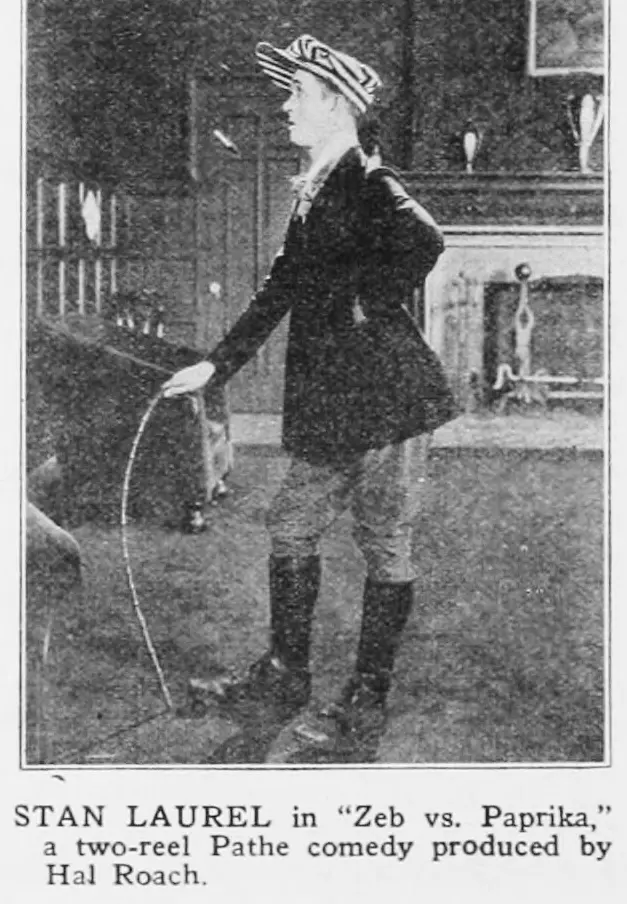
And who better to represent the British contingent's human element than Stan Laurel? Cast as the jockey, his involvement immediately signals that this will be no straightforward sporting drama. Laurel, even in these earlier solo efforts, possessed an uncanny ability to turn even the most mundane tasks into a cascade of comedic catastrophes. His character, we can surmise, is a well-meaning but utterly accident-prone individual, whose primary contribution to the British horse's success will likely come from sheer dumb luck or the unintended consequences of his blunders, rather than masterful horsemanship. The journey itself, from the stately British Isles to the bustling American racetracks, would have offered myriad opportunities for visual gags – the discomforts of sea travel, the culture shock, the inevitable misunderstandings that arise when two distinct worlds collide. Al Giebler, the film's writer, evidently understood the rich vein of humor to be mined from such a scenario, crafting a narrative that prioritizes physical comedy and character-driven mishaps over a rigid adherence to realistic sporting procedure. The anticipation of the race itself becomes secondary to the delightful journey of watching Laurel navigate his peculiar destiny.
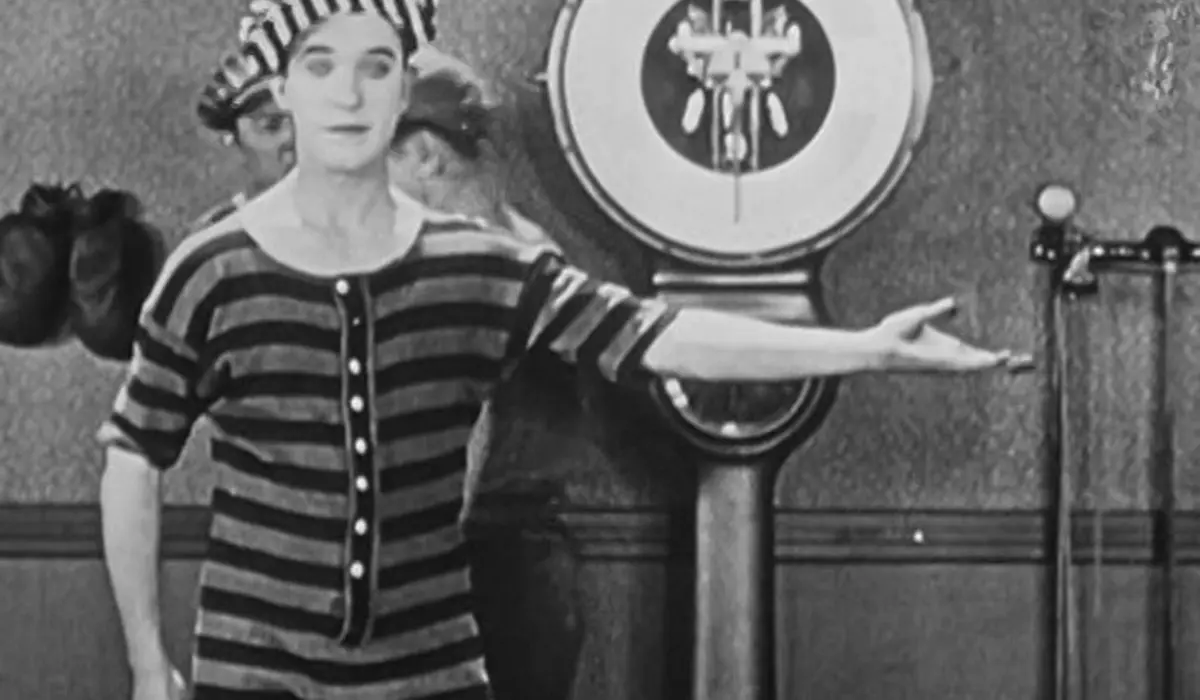
For aficionados of classic comedy, Zeb vs. Paprika offers a fascinating glimpse into Stan Laurel's evolving comedic persona. Long before he became one half of the world's most beloved comedy duo, Laurel was a prolific silent film actor, honing his craft in dozens of shorts. Here, he embodies the quintessential Laurel character: innocent, somewhat bewildered, perpetually on the verge of tears or a catastrophic mistake, yet utterly endearing. His physical comedy, even at this stage, is remarkably sophisticated. He doesn't just fall; he crumples. He doesn't just trip; he executes a ballet of accidental contortions. His face, a canvas of expressive vulnerability, communicates volumes without uttering a single word. It's a masterclass in silent performance, where every eye roll, every shrug, every bewildered stare is a punchline in itself.
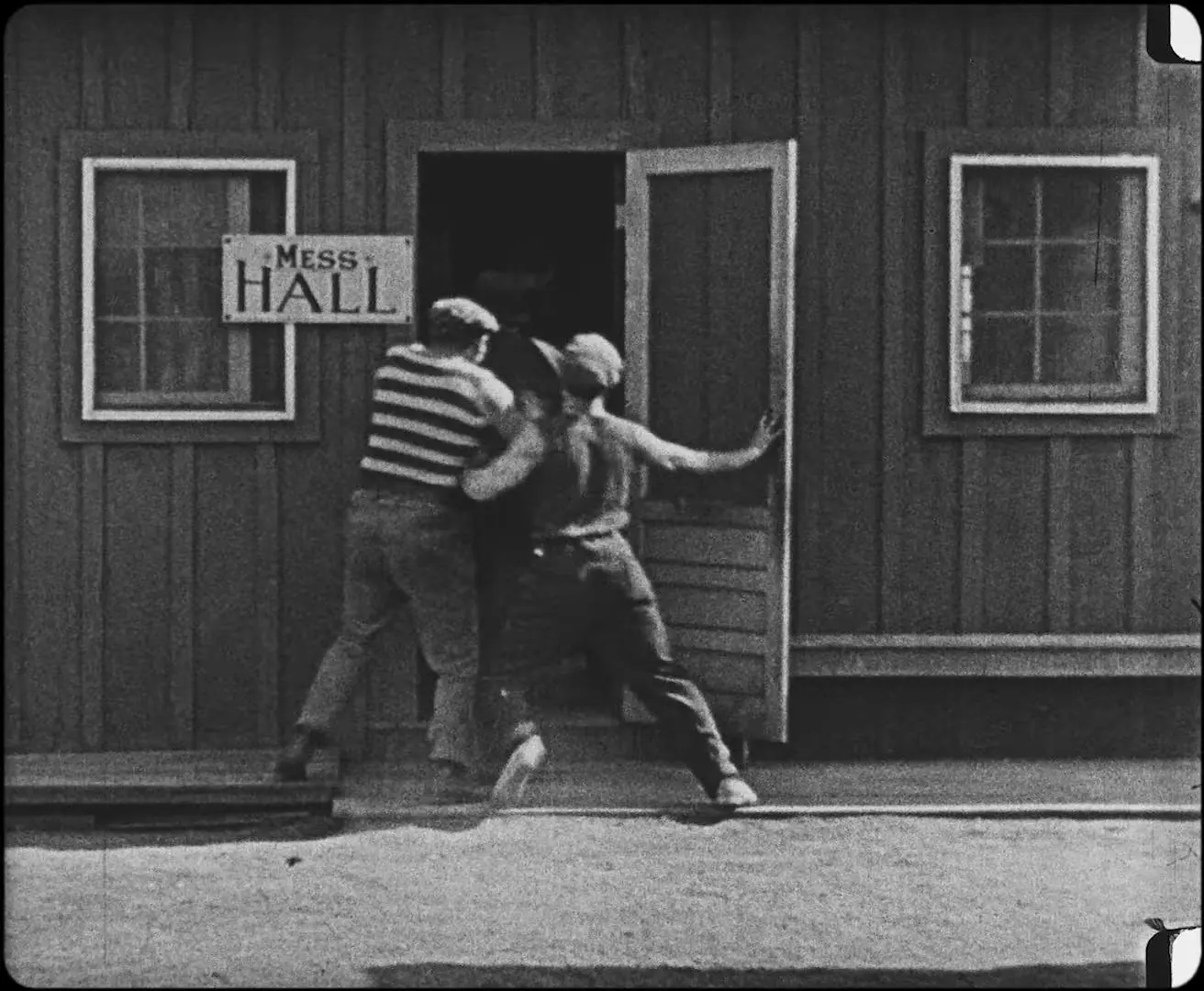
Comparing his work here to other early solo ventures like My Boy (1921), we observe a consistency in his character's core innocence and his talent for eliciting sympathy alongside laughter. In My Boy, he plays a similar figure, a well-meaning but hapless individual navigating a world seemingly designed to thwart him. This early work laid the foundational bricks for the 'Stan' character that would later become globally iconic. His jockey in Zeb vs. Paprika is not a calculating trickster or a cynical anti-hero; he is, quite simply, Stan – a man who tries his best but is perpetually outmaneuvered by inanimate objects, the laws of physics, and his own good intentions. This makes his character instantly relatable and infinitely watchable. The genius of Laurel's early performances lies in their ability to make the audience root for him, even as they anticipate his inevitable, hilarious downfall.
The silent era demanded a unique kind of acting, one that relied heavily on mime, facial expressions, and precise physical timing. Laurel, having cut his teeth in British music halls alongside the likes of Charlie Chaplin, was a seasoned practitioner of this art. In Zeb vs. Paprika, his performance as the jockey is a showcase of this finely tuned skill. Imagine the scenes where he attempts to mount the horse, perhaps getting tangled in the reins, or struggling with the stirrups, all while maintaining that signature look of befuddled earnestness. These are the moments where Laurel truly shines, transforming potential frustration into pure comedic gold. His ability to convey complex emotions and situations without dialogue is a testament to his innate comedic genius and his deep understanding of the language of the body. He makes you laugh, not just at his predicaments, but with his resilient, if clumsy, spirit.
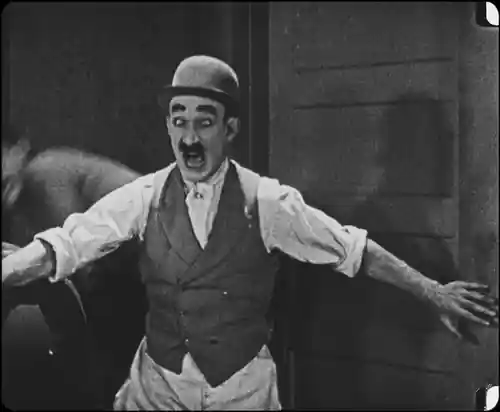
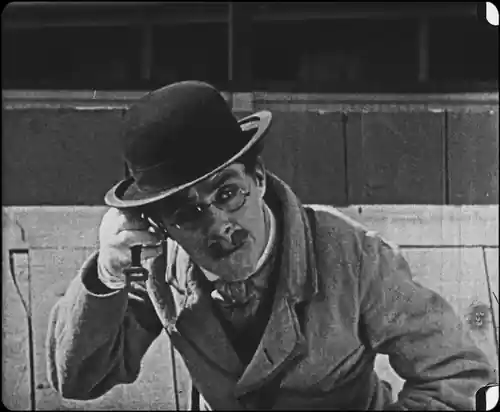
While Stan Laurel is undoubtedly the central comedic anchor, a film's success, even a short one, relies on a strong supporting cast. Zeb vs. Paprika features a roster of familiar silent film faces, including Ena Gregory, Billy Engle, Charles Lloyd, John M. O'Brien, Eddie Baker, Mildred Booth, Charlie Hall, Al Forbes, George Rowe, Harry L. Rattenberry, Al Ochs, Sammy Brooks, Jack Ackroyd, James Finlayson, William Gillespie, Dick Gilbert, Helen Gilmore, Fred Karno Jr., Earl Mohan, and Noah Young. Each of these actors, often specialists in character roles, contributed to the rich tapestry of early Hollywood. Their reactions, their exasperation, their straight-man performances, all serve to amplify Laurel's comedic brilliance. For instance, the exasperated owner of the British horse, perhaps played by someone like James Finlayson (who would later become a frequent foil for Laurel & Hardy), would provide the perfect counterpoint to Laurel's bumbling, creating a dynamic tension that fuels the humor.
The script, penned by Al Giebler, is crucial to the film's construction. Giebler, a prolific writer during the silent era, understood the mechanics of visual comedy. His role was to devise situations that allowed Laurel's character to shine, building up to the inevitable climax of the race while peppering the narrative with smaller, self-contained gags. The art of writing for silent film was distinct; it required an ability to think in terms of actions, reactions, and clear visual storytelling that could be understood across linguistic barriers. Giebler's genius lay in his capacity to craft a story that was not only coherent but also consistently funny, providing the framework upon which the actors, particularly Laurel, could improvise and expand. The plot outline – a British horse and jockey facing an American champ – is simple enough to be universally understood, allowing the focus to remain on the comedic journey rather than complex exposition. This simplicity is often the hallmark of effective silent comedy, enabling maximum impact from physical gags.
To truly appreciate Zeb vs. Paprika, it's helpful to consider the broader context of 1920s cinema. This was a decade of immense experimentation and growth for the film industry. While epic dramas like The Big Adventure or mysteries like Fantomas: The Man in Black captivated audiences with their narratives, comedy was carving its own indelible niche. The "golden age" of silent comedy was in full swing, with titans like Chaplin, Keaton, and Lloyd pushing the boundaries of physical humor and cinematic innovation. Laurel, though not yet a household name on their level, was a significant contributor to this vibrant scene. Films like Zeb vs. Paprika, while perhaps not as grand in scale as some contemporary productions, were vital in developing the language of screen comedy.
The choice of a horse racing setting was also a shrewd one. Horse racing was, and remains, a sport with inherent drama and visual spectacle, making it ideal for the silent screen. The thundering hooves, the intense expressions of the jockeys, the excited crowds – all translate well without dialogue. Integrating a comedian like Laurel into such a setting injects an immediate element of subversion and surprise. Instead of a straightforward race, we expect a series of unexpected twists and turns, largely orchestrated by our protagonist's accidental genius. This blend of high-stakes sport and low-brow comedy was a formula that often resonated with audiences, providing both excitement and relief through laughter. It’s a far cry from the serious social commentary sometimes found in films like Neglected Women, demonstrating the vast stylistic range of the era.
The production of such shorts was a rapid-fire affair. Studios churned out comedies at an astonishing pace, providing a constant stream of entertainment for eager audiences. This environment fostered creativity and quick thinking, allowing performers like Laurel to constantly refine their routines and writers like Giebler to experiment with different scenarios. The emphasis was on immediate gratification – a laugh every few seconds. This pace is evident in Zeb vs. Paprika, where the narrative quickly propels us from one comedic setup to the next, never lingering too long, always striving for the next visual gag or character mishap. It’s a testament to the efficiency and effectiveness of early Hollywood's comedic machine.
Creating a silent comedy, especially one involving animals and a major sporting event, was no small feat. While the budget for shorts was often modest, the ingenuity required to stage convincing race scenes and integrate comedic elements would have been considerable. The director (whose name is often uncredited in these early shorts, focusing instead on the stars or writers) would have needed a keen eye for physical comedy and a deep understanding of pacing. The use of intertitles, while minimal in a physical comedy, would have been carefully crafted to provide necessary exposition or highlight particularly witty remarks, though the visual gags themselves were always paramount.
Consider the logistics: managing a live horse on a film set, coordinating the movements of multiple actors, and ensuring that Stan Laurel's comedic timing was perfectly captured by the camera. These were all challenges that the filmmakers of Zeb vs. Paprika would have faced and overcome. The success of the film hinges on the seamless integration of these elements, making the absurd seem plausible and the impossible hilarious. The film, like many from its era such as Once a Plumber (another early comedy), would have been shot quickly, often with a small crew, relying on the talent and professionalism of its cast and the clear vision of its creative team.
The film's impact, though perhaps not as widely discussed as Laurel & Hardy's later features, lies in its contribution to the evolution of comedic storytelling. It solidified certain tropes and character archetypes that would continue to delight audiences for decades. The very act of taking a prestigious sporting event and injecting it with slapstick chaos was a brilliant comedic choice, one that still resonates today. It proves that laughter doesn't need dialogue; it simply needs a relatable character, an absurd situation, and perfectly executed physical comedy. The visual language of comedy, so expertly employed here, speaks volumes across generations and cultures, ensuring that a simple story of a jockey and his horse can still bring a smile to faces nearly a century later.
While Zeb vs. Paprika might not be the first film that comes to mind when discussing Stan Laurel's illustrious career, it is an essential piece of his personal cinematic puzzle. It showcases his raw talent, his unique comedic timing, and the development of the character traits that would later define his iconic partnership with Oliver Hardy. For fans of silent cinema, it's a window into the inventive, energetic world of 1920s shorts, a reminder of a period when film was still discovering its voice, relying heavily on the power of visual storytelling and the charisma of its stars.
The film's simple yet effective premise – a cross-continental horse race with a bumbling jockey – ensures its timeless appeal. It taps into universal themes of competition, national pride, and the endearing nature of the underdog. More importantly, it celebrates the pure joy of laughter, achieved through clever physical gags and a character whose misfortunes are as charming as they are hilarious. It's a delightful example of how early filmmakers, with limited technology but boundless creativity, managed to craft narratives that continue to entertain and resonate. So, if you ever get the chance to witness the comedic spectacle of Zeb vs. Paprika, take it. It’s a charming, historically significant piece of silent film history, and a testament to the enduring genius of Stan Laurel, long before he found his perfect partner in crime. It's a reminder that sometimes, the greatest adventure lies not in winning, but in the glorious, chaotic journey to the finish line, especially when Stan Laurel is in the saddle.
IMDb 5.8
1928
Community
Log in to comment.