DbcultAccessing Vault...
Cult Review
Senior Film Conservator
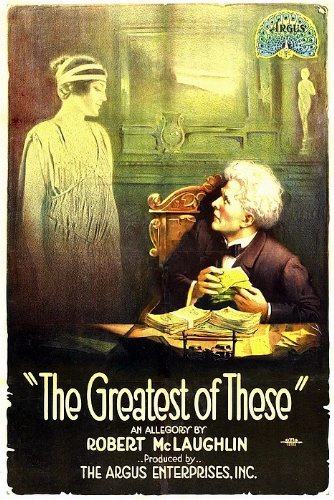
In the pantheon of cinema that dares to grapple with the loftiest of human virtues, Robert McLaughlin's 'The Greatest of These' stands as an incandescent beacon, a narrative tapestry woven with threads of profound spiritual inquiry and unflinching humanism. McLaughlin, with his signature inimitable style, transcends mere storytelling; he crafts a cinematic parable, an allegorical journey into the very crucible of the human spirit, where the theological virtues of Faith, Hope, and Charity are not abstract concepts but living, breathing forces that shape destinies and redefine resilience. This is not merely a film to be watched; it is an experience to be absorbed, a meditation on what truly sustains us when all else crumbles.
At the narrative's desolate heart lies a community ravaged by an ecological catastrophe, stripped bare of its sustenance and, more insidiously, its collective will. It is within this stark tableau that Faith, as a palpable entity, begins its arduous assertion. McLaughlin introduces us to Elara, a young woman whose quiet fortitude belies the immense burden she carries. Her unwavering conviction in the land's latent capacity for resurgence, despite its barren, unforgiving visage, is nothing short of miraculous. This is not a naive optimism, but a profound, almost primal trust in an unseen order, a belief that defies the stark, empirical evidence of decay. Elara's faith is a solitary ember in a world plunged into darkness, frequently challenged by the encroaching nihilism of her neighbors. Her daily rituals – a silent prayer over dust-choked soil, a persistent gaze towards a sky that offers no immediate succor – become acts of radical defiance. It is a faith born not of comfort, but of desperate necessity, a last bastion against the crushing weight of despair. This portrayal resonates deeply, reminding one of the quiet, unyielding spirit found in characters facing insurmountable odds, much like the stoic protagonists grappling with societal collapse in films such as The Trap, where hope is a fragile commodity to be fiercely guarded.
From the bedrock of Elara's unwavering faith springs the delicate, yet formidable, tendril of Hope. In McLaughlin's vision, hope is not a passive wish, but an active, laborious cultivation. This is exquisitely symbolized by Elara's painstaking nurturing of a single, miraculously resilient seedling – a potent, almost sacred emblem of a future harvest. It is a fragile life, demanding incessant vigilance against a backdrop of a dying world. Every drop of water, every ray of sun, every tender touch becomes an act of profound hope, a daily rebellion against the seemingly inevitable. The camera often lingers on Elara's hands, dirtied but determined, tending to this solitary promise, transforming the mundane into the monumental. This hope is not a fantasy, but a deliberate act of will, a refusal to concede to the pervasive gloom that threatens to engulf all. It is a poignant echo of the resilience found in characters like the titular figure in The Waif, who, despite their vulnerability, cling to an inner strength that promises a better dawn. McLaughlin understands that hope, in its purest form, is not about guarantees, but about the courage to continue striving for something better, even when the odds are stacked overwhelmingly against you.
While Faith provides the foundation and Hope sustains the arduous journey, it is Charity, in its most profound and self-sacrificing manifestation, that elevates 'The Greatest of These' into the realm of timeless cinematic allegory. The film's emotional crescendo arrives not through a grand, miraculous intervention, but through an act of breathtaking, understated generosity. As Elara's solitary plant, the embodiment of her tireless hope, finally yields its first precious fruits, the moment of personal triumph is swiftly transformed into one of communal salvation. Instead of hoarding this rare sustenance for herself or her immediate kin – a natural, even justifiable instinct in such dire circumstances – Elara selflessly distributes its precious seeds among the last few disheartened families still clinging to the ravaged land. This act, small in scale yet monumental in its implication, transcends mere giving. It is a sharing of the very essence of future possibility, a rekindling of dormant spirits, and a profound demonstration that true salvation lies not in individual survival, but in the communal embrace of selfless love. This climactic act resonates with the tragic yet redemptive spirit found in films like Sweetheart of the Doomed, where personal sacrifice ultimately defines heroism, but here, the sacrifice begets not just admiration, but tangible, collective renewal.
The emotional weight of this narrative is significantly amplified by the masterful performance of Samuel R. Brodsky as Elias, the venerable patriarch whose initial stoicism gradually erodes into a profound disillusionment. Brodsky, with a gravitas that feels both ancient and acutely contemporary, embodies the weary resignation of a generation that has witnessed too much hardship. His portrayal is a study in nuanced emotional decay, his eyes often reflecting the deep-seated weariness that threatens to extinguish all hope. Elias serves as a vital counterpoint to Elara's burgeoning faith, his skepticism and despair challenging her resolve at every turn. Brodsky’s performance is not one of bombast or theatricality, but of quiet, internal struggle, conveyed through subtle gestures, a downturned mouth, or the heavy slump of his shoulders. When Elara's act of charity finally reaches him, the flicker of rekindled hope in Brodsky's eyes is a moment of profound cinematic power, a testament to his ability to convey immense emotional shifts with understated grace. His journey from brokenness to a fragile, renewed belief is one of the film’s most compelling arcs, reminding us that even the most hardened hearts can be softened by genuine love. His presence grounds the allegorical nature of the film in a deeply human reality, making the abstract virtues tangible through his lived experience on screen.
Robert McLaughlin’s directorial prowess shines throughout 'The Greatest of These,' not through ostentatious display, but through a meticulous, almost painterly approach to visual storytelling and narrative economy. His “inimitable style” here manifests as a masterful blend of stark realism and profound allegory. The cinematography, though perhaps constrained by the technological limitations of its era, manages to evoke a haunting beauty in the desolate landscapes, turning barren fields into canvases for human struggle. The use of natural light, the deliberate framing of Elara against vast, empty skies, and the close-ups on the symbolic seedling all contribute to a sense of both vulnerability and immense spiritual fortitude. McLaughlin understands that true drama often lies in the quiet moments, in the unspoken emotions etched upon faces, and in the profound symbolism of everyday objects. The narrative structure, while seemingly straightforward, is imbued with layers of meaning, each scene carefully constructed to build towards the ultimate revelation of charity's supremacy. There is a timeless quality to his direction, a classical elegance that allows the film's profound themes to resonate without ever feeling didactic. It's a testament to a filmmaker who trusts his audience to engage with complex ideas, much like the enduring philosophical depth explored in a work such as Hamlet, albeit through a starkly different narrative lens.
What truly distinguishes 'The Greatest of These' is its enduring relevance. In an age often characterized by cynicism and a relentless pursuit of individual gain, McLaughlin's film serves as a powerful, necessary counter-narrative. It reminds us that humanity's most potent forces are not those of conquest or accumulation, but of compassion and selflessness. The film's message, distilled from ancient wisdom, feels remarkably fresh and urgent, prompting viewers to reflect on their own capacity for faith in the face of adversity, for hope when all seems lost, and, most crucially, for charity in a world perpetually in need of healing. It's a film that doesn't just entertain; it ennobles. The subtle yet powerful performances, particularly that of Samuel R. Brodsky, provide the human anchor for McLaughlin's grand allegorical ambitions, ensuring that the virtues explored feel deeply personal and universally accessible. The film's impact extends far beyond its runtime, planting seeds of introspection and empathy that continue to germinate long after the final frame. It stands as a powerful argument for the cinema's capacity to transcend mere entertainment and function as a profound moral compass, guiding us towards the best versions of ourselves. Much like the poignant reflections on time and identity in A Girl of Yesterday, 'The Greatest of These' offers a timeless perspective, albeit one focused on the eternal rather than the ephemeral.
In conclusion, 'The Greatest of These' is a cinematic achievement of rare beauty and profound wisdom. Robert McLaughlin, through his singular vision and the compelling performances of his cast, most notably Samuel R. Brodsky, has bequeathed to us a work that is both challenging and deeply comforting. It is a film that reaffirms the enduring power of the human spirit and the timeless truth that, among all virtues, the greatest of these is indeed charity – the selfless act of love that binds us, heals us, and ultimately saves us. It is a film that deserves to be rediscovered, cherished, and contemplated for generations to come, a true masterpiece of allegorical storytelling that continues to resonate with an urgent, vital message for our contemporary world.

IMDb 4.2
1935
Community
Log in to comment.