DbcultAccessing Vault...
Cult Review
Senior Film Conservator
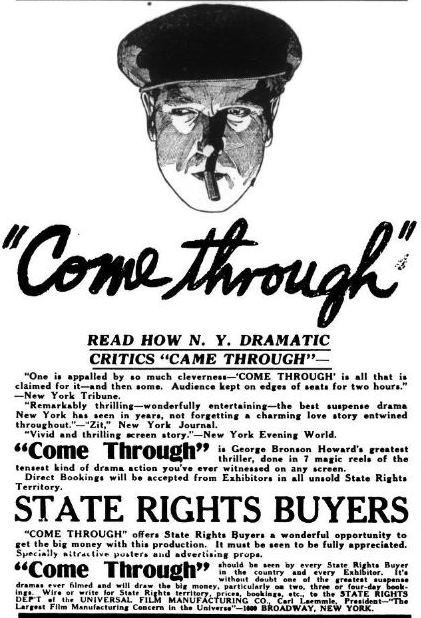
Step back in time, dear reader, to an era when stories unfolded not with spoken words, but with the eloquent flicker of light and shadow, accompanied by the soulful strains of an orchestra. We're diving into the silent film classic, Come Through, a cinematic endeavor from 1917 that, even a century later, continues to resonate with its audacious portrayal of ambition, duality, and the intoxicating allure of a life lived on the edge. This isn't merely a film; it's a testament to the power of early cinema to weave narratives of complex human psychology, long before the advent of synchronized sound.
The narrative thrust of Come Through is nothing short of captivating. Imagine a young man, a product of the rugged, unforgiving terrain of a Montana mining camp, where life is dictated by the pickaxe and the earth's stubborn resistance. His existence is one of raw labor, devoid of the polished veneers of urbanity. Yet, within him burns an insatiable desire for something more, a yearning that transcends the dust and grime of his origins. This yearning propels him eastward, from the untamed wilderness to the glittering, labyrinthine streets of New York City, a metropolis synonymous with opportunity and reinvention. It's here that he undergoes a profound metamorphosis, shedding the rough-hewn skin of a miner to emerge as a sophisticated, celebrated dancer, a darling of the city's high society. This transformation isn't just a change of clothes; it's a complete overhaul of identity, a deliberate crafting of a new persona designed to navigate the intricate social dance of the elite.
But the film's brilliance lies in its refusal to settle for a straightforward rags-to-riches tale. Beneath the elegant pirouettes and the charming smiles, another, far more dangerous identity lurks. Our protagonist, the acclaimed dancer, is simultaneously a gentleman burglar, an individual who uses his intimate knowledge of high society to meticulously plan and execute daring heists. This dual existence is not merely a plot device; it's a profound exploration of identity, morality, and the lengths to which one might go to both escape a past and conquer a future. The tension between his public adoration and his secret transgressions creates a psychological tightrope walk that keeps viewers utterly engrossed. It forces us to ponder the true nature of character: is it defined by public perception, private actions, or the intricate interplay between the two? The film masterfully exploits this dichotomy, presenting a protagonist who is both admired and condemned, a hero and a villain, often within the same breath. This exploration of the 'other self' is a compelling theme, reminiscent of other silent era explorations of hidden lives and societal facades, though Come Through carves its own unique path with its particular blend of artistry and criminality.
At the heart of Come Through's enduring appeal is the magnetic performance of Herbert Rawlinson. In an era where actors had to convey complex emotions and intricate motivations without the benefit of dialogue, Rawlinson delivers a masterclass in silent expression. His portrayal of the protagonist is a marvel of physical acting and nuanced facial communication. As the graceful dancer, he exudes an effortless charm, his movements fluid and captivating, embodying the very essence of sophisticated artistry. He uses his eyes, his posture, and the subtle shifts in his demeanor to convey the joy and precision of his public persona.
However, it is in his portrayal of the gentleman burglar that Rawlinson truly shines. He imbues this darker aspect of his character with a chilling blend of calculated cunning and underlying desperation. The transformation is remarkable; the open, inviting face of the dancer gives way to a mask of steely resolve, his eyes glinting with a predatory intelligence. He conveys the internal conflict, the constant vigilance required to maintain such a dangerous charade, through subtle gestures and an almost imperceptible tension in his body language. One can almost feel the weight of his secret, the precarious balance he maintains between two disparate worlds. This is not a caricature of a criminal; it is a nuanced depiction of a man driven by forces both external and internal, a man who has chosen a perilous path for reasons the film invites us to ponder. Rawlinson's ability to switch between these two facets of his character, often within the same scene, without resorting to overt theatricality, is a testament to his skill and understanding of the silent medium. He makes the audience believe in the impossible, making the dual life not just plausible, but compellingly human. His performance anchors the entire film, providing the emotional depth necessary to elevate it beyond a simple crime thriller.
The thematic richness of Come Through is one of its most compelling attributes. The film paints a vivid canvas of contrasts, beginning with the stark juxtaposition of the Montana mining camp and the opulent New York high society. This geographical and social leap is more than just a change of scenery; it's a commentary on the American dream, or perhaps, the American illusion. The protagonist's journey from manual labor to artistic acclaim, and then to criminal enterprise, forces us to question the definitions of success and the pathways available to those who seek to transcend their birthright. Is true achievement found in honest toil, artistic expression, or the audacious appropriation of wealth?
The film delves deeply into the concepts of public persona versus private reality. The dancer is adored, celebrated, and an emblem of cultural sophistication. The burglar operates in the shadows, an unseen force challenging the very institutions that celebrate his other self. This duality raises profound questions about authenticity and the masks we wear in society. How much of our identity is constructed for public consumption, and what happens when that constructed self clashes with our true desires or needs? The film subtly critiques the superficiality of high society, suggesting that beneath its polished exterior, there are vulnerabilities and perhaps even a tacit acceptance of certain transgressions, provided they remain unseen.
Furthermore, Come Through tackles the thorny issue of morality. Is the protagonist's criminality justifiable given his origins and aspirations? Does his artistic talent somehow mitigate his illicit activities, or does it merely provide a more sophisticated cover? The film doesn't offer easy answers, instead inviting the audience to grapple with these complex ethical dilemmas. It's a fascinating study of ambition unchecked by conventional ethics, and the precarious tightrope walk between aspiration and downfall. The thematic depth here is remarkable for a film of its era, demonstrating a sophisticated understanding of human nature and societal pressures.
While Herbert Rawlinson commands the screen, the ensemble cast of Come Through plays a crucial role in fleshing out the world and providing foils for our complex protagonist. Although specific details of their individual roles are often lost to the mists of time for many silent films, we can infer their contributions to the narrative's texture. Jean Hathaway, likely portraying a society matriarch or a figure of authority, would have lent gravitas and perhaps a touch of stern judgment to the elite circles our hero infiltrates. Her presence would underscore the rigid social structures he simultaneously aspires to and subverts.
Roy Stewart and George Webb, often cast in roles of rugged masculinity or moral uprightness in other features, could have represented figures from the protagonist's past, perhaps fellow miners, or perhaps law enforcement officers in New York, subtly pursuing the elusive burglar. Their characters would serve as a constant reminder of the two worlds our hero inhabits, creating moments of potential exposure or moral confrontation. Imagine the tension as the dancer brushes past a detective, or encounters an old acquaintance from his mining days, forcing him to maintain his elaborate charade.
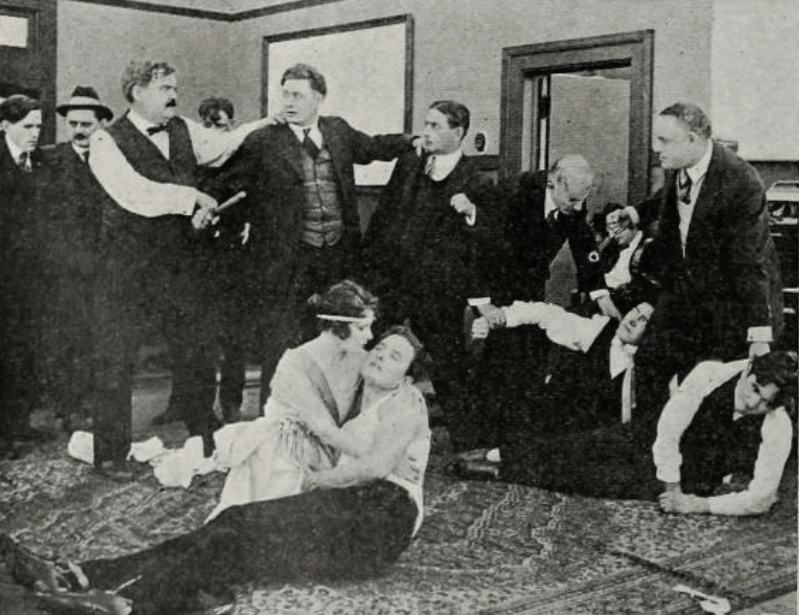
Charles Hill Mailes and William Dyer often brought a certain theatricality or imposing presence to their roles. They might have been the wealthy victims of the burglar, or perhaps rival figures in the dance world, adding layers of jealousy or suspicion. Their performances, even in supporting capacities, would contribute to the melodramatic flair characteristic of the era, enhancing the stakes of the protagonist's double life. Margaret Whistler, Alfred Allen, and Alice Lake would have provided the necessary emotional resonance, perhaps as love interests, confidantes, or unwitting participants in the protagonist's schemes. Alice Lake, in particular, was known for her expressive performances and might have played a key romantic interest, torn by her affections for the dancer and her suspicions about his true nature. Herbert Rawlinson, of course, is the linchpin, and the supporting cast's ability to react to and elevate his central performance would have been crucial in selling the film's ambitious premise. Their collective efforts create a believable social fabric against which the protagonist's daring exploits unfold, making the stakes feel real and the world fully inhabited.
Examining Come Through also offers a fascinating glimpse into the craftsmanship of silent cinema. Without spoken dialogue, filmmakers relied heavily on visual storytelling, a technique that often resulted in a heightened sense of drama and symbolism. Intertitles, far from being mere text, became an integral part of the narrative, providing exposition, conveying dialogue, and even dictating the emotional tone of a scene. In Come Through, these intertitles would have been carefully crafted to reveal the protagonist's thoughts, the intricate details of his burglaries, and the reactions of the unsuspecting society around him, guiding the audience through the labyrinth of his dual life.
Cinematography in 1917, while perhaps lacking the sophisticated camera movements of later eras, excelled in its use of lighting and composition. One can imagine dramatic contrasts between the dim, shadowy interiors where the burglar operates and the brightly lit ballrooms where the dancer performs. Such visual distinctions would not only enhance the mood but also visually reinforce the thematic duality of the film. The use of close-ups on Rawlinson's expressive face would be paramount, allowing the audience to discern his internal struggles and cunning machinations. Editing, too, played a crucial role, building suspense during the heist sequences and maintaining the brisk pace necessary to keep the audience engaged without dialogue. The rapid cuts between the dancer's public life and the burglar's clandestine activities would amplify the tension and highlight the precariousness of his existence.
Melodrama, a hallmark of the silent era, would have been skillfully employed to heighten emotional impact. Exaggerated gestures and facial expressions, though sometimes perceived as quaint today, were essential tools for conveying powerful feelings across the screen. These elements, combined with a compelling score (which, though not recorded, was an integral part of the viewing experience), would have immersed audiences in the protagonist's world, making his triumphs and perils deeply felt. The film's success would hinge on its ability to transcend the lack of sound through sheer visual artistry and the compelling performances of its cast, creating a narrative that speaks volumes without uttering a single word.
The intricate narrative of Come Through is the brainchild of writers George Bronson Howard and Fred Myton. Their collaboration likely brought a potent mix of dramatic flair and suspenseful plotting to the screen. Howard, known for his diverse literary output including plays and detective stories, would have been instrumental in crafting the intricate crime elements and the psychological depth of the protagonist's dual life. His experience in crafting compelling narratives would ensure that the burglaries were not mere spectacles, but carefully orchestrated acts that revealed character and advanced the plot.
Fred Myton, on the other hand, was a prolific screenwriter of the era, often credited with crafting engaging plots for a wide array of genres. His contribution would likely have focused on the structural integrity of the story, ensuring a coherent progression from the Montana mining camp to the high society of New York, and skillfully weaving together the threads of romance, crime, and social commentary. Together, they would have faced the unique challenge of developing a story that could be effectively told visually, relying on strong character motivations and clear narrative beats to convey meaning without dialogue. Their script would have provided the framework for Rawlinson's stellar performance, creating opportunities for his character to exhibit both his charming public face and his cunning secret identity. The balance between the thrilling aspects of the burglaries and the social drama of the dancer's life would have been a delicate one, and their combined writing prowess would have been essential in achieving this equilibrium, ensuring that Come Through remained a cohesive and engaging cinematic experience.
When considering Come Through, it's illuminating to place it within the broader context of silent cinema, especially films that explored similar themes of social mobility, hidden identities, or criminal intrigue. The protagonist's journey from a humble background to societal prominence, for instance, finds a distant echo in films like The Clodhopper, which often depicted characters striving to escape their rural roots for urban sophistication. However, Come Through takes a far darker, more morally ambiguous turn with its embrace of a secret criminal life.
The element of a gentleman burglar, operating within the very circles he victimizes, also brings to mind the intricate plotting of mystery films, even those not directly focused on crime. The meticulous planning and execution of his heists share a certain intellectual thrill with adaptations of classic detective stories, perhaps even a distant kinship with the suspense of The Moonstone, where a jewel theft unravels a complex web of secrets. Similarly, the film's exploration of hidden motives and the price of deceit could be loosely compared to the moral quandaries presented in films like The Price of Malice, which likely delved into the dark consequences of illicit actions. What sets Come Through apart, however, is its compelling fusion of these elements: the aspiration for social elevation, the artistic expression of a dancer, and the thrilling, dangerous life of a master thief, all contained within one captivating character. It doesn't just touch upon these themes; it makes them the very fabric of its existence, presenting a unique and unforgettable narrative that stands out even among its contemporaries.
In conclusion, Come Through is more than just a historical artifact; it's a vibrant piece of silent cinema that continues to intrigue and entertain. Its exploration of dual identity, social aspiration, and the thin line between legitimate success and criminal enterprise remains as relevant today as it was in 1917. Herbert Rawlinson's performance is a tour de force, a testament to the power of silent acting to convey profound emotional and psychological depth. The film's thematic richness, coupled with the skillful craftsmanship of its writers and the visual storytelling techniques of the era, makes it a compelling watch for anyone interested in the evolution of narrative cinema.
For modern viewers, Come Through offers a unique opportunity to appreciate the artistry of a bygone era. It reminds us that compelling stories and complex characters are not solely the domain of sound film, but have been at the heart of cinematic expression since its very inception. It's a film that asks us to look beyond the surface, to question appearances, and to marvel at the ingenuity of a man who dared to live two lives, leaving an indelible mark on both the dance floor and the annals of cinematic crime. If you have the chance to experience this silent gem, seize it – you'll be richly rewarded.
IMDb 5.2
1935
Community
Log in to comment.