DbcultAccessing Vault...
Cult Review
Senior Film Conservator
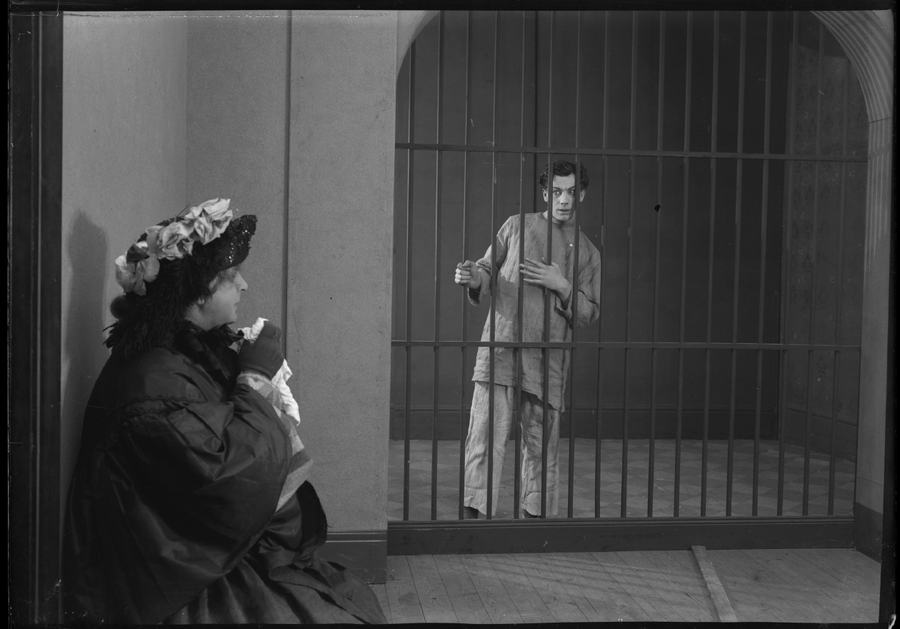
Stepping back into the cinematic landscape of 1917, one encounters a fascinating artifact of early Swedish filmmaking: Guldspindeln, or 'The Golden Spider'. This is not merely a film; it is a meticulously preserved fragment of a bygone era, a silent testament to the burgeoning artistry of a medium still finding its voice. Helmed by the often-underestimated Fritz Magnussen, a director whose prolific output in the 1910s and 20s deserves far greater critical re-evaluation, the film plunges us headfirst into the murkier corners of Parisian society, where glamour and depravity dance a macabre tango. Magnussen, known for his ability to craft compelling narratives with a keen eye for human frailty, truly shines here, transforming a simple premise – a bloody murder investigation – into a sprawling tapestry of intrigue and moral ambiguity.
The very title, 'The Golden Spider', immediately conjures images of delicate beauty concealing venomous intent, a motif that Magnussen masterfully weaves throughout the narrative. From the moment the French police are summoned to an opulent, yet disturbingly dishevelled, Parisian residence, the air is thick with unspoken secrets. The victim, a figure of some local notoriety, lies amidst an almost theatrical disarray, his demise signaling not a random act, but a meticulously planned unraveling. The initial scenes are a masterclass in visual storytelling, relying on carefully composed shots and the nuanced reactions of the early investigators to convey the gravity and perplexing nature of the crime. This isn't a mere procedural; it's an atmospheric immersion into the psychological aftermath of violence, a silent symphony of suspicion and burgeoning dread.
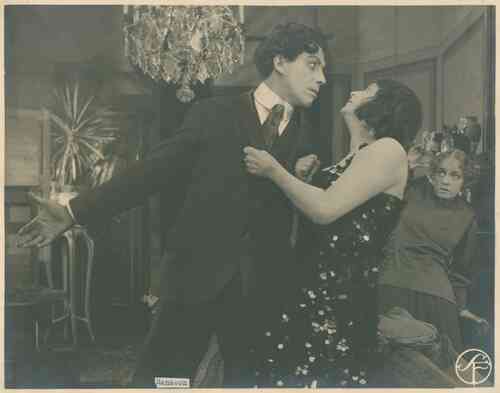
Magnussen's direction exhibits a remarkable confidence for the period. He understands the power of suggestion, allowing the audience to piece together fragments of information, much like the detectives on screen. The pacing, though deliberate, never lags, maintaining a taut sense of suspense that builds with each new revelation. The camera work, while rooted in the static conventions of the time, is nonetheless expressive, often employing stark contrasts of light and shadow to emphasize character motivations or to heighten dramatic tension. One cannot help but draw parallels to the atmospheric depth found in later German Expressionist works, a testament to Magnussen's forward-thinking approach to visual narrative. While perhaps not as overtly experimental as some of its contemporaries, Guldspindeln demonstrates a sophisticated understanding of cinematic language, proving that innovation often lies in refinement rather than radical departure.
The ensemble cast is, without hyperbole, exceptional, navigating the demands of silent cinema with an almost balletic grace. Greta Almroth, a prominent star of the era, delivers a performance of striking subtlety and emotional depth. Her character, whose identity slowly unravels as the investigation progresses, is imbued with a compelling blend of vulnerability and steely resolve. Almroth's expressive eyes and precise gestures communicate volumes, creating a character who is both a victim of circumstance and a formidable force to be reckoned with. Her portrayal is a masterclass in silent acting, conveying internal turmoil and external defiance without a single spoken word. One might recall her nuanced work in The Rainbow, where she similarly commanded the screen with her powerful, yet understated, presence.
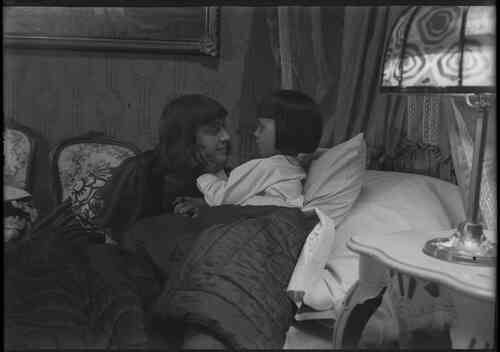
Nicolai Johannsen, in a role that requires both gravitas and a touch of world-weariness, brings an authentic realism to his portrayal of the lead investigator. His detective is not the infallible hero, but a man burdened by the grim realities of his profession, yet driven by an unwavering commitment to justice. Johannsen’s ability to convey both intellectual rigor and a deep-seated empathy through his physicality and facial expressions is truly remarkable. His scenes are often a quiet study in deduction, punctuated by moments of intense emotional reaction, grounding the more melodramatic elements of the plot in a believable human experience. His performance here perhaps even surpasses his compelling turn in Dommens dag, where he also expertly navigated complex moral landscapes.
The supporting players are equally impressive. William Larsson, often cast in roles demanding a certain imposing presence, here imbues his character with a menacing ambiguity that keeps the audience guessing. His interactions are charged with an undercurrent of threat, making him a compelling suspect or a powerful ally, depending on the scene. Lars Hanson, a name that would become synonymous with Swedish cinematic excellence, delivers a performance that, while perhaps not as central as Almroth's or Johannsen's, is nonetheless impactful. His character, often caught in the periphery of the central mystery, provides crucial emotional resonance, acting as a moral compass or a tragic figure swept up in the unfolding drama. Hanson's capacity for conveying profound internal states, so evident in later works like The Pretenders, is already keenly felt here, even in a more constrained role.
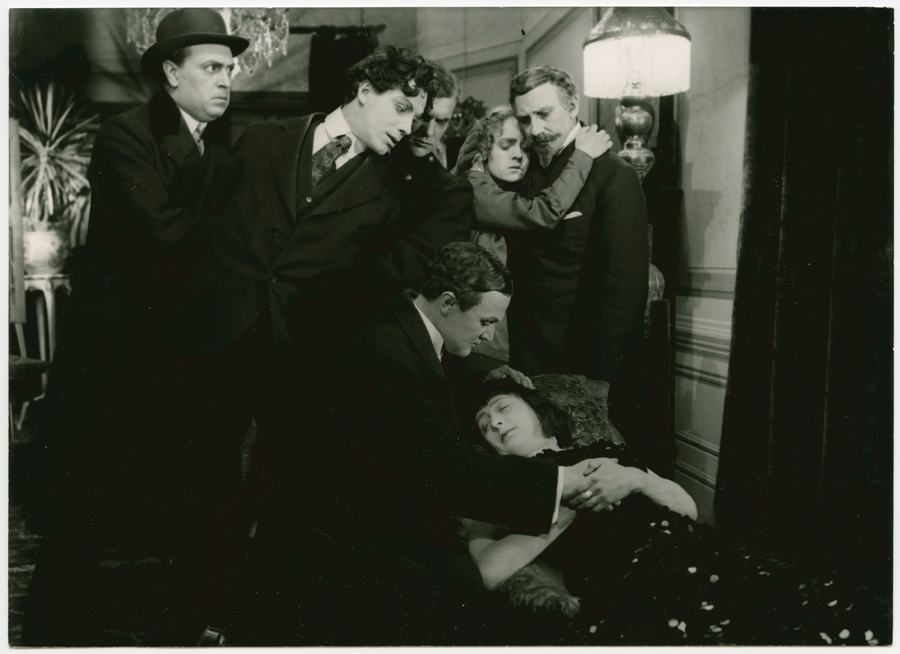
And then there is Lili Beck, whose screen presence is simply captivating. Beck often plays characters of strong will and independent spirit, and in Guldspindeln, she brings a fascinating duality to her role. Her character oscillates between outward composure and an underlying desperation, adding layers of complexity to the narrative's central mystery. Her ability to command attention, even in scenes with minimal dialogue, speaks volumes of her inherent charisma and acting prowess. Comparing her performance here to her earlier work in Builders of Castles, one can observe a clear maturation in her craft, a deepening of her capacity to inhabit multifaceted characters.
The narrative, penned by Fritz Magnussen himself, is a intricate web of deceit and revelation. It avoids the simplistic good-versus-evil dichotomy, instead delving into the more uncomfortable shades of gray that define human motivation. The plot twists are earned, emerging organically from character choices and the escalating tension rather than feeling contrived. Magnussen's writing demonstrates a profound understanding of psychological realism, a trait that elevates Guldspindeln beyond a mere potboiler. He crafts a world where every character harbors secrets, and every seemingly innocuous detail holds the potential to unlock a deeper truth. The script's intelligence is particularly evident in how it manages multiple converging storylines without ever losing its focus, a remarkable feat for any period of filmmaking.
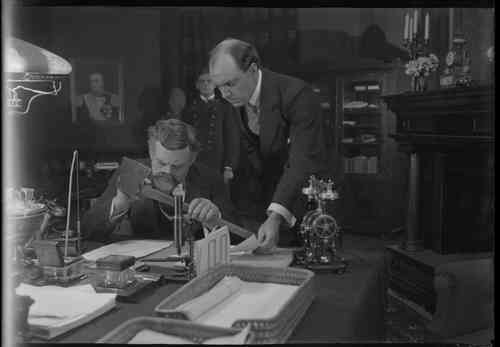
The setting of Paris itself functions almost as an additional character. Magnussen and his cinematographer evoke a city that is simultaneously romantic and dangerous, a place where clandestine affairs flourish in the shadow of grand boulevards. The production design, while perhaps not as lavish as some Hollywood spectacles of the era, is meticulously detailed, capturing the essence of early 20th-century Parisian life – from the bustling streets to the intimate, richly furnished interiors where much of the drama unfolds. The use of natural light, combined with carefully placed artificial illumination, creates a palpable sense of atmosphere, enhancing the film's noirish undertones long before the genre was formally defined. This visual poetry is a hallmark of Magnussen's style, a commitment to immersing the viewer fully in the world he creates.
One of the film's most enduring strengths lies in its thematic depth. Beyond the surface-level mystery, Guldspindeln explores themes of societal corruption, the illusion of innocence, and the often-fragile nature of justice. The 'golden spider' itself can be interpreted in multiple ways: as a symbol of the femme fatale whose allure ensnares men, as a representation of a vast criminal enterprise, or even as a metaphor for the insidious nature of greed that permeates all levels of society. Magnussen doesn't offer easy answers, instead inviting the audience to ponder these complex questions long after the final frame. This intellectual engagement is a rare quality for films of any era, and it speaks to the lasting power of this particular work.
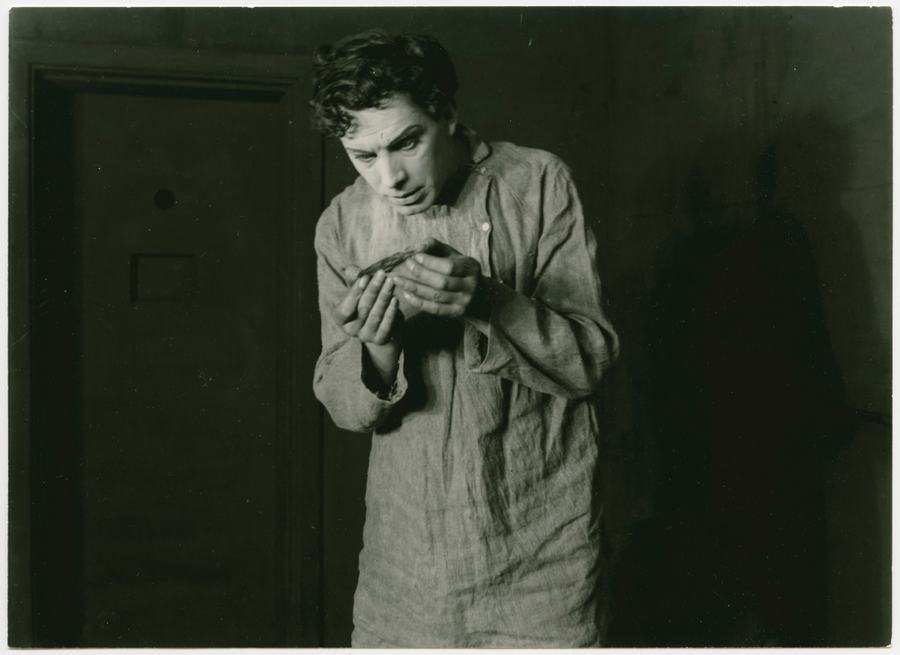
While some might compare its narrative structure to other silent crime dramas like The Tide of Death, Guldspindeln distinguishes itself through its psychological nuance and its unflinching gaze into the darker recesses of human nature. It lacks the overt melodrama that sometimes characterized the period, opting instead for a more grounded, albeit still heightened, realism. The film's influence, though perhaps not as widely acknowledged as some of its more celebrated contemporaries, can be felt in the subsequent development of European crime cinema, particularly in its emphasis on atmosphere and character-driven suspense. It serves as a vital precursor to the more intricate thrillers that would emerge in the decades to follow, demonstrating that the foundations of complex narrative cinema were being laid much earlier than often recognized.
The meticulous restoration of such films is crucial, allowing contemporary audiences to appreciate the craftsmanship and artistry that defined early cinema. Watching Guldspindeln today is not just an academic exercise; it is a genuinely engaging experience. The film’s power lies not just in its historical significance, but in its enduring ability to captivate and provoke thought. It reminds us that storytelling, even without the benefit of synchronized sound, can be profoundly impactful, relying on the universal language of human emotion and visual allegory. It is a testament to the fact that compelling narratives transcend technological limitations, proving that a well-told story, expertly brought to life by talented performers and a visionary director, will always resonate.
In conclusion, Guldspindeln stands as a compelling example of early cinematic mastery. It’s a film that asks us to look beyond the surface, to question appearances, and to delve into the intricate dance between light and shadow that defines both a city and the human soul. Fritz Magnussen’s vision, brought to life by a stellar cast including Greta Almroth, Nicolai Johannsen, William Larsson, Lars Hanson, and Lili Beck, ensures its place as a significant, if sometimes overlooked, contribution to the silent film canon. For anyone interested in the evolution of the crime genre, the art of silent acting, or simply a gripping story, 'The Golden Spider' offers a richly rewarding experience, a shimmering thread in the vast tapestry of film history that continues to intrigue and enthrall.
IMDb —
1924
Community
Log in to comment.