DbcultAccessing Vault...
4.5/10
Senior Film Conservator
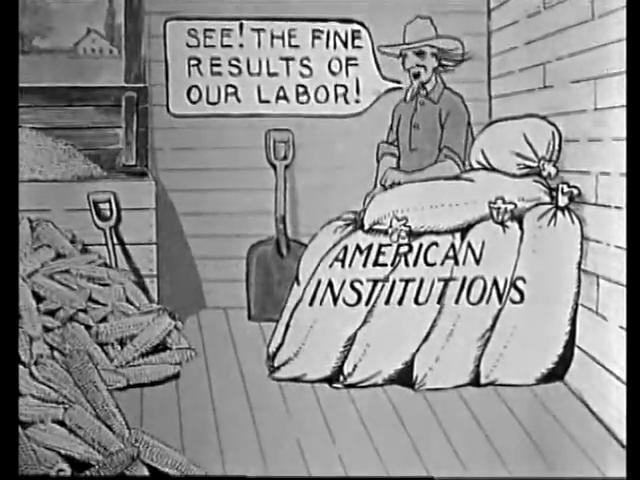
A definitive 4.5/10 rating for a film that redefined the boundaries of cult cinema. Uncle Sam and the Bolsheviki - I.W.W. Rat remains a cornerstone of transgressive art.
The cinematic landscape of the early 20th century was a fertile ground for nascent ideas, experimental narratives, and, crucially, potent socio-political commentary. Among the myriad of films that emerged from this period, some served as pure entertainment, others as social critiques, and a significant portion as instruments of public persuasion. 'Uncle Sam and the Bolsheviki - I.W.W. Rat' unequivocally falls into the latter category, standing as a stark, unvarnished example of propaganda cinema forged in the crucible of America’s post-Great War anxieties and the nascent 'Red Scare.' To approach this film merely as a historical artifact would be to miss its enduring, if unsettling, power as a mirror reflecting the collective fears and fervent nationalistic impulses of an era.
The film, a direct product of its time, capitalizes on the widespread fear of Bolshevism following the Russian Revolution and the growing apprehension surrounding radical labor movements like the Industrial Workers of the World (I.W.W.). The title itself is a blunt declaration of intent, conflating foreign communist ideology with domestic labor activism, and casting both as a rodent-like threat to the American body politic. This wasn't subtle filmmaking; it was a sledgehammer to the senses, designed to evoke immediate, visceral reactions. The narrative, as it unfolds, is less a complex character study and more a carefully constructed allegory, pitting the idealized virtues of American patriotism against the perceived vices of foreign-influenced subversion.
Our protagonist, John Sterling, is less a person and more a walking embodiment of American ideals. Having returned from the trenches of Europe, where he presumably fought for liberty and democracy, he finds these very principles under assault at home. This narrative choice immediately establishes a powerful emotional resonance: the soldier who defended the nation abroad now must defend it from within. Sterling's quiet resolve, his keen observation, and his unyielding commitment to justice are presented as the quintessential American virtues, a deliberate counterpoint to the chaotic and deceptive tactics of the I.W.W. He is the audience's surrogate, the eyes through which the 'rat' is identified, tracked, and ultimately cornered. His journey from bewildered observer to active participant in the defense of his community is a carefully orchestrated arc, designed to inspire similar vigilance in the viewer.
The film's strength, within its propagandistic framework, lies in its ability to humanize the threat through Sterling's perspective. We see the impact of the I.W.W.'s actions not just as abstract societal damage, but as personal hardship for his neighbors, his former colleagues, and his community. This personalization of the conflict serves to amplify the sense of urgency and danger, making the 'Bolsheviki-I.W.W. Rat' not just a political concept, but a direct threat to the viewer's own way of life. This technique is a hallmark of effective propaganda, transforming broad ideological conflicts into tangible, relatable stakes. One might draw a parallel to the way other films of the era, such as The House of Bondage, sought to address social ills by focusing on individual suffering, albeit with vastly different ideological underpinnings.
The depiction of the I.W.W. and their supposed Bolshevik puppet masters is where the film sheds any pretense of nuance. The I.W.W. members are portrayed as a motley crew of malcontents, foreign agitators, and cynical opportunists, preying on the grievances of honest, but easily misled, American workers. Their meetings are depicted as clandestine gatherings, shrouded in shadow, where plans for sabotage and industrial unrest are hatched. The 'Bolsheviki' are even more abstract and sinister, often represented by shadowy figures in opulent, dimly lit rooms, pulling strings from afar. This visual language is crucial; it establishes a clear dichotomy between the open, honest American way and the secretive, deceptive tactics of the enemy.
The film employs classic villain archetypes: the charismatic, silver-tongued orator who incites unrest; the thuggish enforcer who intimidates dissenters; and the shadowy mastermind whose true allegiance is only revealed in the climax. This simplification of complex socio-economic forces into easily identifiable villains is a common tactic in propaganda, designed to channel public fear and resentment towards a specific target. The 'rat' metaphor itself is deeply dehumanizing, reducing a political movement and its adherents to vermin to be exterminated. This stark portrayal stands in contrast to films that attempted more nuanced explorations of criminality or social unrest, such as The Robber, which, despite its title, might have explored the motivations of its anti-hero with greater psychological depth.
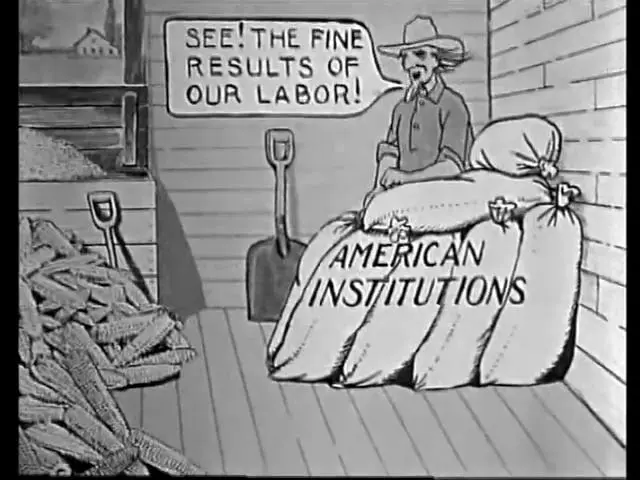
While the film's message is overt, its cinematic execution, for its era, is remarkably effective in conveying that message. The use of intertitles is particularly impactful, often serving as direct pronouncements or moral injunctions, guiding the audience's interpretation of events. Close-ups are employed to emphasize moments of patriotic resolve or sinister intent, drawing the viewer into the emotional core of the scene. The film's pacing, building from initial unease to climactic confrontation, is skillfully managed to maintain tension and drive home its urgent message. The visual contrast between the orderly, sunlit world of loyal Americans and the murky, shadowed realm of the conspirators is a recurring motif, reinforcing the clear-cut moral boundaries the film seeks to establish.
Furthermore, the film likely utilized evocative symbolism characteristic of the period. Images of the American flag, the Statue of Liberty, or idealized family units would be juxtaposed against scenes of striking workers, burning factories, or radical rallies, creating a powerful visual rhetoric. The climax, with its dramatic unmasking and subsequent rallying of patriotic forces, would have been orchestrated for maximum emotional impact, designed to elicit cheers and a renewed sense of national solidarity. In this regard, it shares a certain theatricality with other melodramas of the time, though its political agenda is far more pronounced than a film like My Lady's Slipper, which focused more on personal intrigue.
To fully appreciate 'Uncle Sam and the Bolsheviki - I.W.W. Rat,' one must immerse oneself in the volatile socio-political landscape of the late 1910s and early 1920s. World War I had just concluded, leaving a profound sense of disillusionment and economic instability. The Russian Revolution had sent shockwaves across the globe, inspiring both hope among radicals and deep fear among established powers. In America, labor unrest was rampant, fueled by poor working conditions, low wages, and the economic dislocations of wartime production and demobilization. The I.W.W., with its radical syndicalist ideology and calls for a single, unified labor union, was viewed by many in government and industry as a direct threat to capitalism and national security.
The film emerged during a period of intense anti-radical sentiment, epitomized by the Palmer Raids and a pervasive fear of communist infiltration. It served as a cultural weapon in this ideological war, reinforcing official narratives and mobilizing public opinion against perceived internal enemies. Its message was clear: dissent was disloyalty, and radicalism was foreign. This was a time when even progressive ideas, such as women's suffrage, as explored in Your Girl and Mine: A Woman Suffrage Play, faced intense scrutiny and often harsh opposition, albeit for different reasons. The emotional tenor of 'Uncle Sam and the Bolsheviki - I.W.W. Rat' is a direct reflection of these heightened tensions, a cinematic artifact of a nation grappling with its identity and its place in a rapidly changing world.
While 'Uncle Sam and the Bolsheviki - I.W.W. Rat' may not be remembered for its artistic subtlety or nuanced character development, its significance lies in its candidness as a propaganda piece. It offers invaluable insight into the anxieties, prejudices, and political climate of its time. For modern viewers, it serves as a powerful reminder of how easily fear can be weaponized and how cinematic storytelling can be employed to shape public perception. It prompts critical reflection on the responsibility of media creators and the discerning eye required of audiences, then and now.
The film's methods, though crude by today's standards, reveal fundamental principles of propaganda that remain eerily relevant. The creation of a clear 'other,' the simplification of complex issues into a battle of good versus evil, and the appeal to patriotism and fear are timeless tactics. Comparing it to other films of national interest, such as The Crown Prince's Double, which might have explored themes of national identity or espionage from a different angle, highlights the unique, aggressive stance of 'Uncle Sam and the Bolsheviki - I.W.W. Rat'. Its enduring relevance isn't in its artistic merit, but in its historical authenticity as a cultural document of a particularly turbulent chapter in American history, a raw and potent expression of nationalistic fervor confronting perceived existential threats.
Ultimately, 'Uncle Sam and the Bolsheviki - I.W.W. Rat' is more than just an old film; it's a historical artifact, a warning, and a testament to the persuasive power of moving images. It encapsulates a specific moment when America wrestled with its post-war identity, its burgeoning industrial power, and the specter of global revolution. It’s a film that demands to be viewed not just for its narrative, but for what it reveals about the anxieties and political currents that shaped a nation. It's a stark reminder that the 'rat' of fear and division can take many forms, and vigilance, as embodied by John Sterling, remains a perpetual civic duty.
IMDb 7.8
1932
Community
Log in to comment.