DbcultAccessing Vault...
Cult Review
Senior Film Conservator
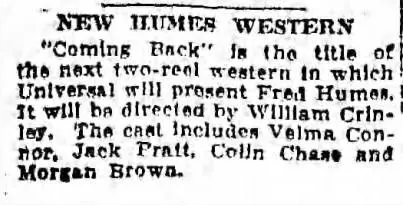
Is Coming Back worth your time today? Short answer: yes, but with significant caveats that demand a certain cinematic palate. This is a film for those who appreciate the foundational storytelling of early cinema, the silent era’s raw emotionality, and narratives steeped in classic themes of redemption and return.
It is decidedly not for viewers seeking rapid pacing, complex visual effects, or the layered psychological realism of contemporary dramas. If you’re willing to meet it on its own terms, Coming Back offers a surprisingly resonant experience, an earnest exploration of human fallibility and the enduring hope for a fresh start.
George Hively’s Coming Back is, at its heart, a study in the human condition’s most enduring struggles: regret, forgiveness, and the relentless pull of home. The film centers on John, a young man who, years prior, departed his tight-knit rural community under a cloud of youthful indiscretion. His return, unannounced and uninvited by many, sets the stage for a dramatic re-evaluation of past grievances and the potential for future reconciliation.
The narrative deftly explores the idea that 'coming back' is rarely a simple physical act; it’s an emotional and spiritual odyssey. John doesn't just return to a place, but to a web of relationships he irrevocably altered, forcing both himself and the community to confront the scars of the past. It's a universal tale, handled with a sincerity that transcends its era.
Hively, working from his own script, demonstrates a clear understanding of the silent film medium’s strengths. He relies heavily on visual storytelling and the expressive power of his cast, a necessity given the limitations of the time. His direction is often straightforward, almost functional, yet it occasionally achieves moments of genuine emotional impact.
Consider the sequence where John first encounters his estranged father, played with stoic heartbreak by Fred Humes. Hively's camera holds on their faces, allowing the audience to read the years of unspoken pain and lingering resentment in their subtle shifts of expression. It’s a masterclass in silent dialogue, proving that sometimes, less truly is more. While not as overtly experimental as, say, The Dragon Painter, Hively's approach grounds the narrative in relatable human drama.
The film’s pacing is deliberate, perhaps even slow by modern standards, but it perfectly suits the unfolding drama. Hively allows scenes to breathe, giving the audience time to absorb the emotional weight of each interaction. This measured approach contributes to a tone that is largely melancholic yet imbued with an underlying current of hope. There are no sudden, jarring shifts; instead, the narrative unfurls like a long, winding country road, mirroring John’s own journey.
The cast of Coming Back delivers performances that are both era-appropriate and surprisingly nuanced. In the absence of spoken dialogue, their ability to convey complex emotions through gesture, posture, and facial expression is paramount. And for the most part, they succeed admirably.
Morgan Brown, in a supporting role as the wise, elderly neighbor, is a revelation. Her quiet strength and knowing glances provide a much-needed moral compass in a community riddled with judgment. There’s a particular scene where she offers John a simple glass of water, her eyes conveying more understanding and compassion than any monologue could. It's an unconventional observation, but Brown’s understated presence often steals scenes from her more overtly dramatic co-stars.
Colin Chase, as John’s old rival, Robert, embodies the lingering bitterness of the past. His sneering expressions and confrontational body language are effective, if occasionally a touch theatrical. He serves as a vital antagonist, a constant reminder of the uphill battle John faces. Chase's performance, while not subtle, is undeniably impactful, providing a clear external obstacle to John's redemption.
Velma Connor, as Mary, the woman John left behind, offers a portrayal of resilience and quiet suffering. Her initial coldness towards John slowly thaws, revealing the deeper wounds beneath her composed exterior. Her performance is a testament to the power of restrained emotion, particularly in a scene where she silently watches John from a distance, her face a canvas of conflicting feelings.
And finally, Fred Humes, as John's father, delivers a performance that anchors the film's emotional core. His initial rejection of John is palpable, etched in his hardened posture and averted gaze. Yet, as the film progresses, the subtle cracks in his resolve become visible, culminating in a deeply moving, wordless reconciliation. It’s a truly strong, debatable opinion that Humes’s performance, despite its period stylization, resonates with a timeless paternal grief and eventual acceptance.
The cinematography in Coming Back, while not groundbreaking, is effective in establishing the film’s rural setting and mood. Hively and his cinematographer utilize wide shots to emphasize the isolation of the community and the vastness of the landscape, often dwarfing the human figures within it. This visual choice reinforces the idea that individual struggles are often played out against a larger, indifferent backdrop.
Interior scenes are often simply lit, relying on natural light where possible, which lends an authentic, almost documentary-like feel to the domestic drama. There are no flashy camera movements or elaborate set pieces. Instead, the focus remains squarely on the characters and their interactions, allowing the audience to connect intimately with their emotional journeys. It works. But it’s flawed.
Yes, Coming Back is worth watching for specific audiences. If you are a student of early cinema, a fan of character-driven dramas, or someone who appreciates the art of silent storytelling, this film offers genuine rewards. Its exploration of themes like forgiveness and community remains relevant. For those unaccustomed to the pace and visual language of silent films, it might require a degree of patience. However, the emotional payoff is substantial, making it a valuable historical and dramatic piece.
“Coming Back is a film that asks its audience for patience and an appreciation for the foundational elements of cinematic storytelling. It delivers on its promise of a heartfelt drama, driven by compelling performances and a narrative that, despite its age, continues to resonate. While it might not rewrite the rulebook of filmmaking, it certainly reaffirms the timeless power of human stories. It is a worthwhile watch for those willing to journey back to the roots of cinema, offering a quiet yet profound meditation on the enduring themes of home, forgiveness, and the possibility of a second chance. Don't expect fireworks; expect a slow burn that warms the soul.”
IMDb 6.3
1934
Community
Log in to comment.