DbcultAccessing Vault...
Cult Review
Senior Film Conservator
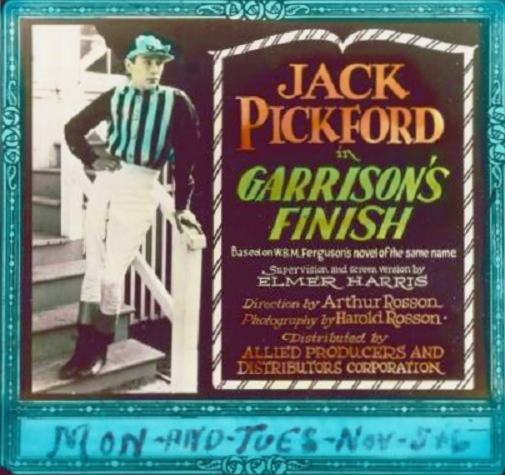
The 1920s represented a zenith for the sports melodrama, a period where the visceral energy of the racetrack provided a perfect metaphor for the era's frantic social mobility. Garrison's Finish (1923), directed by Arthur Rosson, stands as a quintessential artifact of this zeitgeist. It is a film that balances the adrenaline of the gallop with the quietude of a psychological drama. While often overshadowed by the colossal legacy of Mary Pickford, her brother Jack Pickford delivers a performance here that is both vulnerable and intensely physical, proving that the Pickford talent was not solely concentrated in the family's most famous daughter. The narrative arc of Billy Garrison is one of classic tragicomedy: a man stripped of his identity only to find a truer version of himself in the crucible of anonymity.
The cinematography, though constrained by the technical limitations of the early twenties, manages to capture the horse racing sequences with a dynamism that feels surprisingly modern. Unlike the more static compositions found in contemporary works like Off the Earth, Rosson utilizes varied camera angles to simulate the velocity of the horses. There is a palpable sense of dirt and sweat, a grit that contrasts sharply with the polished drawing rooms of the Southern aristocracy where the middle act of the film unfolds. This juxtaposition between the urban squalor of Garrison's fall and the pastoral elegance of the Desha plantation serves as a visual shorthand for his internal moral journey.
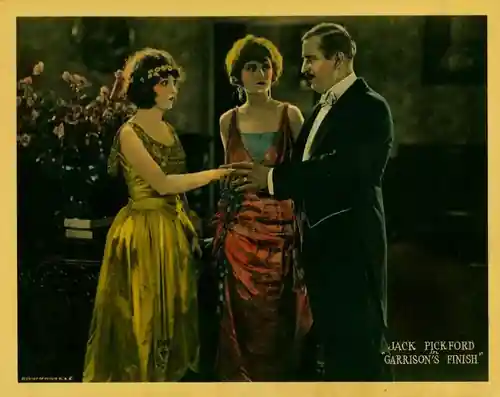
The device of amnesia is a recurrent trope in silent cinema, often used to bypass the complexities of character development in favor of a clean slate. In Garrison's Finish, it is handled with a certain poetic license that allows the audience to focus on the essential goodness of the protagonist. When Billy loses his memory following the barroom altercation, he is no longer the disgraced jockey; he is a man of pure potential. This thematic exploration of the 'second chance' resonates deeply with the post-war audience of 1923, who were themselves looking for ways to shed the traumas of the past. The film shares this preoccupation with identity and social standing with The Black Sheep of the Family, though it treats the subject with a more optimistic, almost fairy-tale-like lens.
Jack Pickford’s portrayal of the amnesiac Billy is nuanced. He avoids the melodramatic histrionics that often plagued silent performances, opting instead for a bewildered, wide-eyed sincerity. His chemistry with Madge Bellamy, who plays Sue Desha, is the emotional anchor of the film. Bellamy provides more than just a romantic interest; she is the moral compass that guides Billy back to his true calling. Her performance is a testament to the strength of the 'ingenue' archetype when handled with intelligence and agency, a far cry from the more passive female roles seen in The Snip.
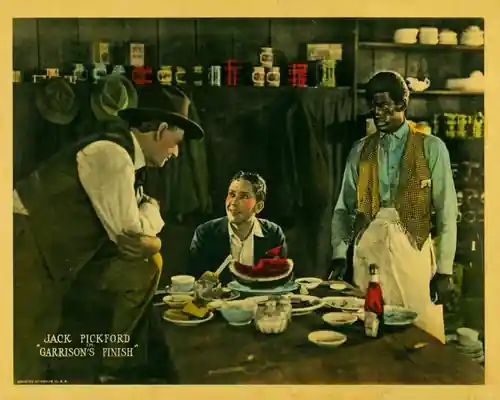
No silent melodrama is complete without a formidable antagonist, and Clarence Burton’s Crimmins is a study in calculated malice. Crimmins is not merely a villain; he is the personification of the corruption that threatens to undermine the purity of the sport. His re-emergence in the third act serves as a catalyst for the film's climax, forcing Billy to confront a past he does not even remember. This tension between the forgotten past and the lived present is what elevates Garrison's Finish above a standard racing flick. It mirrors the moral dilemmas found in Thou Shalt Not Covet, where the weight of past transgressions hangs heavy over the characters' heads.
The revelation of Billy's past to Colonel Desha (played with gravitas by Charles A. Stevenson) introduces a layer of class conflict. The Colonel, a man of rigid honor, represents the old-world values that Billy has inadvertently violated. The 'complications' mentioned in the plot summary are not merely logistical; they are ethical. Can a man be held responsible for actions he cannot recall? Is redemption possible without a full accounting of one's sins? These are the questions that haunt the latter half of the film, providing a depth that is often missing from contemporary race-themed films like To a Finish.
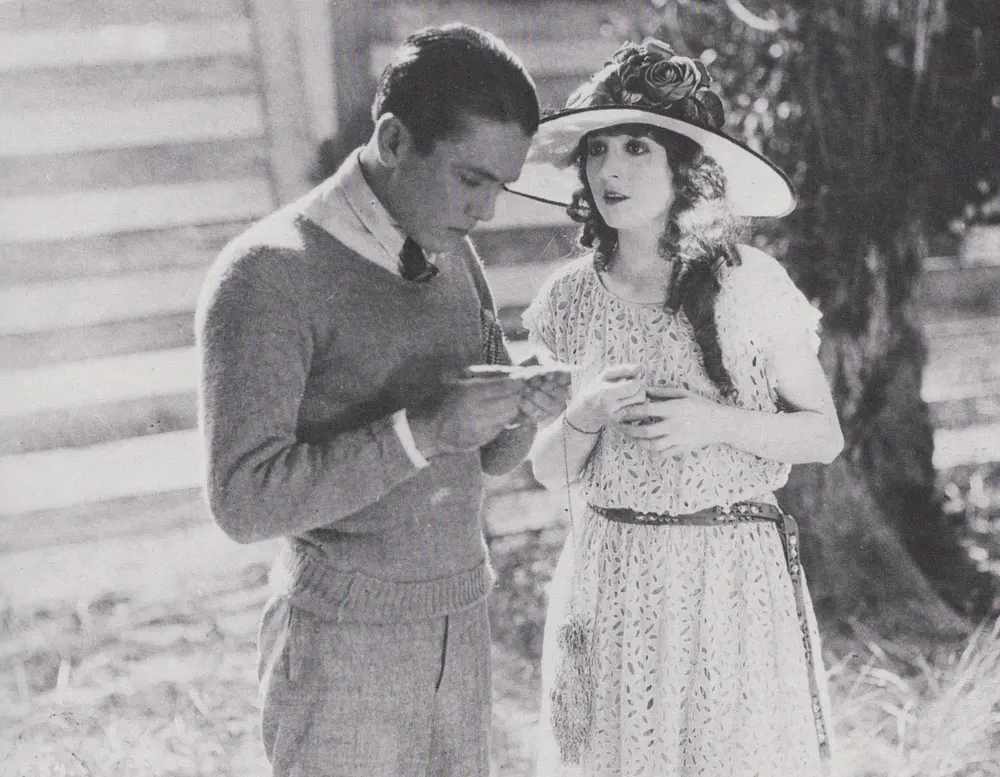
When comparing Garrison's Finish to other releases of the same year, such as the visually opulent Cameo Kirby, one notices a distinct difference in tone. While Cameo Kirby leans into the romanticized history of the Old South, Garrison's Finish feels more grounded in the immediate reality of the 1920s horse racing circuit. The writing team, which included Elmer Harris and William Blair Morton Ferguson, along with an uncredited Mary Pickford, crafted a script that is lean and purposeful. There is very little narrative fat; every scene serves to either build the character or heighten the stakes of the final race.
The film’s pacing is remarkably brisk. While some silent dramas like The Lost Chord can feel ponderous and overly reliant on intertitles, Garrison's Finish trusts its visual storytelling. The sequence where Billy gradually regains his intuition for the horses—the muscle memory superseding the cognitive memory—is a masterclass in silent editing. It reminds the viewer of the thematic concerns of Snowblind, where physical limitations and environmental hazards test the limits of human endurance.
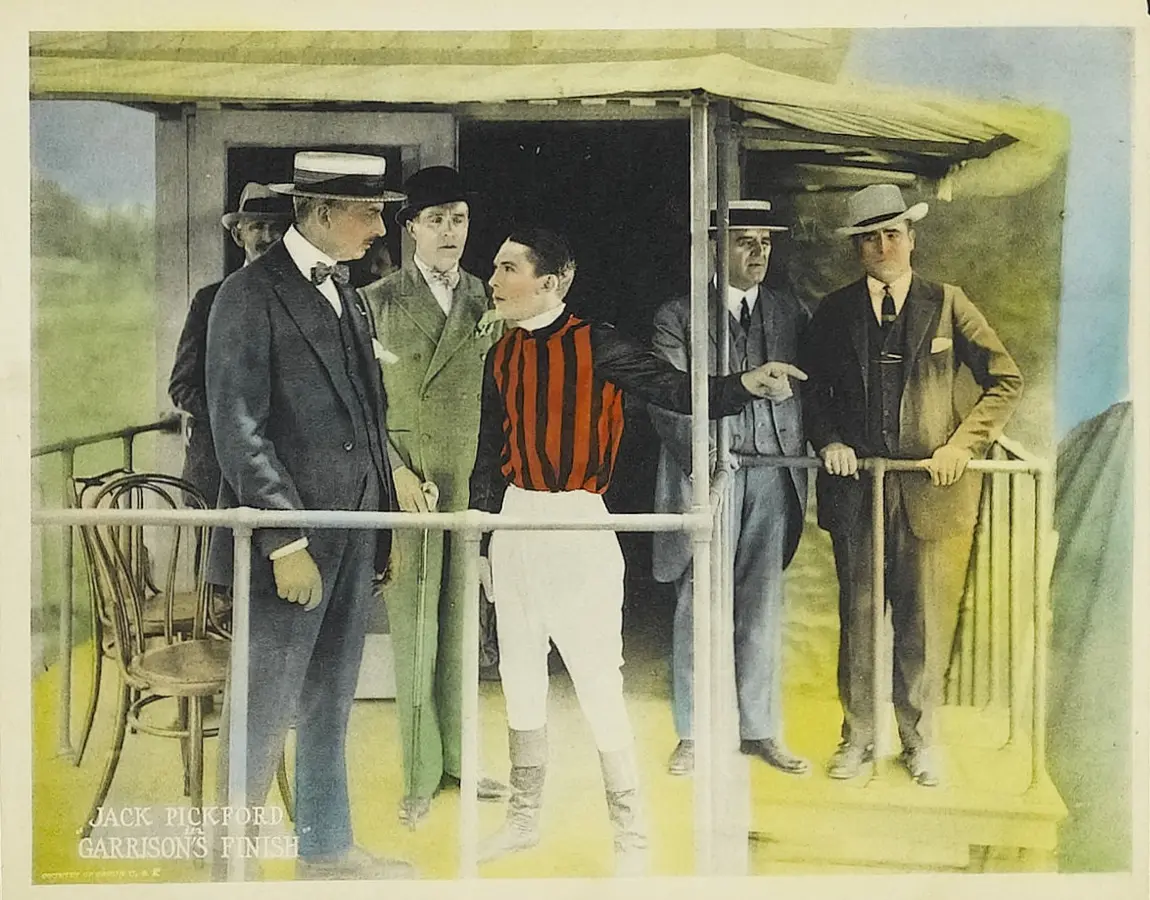
It is impossible to discuss this film without acknowledging the influence of the Pickford-Fairbanks orbit. Though Mary Pickford does not appear on screen, her fingerprints are all over the production’s high standards. The film possesses a certain 'prestige' quality that was the hallmark of their studio output. This is evident in the set design and the casting of seasoned character actors like Charles Ogle and Lydia Knott. The film feels 'big,' even when it is focusing on the intimate struggles of its protagonist. It shares this sense of scale with The Mystery Road, another film that attempts to weave a personal drama into a broader social tapestry.
Furthermore, the film serves as a fascinating companion piece to Screen Snapshots, Series 1, No. 2, which offered audiences a behind-the-scenes look at the stars of the day. Seeing Jack Pickford in Garrison's Finish allows us to appreciate the craft that went into maintaining his 'boy next door' persona while tackling darker, more complex subject matter like addiction and disgrace. It is a performance that suggests a career that could have reached even greater heights had his personal life not been so tumultuous.
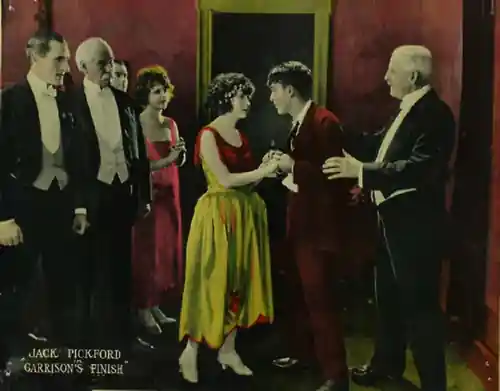
The final race in Garrison's Finish is not just a sporting event; it is a spiritual exorcism. As Billy thunders down the track, the ghosts of his past—the framing by Crimmins, the barroom fight, the months of amnesiac wandering—are all left in the dust. The cinematography here is at its most expressive, using close-ups of the horses' hooves and the strained faces of the jockeys to create a sense of overwhelming tension. It is a sequence that rivals the best work of the era, including the high-stakes drama of Matri-Money or the domestic pressures of The Marriage Bond.
The resolution of the film, while perhaps predictable by modern standards, provides a deeply satisfying sense of closure. The restoration of Billy's memory and his reputation is handled with a grace that avoids the saccharine. In many ways, Garrison's Finish is a precursor to the modern sports film, establishing the 'redemption through victory' template that would be used for decades to come. It lacks the cynicism found in later explorations of the sport, such as Sloth, opting instead for a sincere belief in the possibility of personal transformation.
In the final analysis, Garrison's Finish is much more than a footnote in the Pickford family history. It is a robust, well-constructed drama that utilizes the unique strengths of silent cinema to tell a story of universal resonance. Its exploration of identity, honor, and the redemptive power of love and labor remains as compelling today as it was a century ago. While it may not have the avant-garde experimentalism of She's Everywhere, its traditional narrative is executed with such precision and heart that it stands as a superior example of its genre. For those interested in the evolution of the American sports film, or for those who simply wish to see Jack Pickford at the height of his powers, Garrison's Finish is an essential watch. It reminds us that even when we lose everything—including our very names—the core of our character remains, waiting for the right moment to cross the finish line.
The film’s legacy is one of quiet competence and emotional honesty. It doesn't need the grandiosity of a historical epic like Old Dad to make its point. Instead, it finds the extraordinary in the ordinary life of a man who just wanted to ride. In the pantheon of 1923 cinema, Garrison's Finish earns its place as a winner, not just by a nose, but by a clear and resounding length.
IMDb 6.4
1935
Community
Log in to comment.