DbcultAccessing Vault...
Cult Review
Senior Film Conservator
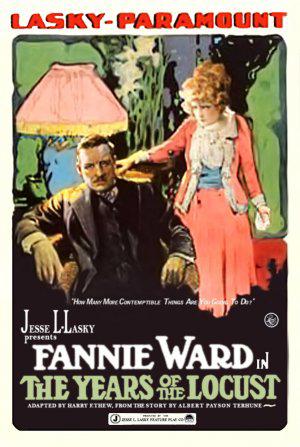
Step into the hushed grandeur of early cinema, where shadows dance with profound emotion and narratives unfold with an intensity that transcends spoken dialogue. Today, we're unearthing a true gem from that captivating era: The Years of the Locust. This isn't just a film; it's a meticulously crafted melodrama, a tapestry woven with threads of sacrifice, deceit, and the relentless pursuit of fortune. Released at a time when cinema was rapidly evolving, it stands as a testament to the power of visual storytelling, showcasing a dramatic depth that many contemporary productions still strive to achieve. For those who appreciate the nuanced artistry of silent films, or even those curious to explore the foundations of cinematic narrative, this picture offers an enthralling journey into a past where moral quandaries were often as stark as the monochrome palette.
At its core, The Years of the Locust is a searing examination of a woman trapped by circumstance and societal expectation. Our protagonist, Lorraine, portrayed with compelling vulnerability by Fannie Ward, finds herself at an agonizing crossroads. Her heart belongs unequivocally to Dirck Mead, a man of honor and genuine affection, but one who, crucially, lacks the financial wherewithal to rescue her family from impending ruin. This is the pivotal dilemma that sets the entire narrative in motion, a familiar trope in melodrama, yet rendered here with a raw emotional honesty that resonates deeply. The weight of her family's future presses down upon her, compelling her to make a choice that will forever alter the trajectory of her life. It's a testament to the writing team—Beatrice DeMille, Harvey F. Thew, Leighton Osmun, and Albert Payson Terhune—that Lorraine's sacrifice feels not merely contrived for plot, but agonizingly real, a stark reflection of the limited agency often afforded to women in that period.
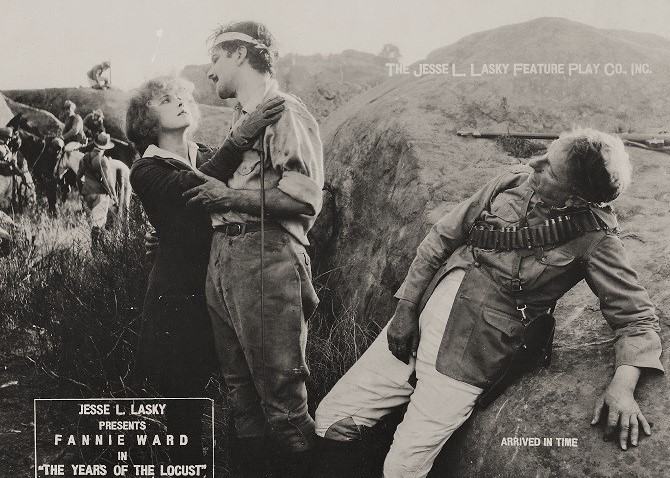
The alternative, the pragmatic if heart-wrenching path, leads her into the arms of Aaron Roth, a man whose wealth is as undeniable as his moral ambiguity. Roth, a figure of shadowy business dealings and questionable ethics, represents the very antithesis of Dirck's honest poverty. His character, brought to life with a suitable blend of charm and menace, embodies the corrupting influence of unchecked ambition. This marriage, a calculated transaction rather than a union of souls, immediately casts a pall over Lorraine's existence. The film masterfully uses the visual language of silent cinema to convey her internal struggle: the forced smiles, the distant gaze, the subtle gestures that betray a profound sadness beneath the veneer of newfound security. It's a stark reminder that golden cages, no matter how opulent, are still cages.
The narrative takes a dramatic turn when Roth, facing the imminent wrath of the law, orchestrates a spectacular vanishing act, leaping from a ship and allowing himself to be presumed dead. This act of calculated deception, a desperate bid for freedom, inadvertently grants Lorraine a different kind of liberation – albeit one built on a foundation of falsehood. The immediate relief, however, is tinged with the lingering guilt of her past choices. This sequence is reminiscent of other films where characters attempt to escape their pasts through dramatic means, such as the desperate flight depicted in The Man Who Came Back, where the protagonist's journey is equally fraught with the specter of previous lives. The film expertly plays with the audience's understanding, allowing us to witness the 'death' while knowing the truth, creating a delicious dramatic irony that permeates the subsequent acts.
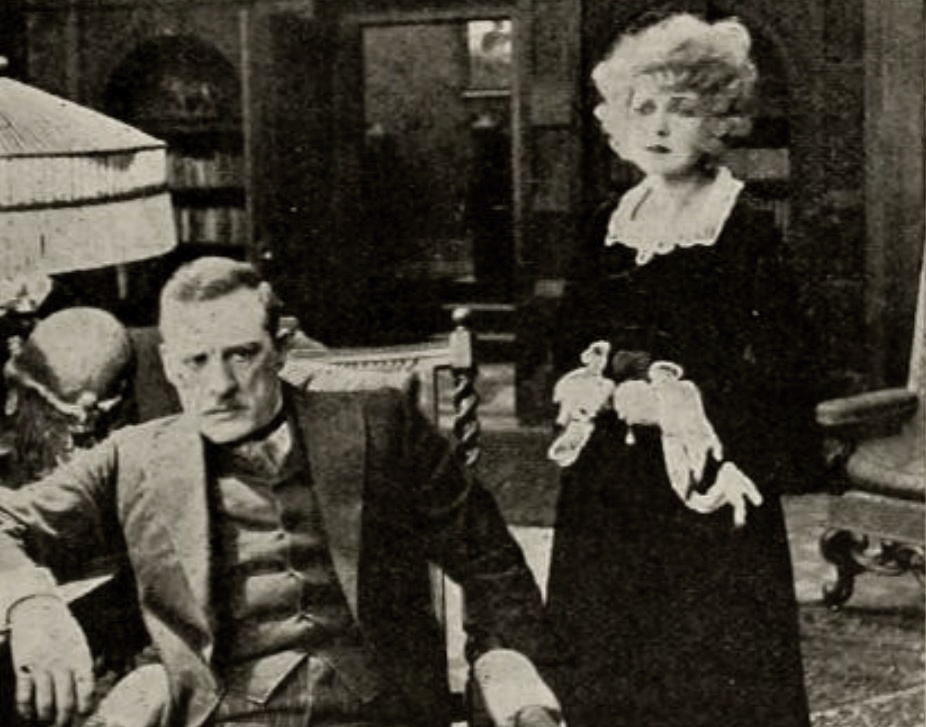
Years pass, and the wheels of fortune turn, this time in favor of Dirck Mead. Martin Best imbues Dirck with a quiet resilience, his character evolving from a penniless suitor to a formidable diamond magnate. His transformation isn't just financial; it's a testament to his inherent drive and integrity, qualities that stand in stark contrast to Roth's Machiavellian machinations. The serendipitous reunion of Dirck and Lorraine in the bustling metropolis of New York is handled with a tender grace, a quiet acknowledgment of their enduring connection. Their subsequent marriage and relocation to the exotic landscapes of South Africa promise a fresh start, a chance for Lorraine to finally embrace the love she once sacrificed. The cinematography, even in its silent form, hints at the vastness and promise of this new world, a potential Eden for their rekindled romance.
But as any connoisseur of melodrama knows, happiness is often a fleeting commodity, especially when a villain has merely gone into hiding rather than truly vanished. The dramatic irony reaches its zenith when it's revealed that Roth, far from being dead, has also found his way to South Africa, continuing his shady enterprises amidst the very diamond fields that now constitute Dirck's empire. Walter Long, portraying Roth, masterfully embodies the villain's cunning and malevolence, his reappearance a thunderclap shattering Lorraine's fragile peace. The tension escalates palpably; the audience is acutely aware of the ticking clock, the impending collision of past and present. Roth's discovery of Lorraine's new life, his subsequent threats of exposure, cast a chilling shadow over her hard-won happiness. The specter of bigamy, a societal taboo of immense proportion, looms large, threatening to unravel everything she holds dear.
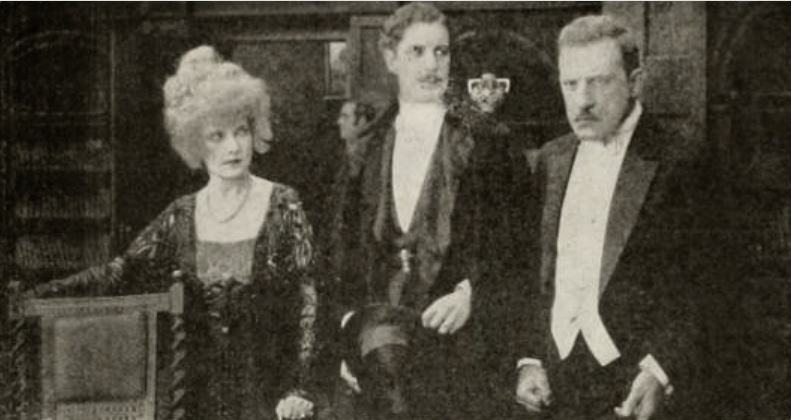
Lorraine's internal conflict becomes the narrative's emotional anchor. Faced with the devastating prospect of her marriage to Dirck being invalidated, and the potential ruin of his reputation, she prepares for the ultimate sacrifice once more – to leave the man she loves to protect him from the scandal Roth promises. It's a moment of profound despair, showcasing Fannie Ward's ability to convey complex emotional states without a single spoken word. Her silent agony is palpable, a testament to the power of well-directed pantomime and expressive acting. However, fate, or perhaps the narrative architects, intervenes with another twist. Lorraine uncovers Roth's audacious plan to steal a colossal and immensely valuable diamond that Dirck is personally escorting to the city. This particular plot device, involving a high-stakes gem at the heart of the conflict, brings to mind other silent era thrillers like The White Pearl, where precious objects often become catalysts for intense drama and dangerous intrigue.
This revelation acts as a powerful catalyst, transforming Lorraine from a woman resigned to her fate into an agent of her own destiny. The threat is no longer merely personal; it's a direct assault on Dirck's livelihood and honor. Summoning an inner strength, Lorraine embarks on a desperate race against time, a thrilling sequence that builds suspense through rapid cuts and heightened visual cues. Her arrival, just as Roth's robbery is underway, is a moment of pure cinematic triumph. The ensuing confrontation is a chaotic ballet of struggle and desperation. Roth, the architect of so much misery, finally meets his violent end in the fracas. This resolution, while undeniably convenient for Lorraine, provides a visceral sense of justice, a dramatic catharsis after prolonged tension. The death of Roth, though sudden, neatly resolves the impossible marital dilemma that had plagued Lorraine, sparing her the agonizing public and legal fallout of her bigamous entanglement. It's a swift, decisive stroke that, in the context of silent film melodrama, feels earned rather than merely expedient.
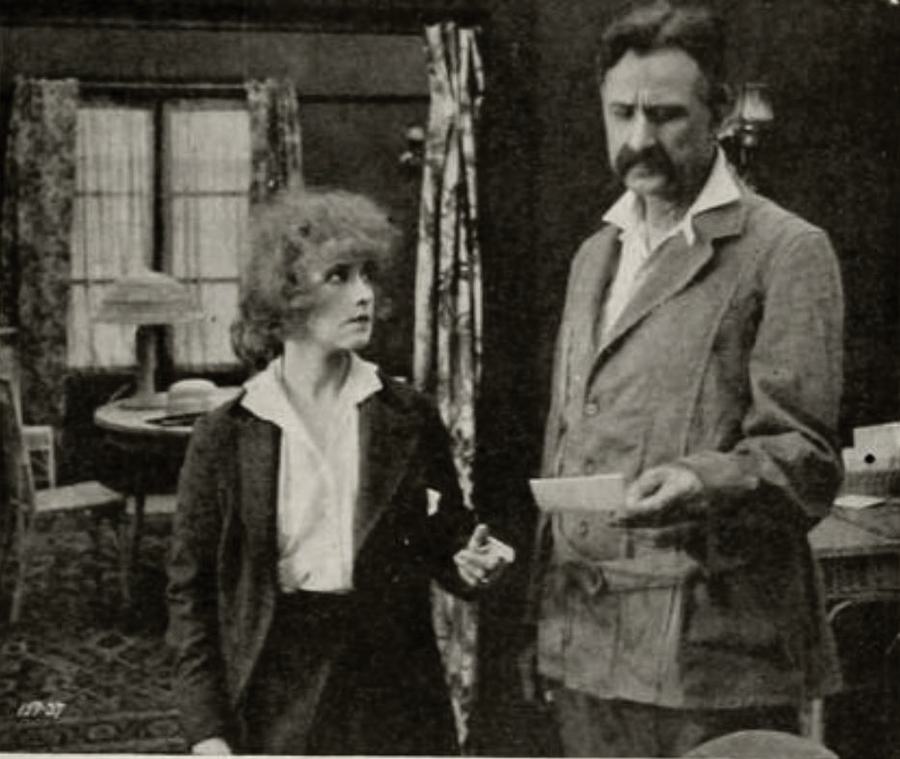
Beyond the thrilling plot mechanics, The Years of the Locust offers a fascinating study of character archetypes prevalent in early cinema. Fannie Ward's Lorraine is a compelling figure, initially defined by her vulnerability and self-sacrificing nature, but ultimately revealing a steely resolve. Her journey from passive victim to active participant in her own salvation is a powerful arc, resonating with themes of female empowerment that would become more prominent in later decades. Martin Best's Dirck Mead, while perhaps less complex, embodies the steadfast, honorable hero, a beacon of integrity against the moral murkiness surrounding him. His unwavering love for Lorraine provides a consistent emotional anchor for the audience. And then there's Walter Long's Aaron Roth, the quintessential villain, whose relentless pursuit of wealth and willingness to manipulate others drives much of the film's conflict. His character, while purely antagonist, is essential in highlighting the virtues of the protagonists and the moral stakes of their world.
Thematic depth is another hallmark of this silent masterpiece. The film grapples with the corrosive nature of wealth and the impossible choices it can force upon individuals. Lorraine's initial sacrifice is a direct consequence of her family's financial distress, illustrating how economic pressures can warp personal desires and moral compasses. The theme of fate versus free will is also subtly explored; while circumstances repeatedly conspire against Lorraine, her ultimate act of defiance in thwarting the robbery demonstrates a powerful assertion of agency. Redemption, too, plays a crucial role, not just for Lorraine in securing her happiness, but in the violent resolution that purges the primary source of her suffering. It suggests that sometimes, justice is delivered not by the slow grinding wheels of the law, but by the swift, dramatic hand of destiny. This exploration of moral quandaries and the pursuit of justice, often through unconventional means, can be seen as a precursor to the complex ethical landscapes explored in later noir films.
From a technical perspective, The Years of the Locust is a remarkable example of silent film craftsmanship. The direction, likely guided by the collaborative efforts of the credited writers and an uncredited director, demonstrates a keen understanding of visual storytelling. Pacing is crucial in silent cinema, and here it builds effectively, moving from the languid despair of Lorraine's initial sacrifice to the breathless suspense of the climax. The use of intertitles is judicious, providing necessary exposition and dialogue without disrupting the visual flow. The acting, particularly by Fannie Ward, is wonderfully expressive, relying on exaggerated yet nuanced facial expressions and body language to convey emotion – a skill that defined the great performers of the era. The cinematography, though limited by the technology of its time, captures both the intimate drama and the expansive settings, from the constrained drawing rooms of New York to the rugged vistas of South Africa. The film's ability to maintain tension and emotional resonance across these diverse settings is a testament to its technical prowess.
Comparing it to other films of its time, The Years of the Locust distinguishes itself through its intricate plot and the depth of its emotional journey. While films like Trapped by the Camera might focus on the mechanics of crime and revelation through technology, The Years of the Locust grounds its suspense in deeply personal stakes. Similarly, while Her Shattered Idol might explore disillusionment, this film takes it a step further, forcing its protagonist into direct action to rebuild her shattered world. The film’s strength lies in its ability to marry grand dramatic gestures with believable human motivations, creating a narrative that feels both epic and intimately personal. The writers, Beatrice DeMille, Harvey F. Thew, Leighton Osmun, and Albert Payson Terhune, crafted a screenplay that, even without spoken dialogue, communicates complex character arcs and moral quandaries with remarkable clarity and impact.
In retrospect, The Years of the Locust stands as more than just a historical artifact; it's a vibrant, compelling piece of cinematic art that continues to engage and provoke thought. Its exploration of sacrifice, the insidious nature of deceit, and the ultimate triumph of courage against overwhelming odds are themes that remain perennially relevant. For those willing to immerse themselves in the unique language of silent film, this picture offers a rich, rewarding experience, a window into the narrative sophistication and emotional power that defined an entire era of filmmaking. It reminds us that storytelling, in its purest form, transcends the need for dialogue, relying instead on the universal language of human emotion and dramatic tension. It is a powerful reminder of how resilient the human spirit can be, even when caught in the most trying of circumstances, and how the 'years of the locust,' those periods of hardship and struggle, can ultimately lead to a profound and hard-won peace.
IMDb —
1927
Community
Log in to comment.