DbcultAccessing Vault...
5/10
Senior Film Conservator
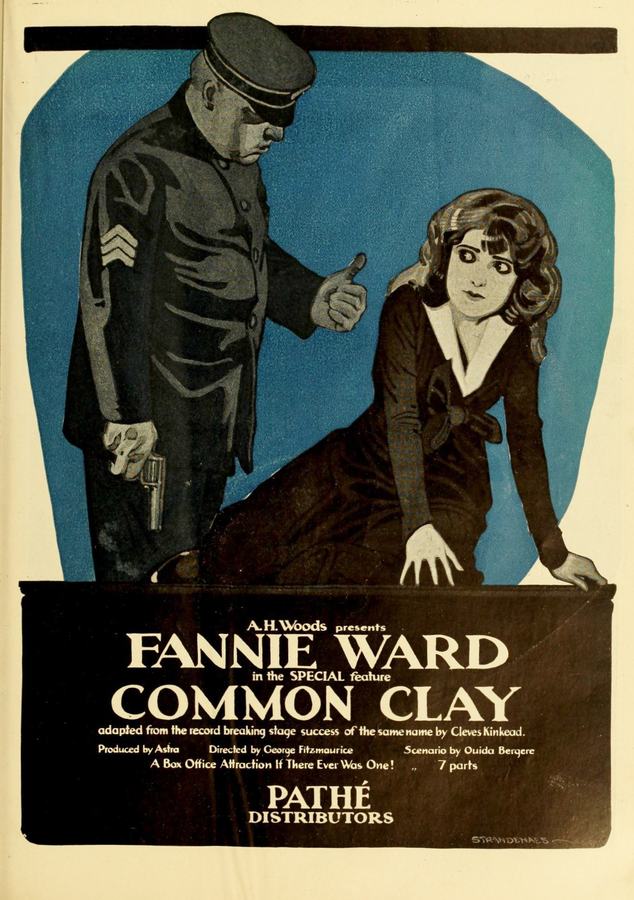
A definitive 5/10 rating for a film that redefined the boundaries of cult cinema. Common Clay remains a cornerstone of transgressive art.
In the bustling, transformative year of 1919, as the world slowly began to mend from the ravages of global conflict, the flickering screens of nascent cinema offered audiences more than mere entertainment; they provided a mirror reflecting society's anxieties, its moral quandaries, and its enduring fascination with the human spirit's capacity for both resilience and transgression. Among the myriad narratives vying for public attention, Common Clay emerged, a film that, even a century later, resonates with a striking poignancy, thanks to its unflinching gaze into the stratified social fabric of its time and a performance by Fannie Ward that transcends the limitations of the silent medium.
Directed with a keen understanding of dramatic tension and adapted from a popular stage play by Cleves Kinkead and Ouida Bergère, Common Clay is far more than a simple melodrama. It is a trenchant social commentary, a meticulously crafted character study, and a testament to the power of narrative to challenge entrenched prejudices. The film plunges us headfirst into the precarious existence of Ellen Neal, portrayed with captivating intensity by Ward, a young woman whose life epitomizes the struggles faced by the working class in an era defined by stark economic disparities and rigid class structures. Her journey from the drudgery of a department store clerk to the domestic service of an elite household is not merely a change of scenery, but a profound shift in her personal landscape, fraught with both peril and the tantalizing promise of a better life.
Ellen's initial dissatisfaction with her lot is palpable, a quiet desperation that many in the audience of 1919 would have intimately understood. When her friend Jennie Peters coaxes her into the vivacious, yet morally ambiguous, world of a cabaret, it's a decision born of youthful exuberance and a yearning for escape, rather than any inherent moral failing. Yet, this seemingly innocuous outing becomes a pivotal turning point, transforming her into an unwitting victim of a police raid. This incident, an arbitrary brush with the law that brands her with the stigma of association, becomes a catalyst. Instead of crushing her spirit, it ignites a fierce resolve to forge a life beyond reproach. It's a classic melodramatic trope, certainly, but one that Common Clay handles with a surprising degree of psychological nuance, allowing Ellen's agency to shine through her misfortune. Her night in jail, a brief but impactful sojourn into the underbelly of society, serves as a moral crucible, hardening her determination to rise above her circumstances.
Her subsequent employment as a maid in the opulent Fullerton home marks a literal and metaphorical ascent, an entry into a world of privilege that stands in stark contrast to her own humble origins. Here, the film begins to explore the insidious nature of class boundaries, showing how even proximity to wealth does not erase the deep-seated prejudices that define societal interactions. The Fullerton estate, initially a sanctuary, soon becomes the setting for an illicit romance with Hugh, the family's charming, yet somewhat naive, scion. This forbidden love, blossoming amidst the rigid social conventions of the era, is central to the film's dramatic thrust. Their passion is portrayed with a delicate intensity, a silent testament to the universal human yearning for connection, regardless of societal dictates.
The departure of Hugh for war service casts a long shadow, leaving Ellen to confront the profound consequences of their liaison alone. Her pregnancy, a biological reality, becomes a social anathema, threatening to undo all her efforts at respectability. This segment of the film powerfully highlights the double standards prevalent in society, where the woman bears the full brunt of moral condemnation for a shared transgression. Ellen's desperate appeal to the Fullertons for assistance, a plea for compassion and acknowledgment, is met with a cold, calculated response. Their concern is not for her or the impending child, but for their family's pristine reputation. This moment of rejection underscores the film's critique of the wealthy elite, exposing their hypocrisy and the performative nature of their morality.
The situation escalates into a dramatic courtroom confrontation, orchestrated by the Fullertons and presided over by Judge Filson, a family friend whose impartiality is presumed. The legal arena, often portrayed as a bastion of truth and justice, here becomes a stage for the brutal dissection of Ellen's character and circumstances. This setup, reminiscent of the legal and social battles depicted in films like Delo Beilisa, emphasizes the power dynamics at play when an individual from the lower strata challenges the established order. The tension builds palpably as the narrative hurtles towards its astonishing climax.
It is in this very courtroom, amidst the accusations and the judgment, that Common Clay delivers its most potent and melodramatic twist. The revelation that Ellen is, in fact, the illegitimate daughter of Judge Filson himself, born of a tragic union that ended in her mother's suicide, is a narrative earthquake. This stunning disclosure not only vindicates Ellen in a deeply personal way but also exposes the deep-seated hypocrisy and hidden histories lurking beneath the veneer of respectability. It's a dramatic device that, while perhaps conventional for the era, still packs an emotional punch, forcing the audience to reconsider everything they thought they knew about the characters and their moral standing. This theme of hidden parentage and the disruptive power of secrets finds echoes in other films of the period, such as In His Brother's Place or The Family Honor, where familial ties and social standing are similarly challenged by unexpected truths.
The judge's reluctant acceptance of Ellen as his daughter is a moment of profound, if belated, reckoning, forcing him to confront his own past and the consequences of his actions. It's a powerful indictment of the societal norms that allowed such secrets to fester, and a testament to the enduring human need for recognition and belonging. The film expertly uses this revelation not just for shock value, but to deepen its exploration of identity, culpability, and the arbitrary nature of social condemnation.
At the heart of Common Clay's enduring appeal is the masterful performance of Fannie Ward. In an era where histrionics could easily overshadow genuine emotion, Ward delivers a portrayal of Ellen Neal that is both nuanced and intensely moving. Without the aid of spoken dialogue, she conveys a vast spectrum of emotions – from the quiet despair of her early life to the fierce determination of her resolve, the tender vulnerability of her love, and the raw anguish of her betrayal. Her expressive eyes and subtle gestures communicate volumes, drawing the audience into Ellen's inner world with remarkable efficacy. Ward's ability to command the screen, to evoke profound empathy, solidifies her status as a silent film icon.
The supporting cast, including John Barrows, John Cossar, Henry A. Barrows, and Helen Dunbar, provide solid foundations for Ward's central performance. Their portrayals of the rigid, class-conscious Fullertons and the various figures in Ellen's tumultuous life contribute significantly to the film's dramatic realism. W.E. Lawrence as Hugh Fullerton adeptly conveys the character's initial charm and later remorse, making his eventual reconciliation with Ellen feel earned despite his earlier abandonment. The ensemble works in concert to build a world where social pressures are almost tangible, and personal stakes are impossibly high.
The direction of Common Clay, while not always attributed with the same specificity as later films, demonstrates a sophisticated understanding of visual narrative. The use of intertitles is judicious, providing necessary exposition without interrupting the flow of emotional expression. Cinematography effectively contrasts the drabness of Ellen's early life with the grandeur of the Fullerton estate, using lighting and composition to emphasize the chasm between their worlds. Close-ups are employed strategically to highlight key emotional moments, allowing Ward's facial expressions to carry significant narrative weight. The pacing, a crucial element in silent cinema, builds steadily, culminating in the dramatic courtroom scene that acts as the film's emotional and thematic crescendo.
Thematically, Common Clay is rich and multi-layered. It's a powerful indictment of social hypocrisy, particularly the way in which the wealthy are often shielded from the consequences of their actions, while the poor bear the full weight of societal judgment. Ellen's journey is one of moral reclamation, but it is also a struggle against an inherently unjust system. The film explores the concept of 'common clay' – the idea that beneath the superficial distinctions of class and wealth, all humans are fundamentally the same, susceptible to the same passions, vulnerabilities, and desires for dignity. This resonates with films like The Forbidden Path, which similarly grappled with societal expectations and the consequences of deviating from prescribed moral codes.
Furthermore, the film delves into the complexities of fate versus free will. Is Ellen merely a victim of circumstance, or does she actively shape her destiny through her choices and resilience? The resolution, with Hugh's return from the war and his renewed declaration of love, signals a triumphant, albeit hard-won, victory for genuine affection over societal prejudice. His defiance of his parents' protests and their eventual marriage serves as a powerful affirmation of the film's core message: that love, and indeed human worth, should not be dictated by birthright or social standing. This ultimate triumph of individual will and affection over societal strictures echoes the spirit of narratives focused on personal integrity and justice, a theme also subtly explored in films such as The Silence Sellers, which often dealt with the quiet battles against hidden societal pressures.
Upon Hugh's eventual return from the ravages of conflict, his rekindled affection for Ellen transcends the formidable barriers of class prejudice and parental disapproval. This reunion is not merely a convenient plot device, but a powerful affirmation of the enduring nature of true love and the possibility of redemption, not just for Ellen, but for Hugh, who must overcome his own family's ingrained snobbery. Their subsequent marriage, against the backdrop of their tumultuous past, acts as a defiant declaration against the rigid social structures that once threatened to define and diminish Ellen. It signifies a victory for personal integrity and emotional honesty over superficial appearances and class-based judgments. The film's conclusion, while offering a satisfying resolution, doesn't shy away from acknowledging the profound struggles that preceded it, leaving the audience with a sense of hard-earned justice rather than facile happiness.
In its entirety, Common Clay stands as a vital piece of silent cinema, a compelling drama that deftly navigates complex social issues through the lens of individual struggle and ultimate triumph. It reminds us that the human condition, with its inherent flaws and boundless capacity for love and resilience, remains the most fascinating subject for artistic exploration. For contemporary viewers, it offers a fascinating glimpse into the societal concerns of a bygone era, while simultaneously proving that stories of love, class, and the fight for dignity are truly timeless. The film, in its quiet power, continues to speak volumes, a testament to the enduring craft of its writers, Ouida Bergère and Cleves Kinkead, and the unforgettable performance of its star, Fannie Ward. Much like the moral and legal dilemmas explored in In the Balance, Common Clay ultimately argues for a deeper understanding of human circumstances beyond superficial judgment. It is a film that, despite its age, remains remarkably relevant, prompting us to consider what truly constitutes 'common clay' in our own complex world.

IMDb 5
1925
Community
Log in to comment.