DbcultAccessing Vault...
Cult Review
Senior Film Conservator
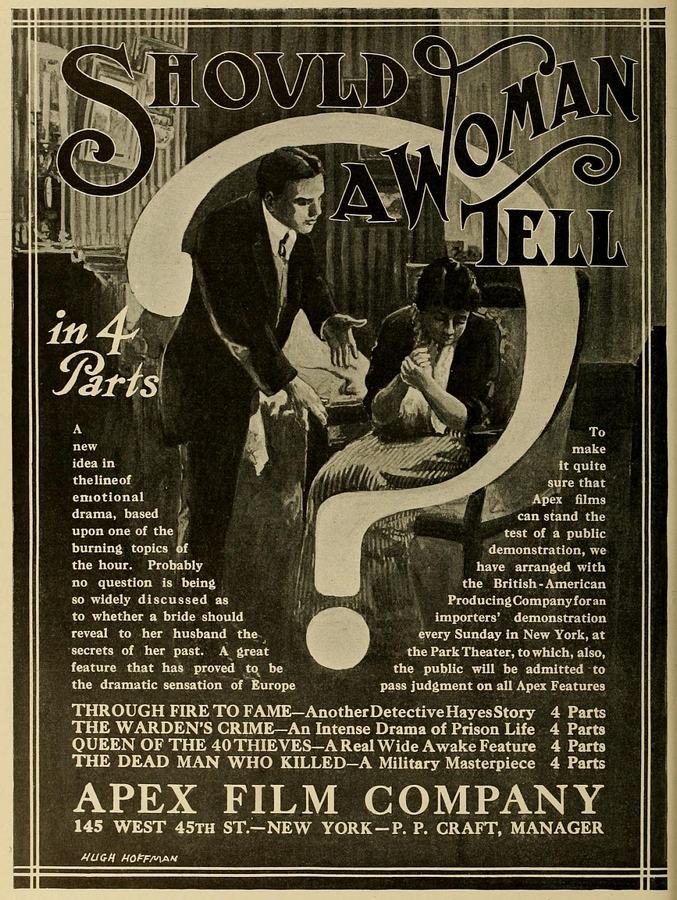
In the annals of early cinema, few narratives plumb the depths of human conscience and societal rigidity with the stark, unflinching gaze of Should a Woman Tell? This silent drama, a profound exploration of guilt, love, and the suffocating weight of an unconfessed truth, transcends its era to deliver a timeless tragedy. It asks not merely a question of disclosure, but interrogates the very fabric of morality, the price of silence, and the devastating ripple effects of a singular, desperate act. The film’s protagonist, Vera, is a character forged in the crucible of privilege, yet destined to navigate a moral labyrinth far removed from her gilded origins. Her journey from detached aristocracy to a woman haunted by a harrowing secret is a testament to the era's capacity for complex psychological storytelling, even without the spoken word. The visual language of silent film, relying heavily on expressive acting, symbolic gestures, and poignant intertitles, would have been crucial in conveying the nuanced turmoil within Vera's soul.
The narrative commences with Vera, daughter of the esteemed Countess Dubowska, languishing in the opulent yet emotionally sterile confines of her mother's estate. Surrounded by luxury, she finds herself adrift, a prisoner of ennui. This initial state of disquiet is masterfully set against the backdrop of a high-society soiree, where Vera's internal brooding contrasts sharply with the superficial gaiety around her. It's a classic cinematic trope, yet one that effectively establishes her alienation. The Countess, in a gesture that smacks more of performative philanthropy than genuine empathy, orchestrates a "slumming expedition." This venture into the impoverished quarters, ostensibly to dispense charity, becomes the unlikely catalyst for Vera's profound awakening. Her initial disengagement gives way to a nascent compassion, particularly when confronted with the plight of Max Petroff, a carpenter incapacitated by a broken arm. Vera's act of dressing his wound and offering provisions is not merely charity; it's an intimate, human connection that momentarily liberates her from her own emotional confinement. This scene, though seemingly benign, is laden with dramatic irony, foreshadowing the horrific turn their interaction will take.
The film then pivots from burgeoning altruism to chilling manipulation. Max Petroff, far from being a grateful recipient of kindness, proves to be a predatory opportunist. His inability to forget Vera's touch twists into an insidious obsession, leading him to contrive a desperate plea, a letter fabricated to lure her back. The audacity of his plan – secretly infiltrating the Countess's mansion to plant this deceptive missive – underscores his calculating nature and the stark class divide that fuels his actions. This clandestine act, unseen by Vera, establishes a crucial dramatic irony: she is drawn back to danger under the illusion of continuing her charitable mission, completely unaware of the sinister machinations at play. This sequence echoes the dark undercurrents sometimes found in contemporary dramas exploring hidden threats within society, much like the deceptive appearances in films such as The Spy, where danger lurks beneath a veneer of normalcy.
Vera's return to Max's dwelling, laden with provisions and good intentions, seals her tragic fate. The moment she steps inside, the trap springs shut. Max's swift action of locking the door and his subsequent assault on the "unprotected Vera" is a brutal, visceral turning point. This scene, though likely conveyed with the decorum of early cinema, would have been profoundly shocking, a stark violation of innocence and trust. The ensuing struggle, culminating in Vera's desperate act of self-defense with a chisel, is the narrative's central trauma. It is a moment of horrific agency, where a victim is forced to become an executioner to preserve her life and dignity. The killing of Max Petroff is not an act of malice, but a primal response to an existential threat. Yet, in the societal context of the time, and indeed any time, it is an act that carries an immense, suffocating burden. This violent rupture marks Vera irrevocably, transforming her from a woman seeking purpose into one forever shadowed by a devastating secret. The psychological weight of such an act, even in self-defense, is immense, a theme explored in other films grappling with the consequences of violence, though often from different angles, such as the moral quandaries in Down with Weapons, albeit within a wartime context.
The narrative then shifts to the profound, insidious impact of this secret on Vera's life. Some time later, she encounters Prince Dolsky at a fencing academy – a setting that, ironically, speaks of precision, control, and honorable combat, a stark contrast to the brutal, uncontrolled violence she experienced. The prince is instantly captivated, declaring his love. But Vera, her heart a battleground of burgeoning affection and gnawing guilt, cannot accept. Her conscience, a relentless tormentor, creates an insurmountable barrier. This internal struggle is a masterclass in silent film acting, requiring subtle facial expressions and body language to convey the profound conflict. As her love for the prince deepens, the specter of Max Petroff looms larger, manifesting as a terrifying vision that envelops Prince Dolsky's form, driving her into a frenzied flight. This psychological manifestation of guilt is a powerful cinematic device, visually representing the inescapable nature of her trauma.
Her subsequent illness is clearly a psychosomatic response to this unbearable internal pressure. Upon her convalescence, the prince renews his proposal, and this time, Vera accepts, perhaps out of a desperate yearning for normalcy, for love, or a misguided hope that marriage might somehow exorcise her demons. Yet, the confession remains lodged in her throat. She is "on the verge of making a full confession many times," but the prince, blinded by his deep love and perhaps a touch of aristocratic obliviousness, "refuses to listen." This dramatic irony is excruciating. The one person who could offer solace and understanding inadvertently denies her the very release she craves. This refusal to hear the truth, driven by love, ultimately sets the stage for even greater tragedy. The idea of a hidden truth straining a relationship is deftly explored in films like Old Brandis' Eyes, where secrets fester and distort perceptions.
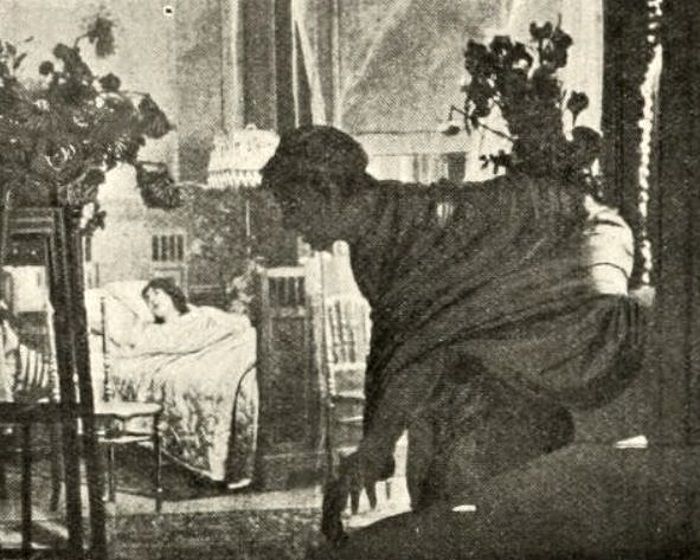
The night before the wedding, in a final, desperate attempt to unburden herself, Vera pens a full confession. This act of writing, of committing the unspeakable to paper, is a powerful symbolic gesture. It is her last chance at honesty, at building a marriage founded on truth. But fate, in its cruelest twist, intervenes. The letter arrives at the prince's residence just after he has been called away to his estate. The returned letter, a tangible symbol of her failed attempt at absolution, pushes Vera to despair, and she burns it. This act of destruction is profoundly symbolic: it represents the extinguishing of her hope for a life free of secrets, and perhaps, the burning away of a part of her soul. The wedding proceeds, a joyous occasion for all but the bride, who walks down the aisle shrouded in a cloak of unspoken tragedy.
The honeymoon, a time traditionally associated with intimacy and new beginnings, becomes the stage for the inevitable unraveling. The calls of her conscience, amplified by the sanctity of her new vows and the proximity to her husband, become deafening. At "the critical moment," Vera finally relates what happened. The truth, long suppressed, erupts with devastating force. The prince's reaction is immediate, visceral, and utterly unforgiving. He is "astounded," and in a fit of shock and betrayal, orders Vera from the home she had barely entered as his wife. This swift banishment is a brutal consequence, highlighting the societal intolerance for such transgressions, regardless of the mitigating circumstances. His love, once so profound, shatters under the weight of her confession, leaving behind only anger and a sense of profound betrayal. This sequence resonates with the theme of societal judgment and the harsh penalties for deviation from norms, a thread that runs through many melodramas of the era, including perhaps the "sacrifice" in The Sacrifice of Pauline, where women often bear the brunt of moral condemnation.
The prince, reeling from the shock, initially seeks solace in a "gay life," a desperate attempt to drown his sorrows and forget the woman who shattered his world. This period of hedonism, however, proves fleeting and unsatisfying. A "reaction takes place," and regret begins to gnaw at him. He realizes the severity of his actions, the rashness of his judgment, and yearns for forgiveness from the wife he so cruelly cast aside. His engagement of a detective to search for her signifies his profound shift from vengeful anger to desperate remorse. His journey mirrors Vera's in its own way, a trajectory from certainty to regret, highlighting the complex emotional landscape of both characters.
Meanwhile, Vera, under an assumed name, has not merely survived but thrived. She has reinvented herself, transforming her pain into art, becoming a celebrated actress. This metamorphosis is a powerful statement on resilience and the capacity for self-creation in the face of profound adversity. The stage, often a place of illusion and performance, becomes her sanctuary, a space where she can embody other lives and perhaps, for a time, escape her own. The choice of her playing the principal part in "Traviata" is particularly poignant; "La Traviata" itself is a story of a fallen woman, societal judgment, and tragic love, drawing a direct parallel to Vera's own life.
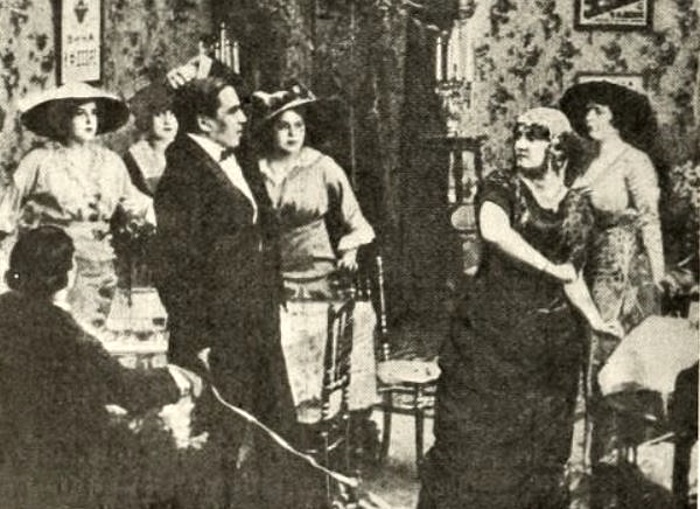
The climax of the film arrives at the opera house. An old friend induces the prince to attend, leading to the fateful recognition of his wife on stage. The sight of Vera, transformed and celebrated, yet bearing the indelible marks of their shared past, ignites a desperate hope within him. He goes to her dressing room, seeking reconciliation, praying "fervently for his wife's forgiveness." This is the moment of truth for both of them, a potential turning point toward redemption. But Vera's response is chillingly resolute: "It is too late now, prince. There was a time when I loved you, but now my love is dead. There is the door." Her words, delivered with the stark finality of a theatrical pronouncement, shatter the prince's last vestiges of hope. The love that once bound them, that she fought so hard to protect and confess, has indeed withered and died under the weight of his initial rejection and her subsequent suffering.
The prince's broken-hearted reply, "Goodbye forever. I loved you so much and I believed in my happiness," is the epitaph for their tragic romance. He departs, lamenting his lost love, and in a final, devastating act of despair, ends his unhappy life. This ultimate tragedy underscores the profound and irreversible consequences of their intertwined fates. The film doesn't offer easy answers or convenient happy endings. Instead, it presents a stark, uncompromising vision of a life irrevocably altered by trauma, guilt, and the complex dance between confession and forgiveness. The prince's suicide is not merely a melodramatic flourish; it is the ultimate expression of a soul broken by regret and the loss of a love he once cast away.
Thematic Resonance and Early Cinematic Prowess:
Should a Woman Tell? is a powerful testament to the narrative sophistication achievable in early silent cinema. Its exploration of themes such as the burden of guilt, the complexities of love, class disparities, and female agency in the face of adversity is remarkably nuanced. Vera's journey is a microcosm of the struggles many women faced in a society that often judged them harshly, regardless of their circumstances. Her initial philanthropic zeal, born of privilege, is quickly overshadowed by a brutal reality, forcing her into an act of self-preservation that society would likely condemn. The film questions the very concept of justice: is Vera a murderer, or a survivor? And how does society reconcile these labels?
The narrative structure, moving from Vera’s internal struggle to her public rehabilitation as an actress, then back to the personal tragedy of her relationship with the prince, creates a compelling arc. The use of visions and psychosomatic illness effectively externalizes her internal torment, a common yet potent technique in silent films to convey psychological states. The dramatic irony throughout, from Max's deceptive letter to the prince's refusal to listen, heightens the sense of impending doom and inescapable fate.
Comparisons to other films of the era reveal its unique position. While films like The Bushranger's Bride or The Girl from Outback might explore adventure and frontier justice, Should a Woman Tell? delves into the internal landscape of its characters with a profound psychological realism. The moral quandaries presented here are far removed from the more straightforward conflicts of good versus evil. Instead, we are presented with a protagonist whose actions, while justifiable in self-defense, carry an immense moral weight that ultimately destroys her chance at conventional happiness. This deep dive into moral ambiguity sets it apart.
The film’s portrayal of love, particularly the relationship between Vera and Prince Dolsky, is equally complex. Their love is passionate and sincere, yet it is ultimately insufficient to overcome the chasm created by Vera’s secret and the prince’s inability to forgive. His initial refusal to listen, driven by an almost naive idealism, and his later, desperate yearning for reconciliation, paints a picture of a man whose love is both strong and tragically flawed. Vera's final rejection, though heartbreaking, is understandable; her love has been systematically eroded by suffering and his earlier, unforgiving judgment. It speaks to the irreversible damage that can occur when trust is broken and solace denied. This tragic romance echoes the poignant sacrifices made in the name of love, as seen in För sin kärleks skull, where the pursuit of affection often comes with a steep personal cost.
The class dynamics are also subtly yet powerfully rendered. Max Petroff’s manipulative act can be interpreted not just as individual depravity, but as a desperate, twisted response to his own poverty and powerlessness in the face of aristocratic wealth. Vera’s initial slumming expedition, while well-intentioned, highlights the vast gulf between her world and his. The film suggests that even acts of charity can inadvertently expose one to unexpected dangers, blurring the lines between helper and victim, benefactor and predator. This interplay of social strata and their inherent tensions is a recurring motif in cinema, often explored through tales of injustice and consequence, reminiscent of the societal critiques embedded in films like The Toll of Mammon, which examines the moral costs of economic disparity.
The film's title itself, Should a Woman Tell?, is a profound question that reverberates throughout the narrative. It forces the audience to confront the difficult choices women, especially, faced when burdened by secrets that carried immense social stigma. To tell might mean ruin; to conceal might mean psychological torment. Vera chooses to tell, eventually, and the consequence is immediate devastation. Her ultimate triumph as an actress, however, offers a glimmer of agency, suggesting that even after profound loss, there can be a path to self-expression and a form of personal redemption, albeit one tinged with an enduring sadness.
In conclusion, Should a Woman Tell? stands as a compelling, if heartbreaking, example of early cinematic storytelling. Its intricate plot, deep character study, and unflinching examination of moral dilemmas make it a significant work. The film’s tragic conclusion, with the prince’s suicide and Vera’s hardened resolve, leaves an indelible impression, urging viewers to reflect on the destructive power of secrets, the fragility of forgiveness, and the enduring human struggle to reconcile truth with happiness. It’s a narrative that, despite its silent origins, speaks volumes about the human condition, making it a film ripe for rediscovery and critical appreciation even today.
A cinematic journey into the heart of a woman's secret.
IMDb 5.9
1912
Community
Log in to comment.