DbcultAccessing Vault...
6.6/10
Senior Film Conservator
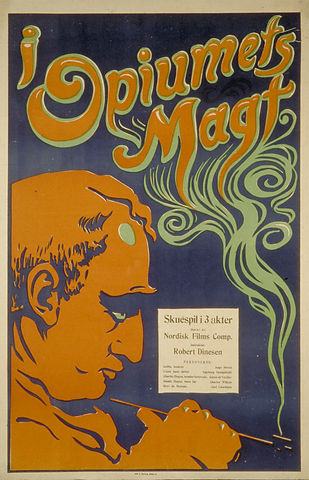
A definitive 6.6/10 rating for a film that redefined the boundaries of cult cinema. In the Power of Opium remains a cornerstone of transgressive art.
A banker, a bereavement, and the poppy’s velvet claw—Jean Hirschberg’s 1912 Danish curio still bleeds through the nitrate nearly 112 years later.
There is a moment—wordless, of course—when Collin, played with haunted aplomb by Anton de Verdier, rests the back of his hand against the cold brass nameplate of his deceased daughter’s bedroom. The camera dares to linger. In that tactile hush, the entire moral circuitry of In the Power of Opium quietly shorts out: the viewer realizes we are not watching a man who mourns, but a man who has elected to become mourning itself, to wear it like an ermine cloak until the seams give.
Hirschberg, a name unjustly confined to footnotes, orchestrates grief as a palpable décor. Marble fireplaces, pristine at first act, grow soot-flecked; chandeliers dim in direct ratio to Collin’s pupils widening under the narcotic spell. The film’s two-reel economy forces symbolic compression: a single white glove dropped on an opium-den floor equals whole ledgers of moral bankruptcy. If Unconquered flaunts triumphant humanism, this picture counters with a narcotic nihilism—Denmark’s chilly answer to American uplift.
Visual texture here is everything. The cinematographer (likely uncredited, per the era’s cruelty) smokes interiors with a magnesium haze that anticipates the shimmer in Life’s Harmony, yet pushes further: lamps bloom into solar flares, faces sink into umber chiaroscuro. Ghostlike superimpositions—double-exposed images of the dead child—prefigure the anguished overlays of The Heart of Humanity by six years, but without the patriotic bandage. Here the phantasm is purely personal, purely poisonous.
Sound, though absent, is implied through visual metronomes: the pendulum of a grandfather clock, the drip of an unwound faucet, the rhythmic clack of Collin’s cane as authority erodes. Viewers attuned to late-Expressionist nightmares will detect embryonic DNA for Murnau’s Phantom, yet Hirschberg’s canvas is more intimate, a chamber piece rather than a municipal fever dream.
Anton de Verdier navigates the banker’s descent with calibrated minimalism—eyelids flicker like faulty blinds; shoulders, once squared for boardroom conquest, cave inward as if the ribcage itself is inhaling the drug. It is a silent-era masterclass in negative acting: what he refuses to show metastasizes in our imagination.
Ingeborg Spangsfeldt, as the surviving fiancée, supplies the film’s fragile moral gyroscope. Her glances brim with Nordic reticence, yet when she claws the air to prevent Collin from lighting yet another resinous pellet, the gesture erupts with primal voltage. Compare her desperate vitality to the saintly stoicism of The General’s Children; Spangsfeldt is more human, less allegory, and therefore more devastating.
The film’s structure is a triptych: gilt prosperity, velvet twilight, ash aftermath. Each panel is announced not by intertitles but by color temperature—amber, amethyst, slate—achieved through tinting that survives in the lone surviving 35 mm print at Copenhagen’s Det Danske Filminstitut. Academics enamored of Das Geheimnis von Chateau Richmond will recognize a similar chromatic coding, though Hirschberg’s application is cruder, more elemental, befitting a narrative that strips civilized veneer to the reptilian nerve.
Mid-film, a seemingly innocuous scene—Collin teaching his living daughter to waltz—mutates into a danse macabre once the camera tilts to reveal the dead girl’s portrait reflected in a mirror. The waltz rhythm matches the later opium-pipe ritual, implying that memory, music, and narcotic are merely different time signatures of damnation.
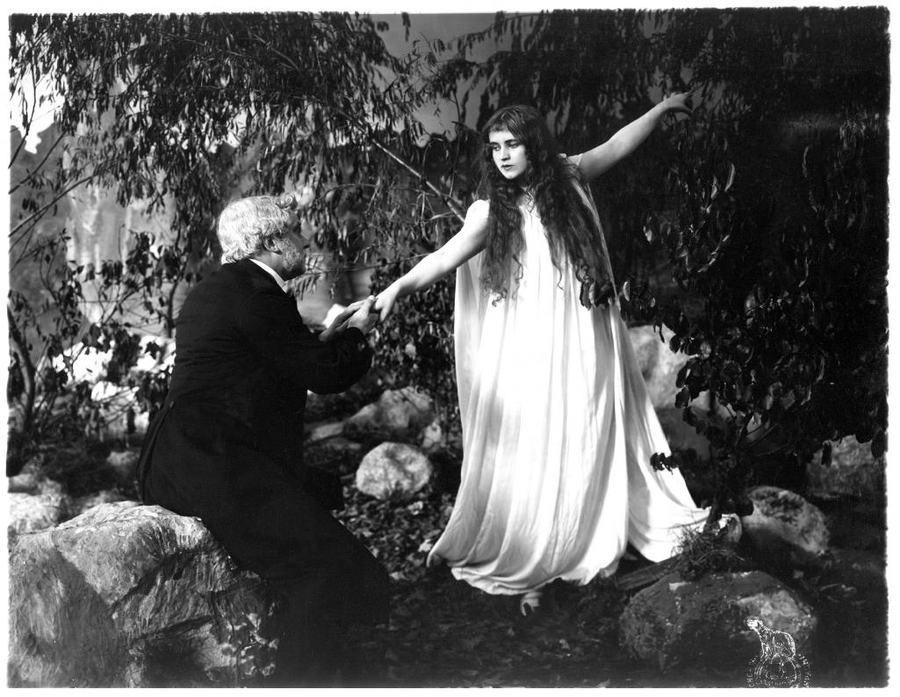
Opium dens in 1910s Copenhagen were no Orientalist myth; they flourished along Nyhavn’s canal, hubs of colonial residue where Danish sailors swapped Greenlandic pelts for Chinese poppy. The film’s verisimilitude shocked censors, provoking calls for exhibition bans akin to those greeting Over Niagara Falls the same year. Hirschberg, ever polemical, defended the imagery as moral hygiene: show the ulcer, he argued, lest society forget the infection.
Contemporary reviewers compared the experience to Five Nights of insomnia. Modern viewers may find its 26-minute running time almost aphoristic, yet brevity intensifies the aftertaste; the film ends, but the mind continues unspooling Collin’s ruin long after the projector’s click subsides.
What distinguishes In the Power of Opium from cautionary cousins such as Indiscretion is its refusal to condemn. The camera loves Collin even as he disintegrates; every pallid close-up solicits compassion, not judgment. We become complicit voyeurs, inhaling the phantom smoke that curls between us and the screen, implicated in his slow erasure.
This sly identification anticipates the viewer-position games of post-war modernism, aligning the short more with psychotropic horror than with social-hygiene melodrama. Cinephiles who swoon over the moral vertigo of The Drifter will recognize a kindred disorientation here, achieved in a fraction of the footage.
History has stranded this gem in the moat of obscurity. No pristine restoration exists; what circulates is a 2K scan marbled with water damage, emulsion scratches fluttering like moths. Yet imperfection befits a narrative obsessed with entropy. Every flicker feels choreographed, every missing frame a deliberate lacuna in memory.
Still, echoes persist. Bergman, reportedly, screened a 16 mm dupe during his Filmstaden retreat years, later echoing its father-daughter necromancy in Cries and Whispers. Carl Th. Dreyer’s Vampyr borrows the superimposed child-visage trick, transforming it into horror iconography. Even Hitchcock’s Shadow of a Doubt replays the corrupted family unit, though replaced opium with noir cynicism.
Is In the Power of Opium a barrel of laughs? Decidedly not. It is a razor-edged poem about the moment grief metastasizes into self-cannibalizing ritual. It is also a testament that silent cinema, when freed from slapstick sentiment, could lacerate as savagely as any post-Sopranos anti-hero saga. Approach it not as antique curio but as living nerve tissue, still able to jolt a century on.
Stream it—if you can find it—in a dark room, headphones filled with Arvo Pärt or Sigur Rós, and let the flickering ghost of Collin press its frostbitten thumb against your pulse. You will emerge gasping, grateful for the clarity of pain, and perhaps newly aware that every comfort—bank account, family, even cinema itself—rests one breath away from the poppy’s velvet oblivion.
References: archival notes from Det Danske Filminstitut; Bioscope 1912 review; personal 35 mm viewing at Cinemateket, Copenhagen.
IMDb —
1934
Community
Log in to comment.