DbcultAccessing Vault...
Cult Review
Senior Film Conservator
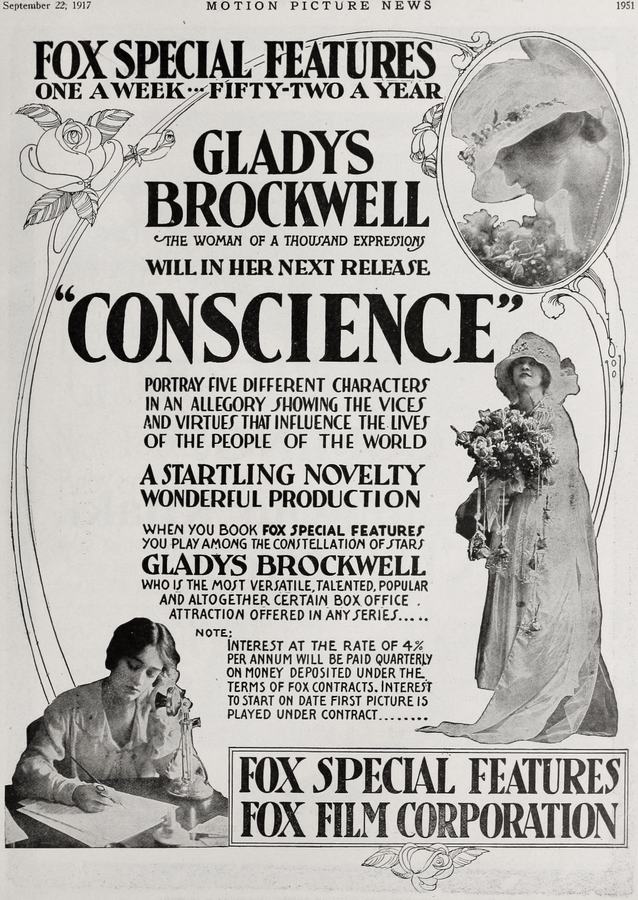
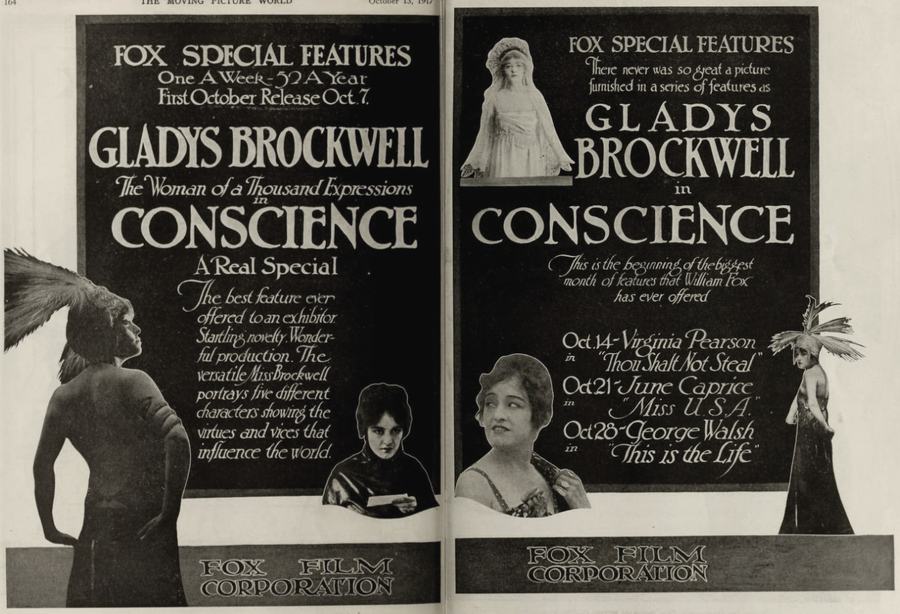
Stepping back into the cinematic landscape of 1917, one encounters a fascinating divergence of artistic ambition. While some productions contented themselves with lighthearted escapism or straightforward melodrama, others dared to grapple with profound philosophical and theological concepts. Among these more audacious endeavors stands Conscience, a film that doesn't just tell a story but constructs an elaborate allegorical framework, inviting its audience to ponder the very nature of sin, judgment, and redemption. It’s a bold artistic statement, especially for its era, positioning itself as a silent epic that seeks to explore the inner workings of the human soul through a grand, almost Miltonic lens.
The film immediately distinguishes itself with an opening sequence that is nothing short of audacious. We are transported to a dimly lit chamber where the venerable, sightless poet John Milton, a figure synonymous with epic verse and profound theological inquiry, is seen dictating 'Paradise Lost' to his daughters. This is no mere historical vignette; it's a deliberate, resonant overture, signaling to the audience that what follows will be a narrative steeped in the grand tradition of moral and spiritual struggle. It's a brilliant stroke of pre-cinematic storytelling, setting a high bar for the allegories that will unfold. This prologue transitions seamlessly into a celestial drama, where Serama, depicted as the alluring yet insidious consort of Lucifer, is cast out from the celestial spheres by the resolute Archangel Michael. It is here that the film's central conceit is introduced: Michael, with divine authority, commissions the abstract entity of Conscience to descend into the mortal realm, its sacred duty to scrutinize, judge, and ultimately chastise the transgressions of human souls. This is a powerful, visual representation of an internal mechanism, externalized for dramatic effect, making the abstract tangible in a way only early cinema could attempt.
From these cosmic heights, we are brought crashing down to the glittering, superficial world of society girl Ruth Somers. Marjorie Daw, in a performance that must have demanded a delicate balance of charm and insidious cruelty, embodies Ruth as a character both captivating and deeply flawed. The script, penned by Adrian Johnson, J. Searle Dawley, and E. Lloyd Sheldon, reveals Ruth to be a terrestrial echo, a reincarnation, of the banished Serama. This connection immediately elevates her personal narrative beyond simple human failing, imbuing it with a sense of predestined struggle. Ruth's imminent marriage to Cecil Brooke, a man of immense wealth, underscores her position within the upper echelons of society, a world where appearances often mask moral decay. Yet, her life is not without its sinister shadow: Dr. Norton, her ever-present guardian, portrayed with a chilling intensity by Bertram Grassby, is no ordinary confidant. He is revealed to be the very incarnation of Lucifer, a constant, insidious whisper in Ruth's ear, perpetuating her destructive tendencies and subtly guiding her towards further moral compromise. This duality, the mundane juxtaposed with the mythic, creates a compelling tension that propels the narrative forward.

The true ingenuity of Conscience, however, lies in its central dramatic device: the Court of Conscience. This is where the film transcends simple melodrama and ventures into the realm of profound moral allegory, reminiscent in its ambition, if not its execution, of later works exploring human fallibility. Ruth is not merely facing the consequences of her actions in a human court; she is summoned before a tribunal of the soul, a spiritual reckoning. This ethereal court is populated by personified vices, brought to life by the cast with stark, almost Expressionistic intensity. Lust, Avarice, Hate, Revenge, and Vanity take the stand as witnesses, each delivering a damning testimony against Ruth. This is where the film truly shines, transforming abstract moral failings into palpable, accusatory figures. The narrative meticulously unfurls Ruth's past, revealing a history of casual seduction and heartless abandonment. We learn of Madge, Ned Langley's lover, driven to suicide after Ruth enthralled Ned with false promises of marriage. The film doesn't shy away from the devastating human cost of Ruth's actions, detailing the deaths of two other rivals, testament to her destructive allure. This dramatic recounting, delivered by the personified sins, serves as a powerful, visual catalog of her transgressions, making her moral culpability undeniable.
The performances, particularly from Marjorie Daw as Ruth and Bertram Grassby as Dr. Norton/Lucifer, anchor the film's ambitious narrative. Daw's portrayal of Ruth, especially her journey from callous indifference to eventual repentance, is crucial. She manages to convey the character's initial allure and subsequent moral decay, making her eventual reckoning all the more impactful. Grassby, as the insidious Dr. Norton, is a masterclass in subtle villainy. His presence is a constant, unsettling reminder of the demonic influence at play, a silent puppeteer pulling Ruth's strings. The supporting cast, including Genevieve Blinn, Harry Lonsdale, Eugenie Forde, Douglas Gerrard, Edward Cecil, Colin Chase, Gladys Brockwell, and Eve Southern, contribute to the film's rich tapestry, each playing their part in the moral drama, whether as victims, observers, or the very personifications of vice. The direction by J. Searle Dawley, working from the intricate script, manages to balance the grand allegorical scope with the intimate human drama, a challenging feat for the nascent art form of cinema.
The film's thematic depth is its most compelling aspect. It delves into universal questions of free will versus predestination, the nature of sin, and the possibility of redemption. Ruth, as a reincarnation of Serama, initially seems fated to repeat her past transgressions, yet the intervention of Conscience and the eventual torment of remembrance suggest a path towards agency and transformation. This exploration of the inner struggle, the battle between one's base desires and the moral compass, resonates with the human experience across time. While not explicitly didactic, the film's message is clear: actions have consequences, and true peace can only be found through genuine repentance. This moral clarity, presented through such an elaborate allegorical structure, sets Conscience apart from many of its contemporaries that often relied on more straightforward moralizing. It's a testament to the writers' vision that they attempted such a complex exploration of ethics within a popular entertainment medium.
The climax of the film sees Ruth's carefully constructed world collapse. The interruption of her wedding by Ned Langley, a man she had so cruelly wronged, serves as a brutal awakening. Her scornful dismissal of him, leading directly to his tragic suicide, is the final, devastating act that seals her earthly fate. Abandoned by Brooke, her social standing in tatters, Ruth faces her ultimate sentence from the Court of Conscience: not death, but an existence condemned to the ceaseless, searing torment of remembrance. This psychological punishment, far more profound than any physical retribution, is a powerful statement about the lasting impact of one's actions on the soul. It forces Ruth to confront the full weight of her past, a torment that only genuine introspection and regret can alleviate. In a moment of profound transformation, she rejects the insidious influence of Dr. Norton, sending him away, a symbolic severing of her ties to Lucifer's dominion. Her final act of kneeling in repentance signifies a profound shift, a surrender to the very Conscience that had been judging her. It's a powerful, if somewhat abrupt, conclusion to her spiritual journey, suggesting that even the most corrupted soul can find a path to atonement.
From a stylistic perspective, Conscience is a fascinating example of early cinematic technique. The use of intertitles would have been crucial in conveying the film's complex allegorical layers and the internal thoughts of its characters. While specific details on cinematography are scarce from this distance, the ambition of the plot suggests a reliance on dramatic staging, symbolic imagery, and perhaps even early forms of special effects to depict the celestial realms and the personified vices. The pacing, characteristic of silent films, would have allowed for lingering shots on expressive faces and allegorical tableaux, giving the audience time to absorb the profound implications of each scene. The film's use of light and shadow, a common tool in early cinema, would have been particularly effective in distinguishing the celestial from the mundane, and the moral clarity from the murkiness of sin. It's a film that demands engagement, not just passive viewing, inviting the audience to interpret its rich symbolism.
Comparing Conscience to other films of its era, one can see its unique position. While films like Seven Deadly Sins (also from 1917) and The Inner Struggle (1916) also explored moral themes, Conscience distinguishes itself with its explicit, high-concept allegorical framework, drawing directly from literary giants like Milton. It's less a social drama and more a metaphysical one, a spiritual epic in miniature. This approach allowed it to tackle complex philosophical ideas that might have been too abstract for more conventional narratives. The film’s boldness in personifying abstract concepts like Conscience, Lust, and Avarice places it firmly in a tradition that seeks to make the invisible visible, a recurring motif in art that attempts to grapple with moral philosophy.
The enduring relevance of Conscience lies not just in its historical significance as an early silent film, but in its timeless exploration of human morality. The questions it poses about accountability, the seductive power of vice, and the possibility of spiritual transformation remain as pertinent today as they were over a century ago. It reminds us that even in an age of rapidly evolving technology and changing social norms, the fundamental struggle between good and evil, and the internal voice that guides us, remains a constant. The film serves as a powerful testament to the early ambition of cinema, demonstrating its capacity to be not just an entertainer, but a profound medium for philosophical inquiry and moral reflection. It's a film that deserves to be rediscovered, not just for its historical value, but for its rich, thought-provoking narrative and its audacious artistic vision. Its influence, while perhaps subtle, certainly contributed to the expanding vocabulary of cinematic storytelling, proving that even without sound, film could delve into the deepest recesses of the human condition.
Ultimately, Conscience is a cinematic artifact that transcends its time. It’s a bold, imaginative journey into the human psyche, framed by a cosmic battle between good and evil, and culminating in a deeply personal struggle for redemption. The film, through its unique blend of literary allusion, allegorical characters, and dramatic narrative, offers a compelling and surprisingly sophisticated meditation on the forces that shape our moral lives. It’s a poignant reminder that the silent era was anything but silent in its artistic voice and its capacity to provoke profound thought.
IMDb —
1918
Community
Log in to comment.