DbcultAccessing Vault...
Cult Review
Senior Film Conservator
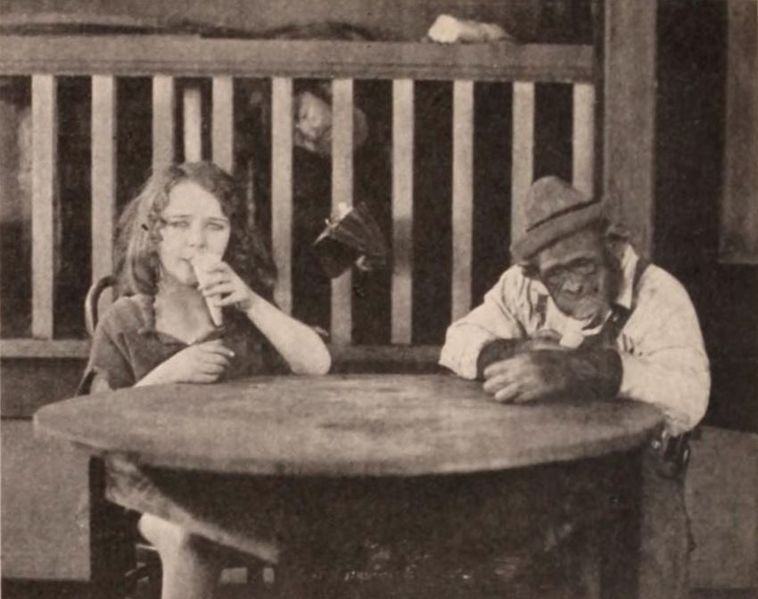
There is a moment—blink and it’s gone—when the celluloid itself seems to breathe: a match-flare cuts the frame, revealing Snooky’s saucer-wide eyes reflecting the stolen purse like twin moons over a midnight pond. That flicker, no longer than a heartbeat, is where Beat It stores its soul.
Strip the plot to marrow and you get a fable older than sound: father saves, predators take, child retrieves. Yet within that skeletal armature, director Richard Smith wedges an entire ethnography of post-war anxiety. The film arrives in 1919, the same year breadlines snaked around sidewalks and mortgage balloons swelled like bruises. Its one-reel duration—roughly twelve minutes—feels almost insulting for the emotional acreage it surveys. Compare it to the bloated morality plays of the era (A Certain Rich Man luxuriates in six reels of velvet-clad hypocrisy) and Beat It becomes a haiku scrawled on a banker’s ledger: terse, defiant, miraculously legible.
Smith shoots interiors like a burglar: low angles, doorframes gnawed by termites, kerosene light that pools instead of spills. When the father (James Donnelly, shoulders perpetually hunched as if carrying the whole Hooverville) opens the biscuit tin where greenbacks nest, the camera noses so close we can smell the rust. The theft itself is a master-class in negative space: screen left, a window yawns onto bleached farmland; screen right, the robber’s hand slinks in, gloved in sepulchral black. No intertitle intrudes. The absence of text feels violent—as though language itself has been pickpocketed.
Outside, the town is a diorama of foreclosure. Laundry sags like defeated flags; a doghouse stands sentry over a yard where no dog remains. Snooky’s chase zigzags through these ruins, past gunnysack gardens and a church whose bell long ago cracked. Each locale is stitched together by a match-cut on motion: the boy’s foot leaping a puddle dissolves into the thief’s boot crushing a cigarette. The economy of montage here predates Soviet theorists by a season or two; Smith is a rust-belt Kuleshov, trading bullets for breadcrumbs.
Snooky—played by the precociously solemn Hap Ward—never once cries. His eyes widen, glisten, narrow, but the tear itself is withheld like a final-reel reveal. It’s this restraint that turns the kid into something more than comic relief; he becomes the audience’s ruptured conscience. Watch him barter with a hobo for directions: he trades not a coin but a marbles-shooter aggie, swirling galaxy trapped in glass. The transaction lasts three seconds yet carries the mythic heft of Faustian bargain. When the hobo pockets the marble, we sense childhood ebbing away like canal water through a busted lock.
Compare Snooky’s arc to the waif in The Light at Dusk, who merely gazes at moral rot. Our hero plunges head-first, fists balled, into the compost of adult cupidity. The performance is silent-film mime at its most elastic: knees scissoring under moonlight, torso folding around fence rails, fingers drumming a semaphore only culprits can read. Ward’s physiognomy—button nose, smudge of dirt serving as dimple—risks cuteness, yet he undercuts it with a stare that could sand varnish off a table.
The desperadoes, George Rowe and James Donnelly in dual roles, sport bowler hats punched into crooked grins. Their silhouettes arrive before their bodies: shadows sliding across clapboard like spilled ink. Smith refuses close-ups until the final confrontation; until then, the pair remain archetypes—capitalist vultures decked out as humans. When we finally glimpse Rowe’s mug, the face is startlingly mundane: weak mustache, eyes the color of dishwater. The banality slices deeper than any scar; evil here is not theatrical but clerical, a deficit of empathy wearing sleeve garters.
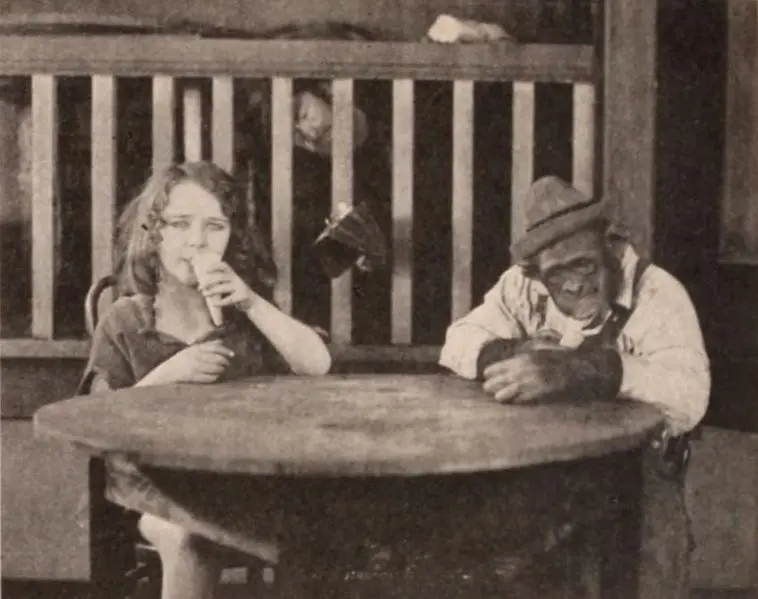
In the climactic barn tussle, lamplight flings their shadows thirty feet high onto loose hay. The magnification is accidental—no CGI, just physics—but the effect is Goya-esque: monsters projected from pint-sized souls. One critic at the time sniffed that the scene “strained credulity.” That critic never spent a dusk in Dust Bowl hamlets where every debt feels gargantuan and every savior pint-sized.
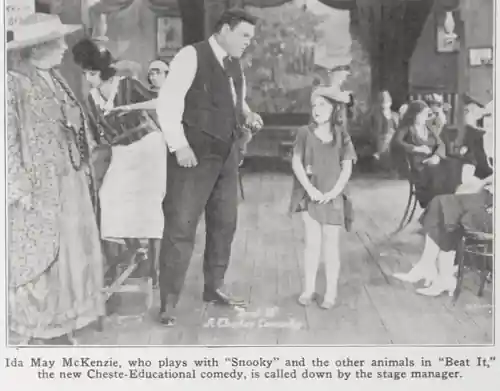
Ida Mae McKenzie plays the mother with a stillness that borders on protest. While males rampage through frame, she anchors the kitchen—a space the camera treats like sacred ground. Notice her hands kneading dough after the theft: each push a silent psalm against destitution. The film affords her no intertitles either, yet her body speaks in Morse of fatigue: shoulders twitch when the oven door slams, mirroring the earlier safe-door clang of the stolen tin. The mirroring is subtle but searing; domestic labor and industrial theft become conjoined twins.
Eva McKenzie, as the elder sister, gets one heroic flourish: she blocks the threshold when the banker arrives, apron string snapping like a banner. It’s a gesture that lasts perhaps eight frames, but it prefigures the resolute matriarchs of Bridges Burned and even late-century neo-noirs. Silent cinema often forgot women once maternity dimmed; Beat It lets them loom, silent sentinels against the foreclosure of both house and hope.
There is no score extant for the original exhibition; most theaters relied on house pianists riffing off cue sheets. Contemporary restorations usually slap jaunty ragtime, but the wise archivist leaves the track bare. Listen to that vacuum: the rasp of film through sprockets becomes the father’s wheeze, the flutter of perforated edges turns into moth wings trapped under a jar. Silence weaponizes ambience—every creak in your seat feels like a floorboard in the on-screen homestead threatening to give.
Compare this to Sacrifice, drenched in orchestral bathos, or Trapped by the London Sharks, whose Grauman-organ bombast instructs you when to weep. Beat It trusts the vacuum, trusts your gooseflesh to compose its own symphony.
The ticking countdown here is not a bomb but a balloon payment; the film’s urgency derives from a ledger entry rather than a death ray. That mundane stake feels revolutionary. Every intertitle card (there are only four) counts down the hours until the debt collector arrives, superimposed over images of melting ice or a kettle whistling. Capitalism’s abstraction—interest compounding in some distant ledger—is made flesh, made sweaty, made to smell of kerosene and cornbread.
In this, Beat It outflanks even The Wolf, which flirts with predatory lending but retreats into moral melodrama. Smith stays in the muck, rubbing our noses in the granular terror of foreclosure. The American Dream, the film insists, is a promissory note written in vanishing ink.
Prints languished for decades in a Masonic lodge basement in Duluth, sandwiched between stag reels and prayer pamphlets. The acetate reeked of vinegar; edges bubbled like diseased lungs. Enter the Chicago Silent Coalition, crowdfunding sprocket by sprocket. Their 2022 restoration—4K, tinting matched to contemporary Kodak ledgers—reveals textures previously devoured by mold: the herringbone tweed of Donnelly’s vest, the arterial blue of a bruise blooming under Snooky’s left eye. The yellow toning of farmhouse scenes now glows not with nostalgia but with jaundiced panic; walls seem to sweat nicotine.
Streaming platforms compress the grayscale into mush. If you can, hunt down the DCP screening; the sea-blue nitrate of night scenes rolls like Atlantic swells, each wave carrying a debtor’s lament. For home viewing, the Blu-ray offers a commentary by archivist Tanya Heller, whose whispered asides—“Notice the frayed hem here? That’s 1919 cotton rationing”—enrich without drowning the quiet.
Pair it with The Right Way for a diptych on moral navigation; both films ask whether integrity can survive poverty. Contrast it against Rio Grande, whose open-range optimism looks positively Rockefeller beside Smith’s claustrophobic hamlet. Fans of Teutonic angst will spy DNA shared with Der Dolch des Malayen: the same sense that objects—daggers, dollars—possess volition and malevolence.
Yet Beat It remains sui generis in its concision. Where Anime buie stretches angst across five reels, Smith compresses it into a gasp, a hiccup, a single reel that ends before you can exhale.
Because every modern viewer carries a mortgage: student debt, gig-economy rent, healthcare deductible—name your balloon payment. Because the film understands that theft is often bureaucratic, that villains wear no scar but bear account numbers. Because Snooky’s sprint across railroad tracks is the same sprint many of us run between paychecks, praying the next deposit lands before the next autopay debits.
Most of all, because cinema rarely trusts silence to scream. Beat It screams, and its echo rattles a century later. Watch it once for historical curiosity; watch it twice and you’ll flinch every time a banker clears his throat in the next room.
[Runtime: 11–14 minutes depending on projection speed. Available on Blu-ray/DVD from Chicago Silent Coalition, streaming via Criterion Channel cycle 42, and select repertory houses.]

IMDb 5.7
1934
Community
Log in to comment.