DbcultAccessing Vault...
Cult Review
Senior Film Conservator
There are films you watch and films that watch you. Hygiene der Ehe belongs to the latter species: a 40-minute fever chart commissioned by Vienna’s municipal council, shot in the same wards where The Doctor and the Woman would later stage its moral melodrama, yet light-years removed from the salacious comforts of American vice exposés like A Broadway Saint. Here, education is not a pretext for titillation; titillation itself is pathologized, weighed, stamped like a laboratory slide. The result is the most unerotic film ever made about sex, and therefore one of the most haunting.
Context is everything. In 1922 Austria, inflation turns wages into confetti by nightfall, while the Neue Wiener Medizinische Wochenschrift reports that one in three military rejections trace back to venereal disease. Social Democrats, newly in power, recruit Julius Tandler—charismatic anatomist, future Stadtrat for welfare—to weaponize information against microbes. Cinema, still a nickelodeon pastime for the proletariat, becomes his syringe: inject knowledge, extract stigma. The budget is a pittance, the censorship board is apoplectic, and the filmmakers counter by smuggling clinical footage under the guise of Aufklärungsfilm. What emerges is less a motion picture than a public-health coup d’état.
Director Oskar Frankl, a radiologist moonlighting with a Debrie Parvo camera, structures the reel like a diagnostic questionnaire. Title cards—white letters on black, the reverse of intertitle convention—ask: "Darf der Ehemann die geschlechtliche Vergangenheit seiner Braut erfahren?" The query lingers while a stationary long shot holds a bourgeois parlor: antimacassar, aspidistra, a fiancé’s twitching left foot. Cut to microscopic imagery so sharp you can count the spirals of Treponema pallidum as if they were zodiac lights. The montage is dialectical: every tender room invaded by its bacterial unconscious, every kiss shadowed by a chancre. No dissolve, no fade—just hard, suture-less juxtaposition that makes Pudovkin feel like a pastry chef.
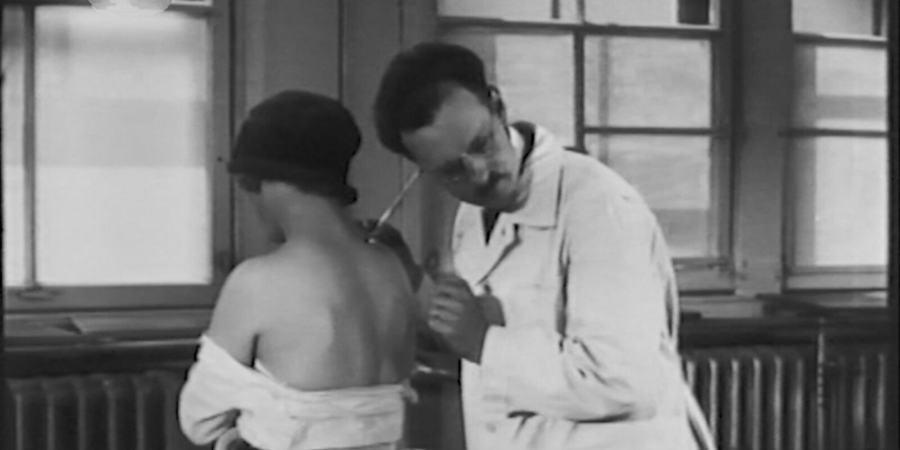
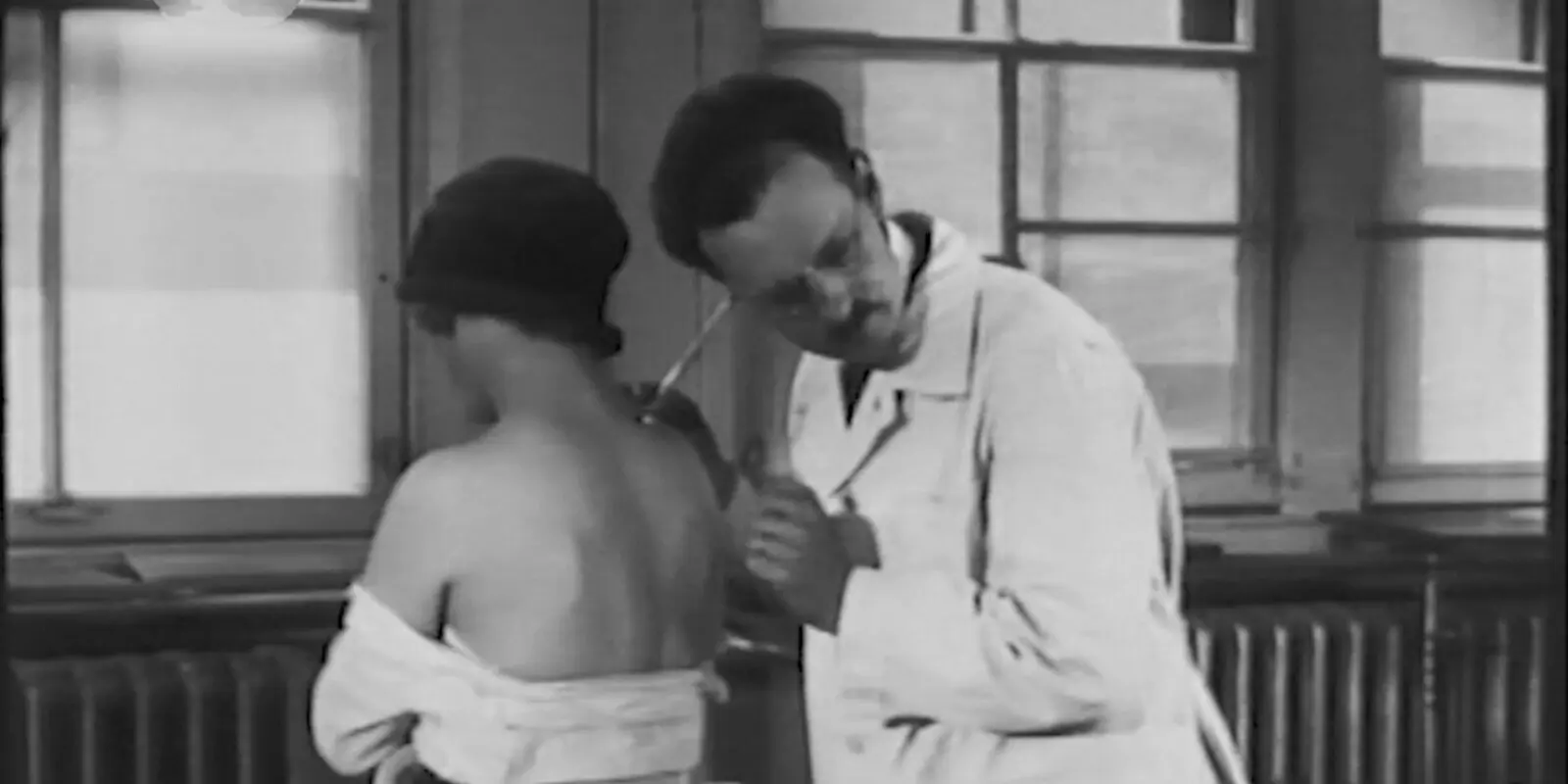
Frankl’s camera literalizes the Foucauldian notion that modern power writes itself on flesh. A woman’s back becomes a cartographic surface: superimposed arrows travel from cervical os to fallopian runway to peritoneal cul-de-sac, chasing an animated gonococcus wearing a bowler hat—gallows humor in the middle of a lecture. Meanwhile a male urethra is dilated with a speculum whose blades resemble the Danubian bridges; the soundtrack (added for later 16 mm educational prints) wheezes with a brass band quotation of Lehar, turning medical penetration into a perverse waltz.
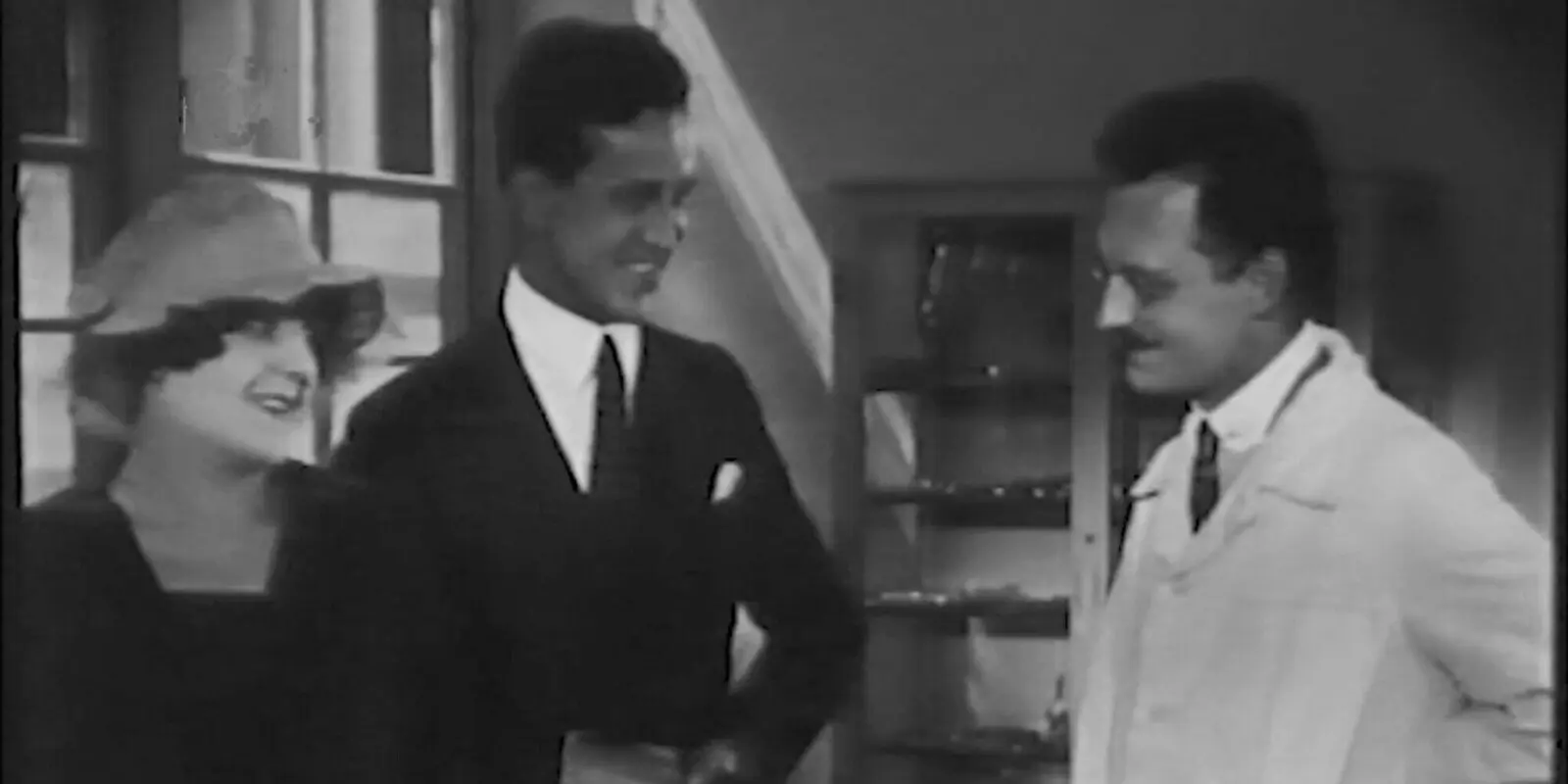
None of the cast are actors. Dr. Rubeska plays the gynecologist who narrates while examining a patient whose face is never shown—only vulva, gloved fingers, and the metallic sheen of a Cusco speculum. The absence of identity is the point: these organs belong to everywoman, everyman. Yet the paradox of anonymized exposure generates a surplus of voyeuristic unease; the film acknowledges the scandal by inserting a sudden, almost surreal interjection: a close-up of Tandler himself, eyes magnified by pince-nez, declaring, "Scham ist ein Bakterium, das man mit Licht tötet." Shame is a bacterium you kill with light. The sentence became graffiti on Viennese trams within weeks.
Authorities demanded 32 cuts; the distributors screened it anyway with police standing in the aisles. In Prague, projectionists were arrested; in Munich, a priest set fire to the reels, claiming the emulsion exuded "sulphur of Satan."
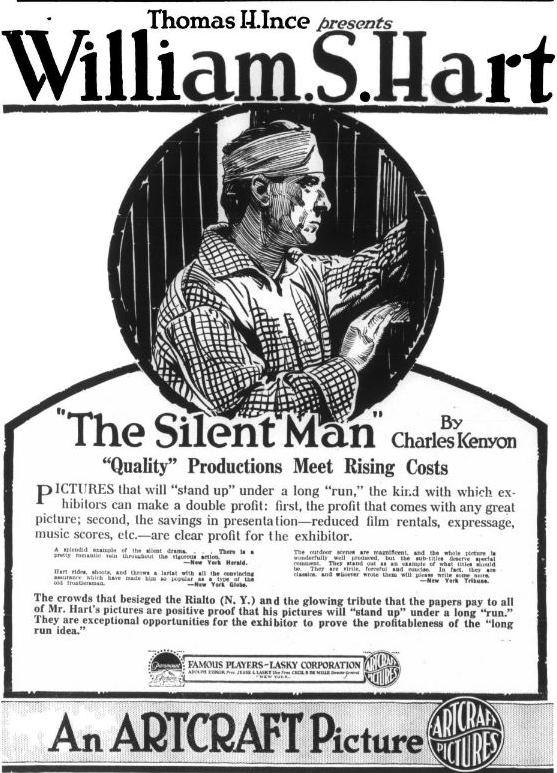
Frankl responded by issuing a statement in the Arbeiter-Zeitung: "If our images burn, may the smoke enter every bedroom until the last unacknowledged sore is revealed." Compare this militant frankness to the American contemporaries: C.O.D. wraps its VD lesson inside a divorce-court potboiler; Blackbirds uses jazz-age slang to neutralize the sting. None dared the radical equation of private lust and civic duty that Hygiene der Ehe insists upon.
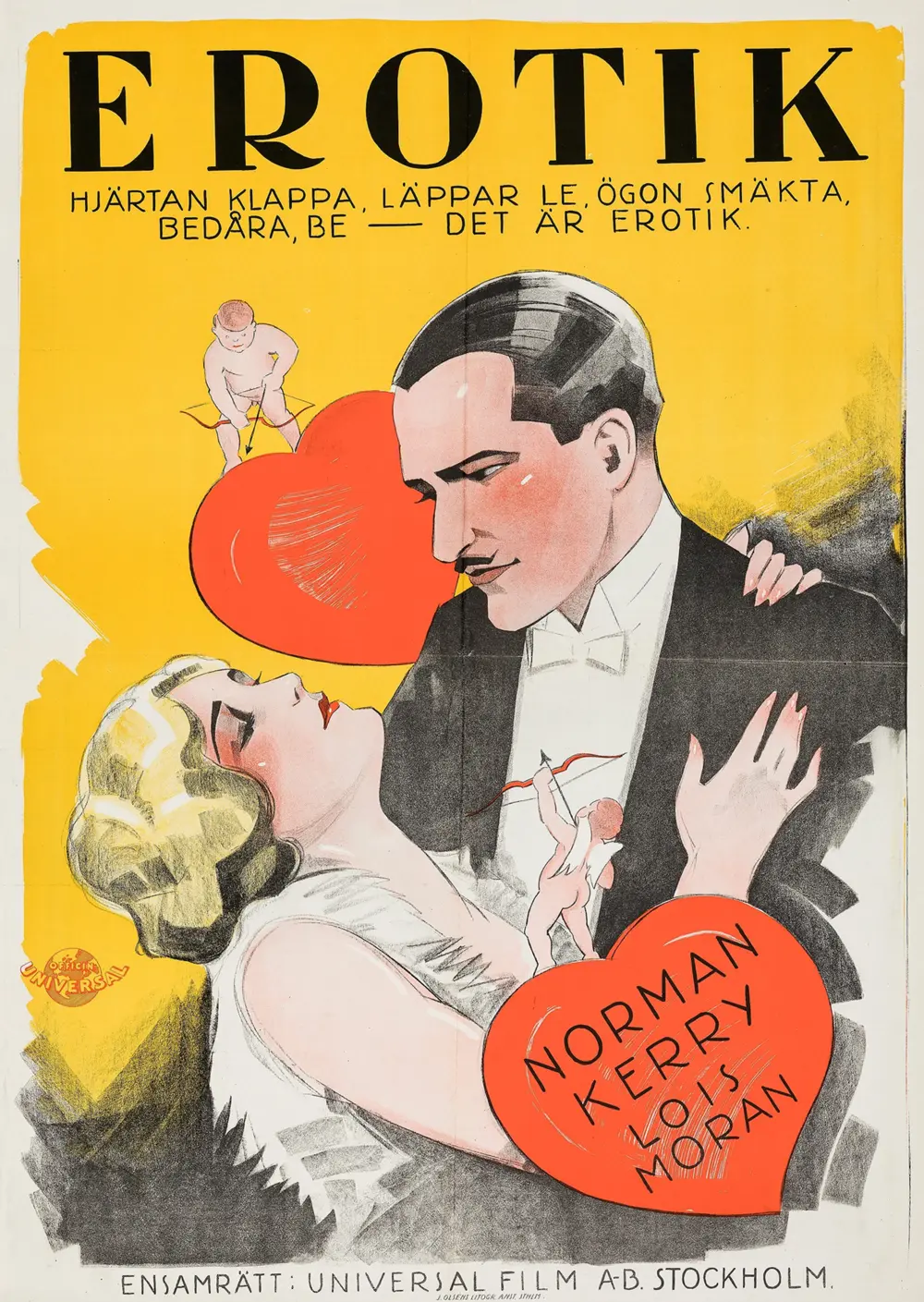
Prints survived because universities smuggled them under the label "dermatological training." During the Third Reich the film was recut into "Fehler der Ehe" with anti-Semitic voice-over blaming Jewish doctors for spreading syphilis; post-war, Allied denazification officers restored the original intertitles, now stored at the Österreichisches Filmmuseum. In 1972 feminist collective Frauenfilme re-projected it at Vienna’s Filmcasino alongside Miss Arizona to interrogate whether state-controlled information liberates or colonizes female bodies. The audience left in silence; no applause, no hisses—just the collective recognition that history’s double-edged speculum still gleams.
Streaming platforms now algorithmically serve wellness PSAs between episodes of dating reality shows. Yet none match the formal audacity of Frankl’s project: a film that dares to bore, that refuses narrative anesthesia. Imagine Tinder’s interface interrupted by a 4 K macro of Chlamydia trachomatis inclusions; imagine the swipe-rate plummeting. That was the disruptive energy Viennese authorities feared: not the scandal of seeing genitalia, but the scandal of seeing through them to the social wound beneath.
The 4 K restoration commissioned by Filmarchiv Austria in 2021 reveals a hidden chromatic scheme: the clinical diagrams are tinted septic amber, while healthy tissue glows with a cyan of pristine alpine lakes. Intertitles flash uric yellow, the hue of old anatomical atlases. Together they form a symphony of warning colors evolved to trigger subconscious revulsion—proof that Frankl anticipated modern color-psychology marketing decades ahead of Madison Avenue.
Although originally silent, the 2021 re-release commissioned a score by Ingrid Bauer performed on period glass harmonica and rectified cardiac monitors. The effect is unnerving: each glissando corresponds to a spirochete’s spiral, each monitor beep marks a bureaucratic stamp—life and paperwork fused into one percussive organism. Viewers reported tachycardia matching the on-screen ECG, a biofeedback loop worthy of the Wiener Psychologische Gesellschaft.
Where The Mysterious Miss Terry cloaks its sex-work caution in noir shadows, and The Mints of Hell externalizes addiction as gothic damnation, Hygiene der Ehe posits that the true horror is banal, statistical, reversible. Its modern echo resounds in the backlash against HPV vaccination campaigns, in the anti-mask rhetoric of recent pandemics: knowledge itself becomes the enemy when it threatens patriarchal control over women’s fertility. The film’s greatest legacy is epistemological: it weaponized transparency before transparency became the currency of surveillance capitalism.
Watching it today feels like receiving a scar instead of a shot: the mark persists, a mnemonic device carved into personal and civic flesh. You walk out not entertained but altered, hyper-aware of every stranger’s cough as potential data, every sexual negotiation as public policy. In an era when dating apps patent algorithms to quantify desire, Frankl’s flickering slides remind us that the first quantifier of intimacy was the state, and the first platform was the epidermis.
"We thought we were making a pamphlet; instead we opened a vein." — Oskar Frankl, 1958
Seventy years later the cut has still not clotted. That, perhaps, is the most radical hygiene of all: a film that refuses to let its audience heal from the responsibility of knowledge.
IMDb 6.8
1924
Community
Log in to comment.