DbcultAccessing Vault...
5.5/10
Senior Film Conservator

A definitive 5.5/10 rating for a film that redefined the boundaries of cult cinema. Count Your Change remains a cornerstone of transgressive art.
In the annals of silent cinema, where the grand narratives of epic dramas often jostled for screen time with the ingenious escapades of physical comedy, a unique alchemy occurred. This was a period when a simple premise, imbued with the right dose of kinetic energy and the indelible charm of its star, could blossom into a timeless piece of entertainment. Such is the case with the 1919 short film, 'Count Your Change', a delightful romp that showcases Harold Lloyd at the zenith of his early comedic powers. It's a film that, despite its brevity and seemingly straightforward plot – a man chased by a dog – manages to encapsulate the very essence of silent-era slapstick: the escalating absurdity, the relentless pursuit, and the triumph of the human spirit (or at least, its comedic resilience) against an unexpected, four-legged adversary.
Before he became synonymous with dangling from clock towers in 'Safety Last!', Harold Lloyd cultivated a distinct persona, the 'Glasses Character' – an earnest, ambitious, yet perpetually flustered young man. Unlike the melancholic tramp of Chaplin or the stoic acrobatics of Keaton, Lloyd's character was relatable; he was the guy next door, striving for success, often finding himself entangled in situations far beyond his control. In 'Count Your Change', this relatability is key. Our protagonist, Harold, isn't a villain or a buffoon; he's merely an unfortunate soul who crosses paths with a particularly tenacious bulldog pup. His reactions – the wide-eyed panic, the frantic attempts to escape, the desperate pleas for assistance – resonate precisely because they are so recognizably human. Lloyd's genius lay in his ability to convey a myriad of emotions and intentions without uttering a single word, relying instead on his expressive face, precise body language, and an unparalleled gift for physical comedy. He doesn't just run; he careens, he stumbles, he ducks and weaves with a balletic grace that belies the apparent chaos. His movements are a language unto themselves, perfectly articulating the exasperation and sheer terror of being relentlessly pursued by an adorable, yet unyielding, canine.

The simplicity of the premise in 'Count Your Change' belies the intricate comedic architecture crafted by writer H.M. Walker. In the silent era, screenwriters were masters of visual storytelling, tasked with devising scenarios that could be universally understood and inherently humorous without dialogue. Walker's contribution to this film is evident in the escalating nature of the chase. It’s not just a single pursuit; it’s a series of vignettes, each designed to build upon the last, introducing new obstacles and magnifying Harold's predicament. The narrative doesn't rely on complex character arcs or profound thematic explorations; instead, it focuses on the meticulous construction of gags and the rhythmic pacing required to deliver maximum comedic impact. Every near miss, every false sense of security, every sudden reappearance of the dog is carefully orchestrated to elicit laughter. This kind of writing is a testament to the ingenuity of early cinema, where the narrative engine was fueled by ingenious visual gags rather than spoken exposition. The economy of storytelling, the ability to convey a complete comedic experience within a relatively short runtime, is a hallmark of Walker's craft and the silent era's unique demands.
No discussion of 'Count Your Change' would be complete without acknowledging the true scene-stealer: the bulldog pup. This isn't just an animal actor; it's a comedic force of nature. Its unwavering determination, its seemingly innocent yet utterly relentless pursuit, provides the perfect foil to Harold's increasingly desperate efforts. The humor often stems from the contrast between the pup's small stature and its outsized impact on Harold's life. It's a testament to the animal's training and the filmmakers' ability to capture its antics effectively. The supporting cast, though often relegated to background reactions or momentary interactions, also plays a crucial role in enhancing the comedic tableau. Figures like Sammy Brooks, Lew Harvey, Fred Jefferson, Fred C. Newmeyer (who also directed many of Lloyd’s shorts), Maynard Laswell, Dorothea Wolbert, Vivian Gane, Bud Jamison, Marie Mosquini, Lige Conley, Katherine Surtess, Jerome LaPlanche, Bebe Daniels, Estelle Harrison, James Fitzgerald, James Parrott, 'Snub' Pollard, Hazel Powell, and Wally Howe, Dee Lampton, each contribute to the texture of the world Harold inhabits. Their collective bewilderment, annoyance, or unwitting involvement in the chase amplifies the absurdity, turning a simple man-vs-dog scenario into a broader social disruption. Bebe Daniels, a frequent co-star of Lloyd's early work, often brought a vibrant energy to the screen, and while her role here might be fleeting, her presence adds a touch of glamour and comedic timing to the unfolding chaos. The brilliance of these ensemble players lies in their ability to react authentically to the outlandish events, making Harold's predicament all the more comical and relatable.
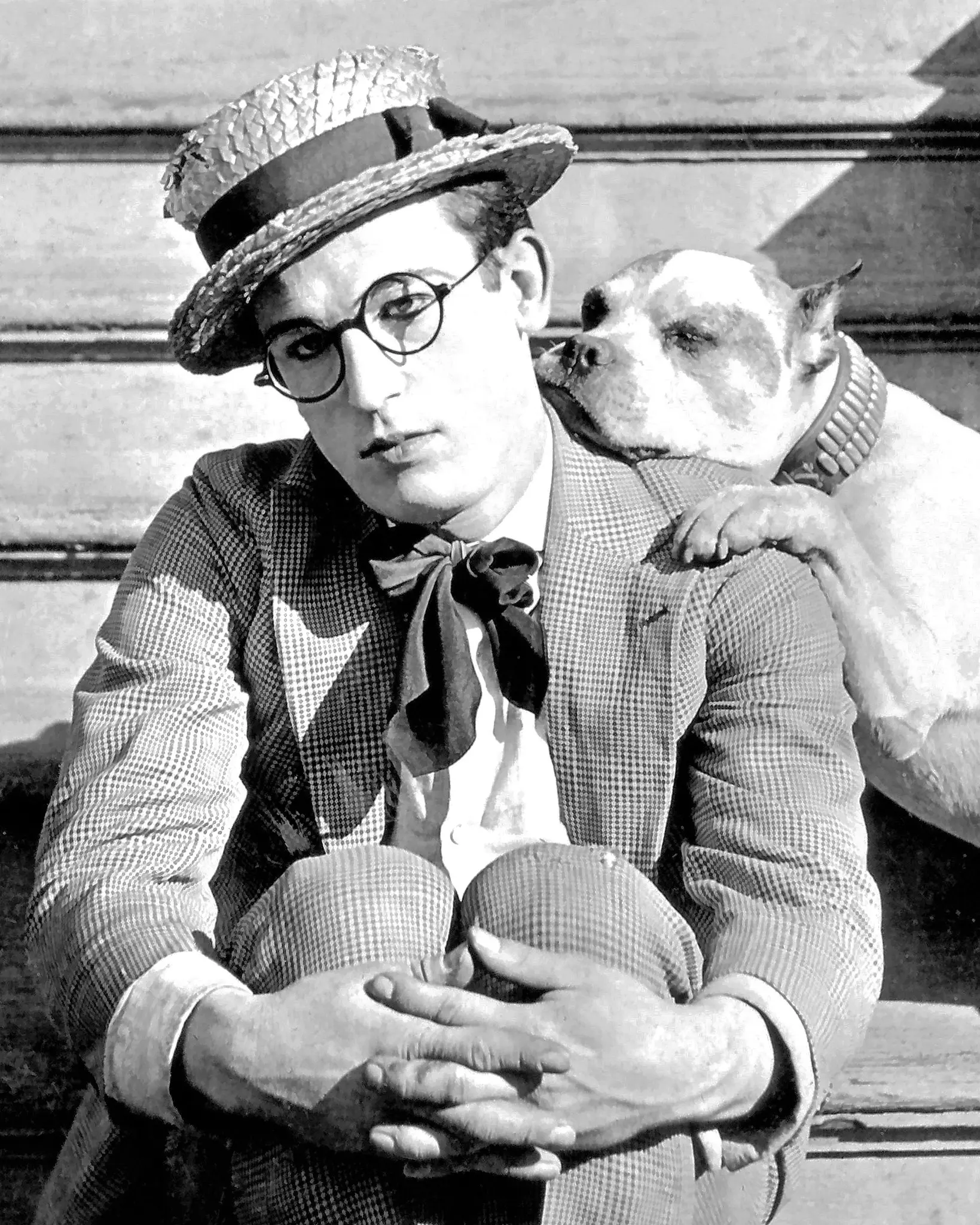
The genius of 'Count Your Change' lies in its imaginative use of diverse settings, each providing a fresh canvas for Harold's escalating predicament. The film masterfully transforms everyday locales into stages for comedic anarchy. The initial chase through a bustling city thoroughfare sets the tone, with Harold weaving through a dense tapestry of pedestrians, street vendors, and horse-drawn carriages. The sheer kinetic energy of this opening sequence immediately establishes the relentless pace, with Harold barely dodging a trolley car, narrowly avoiding a fruit stand, and inadvertently tripping up a bewildered gentleman. The pup, a furry, low-slung missile, remains hot on his heels, oblivious to the human-made obstacles. This scene is a vibrant depiction of urban life, suddenly upended by a very personal, very persistent problem.
Seeking refuge, Harold bursts into a seemingly serene department store. This environment, typically a bastion of order and consumerism, becomes a labyrinth of comedic potential. Harold attempts to blend in amongst mannequins, ducks behind clothing racks, and even tries to hide under a counter, only for the tenacious pup to sniff him out. The ensuing chaos involves toppling displays of hats, scattering bolts of fabric, and a bewildered sales assistant trying in vain to maintain decorum. The contrast between the store's intended tranquility and the sudden eruption of a man-and-dog chase is inherently hilarious, showcasing Lloyd's ability to extract humor from incongruity.
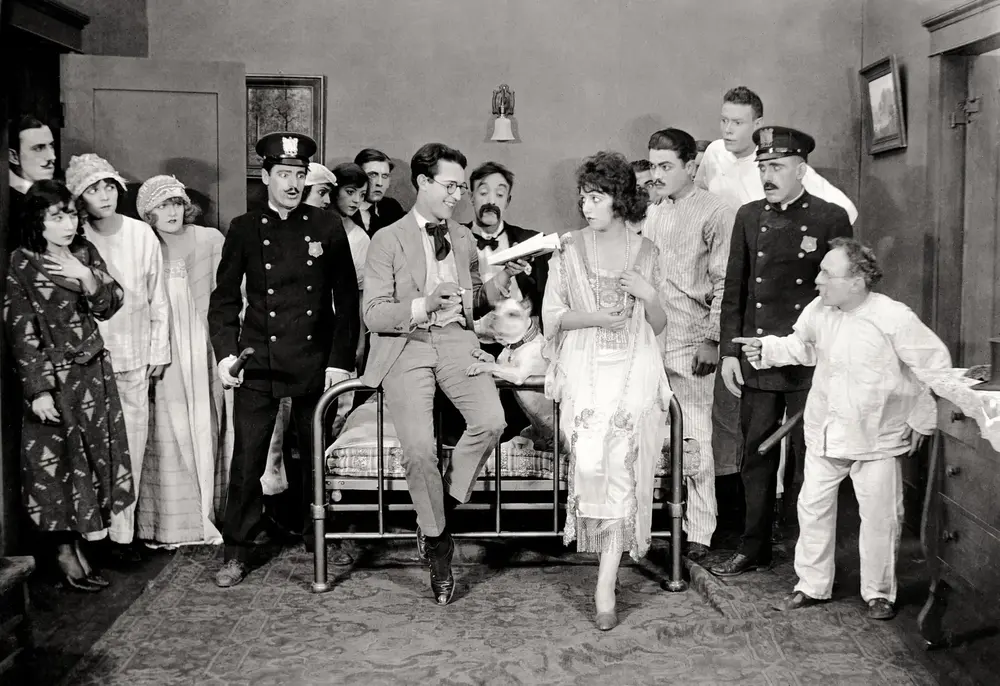
His escape leads him into an upscale restaurant, a place of hushed conversations and clinking silverware. For a fleeting moment, Harold believes he's safe, perhaps even finding a moment to catch his breath amidst the polite society. But the pup, with its uncanny ability to appear at the most inopportune moments, soon makes its entrance. What follows is a symphony of spilled soup, overturned tables, and indignant diners. Harold's desperate attempts to evade the dog result in a chain reaction of culinary catastrophes, with food flying and patrons scrambling. The disruption of such a formal setting by a simple, persistent dog is a classic comedic trope, executed with precision by Lloyd and his fellow actors.
The chase then spills into a tranquil public park, offering a momentary change of scenery but no respite. Harold attempts a clumsy disguise, perhaps a newspaper over his face, only for the pup's keen sense of smell to betray him. The pursuit continues through picnickers, disrupting a romantic couple's embrace, sending children's toys flying, and even startling a group of elderly gentlemen playing checkers. The open space allows for broader comedic movements, with Harold leaping over benches and dodging trees, all while the determined bulldog remains steadfastly on his tail. This sequence highlights the relentless nature of the pursuit, suggesting that no matter the setting, Harold's canine tormentor is an inescapable force.
Finally, Harold finds himself inadvertently stumbling into a quiet library or office space, the ultimate symbol of order and silence. The juxtaposition of the frantic chase with this hushed environment provides some of the film's most memorable gags. Books go flying, papers are scattered, and startled clerks jump from their seats. The absurdity reaches its peak as Harold, desperate and disheveled, attempts to reason with the dog or hide amongst the stacks, only to find his efforts futile. The climax of the film sees Harold, utterly exhausted and defeated, finally cornered. However, in a stroke of comedic irony, the pup, having achieved its objective, merely wants to play, perhaps having mistaken Harold for a particularly energetic playmate all along. The resolution, though simple, brings the chaotic journey to a satisfying, if slightly exasperating, close, leaving Harold (and the audience) with a sense of delightful, if weary, relief.
While 'Count Your Change' may not possess the grand scale or iconic set pieces of Lloyd's later feature films, it is an indispensable piece of his early filmography. It demonstrates his evolving comedic persona and his mastery of the chase sequence, a staple of silent comedy. The film's energy and the sheer inventiveness of its gags foreshadow the more elaborate stunts and intricate comedic scenarios that would define his golden age. In an era where short films were rapidly produced and consumed, 'Count Your Change' stands out for its focused execution and the timeless appeal of its central premise. It’s a testament to the enduring power of simple, well-executed physical comedy. Compared to other contemporary films of its time, even those exploring similar themes of everyday predicaments, such as Full of Pep, which might feature a protagonist navigating a series of escalating social or personal challenges, 'Count Your Change' distills the essence of relentless, animal-driven chaos with a singular focus that sets it apart. While Full of Pep might offer a broader comedic tapestry, 'Count Your Change' provides a masterclass in sustained, single-minded comedic pursuit, making it a unique and memorable entry in the silent comedy canon.
The film serves as a charming reminder of how much laughter could be generated from the most basic of conflicts, elevated by the unparalleled talent of its star and the clever craftsmanship of its creators. It's a snapshot of a bygone era, yet its humor remains remarkably fresh, proving that a good chase, especially one involving a man, his glasses, and a very determined dog, is truly timeless. For anyone wishing to delve into the foundational elements of Harold Lloyd's comedic genius, 'Count Your Change' offers a delightful, albeit breathless, introduction to the art of the chase and the enduring power of silent laughter.
IMDb —
1918
Community
Log in to comment.