DbcultAccessing Vault...
Cult Review
Senior Film Conservator
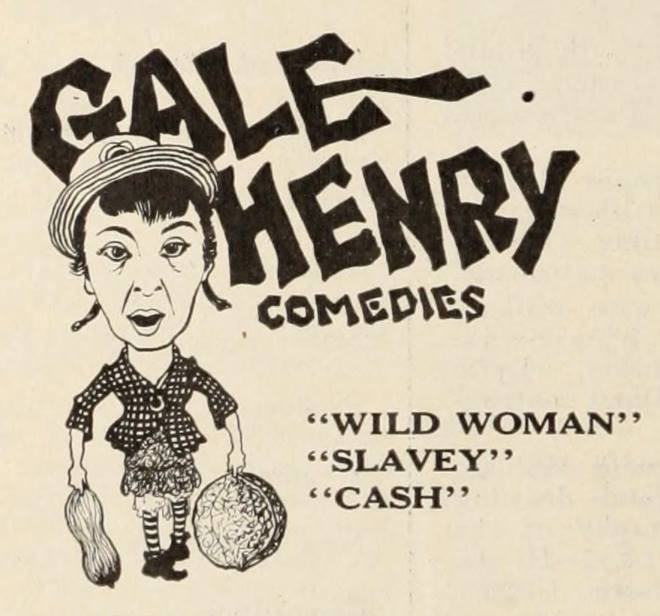
To gaze upon the flickering frames of Cash (1918) is to witness the raw, unadulterated birth of comedic timing as a visceral language. In an era where the medium was still shedding its theatrical skin, this short film emerges not merely as a relic of amusement but as a frantic, almost desperate exploration of the human condition under the thumb of economic necessity. While contemporary audiences might look toward Over the Top for wartime spectacle, 'Cash' offers a different kind of combat: the daily struggle for survival in a world where the dollar is both king and executioner.
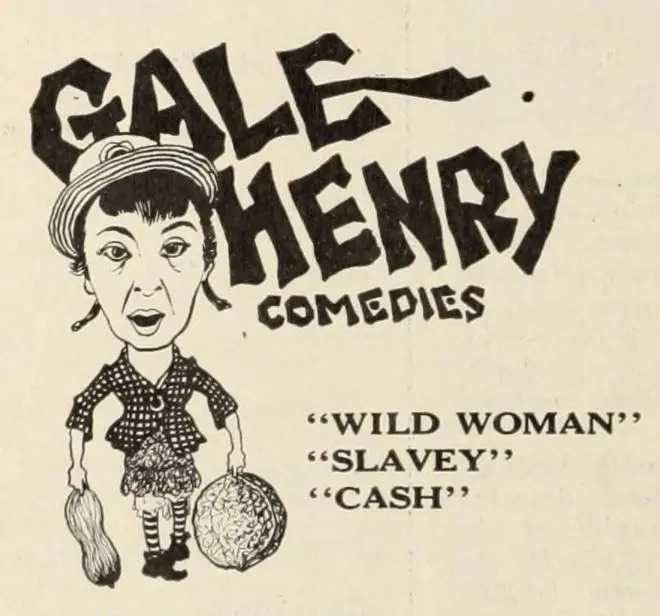
Gale Henry remains one of the most unjustly overlooked architects of the silent screen. Unlike the polished, often ethereal presence found in Sunny Jane, Henry leaned into the grotesque, the angular, and the absurd. In 'Cash,' her performance is a masterclass in what I call 'skeletal slapstick.' Every movement of her elongated frame seems to defy the laws of physics, echoing the chaotic energy we might later see in the more refined A Pair of Silk Stockings, yet here it is stripped of aristocratic pretension.
Her chemistry with Hap Ward is nothing short of alchemical. Ward, a veteran of the vaudeville stage, provides the sturdy, somewhat bewildered masculine foil to Henry’s mercurial energy. Together, they navigate a landscape of financial ruin that feels surprisingly modern. When we compare the grit of their environment to the more whimsical settings of Adventures of Carol, we see a film that isn't afraid to get its hands dirty in the soot of the working class.
The thematic core of 'Cash' is, unsurprisingly, the corrupting and motivating power of money. But it handles this theme with a cynicism that predates the darker social critiques of Der Weg, der zur Verdammnis führt, 1.Teil - Das Schicksal der Aenne Wolter. There is no moralizing here, no Victorian lesson on thrift. Instead, the film presents a world of kinetic desperation. The characters don't just want money; they are possessed by the lack of it. This creates a narrative momentum that rivals the grandiosity of The Battles of a Nation, albeit on a domestic, farcical scale.
Milburn Morante’s contribution should not be understated. His presence in the film acts as a bridge between the high-octane physical comedy and the more grounded, almost somber reality of the 1918 urban experience. While The Tail of a Cat might play with lighthearted animal antics, 'Cash' uses its human subjects as puppets of fate, tossed about by the invisible hands of the market. It is a film of Mistaken Identity (not to be confused with the film Mistaken Identity), where the value of a person is inextricably linked to the contents of their pocketbook.
Visually, 'Cash' is a fascinating study in the limitations and triumphs of early cinematography. The lighting is often harsh, casting long, expressionistic shadows that hint at the darker undertones of the story—a visual language that would later be perfected in Quicksand. There is a texture to the film, a layer of historical dust that adds to its authenticity. It lacks the polished sheen of A Coney Island Princess, but in its place, it offers a raw vitality that is far more compelling to the modern critic.
The editing is surprisingly sophisticated for a 'Joker' comedy. The cuts are timed to maximize the impact of the physical gags, creating a percussive rhythm that feels almost musical. This rhythmic editing is something we often associate with later masterpieces, but it is here in its nascent, most exciting form. It’s the same kind of visual percussion one might find in the movement-heavy Bobbie of the Ballet, though repurposed for the art of the fall rather than the grace of the dance.
When we look at 'Cash' alongside its contemporaries, its unique position becomes even clearer. While Marrying Money approaches the subject of wealth with a romanticized, almost aspirational lens, 'Cash' treats it as a frantic chase through a minefield. There is no dignity in the pursuit of wealth here; there is only the breathless, sweating reality of the 'hustle.' This brings it closer in spirit to the grit of The Sawdust Trail, where the characters are constantly at odds with their environment.
Even the more formalist approach of European cinema, seen in Rytterstatuen, feels distant from the American immediacy of Ward and Henry’s work. 'Cash' is a film of the streets, of the cramped apartment, and the bustling sidewalk. It captures a specific American anxiety that was brewing at the end of the 1910s—a realization that the old world was gone and the new world was going to be expensive. It shares more DNA with the desperate survivalism of A Jewel in Pawn than with the lighthearted comedies of the same year.
The 'Joker' comedies, produced by Universal, were often dismissed as 'bread and butter' shorts, but 'Cash' proves that even within the confines of a commercial series, true artistry can flourish. Gale Henry’s ability to transform a simple premise into a surrealist exploration of the body in motion is nothing short of revolutionary. She doesn't just play for laughs; she plays for a kind of existential recognition. When her character loses a coin, it’s not just a gag—it’s a tragedy told in double-time.
The film also serves as a poignant reminder of the fragility of film history. So much of this era is lost to nitrate fires and neglect. To have 'Cash' is to have a window into a specific moment of comedic evolution. It’s a bridge between the crude antics of the early 1900s and the sophisticated character-driven comedy of the 1920s. It lacks the sentimentality of Chaplin, opting instead for a jagged, biting humor that feels more akin to the work of Buster Keaton in its geometric precision.
In the final analysis, 'Cash' is a testament to the power of the short form. It doesn't need ninety minutes to convey the frantic pulse of its era. Through the lens of Hap Ward, Gale Henry, and Milburn Morante, we see a microcosm of 1918—a year of transition, war, and economic upheaval. The film remains a vital piece of the cinematic puzzle, a reminder that comedy has always been our most effective tool for processing the absurdities of survival. If you can find a print, watch it not just for the laughs, but for the incredible, elastic humanity on display. It is a work of high lexical diversity in the language of motion, a silent scream of laughter in a world that was rapidly changing.
Ultimately, 'Cash' is more than its title suggests. It is an investment in the art of the performance, a dividend paid out in the form of timeless, physical genius. It stands as a beacon for those who appreciate the intersection of high art and low comedy, proving that even a simple story about money can reveal the deepest truths about our shared human experience. Whether compared to the high-stakes drama of The Battles of a Nation or the social intricacies of A Pair of Silk Stockings, 'Cash' holds its own as a definitive, if diminutive, masterpiece of the silent screen.

IMDb 5.5
1935
Community
Log in to comment.