DbcultAccessing Vault...
6.3/10
Senior Film Conservator
A definitive 6.3/10 rating for a film that redefined the boundaries of cult cinema. Courtship of Miles Sandwich remains a cornerstone of transgressive art.
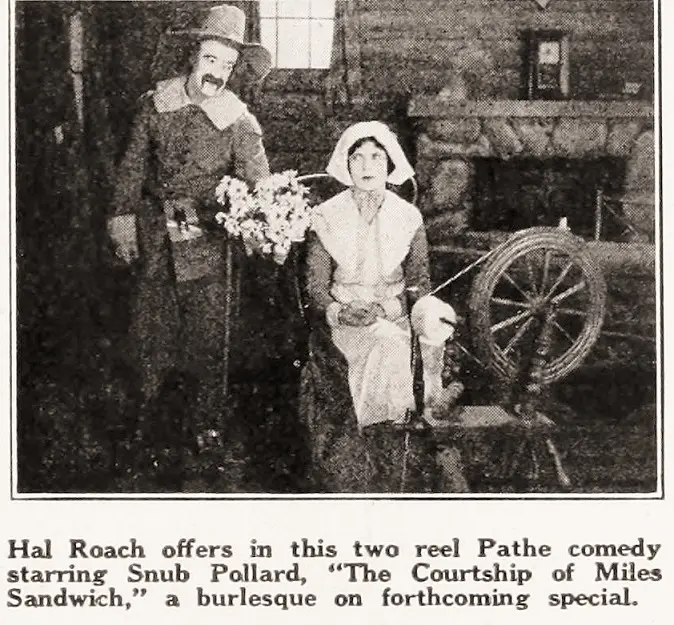
When the dust‑settled reels of early American cinema are dusted off, Courtship of Miles Sandwich emerges as a curious hybrid of nostalgic folklore and slapstick bravado. Directed by a yet‑uncredited hand of the studio system, the film pivots on a simple premise: a father, played with endearing gravitas by Noah Young, narrates the inaugural Thanksgiving to his son Malcolm (a role that, while uncredited, serves as the narrative conduit for the audience). The father’s voice, warm and measured, becomes the scaffolding upon which the child’s imagination builds a ludicrously anachronistic tableau.
The ensemble reads like a who’s‑who of silent‑film mischief. John M. O'Brien, as the hapless John Alldone, delivers a physical comedy that recalls the pratfalls of The Glory of Youth. His exaggerated gestures, timed to the rhythm of the piano accompaniment, convey a childlike earnestness that feels both timeless and deliberately theatrical. Opposite him, Marie Mosquini inhabits Prisilly with a blend of sass and sweetness, her expressive eyebrows doing half the storytelling. Snub Pollard, ever the comic foil, pops up in a cameo as a mischievous turkey‑herder, his trademark mustache twitching in perfect sync with the on‑screen chaos.
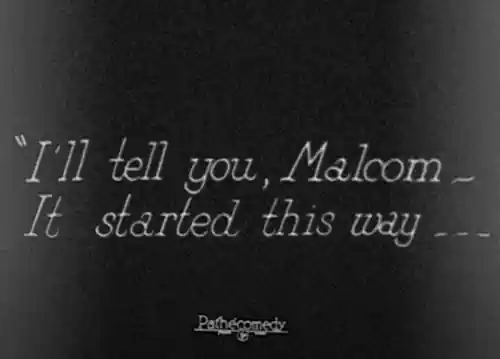
The film’s brilliance lies in its bifurcated narrative. The die‑getic world—where the father’s voice is anchored in a modest kitchen—contrasts sharply with Malcolm’s day‑dream, rendered in exaggerated set pieces and hyper‑stylized intertitles. This duality mirrors the modern technique of “story‑within‑a‑story” that later auteurs like Wes Anderson would perfect, but here it feels raw, experimental, and undeniably charming. The intertitles themselves are painted in a jaunty yellow (#EAB308), providing a visual cue that we have entered the realm of imagination.
Beyond the surface gags—slipping on spilled gravy, a turkey escaping a pot, a frantic chase through a cornucopia of pumpkins—the film subtly interrogates how families construct collective memory. Malcolm’s father, in his role as John Alldone, is not a historical figure but a vessel for the values his son internalizes: perseverance, generosity, and a hint of absurdity that acknowledges humanity’s imperfections. Prisilly, meanwhile, embodies the matriarchal force that binds the chaos into a semblance of order, much like the real‑world mother who orchestrates the holiday feast.

If one were to situate Courtship of Miles Sandwich alongside its contemporaries, parallels emerge. The frantic kitchen choreography recalls the culinary mayhem in Pettigrew's Girl, while the tender father‑son dynamic feels akin to the emotional undercurrents of Daddy. Moreover, the film’s visual gag of a runaway turkey prefigures the animal‑centric slapstick of The Gun Woman, albeit in a more domestic setting.
The cinematographer employs stark chiaroscuro to emphasize the transition between reality and fantasy. In the father’s kitchen, soft, diffused lighting creates an intimate, almost reverent atmosphere. As Malcolm’s imagination ignites, the lighting snaps to high‑contrast, with shafts of bright light cutting through the darkness—a visual metaphor for the child’s unfiltered creativity. The set pieces—an oversized wooden table, comically oversized turkey legs, a cornucopia that seems to defy physics—are deliberately theatrical, reminding the viewer that this is a constructed myth, not a documentary.
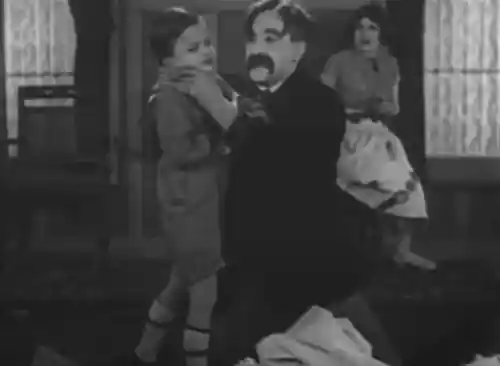
James Finlayson, best known for his collaborations with Laurel and Hardy, delivers a brief but memorable turn as the cantankerous Native American chief. His exaggerated eyebrows and dead‑pan stare provide a foil to the chaotic energy of the kitchen. Though modern sensibilities would critique the caricature, within the film’s context it functions as a satirical nod to the mythic “other” that early American folklore often invoked. The physicality of the actors—particularly Snub Pollard’s elastic limbs—exemplifies the silent era’s reliance on kinetic storytelling.
While the film itself is silent, contemporary screenings often feature a live piano score that mirrors the emotional beats. The pianist typically employs a jaunty ragtime motif during the chaotic banquet sequences, shifting to a warm, melodic theme during the father’s narration. This duality reinforces the visual split and heightens the audience’s immersion.
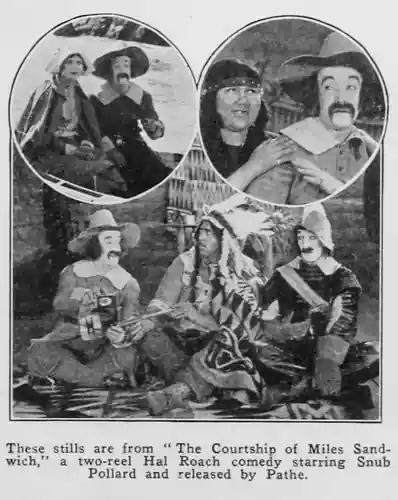
Thanksgiving, as a cultural touchstone, provides fertile ground for reinterpretation. In the early 1920s, the holiday was still being solidified in the national imagination. By framing the origin story as a comedic family legend, the film both honors and gently subverts the sanctity of the tradition. It suggests that the “first” Thanksgiving is less a fixed historical event and more a mutable narrative shaped by each generation’s values.
Although Courtship of Miles Sandwich never achieved the box‑office heights of Chaplin’s works, it has garnered a modest cult following among silent‑film aficionados. Film scholars often cite it in discussions of early meta‑narrative techniques, noting its self‑reflexive commentary on storytelling. Recent retrospectives at film festivals have paired it with The Heart of Youth and Figaros Hochzeit to illustrate the era’s fascination with blending romance, comedy, and historical myth.
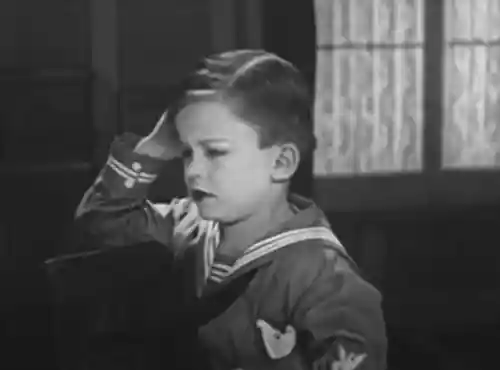
In an age where blockbuster spectacles dominate, Courtship of Miles Sandwich reminds us of cinema’s humble origins: a medium capable of turning a simple family story into a kaleidoscope of humor, pathos, and cultural reflection. Its modest runtime (just under twenty minutes) packs a punch that many modern features struggle to deliver. The film’s ability to oscillate between earnest homage and playful parody makes it a study in tonal balance—a lesson that contemporary filmmakers could still learn from.
For anyone interested in the evolution of narrative cinema, or simply seeking a delightful glimpse into the silent era’s inventive spirit, Courtship of Miles Sandwich is a must‑watch. Its vibrant characters, clever use of visual contrast, and timeless exploration of how families mythologize their past ensure that, even after a century, the film remains as fresh and entertaining as the first turkey on the table.
IMDb —
1928
Community
Log in to comment.