DbcultAccessing Vault...
Cult Review
Senior Film Conservator
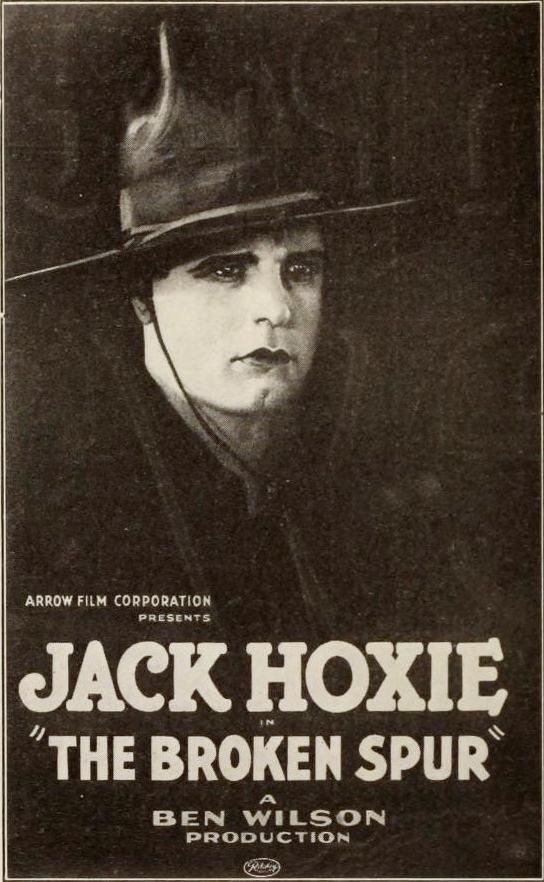
The Broken Spur
"In the shadow of progress, the outlaw’s cry is a lament for the land he cannot let go."
J. Grubb Alexander’s The Broken Spur is a film that thrives on paradoxes. It is a story of duality told through the lives of two men so alike in appearance that their shared visage becomes a weapon. Joe Dayton, the railroad magnate, and Jacques Durand, the bandit, are not merely physical twins but ideological counterparts locked in a battle over the soul of the Canadian frontier. The narrative, though rooted in the pulp conventions of early Westerns, transcends its genre by weaving a tapestry of moral complexity that lingers long after the credits roll.
At its core, the film is a meditation on identity and the fragility of self. The railroad, a symbol of modernity and inevitability, becomes the axis around which both men’s fates pivot. For Dayton, it represents order and economic destiny; for Durand, it is an existential threat. Their mirrored appearances allow Alexander to play with the theme of duality in a visceral way—audiences are forced to confront the question: who is the true antagonist when the faces are indistinguishable?
The cinematography, though rudimentary by today’s standards, is masterful in its use of chiaroscuro. The Canadian wilderness is rendered in stark contrasts: the golden hues of the railway tracks cutting through the dark forest, the shadowy interiors of the saloon where Durand plots his sabotage. These visual motifs mirror the duality of the protagonists’ moral landscapes. The camera lingers on their faces, capturing the subtle shifts that betray their inner turmoil—a twitch, a furrowed brow, a glance that lingers too long.
Jim Welch’s portrayal of Jacques Durand is a standout, embodying the outlaw’s charm and menace with equal measure. His performance is a study in restraint; the ferocity of his actions is undercut by a vulnerability that suggests a man clinging to a life he knows is doomed. Conversely, Edward W. Borman’s Dayton is a portrait of quiet determination, his character a cipher for the relentless march of progress. The chemistry between the two actors is crucial, as their physical resemblance becomes a narrative device that blurs the line between heroism and villainy.
Alexander’s script is a labyrinth of misdirection and tension. The plot hinges on Durand’s ability to impersonate Dayton, a ruse that drives the film’s central conflict. Yet, what elevates the story beyond a mere game of deception is its exploration of the human cost of progress. The railroad is not just a setting—it is a character, a force that erodes the old ways and replaces them with something cold and unyielding. This is where The Broken Spur diverges from the typical Western template; it does not romanticize the frontier. Instead, it mourns its loss, framing the railroad as both a savior and a destroyer.
The film’s tension is further amplified by its supporting characters. Evelyn Nelson’s performance as a conflicted love interest adds depth to the narrative, her internal conflict mirroring the film’s central theme. Her character is not merely a plot device but a lens through which the audience can see the moral ambiguity of the protagonists. Marin Sais and Wilbur McGaugh bring nuance to their roles as enforcers of law and order, their rigid convictions clashing with the fluid morality of the frontier.
Comparisons to other works of the era are illuminating. Like The Breaking of the Drought, The Broken Spur explores the clash between tradition and modernity, but Alexander’s film is more introspective, focusing on the personal stakes of its characters. The sabotage theme echoes Over Niagara Falls, but where that film’s danger is external, here it is internal, a battle of wits and wills. The moral duality of The Broken Spur also resonates with Tosca, though the latter’s operatic grandeur is replaced here with the stark realism of the Canadian wilderness.
Visually, the film is a study in contrasts. The wide, sweeping shots of the railroad construction juxtapose the claustrophobic tension of Durand’s hideouts. The use of color—though limited by the era’s technology—is deliberate. The golden hues of the railway tracks symbolize hope and progress, while the deep blues and greens of the forest represent the untamed, lawless past. This visual duality reinforces the film’s central theme: the impossibility of reconciling two opposing forces.
The score, though understated, plays a crucial role in heightening the film’s emotional beats. A haunting violin motif underscores key scenes, its melancholic tone a reminder of the characters’ shared fate. The music swells during moments of confrontation, creating a palpable tension that leaves the audience breathless. These auditory cues are subtle but effective, guiding the viewer through the film’s moral and emotional landscape.
One cannot discuss The Broken Spur without acknowledging its place in the broader context of early Western cinema. Films like The Auction Block and The White Heather often leaned into romanticized notions of the frontier, but Alexander’s work is more grounded. It avoids the mythologizing of the West and instead presents a realistic, often bleak, portrayal of the forces at play. The film’s ending, though bittersweet, is not a resolution but a reflection of the inevitable—Durand’s defeat is not a triumph but a tragedy, a loss of identity in the face of a changing world.
The performances across the board are commendable. Evelyn Nelson’s portrayal of a woman caught between two worlds adds layers to the narrative, her character a symbol of the land itself—resilient yet vulnerable. Jim Welch’s Durand is a masterclass in underplaying, his quiet intensity masking the seething rage beneath. The supporting actors, though given less screen time, contribute to the film’s authenticity, their performances rooted in the physicality of the frontier.
Technically, the film is a marvel of its time. The use of location shooting in the Canadian wilderness brings an authenticity that studio-bound Westerns lacked. The landscapes are not backdrops but active participants in the story, their rugged beauty contrasting with the harsh realities of the characters’ lives. The editing, though brisk, maintains a rhythm that keeps the audience engaged, the tension building steadily to a climax that is both inevitable and emotionally resonant.
In conclusion, The Broken Spur is a film that defies easy categorization. It is a Western, yes, but it is also a psychological study, a meditation on identity, and a critique of progress. Its strengths lie in its nuanced characters, its evocative visuals, and its refusal to offer simplistic moralizing. While it shares thematic DNA with other early Westerns, it stands apart for its depth and complexity. For those interested in the evolution of the genre, this film is an essential watch—a testament to the power of cinema to explore the human condition.
IMDb —
1918
Community
Log in to comment.