DbcultAccessing Vault...
5.7/10
Senior Film Conservator
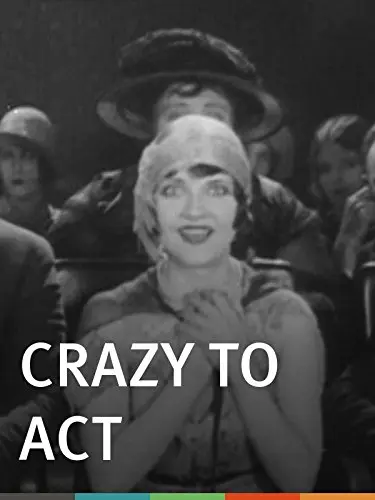
A definitive 5.7/10 rating for a film that redefined the boundaries of cult cinema. Crazy to Act remains a cornerstone of transgressive art.
Is "Crazy to Act" still worth watching in our hyper-saturated cinematic landscape? Short answer: yes, but with significant caveats. This 1927 silent comedy short is a fascinating, if sometimes frustrating, artifact of early Hollywood. It's a film for the curious cinephile, the silent comedy enthusiast, and anyone with an interest in the foundational elements of physical humor, especially those keen on seeing a young Oliver Hardy before his iconic partnership.
However, it is decidedly not for those accustomed to modern narrative pacing, sophisticated comedic dialogue, or intricate character development. If your patience for black-and-white, title-card-driven storytelling is thin, or if you find broad slapstick tiresome, then "Crazy to Act" might test your limits.
"Crazy to Act" is a whirlwind of a film, clocking in at a brisk runtime that barely allows you to catch your breath before depositing you back into the real world. It’s less a meticulously crafted narrative and more a series of escalating comedic set pieces, all centered around the chaotic intersection of romantic entanglement and disastrous filmmaking. Producer Gordon Bagley, played with blustering desperation by Billy Gilbert, is a man whose personal and professional lives are on a collision course. He harbors romantic intentions for his leading lady, Ethel St. John (Mildred June), who, predictably, has eyes only for the film's dashing hero, Arthur Young (Jack Cooper).
This love triangle forms the flimsy, yet effective, spine of the comedy. The real joy, however, comes from the film's self-referential humor about the burgeoning movie industry itself. The sheer absurdity of a film set, the over-the-top acting required for silent melodramas, and the inevitable technical mishaps are all fodder for the comedic mill. The film’s climax, featuring a literal rotating set, is a masterclass in physical comedy and an audacious visual gag that still impresses with its ambition, even if the execution leans heavily into the farcical.
The performances in "Crazy to Act" are, as expected for the era, broad and demonstrative. Silent film acting demanded an almost theatrical exaggeration to convey emotion without dialogue, and the cast here delivers with gusto. Billy Gilbert, in particular, shines as the beleaguered producer Gordon Bagley. His facial expressions, a mixture of exasperation and desperate longing, are a highlight. Gilbert’s ability to convey mounting frustration through physical comedy is evident throughout, from his initial attempts to woo Ethel to his ultimate, bewildered collapse amidst the chaotic set. There’s a scene where he’s trying to direct a particularly dramatic moment, and his silent screams of frustration are more articulate than many spoken lines in modern comedies.
Mildred June as Ethel St. John embodies the archetypal silent film ingenue, albeit one with a defiant streak. Her portrayal balances the expected vulnerability with a clear sense of agency, particularly in her preference for Arthur over the powerful producer. Jack Cooper’s Arthur Young is the dashing, somewhat bland hero, serving primarily as the object of Ethel’s affection and a foil to Bagley’s schemes. Their romantic escapades are played with a straightforward innocence that contrasts sharply with Bagley's more desperate machinations.
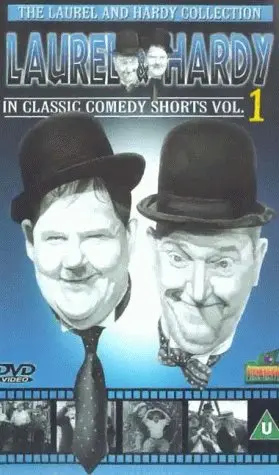
Then there’s Oliver Hardy. While his role here is not a lead, and he’s not yet the iconic 'Stan and Ollie' Hardy, his presence is unmistakable. Hardy often played villains or supporting characters in his pre-Laurel films, and here he brings his distinctive physicality and a certain gravitas, even in a comedic context. His portrayal, though brief, hints at the masterful comedic timing he would soon perfect. Keep an eye out for his subtle reactions; they’re a precursor to the slow burns and exasperated glances that would become his trademark. It's a fascinating watch for fans of his later work, offering a rare glimpse into his formative years.
The ensemble cast, including Barney Hellum, Dave Morris, and Thelma Hill, contribute to the film’s manic energy. Their exaggerated reactions and physical gags are essential to the overall comedic rhythm. The way they interact, often colliding or narrowly avoiding disaster, speaks to the carefully choreographed chaos that defined much of silent slapstick.
The direction of "Crazy to Act," credited to a team of writers, feels very much a product of its time – fast, furious, and focused on visual gags over intricate plotting. The pacing is relentless, a characteristic often found in silent shorts where every frame had to deliver a laugh or advance the physical action. There’s little room for subtlety; the film moves from one escalating mishap to the next with a kind of joyful abandon. This rapid-fire approach can be exhilarating, particularly in the film's more chaotic sequences.
The most memorable directional choice is undoubtedly the use of the rotating movie set during the climax. This sequence is a marvel of practical effects for its era, effectively conveying a sense of utter pandemonium and the complete loss of control. It’s a bold, physical manifestation of Bagley’s collapsing world, both professionally and personally. The way the actors navigate this spinning environment, attempting to maintain some semblance of order while everything literally turns upside down, is genuinely impressive and laugh-out-loud funny. It’s a moment that elevates the film beyond simple slapstick into something more inventive, a clear precursor to the elaborate set pieces that would define later comedies.
However, this relentless pace also means that some gags don't land as effectively as others. There are moments where the humor feels repetitive, relying on familiar tropes of the era without adding much original flair. The editing is sharp, cutting quickly between reactions and actions to maintain momentum, but it doesn't always allow the audience to fully savor a particular comedic beat. This is a film that prioritizes quantity of gags over sustained comedic development, a common trait in shorts designed to entertain quickly before the next feature.
The cinematography, while basic by today's standards, effectively serves the comedic tone. Shot in black and white, the film relies heavily on strong contrasts and clear visual blocking to convey information and humor. Close-ups are used sparingly but effectively to emphasize character reactions, particularly Gilbert’s exasperated expressions. Long shots are employed to showcase the full scope of the chaotic set pieces, allowing the audience to appreciate the scale of the physical comedy. There’s a delightful simplicity to the visual storytelling that allows the physical performances to take center stage.
The tone is undeniably lighthearted and farcical, even when the characters are facing what, in a drama, would be devastating setbacks. The film never takes itself too seriously, which is its greatest strength. It embraces the inherent absurdity of its premise, creating a world where romantic woes and professional disasters are merely excuses for more elaborate physical gags. This commitment to an almost cartoonish reality makes it easier for modern audiences to engage with the dated humor, provided they approach it with an open mind.
One unconventional observation: The film's portrayal of a disastrous film production feels surprisingly prescient, almost a meta-commentary on the chaotic, often amateurish nature of early Hollywood. It's as if the filmmakers themselves were winking at the audience, acknowledging the inherent madness of their own industry. The entire 'film within a film' concept, even in its crudest form here, is a brilliant device.
"Crazy to Act" offers a fascinating window into the silent film era, a period of immense creativity and experimentation. It showcases the types of short comedies that were staples in cinemas, often preceding a longer feature. Understanding this context is crucial for appreciating its appeal. These films were designed for immediate gratification, quick laughs, and broad entertainment. They were the television sitcoms of their day, delivered with a kinetic energy that often feels more akin to live theater.
Its enduring appeal lies not just in its historical value or the early appearance of Oliver Hardy, but in its pure, unadulterated commitment to physical comedy. While some gags might not land with the same impact today, the sheer effort and ingenuity behind sequences like the rotating set are undeniable. It reminds us of a time when cinematic magic was created with pulleys, ropes, and sheer human effort, rather than digital effects. It works. But it’s flawed.
Comparing it to other slapstick shorts of the era, it holds its own, perhaps not reaching the dizzying heights of a Buster Keaton silent, but certainly possessing a distinct charm. It shares some DNA with other films that poked fun at the film industry, like some of the meta-comedies of the Adam's Rib (1923) era, though with far less narrative complexity. It's a stepping stone, a piece of the puzzle that led to the more refined comedies that would follow.
"Crazy to Act" is more than just a historical curiosity; it’s a vibrant, if imperfect, snapshot of silent-era comedy. It’s a film that demands a certain appreciation for its context and its particular brand of humor. While it won't convert skeptics of silent cinema, it offers genuine moments of inventive physical comedy and a delightful peek into the early days of filmmaking. Its chaotic energy and the sheer audacity of its central set piece make it a worthwhile watch for those inclined to explore the roots of cinematic comedy.
It’s a film that doesn't aim for profundity but delivers on its promise of madcap entertainment. For fans of Oliver Hardy, it’s an essential piece of his filmography, showcasing the nascent talents of a comedic giant. Ultimately, "Crazy to Act" is a testament to the enduring power of laughter, even when delivered without a single spoken word. It’s a joyous mess, and sometimes, that’s exactly what you need.

IMDb 6.9
1936
Community
Log in to comment.