DbcultAccessing Vault...
Cult Review
Senior Film Conservator
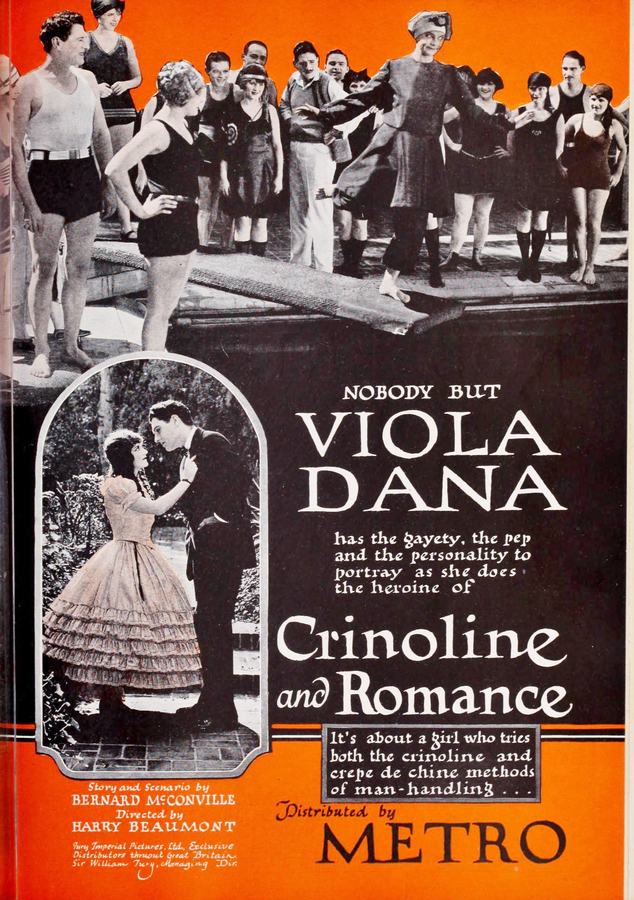
Stepping back into the cinematic landscape of 1919, one encounters a fascinating tapestry of burgeoning narrative forms and evolving visual storytelling. Among these early gems, 'Crinoline and Romance' emerges as a delightful, if often overlooked, piece that captures the social zeitgeist of its era while weaving a universally resonant tale of innocence, discovery, and the intricate dance of love. Directed with a keen eye for character and comedic timing, this film, penned by Bernard McConville, offers more than just a glimpse into a bygone age; it presents a surprisingly nuanced exploration of identity forged at the crossroads of tradition and modernity.
At its heart, the narrative revolves around Miss Emmy Lou, portrayed with a charming blend of naiveté and burgeoning spirit by Mildred June. Her upbringing, meticulously shielded from the world's complexities by her doting grandfather, Colonel Charles E. Cavanaugh (a wonderfully patriarchal yet ultimately benevolent Claude Gillingwater), has rendered her a living relic. She exists in a sartorial and social bubble, her very attire – the titular crinoline – a symbolic tether to a past that refuses to acknowledge the present. This initial premise immediately sets up a delightful comedic tension, as Emmy Lou's inevitable collision with contemporary society promises both humor and profound moments of self-realization. It’s a classic fish-out-of-water trope, yet executed with an earnestness that transcends mere caricature, inviting the audience to genuinely root for her journey of adaptation.
Her venture beyond the secluded valley, to the sophisticated abode of Mrs. Kate Wimbleton, acts as the catalyst for her grand awakening. This transition is handled with a delicate touch, highlighting not just the external changes in her environment but the internal shifts within Emmy Lou herself. The initial awkwardness born of her anachronistic appearance quickly gives way to an undeniable charm, a testament to her inherent goodness and perhaps, the refreshing novelty she represents to the jaded urbanites. It’s a narrative arc that subtly critiques the superficiality of fashionable society while celebrating the enduring appeal of genuine character. One might draw a parallel to the innocence-meets-experience narratives found in films like Her Lucky Day, where protagonists similarly navigate unfamiliar social terrains, often with humorous and heartwarming results. However, 'Crinoline and Romance' distinguishes itself by grounding Emmy Lou's transformation more deeply in a romantic quandary.
The arrival of two distinct suitors, Davis Jordan (John Bowers) and Augustus Biddle (Allan Forrest), introduces the central romantic conflict. Davis, often portrayed as the earnest and genuinely smitten admirer, represents a straightforward, honorable affection. Augustus, on the other hand, hints at a more self-serving ambition beneath a veneer of charm. This classic dichotomy, the good-hearted rival versus the perhaps less scrupulous one, forms the bedrock of countless romantic narratives, yet here it feels particularly poignant given Emmy Lou's inexperience. Her struggle to differentiate between genuine affection and superficial flattery is entirely understandable, making her choices all the more compelling. The film deftly uses the unspoken language of silent cinema – the lingering gaze, the subtle gesture, the expressive pantomime – to convey the nuances of their courtship. Gertrude Short, Lillian Leighton, and the rest of the ensemble cast, including Nick Cogley, Betty Francisco, Viola Dana, and Lillian Lawrence, contribute to the vibrant social backdrop against which Emmy Lou's personal drama unfolds, each adding layers to the film's depiction of early 20th-century social dynamics.
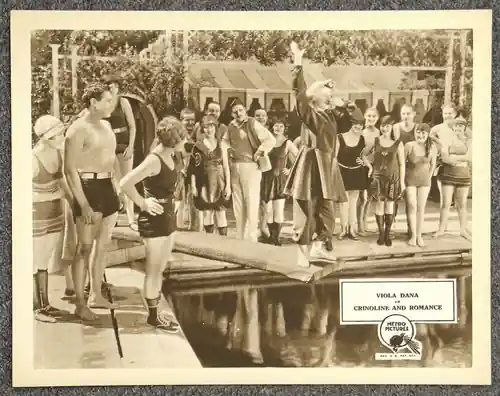
The return to the valley, necessitated by Colonel Cavanaugh's illness, does not resolve the romantic impasse; instead, it merely relocates it. The suitors, hot on Emmy Lou's heels, demonstrate their persistence, but also inadvertently bring the complexities of the outside world back into her once-pristine haven. This geographical shift serves to emphasize that her internal conflict is not tied to a specific locale but to her own burgeoning understanding of love and human nature. The film excels in portraying this internal struggle through Mildred June's expressive performance, relying on facial expressions and body language to convey the character's indecision and emotional turmoil, a hallmark of powerful silent film acting.
The narrative truly elevates itself with the Colonel's ingenious, albeit morally ambiguous, intervention. Staging a duel, a relic of a more chivalrous (or perhaps foolhardy) age, but loading the pistols with blank cartridges, is a masterstroke of paternal manipulation. This act is not merely a plot contrivance; it is a profound commentary on the lengths to which a guardian might go to ensure the happiness and safety of their ward, and a clever device to expose true character. It echoes the dramatic tension found in other silent films that relied on heightened stakes, though perhaps with less lethal intent, such as the climactic moments in The Whip, which similarly built towards a dramatic confrontation, albeit one with genuine peril.
The subsequent betrayal by Augustus, who cheats despite the inherent safety of the situation, is the pivotal moment. It strips away any lingering doubt about his character, revealing his true colors not through grand pronouncements but through a cowardly act under false pretenses. This moment forces Emmy Lou to confront the stark reality of her choices, compelling her to recognize the genuine integrity of Davis Jordan. It’s a sophisticated narrative device for its time, eschewing simple declaration for a dramatic, visceral demonstration of moral fiber. The emotional weight of this scene, even without spoken dialogue, is palpable, relying entirely on the actors' ability to convey shock, disappointment, and eventual clarity. This kind of moral revelation through action is a recurring theme in cinema, often seen in films where characters are tested under duress, such as the difficult choices faced by protagonists in Out of the Darkness, where hidden truths come to light in dramatic fashion.
Bernard McConville’s screenplay for 'Crinoline and Romance' is a testament to the power of visual storytelling in the silent era. The narrative flows with a graceful rhythm, each scene contributing meaningfully to the plot's progression and character development. The film’s direction, while not overtly flashy, demonstrates a clear understanding of how to use composition, editing, and intertitles to convey emotion and information effectively. Close-ups are employed judiciously to highlight crucial facial expressions, drawing the audience into the characters' inner worlds, while wider shots establish the contrasting environments of the secluded valley and the bustling social scene. The subtle shifts in lighting and set design further reinforce the thematic journey from innocent isolation to worldly understanding.
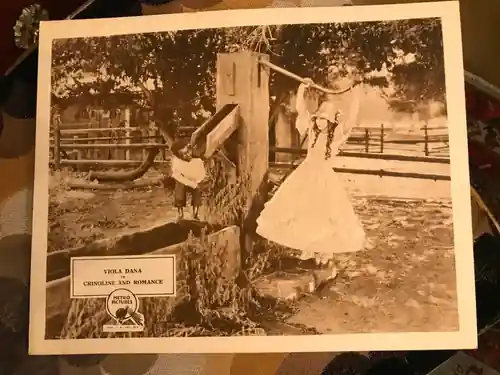
The performances, as mentioned, are central to the film's success. Mildred June embodies Emmy Lou with a delicate balance of vulnerability and growing strength, making her transformation believable and endearing. Claude Gillingwater's Colonel Cavanaugh is a memorable figure, a man of old-world sensibilities who nonetheless possesses a pragmatic understanding of the modern world's challenges, especially concerning his granddaughter's future. His actions, though manipulative, are always rooted in love, making him a complex and ultimately sympathetic character. The supporting cast, including Gertrude Short and Lillian Leighton, provide robust portrayals that flesh out the social milieu, making the Wimbleton household feel like a vibrant, lived-in space. The collective artistry of the performers, working within the constraints and unique strengths of silent film, creates a cohesive and engaging dramatic experience. Their ability to convey complex emotions without dialogue, relying on physical gestures and facial expressions, is a masterclass in the art form, comparable to the expressive ensemble work seen in films like Broken Hearts of Broadway, which also leveraged strong performances to carry its dramatic weight.
'Crinoline and Romance' transcends its period setting to explore themes that remain perennially relevant. The clash between tradition and modernity, the search for authentic selfhood, and the discerning of true love from superficial charm are all handled with a lightness of touch that belies their depth. Emmy Lou's journey is, in essence, a universal coming-of-age story, albeit one framed by the unique social conventions of the early 20th century. Her initial ignorance of the outside world is not presented as a failing but as a state from which she must grow, and her growth is depicted as both challenging and ultimately liberating. This narrative of a sheltered individual encountering the wider world and finding their place is a timeless one, echoing through various cinematic periods, from the whimsical journey in It's a Bird to the more grounded self-discovery in Home, released in the very same year, suggesting a prevalent cultural fascination with such transitions.
The film also subtly touches upon the role of women in society during a period of significant change. While Emmy Lou's story is primarily a romantic one, her agency in choosing her partner, even if guided by her grandfather's intervention, speaks to a nascent sense of female self-determination. She is not merely an object of affection but an active participant in her own destiny, learning and adapting to make an informed choice. This makes 'Crinoline and Romance' not just a charming romantic comedy but also a quiet document of evolving social norms and individual empowerment in a changing world. The 'romance' in the title, therefore, is not just about finding a partner, but about falling in love with the world and one's place within it.
In conclusion, 'Crinoline and Romance' stands as a testament to the enduring power of classic storytelling. It’s a film that, despite its age and the absence of sound, resonates with a warmth and sincerity that feels remarkably current. It reminds us that the human heart, its desires, its vulnerabilities, and its capacity for both deception and genuine affection, remain largely unchanged across generations. For those with an appreciation for silent cinema, or indeed, for anyone seeking a charming, character-driven narrative with a surprising dramatic twist, this film is a delightful discovery. Its gentle humor, heartfelt performances, and insightful exploration of love and integrity make it a deserving subject for rediscovery and appreciation. Much like the quiet strength found in films such as Grif starogo bortsa, which explores the depth of character through subtle actions, 'Crinoline and Romance' proves that powerful narratives don't always need grand spectacles to leave a lasting impression. It's a film that continues to whisper its charming tale, inviting new audiences to listen and fall in love with its timeless 'Romance'.

IMDb 7.4
1926
Community
Log in to comment.