DbcultAccessing Vault...
3.6/10
Senior Film Conservator
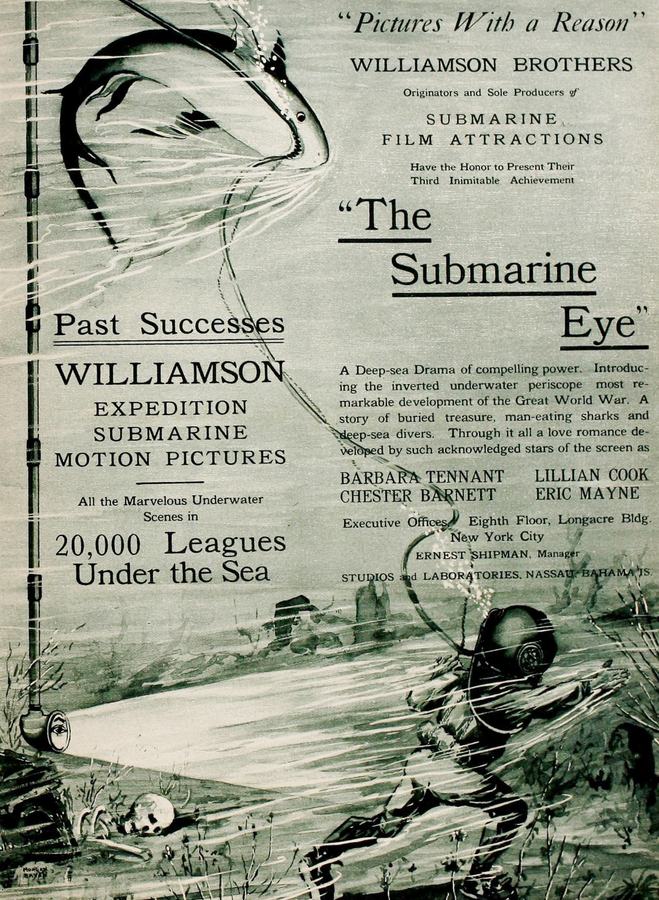
A definitive 3.6/10 rating for a film that redefined the boundaries of cult cinema. The Submarine Eye remains a cornerstone of transgressive art.
The year 1917 was a crucible of industrial upheaval and artistic experimentation, yet few cinematic endeavors captured the zeitgeist of human ingenuity quite like The Submarine Eye. Directed and conceived by the visionary J. Ernest Williamson, this film stands as a monumental testament to the audacity of early filmmakers who refused to be tethered to the terrestrial stage. While contemporaries were exploring the social stratifications of the era in works like The Ragged Princess, Williamson was literally diving into a new dimension. This is not merely a treasure hunt narrative; it is a celluloid manifesto on the power of the human gaze to penetrate the impenetrable.
At the heart of this aquatic epic lies the eponymous 'Eye,' a device that serves as both a plot engine and a metaphorical lens. The inventor, portrayed with a poignant blend of desperation and fervor by the cast, represents the quintessential proletarian hero of the silent age. Much like the high-stakes mechanical obsession seen in The Scarlet Runner, where the automobile becomes a symbol of modern agency, the inverted periscope in this film acts as a bridge between the destitute reality of the protagonist and a future of unimaginable opulence. The cinematography, handled with a pioneering spirit, eschews the static theatricality common in 1910s dramas, opting instead for a fluid, immersive experience that must have left audiences of the time utterly breathless.
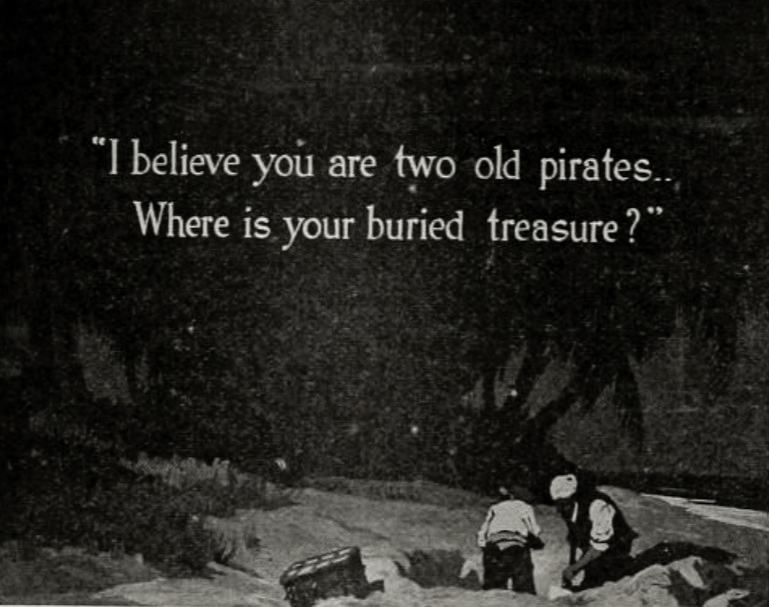
The brilliance of Williamson’s direction lies in his refusal to rely solely on stagecraft. By utilizing his father’s invention—the photosphere—he brought the authentic textures of the ocean floor to the silver screen. This wasn't the stylized, artificial depth one might find in Dødsklippen; this was raw, unfiltered nature. The way the light filters through the brine, creating a diaphanous, shifting atmosphere, provides a visual complexity that rivals the psychological depth of The Rack. The subaqueous sequences are not merely interludes; they are the film's spiritual core, where the silence of the medium perfectly mirrors the oppressive, majestic hush of the deep sea.
The ensemble, featuring Nellie Slattery and Charles Hartley, delivers performances that transcend the often-caricatured gestures of the silent era. Slattery, in particular, anchors the emotional stakes of the film, providing a grounded contrast to the inventor’s obsessive technological pursuit. Her presence reminds the viewer that behind every great invention is a human cost, a theme explored with similar nuance in The Stronger Love. The chemistry between the leads is subtle, avoiding the saccharine melodrama that occasionally plagued films like Jack and Jill. Instead, there is a palpable sense of shared destiny and mutual struggle against the unforgiving tides of both the ocean and the economy.

Furthermore, the supporting cast, including Barbara Tennant and Gustave Fischer, populates this world with a vivid array of characters who embody the various facets of early 20th-century society. From the predatory capitalists who seek to exploit the inventor’s genius to the loyal companions who risk their lives in the briny deep, the characterizations are surprisingly robust. One can see echoes of the social tensions present in Martha's Vindication, yet here they are transposed onto a canvas of maritime adventure. The villainy is not mustache-twirling but born of a systemic greed that feels uncomfortably modern.
To discuss *The Submarine Eye* without acknowledging its technical pedigree would be a disservice to film history. J. Ernest Williamson was not just a filmmaker; he was an explorer who understood that the camera could go where the human eye could not. This film represents a pivotal moment where cinema ceased to be a mere recording of reality and began to expand the very definition of what reality could be. The logistics of filming underwater in 1917 were Herculean, requiring a specialized chamber and a sophisticated understanding of light refraction. This technical bravado is reminiscent of the sheer scale found in The Juggernaut, but while that film focused on the destructive power of industry, *The Submarine Eye* celebrates its revelatory potential.

The pacing of the film is remarkably modern. It avoids the languid stretches that can make some silent films feel like endurance tests. Instead, it maintains a rhythmic tension, oscillating between the claustrophobic interiors of the inventor’s workshop and the vast, agoraphobic expanses of the seabed. This structural balance ensures that the technological marvels never overshadow the human drama. The film manages to be both an educational documentary of the deep and a pulse-pounding thriller, a feat that few films of the era, perhaps with the exception of Michael Strogoff, could claim to achieve.
Thematically, the film grapples with the concept of 'seeing' as a form of power. In the early 1900s, the world was being mapped and dissected by new technologies. *The Submarine Eye* suggests that true wealth is not the gold at the bottom of the ocean, but the ability to perceive what others cannot. This intellectual elitism is tempered by the protagonist’s humble origins, making his eventual success feel like a victory for the common man. It’s a narrative arc that shares DNA with The Valley of the Moon, where characters must escape their stifling environments to find a new sense of self.
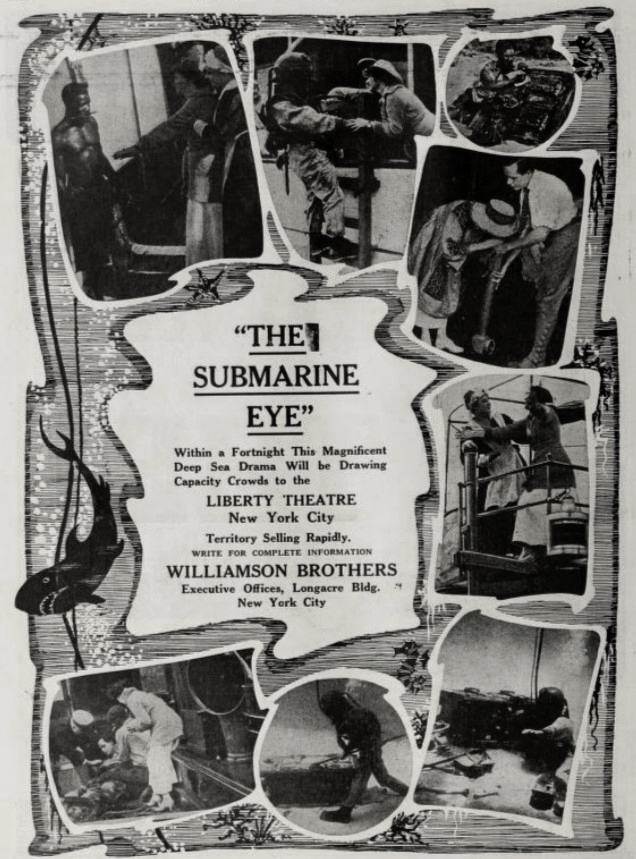
Comparing it to The Message of the Mouse, which used small-scale intrigue to drive its plot, *The Submarine Eye* operates on a much grander, almost mythic scale. It taps into the ancient human fascination with the sea—the same primal urge that drives the characters in The Bandit of Port Avon. However, Williamson’s work is more sophisticated in its execution, utilizing the camera as an active participant in the exploration rather than a passive observer. The 'Eye' of the title is, in many ways, the camera itself, inviting the audience to become voyeurs of a world that had been hidden since the dawn of time.
The visual language of the film is rich with contrast. The gritty, soot-stained world of the inventor’s surface life is depicted with a harsh, realist aesthetic that recalls the somber tones of Kärleken segrar. In contrast, the underwater world is a realm of ethereal beauty and terrifying shadows. The use of tinting in various prints of the film further enhances this dichotomy, with deep blues and greens separating the terrestrial from the subaqueous. This chromatic storytelling is as effective as the intricate plot of Das Geheimnis von Chateau Richmond, guiding the viewer’s emotional response through visual cues rather than dialogue.
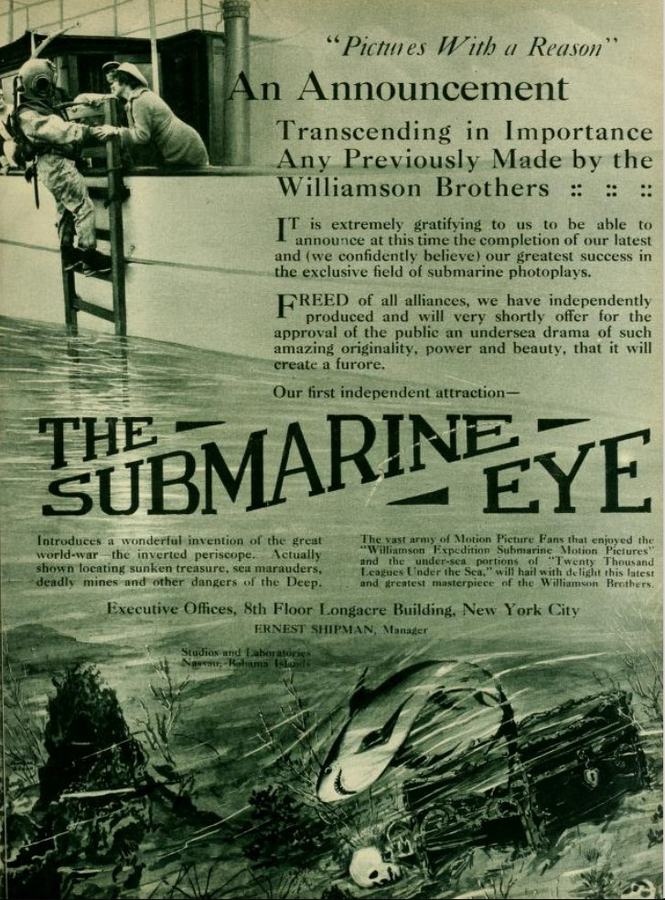
Even the film's treatment of animals and the environment feels ahead of its time. The sharks and marine life are not merely monsters to be defeated, but integral parts of a vast, indifferent ecosystem. This respect for the natural world adds a layer of maturity to the film, elevating it above the standard 'man vs. nature' tropes found in The Bar Sinister. Williamson’s camera lingers on the swaying kelp and the jagged coral with a sense of wonder that is infectious, reminding us that cinema’s greatest strength is its ability to foster empathy for the unknown.
Ultimately, *The Submarine Eye* is a triumph of imagination over limitation. It serves as a reminder that even in the infancy of the medium, filmmakers were capable of producing works of immense complexity and breathtaking beauty. It is a vital piece of cinematic history that deserves to be viewed not just as a technical curiosity, but as a deeply human story about the lengths we will go to uncover the truth—and the treasures—hidden beneath the surface of our reality. It remains a sparkling jewel in the crown of silent cinema, as enduring and mysterious as the ocean it so lovingly depicts.

IMDb —
1919
Community
Log in to comment.