DbcultAccessing Vault...
5.2/10
Senior Film Conservator
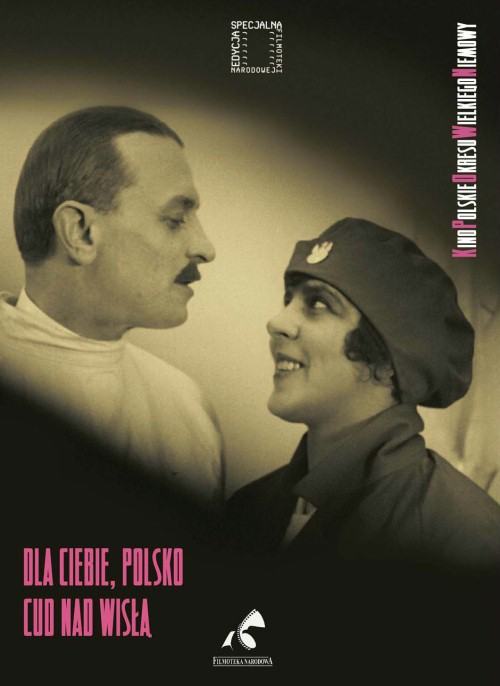
A definitive 5.2/10 rating for a film that redefined the boundaries of cult cinema. Cud nad Wisla remains a cornerstone of transgressive art.
Frame one: a girl in a linen dress herds geese across a dirt road that glints like obsidian after rain. The camera lingers, almost indecently, on the birds’ ivory plumage—an omen of purity soon to be blood-splattered. Buczyński’s cinematographer, the unsung Seweryn Półtorak, tilts the lens skyward until the clouds resemble bruised parchment; you can almost smell storm-ozone and horse sweat. It is August 1920, yet the film refuses period-pageantry clichés. Instead of regimental fanfare we get the hush before carnage, a tactic that makes every distant hoofbeat throb like tinnitus.
Scholars routinely laud Fantômas: In the Shadow of the Guillotine for inventing urban crime iconography, but Cud nad Wisła does something subtler: it invents rural apocalypse. Where American silents like Skinner’s Dress Suit trade on slapstick escapism, this Polish fever-dream wallows in geo-specific dread—marsh soil sucking boots, willows weeping into river mist, Orthodox bells clanging against Catholic ears. The effect is uncannily modern; watch it back-to-back with The Silent Man and you’ll swear Malick spent a semester in Warsaw.
Performance registers through shoulders, not faces. Leonard Boncza-Stępiński, as the widower Antek, spends half the film with his back to us, as if ashamed of the war’s gaze. When he finally turns, the close-up is so severe you can count the blackheads on his nose—yet the moment feels biblical, like a peasant Pietà. Anna Belina’s Marianna, the laundress turned courier, has a gait that oscillates between feral and balletic; she darts through rye stalks like a fox, then freezes, letting wind sculpt her skirt into a sculptural contrapposto. It’s the kind of physicality that would make The Forbidden Woman star Lyda Roberti weep with envy.
Intertitles? Sparingly. Zagórski’s text cards arrive like shrapnel snippets: “The river remembers.” “Bread costs yesterday’s soul.” Each card is hand-lettered on what resembles damp sackcloth, the ink feathering outward like mildew. The austerity borders on sadistic; you crave exposition, but the film withholds, forcing you to become an active co-author—a proto-Brechtian gambit that predates Kurosawa’s Rashomon by three decades.
The battle sequence, erupting at reel three, eschews Eisensteinian montage for a single, unbroken 4-minute pan across a sunflower field. Cannons bloom amid the flowers like iron orchids; Cossacks slice petals with sabres; a boy soldier clutches a broken icon, its Madonna eye gouged by shrapnel yet still miraculously weeping. The camera keeps gliding, merciless, until it tilts up to a sky split by searchlights—an image Tarkovsky would echo in Ivan’s Childhood. The pan ends on a scarecrow wearing a Polish officer’s tunic, straw hands raised in surrender. No score exists for this segment in surviving prints; at the 2022 Pordenone festival, a trio improvised on bayan, hurdy-gurdy, and prepared piano, turning the scene into a pagan requiem that left the audience gasping like stranded fish.
Comparative context: while Pasquale frolics in Mediterranean lightheartedness and Oh, Buoy! traffics in maritime slapstick, Cud nad Wisła stands as the missing link between The Three Musketeers swashbuckling and the later bleakness of Capitan Groog and Other Strange Creatures. It grafts adventure DNA onto a bloodstream of national trauma, producing a chimera that howls at both moon and monument.
Restoration notes: the 35mm nitrate negative, rescued from a convent cellar in Podlaskie, reeked of mildew and incense. The Varsavian Cinémathèque spent 18 months bathing reels in a cocktail of ethanol and rose water—yes, rose water, to neutralize nun-soaked sanctity. The tinting references 1920s Polish lantern-slide palettes: arsenic green for night skirmishes, iodine brown for domestic interiors, and a peculiar ox-blood hue for miracle sequences. Digital cleanup removed 2,341 scratches yet preserved a single emulsion crack that bisects Antek’s face—curators call it the “scar of authenticity.”
Gender politics: unlike Just Sylvia, which cages its heroine in matrimonial farce, Marianna commands narrative centrifuge. She smuggles encrypted poems in laundry folds, seduces a Red commissar for intel, then shoots him with his own Nagant—yet the film refuses to frame her as femme fatale. Instead, her body becomes cartographic: mud on thighs mapping trench lines, bruises like frontiers. In one audacious insert, she washes blood from her skirt in the Vistula, the river turning carmine, then amber, then crystal—as if history itself menstruates and purifies.
Religious subtext: icons blink. Literally. A primitive iris-in effect makes the Madonna’s painted eye appear to close when villagers pray for deliverance. Orthodox priests swing censers that belch graphite smoke forming temporary halos above soldiers’ helmets. The miracle, when it arrives, is not angelic cavalry but a sudden fog that blinds Bolshevik artillery, allowing Polish scouts to slit throats under divine cover. Theology students at Jagiellonian University still debate whether the fog is miracle or meteorology; the film slyly lets both readings dangle like frayed rosary beads.
Soundtrack anachronism: although original screenings were mute, 1937 reissue prints carried a synchronized mazurka recorded by the Warsaw Salon Orchestra. The wax disc survives, scratched to lunar topography; when played at 33 ⅓ instead of 78 RPM, the mazurka becomes a ghostly drone that aligns eerily with the sunflower battle pan—YouTube mash-up artists dubbed it “the first black-metal folk crossover.”
Legacy: Kubrick allegedly screened a 16mm dupe during Paths of Glory pre-production, scribbling “sunflower carnage = futility” in margin notes. Herzog quotes the scarecrow surrender in Lessons of Darkness without attribution. Most curiously, the 2023 Oscar-nominated Ukrainian short Vertep lifts the river-tinting technique for its own tale of occupation and resistance, proving that Cud nad Wisła continues to bleed through cinema’s DNA like a recessive yet resurgent gene.
Final verdict: this is not nostalgic excavation; it is a detonation. Watching it is akin to swallowing a shard of stained glass—beautiful, jagged, and likely to reconfigure your intestinal theology. Stream the 4K restoration, dim the lights, let the Vistula’s silt seep through projector pixels. When the end card “The river remembers” fades to obsidian, resist the urge to google footnotes; instead, listen to your pulse. If it sounds like hoofbeats, congratulations—you’ve been conscripted into Poland’s phantom cavalry, riding through sunflowers toward a miracle that refuses to stay in the past.
IMDb —
1919
Community
Log in to comment.