DbcultAccessing Vault...
3.9/10
Senior Film Conservator
A definitive 3.9/10 rating for a film that redefined the boundaries of cult cinema. Der Stern von Damaskus remains a cornerstone of transgressive art.
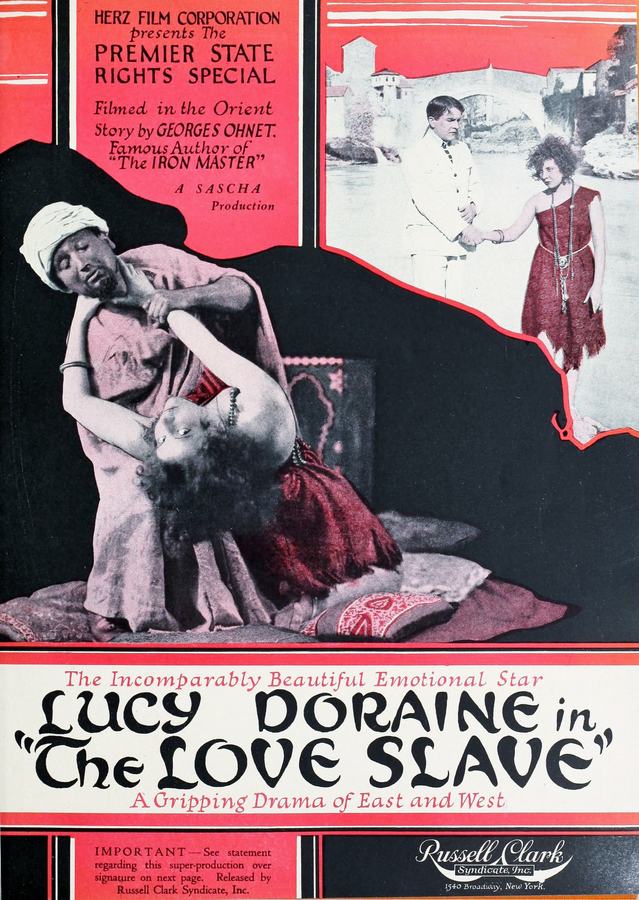
The first time I watched Der Stern von Damaskus I emerged as though dragged across cobblestones by my own collar—breathless, abraded, drunk on its toxic perfume. Michael Curtiz’s 1920 German-produced fever dream is not a film you merely see; it is a contagion you contract. Shot in the waning twilight of European silent melodrama, it marries orientalist fantasy to proto-noir fatalism, then douses the union in kerosene and strikes a match.
Visually, the picture is a chiaroscuro banquet. Curtiz—still a decade away from his Hollywood apotheosis—uses candle-flame and shadow the way a sadist uses a cat-o’-nine-tails, to flay rather than to illuminate. When Georges pries Kora from that whipping post, the camera lingers on the lattice of welts across her back; the scar tissue becomes a topographical map of ownership, a parchment upon which male cruelty has signed its name in blood. Later, in Trieste’s gaslit salons, faces are bisected by velvet drapes, half-gold, half-obsidian, as if every character walks around with a moral split lip.
The Damascus sequence is bathed in ochre dust that swirls like powdered saffron, whereas the Parisian gambling den glimmers with sea-blue absinthe reflections. These chromatic whiplashes—ochre to indigo—imprint emotional geography onto the viewer’s retina before intertitles even appear.

Make no mistake: this is a film about property, not romance. Kora begins as chattel, becomes lover, then curdles into avenging creditor, finally dies a mad proprietress of her own ruin. Every transaction is sexualized. Georges’ initial rescue reads less as heroism than as acquisition; he lifts her off the market like a rare rug. Once aboard the steamer, he reverts to bourgeois propriety, stashing her in steerage as though she were contraband. Her subsequent retaliation—flirting with Ceretti—is not infidelity but a fugitive reclaiming her market value.
Curtiz, adapting a potboiler by Georges Ohnet, refuses to sand the edges off colonial cruelty. The camera does not ogle Kora’s body; it indicts our gaze. When the bullet rips her cheek, the wound is not eroticized—it is a foreclosure notice on her commodified beauty. From that frame onward she wears a half-veil of black Chantilly lace, a living Rorschach blot of desire and revulsion.
Anton Tiller plays Georges as a man perpetually startled by the consequences of his own appetites. His shoulders slope inward, as though his clavicles were parentheses enclosing an apology. Watch him in the ship’s cabin: he shuts the door on Kora with the ginger disgust of someone trapping a spider under glass. Later, when he begs her to return, his eyes flicker not with remorse but with the terror of being unloved—a child fearing a broken toy.
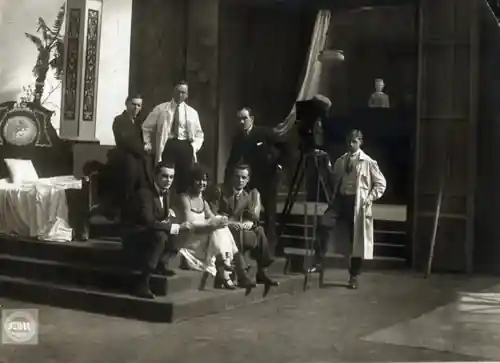
Tiller’s performance is calibrated in micro-tremors: a cheek muscle twitches, a thumb rubs a signet ring, the Adam’s apple descends like a guillotine. Silent cinema demands physiognomic eloquence, and Tiller delivers a soliloquy of cowardice.
Lucy Doraine—Curtiz’s wife at the time—embodies Kora with combustible dignity. Early scenes require her to be porous: every lash is a question mark carved into flesh. Post-disfigurement, she hardens into obsidian. Her gestures grow angular; she arranges cards in her gambling den as though laying out tarot for the damned. The half-mask becomes a meta-cinematic device: we project onto her the guilt of every audience that has consumed suffering as spectacle.
In the penultimate reel, when she corners Suzanne, Doraine unleashes a silent howl—eyes wide, mouth a rictus—that rivals Maria Falconetti’s Joan for primal anguish. The madness that follows feels less like narrative convenience than karmic overpressure finally bursting its boiler.
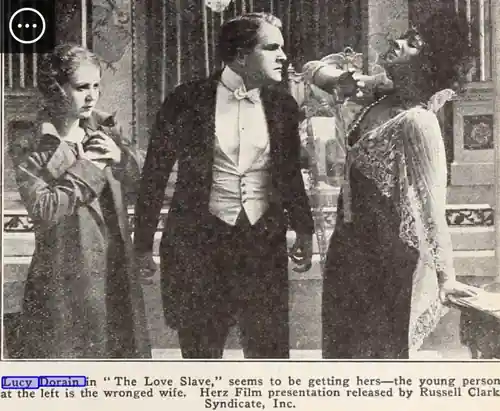
Suzanne, essayed with porcelain fragility by an uncredited actress, functions as the inverse of Kora. Where Kora is exile, Suzanne is patrician hearth; where Kora is scarred geography, Suzanne is unbroken map. Yet the film refuses to let her remain mere salvation. When she descends into Kora’s underworld, her white dress glows like a guilt-flag amid the sea-blue murk of absinthe haze. The ensuing confrontation is a silent aria of female grief: one woman howling for lost time, the other pleading for a future neither can fully own.
Note the spaces. Damascus: open-roofed courtyards yet claustrophobic with patriarchal menace. Trieste: grand boulevards that nonetheless funnel Georges into social expectation. Paris: the gambling house is a labyrinth of mirrored walls—every exit reflects back his own cul-de-sac visage. Even the courtroom resembles a mausoleum, its ceiling a coffered iron grid that prefigures the prison where Georges will rot. Curtiz orchestrates these sets like a chess sadist: every corridor is a throat you slide down.
Purists may sneer at the eleventh-hour mercy: Count Ceretti torching the blackmail letter, thus unshackling Georges. Yet within the film’s moral algebra it scans. The Count’s love for Kora was always proprietorial; by destroying the letter he repudiates the very economy of possession that birthed the tragedy. The final embrace between Georges and Suzanne is shot against a dawn sky whose tangerine blush feels earned precisely because we have crawled through so much stygian muck.
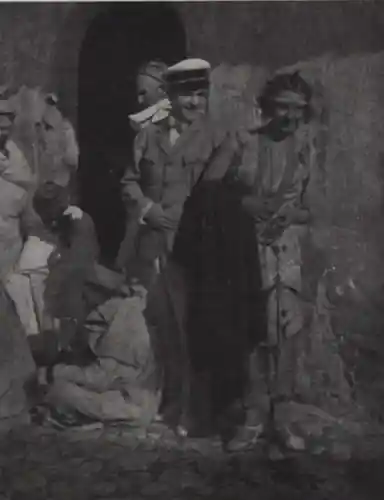
Seen at the 2022 Il Cinema Ritrovato with a new quintet score, the film revealed its indebtedness to Wagnerian leitmotif. A tremulous violin accompanies Kora’s every entrance; Georges’ theme is a hesitant cello; the Count struts in under a cornet that parodies imperial pomp. Yet the most devastating passage remains unscored: a full ninety seconds of absolute silence when Georges spies Kora in Ceretti’s embrace. The absence of music becomes a vacuum that sucks the viewer’s breath away.
Long before he piloted Casablanca or Mildred Pierce, Curtiz was already obsessed with erotic guilt. Compare this early work to Rebecca the Jewess (another tale of possession and racialized beauty) or to the domestic claustrophobia in Pillars of Society. The through-line is clear: Curtiz’s cinema thrums with the dread that love, left unchecked, metastasizes into surveillance.
For decades only a 9-minute fragment survived in the Hungarian Film Archive. A 4K restoration, compiled from a Deutsches Filminstitut negative and a Czech nitrate print, premiered in Bologna. While not yet on Blu-ray, it streams periodically on MUBI and Arte. Seek it out; endure its bruises.
Der Stern von Damaskus is a cracked diamond: jagged, luminous, capable of slicing your palms if gripped too hard. It does not ask for sympathy; it demands complicity. In an era when cinema increasingly flatters the audience, here is a film that indicts us for every glance we steal at another’s agony. Watch it, then spend the night listening for the echo of a whip you will never quite un-hear.

IMDb 6.4
1933
Community
Log in to comment.