DbcultAccessing Vault...
Cult Review
Senior Film Conservator
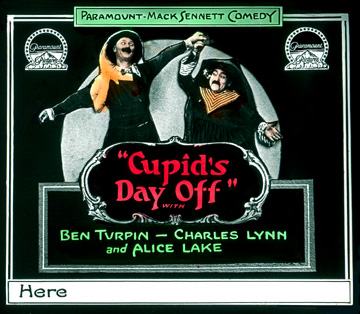
Ah, the silent era! A time when physical comedy reigned supreme, when exaggerated gestures and pratfalls spoke volumes without uttering a single word. It was an epoch of grand spectacle, ingenious gags, and characters whose very existence challenged the staid conventions of society. Among the myriad gems from this period, Mack Sennett's 'Cupid's Day Off' emerges as a particularly vibrant and delightfully chaotic artifact, a testament to the sheer comedic genius that could be woven from the simplest of premises. This isn't merely a film; it's a boisterous carnival of human foibles, a whirlwind of audacious antics that leaves an indelible impression long after the final frame flickers into darkness. It's a reminder that laughter, in its purest, most unadulterated form, transcends the need for dialogue, speaking directly to the universal human experience of absurdity.
Our narrative plunge begins not in a grand ballroom or a bustling metropolis, but within the seemingly mundane confines of a shoe store. Yet, under the stewardship of Ben, portrayed by the inimitable Ben Turpin, and his enigmatic partner, this humble establishment transcends its commercial purpose. It transforms, with audacious flair, into something akin to the riotous conclusion of a high-energy cabaret performance. Imagine a world where the fitting of fashionable footwear isn't a quiet, respectful transaction, but a full-blown spectacle, replete with theatricality and an almost palpable sense of jubilant disorder. The very interior of their emporium pulses with an energy that defies its mercantile function, inviting customers not just to purchase, but to partake in an experience. This initial setting establishes the core philosophy of our protagonists: life, even in its most prosaic moments, is a stage for performance, a canvas for their boundless, often mischievous, creativity. This is a far cry from the somber domesticity explored in films like The Hand That Rocks the Cradle, where hidden dangers lurk beneath a veneer of normalcy; here, the chaos is overt, celebrated, and deliberately engineered for amusement. The dynamism of the shoe store, vibrant and unconventional, sets the tone for the ensuing escapades, hinting at a refusal to conform to societal expectations, a theme that resonates throughout the film's brief but impactful runtime.
Ben Turpin, with his famously crossed eyes, was a master of physical comedy, and one can only imagine the kinetic energy he brought to this scene. His very presence was a visual gag, and here, he's given free rein to infuse the most ordinary of settings with extraordinary vivacity. The shoe store becomes a microcosm of the larger world, where rules are bent, expectations are delightfully dashed, and the line between service and spectacle is not just blurred, but obliterated. This initial sequence is crucial, not just for its comedic value, but for establishing the characters' inherent disregard for convention, their almost pathological need to inject 'new life and the joy of winning' into every facet of their existence. It's a precursor to the more overt lawlessness that follows, a gentle, playful rebellion before the full-blown societal challenge. This scene, though short, speaks volumes about the era's appreciation for visual humor and the power of a performer to transform the mundane into the magnificent. It’s a stark contrast to the often grim realities depicted in more dramatic fare like Pyotr Velikiy, which focuses on historical gravitas, or the stark social commentary of Civilization's Child, where the stakes are life and death, not merely a pair of shoes.
The transition from shoe sales to card sharking is, in 'Cupid's Day Off,' a logical, almost inevitable progression for characters so enamored with the thrill of the win and the art of performance. Their entrepreneurial spirit, previously channeled into making a shoe store feel like a stage, now finds a more perilous, yet equally exhilarating, outlet in the gambling joint. Here, the 'new life and the joy of winning' they so eagerly cultivated takes on a darker, more deceptive hue. It's not just about creating an atmosphere; it's about orchestrating outcomes. The film cleverly portrays their ability to infuse the establishment with a palpable sense of excitement, a buoyant energy born from the illusion of consistent victory. They become the architects of good fortune, albeit for themselves, drawing in patrons with the promise of high stakes and even higher spirits. This segment of the film brilliantly showcases the duo's adaptability and their escalating audacity, moving from mere theatricality to outright manipulation.
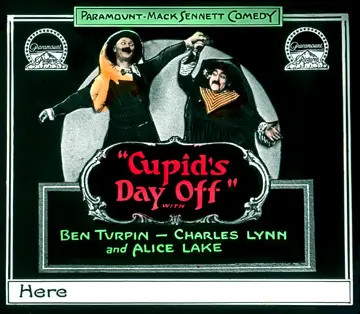
The discovery of their cheating, however, serves as the narrative's pivotal turning point. The proprietor and his regular customers, previously swept up in the intoxicating wave of manufactured success, are profoundly shaken by this revelation. Their faith in human nature, perhaps already tenuous in the cutthroat world of gambling, crumbles under the weight of such blatant deception. This isn't just about losing money; it's about a betrayal of trust, a shattering of the unspoken social contract that, even in a gambling den, dictates a certain level of fairness. The ensuing shock and disillusionment are played for both dramatic effect and comedic irony. The very people who sought thrill and fortune find themselves stripped of their illusions, leading them to summon the police – a desperate plea for the restoration of order in a world momentarily upended by Ben and his partner's cunning. This moment of societal recoil offers a humorous commentary on moral hypocrisy, where the line between acceptable risk and outright fraud is drawn with sudden, indignant clarity. It’s a delightful parallel to the unraveling of societal norms, albeit on a much grander scale, seen in films focused on political unrest like Revolución orozquista, where the stakes are far more severe but the core theme of violated trust resonates.
What truly elevates 'Cupid's Day Off' beyond a simple tale of mischief is the concluding sentiment: 'And so the merry game is kept up.' This isn't a story with a neat resolution, a clear victory for law and order, or a redemption arc for the protagonists. Instead, it suggests a continuous, almost Sisyphean cycle of escapades, discovery, and renewed pursuit. Ben and his partner are not merely criminals; they are agents of delightful disruption, their lives an ongoing performance art piece against the backdrop of societal expectations. The 'merry game' implies a certain joie de vivre in their defiance, a playful embrace of the chase. It speaks to the enduring appeal of the anti-hero, the rogue who operates outside the conventional boundaries, yet does so with a charm and inventiveness that endears them to audiences, even as they baffle and infuriate their cinematic counterparts.
This perpetual motion, this refusal to be caught or reformed, is a hallmark of classic silent slapstick. It’s less about moral lessons and more about the kinetic energy of the chase, the ingenious dodges, and the sheer spectacle of human ingenuity applied to illicit ends. The film, through this concluding note, transforms from a series of events into a philosophical statement on the nature of rebellion and the human spirit's tireless quest for excitement, even if it means bending a few rules. It's a stark contrast to the more morally unambiguous narratives of justice and consequence seen in Westerns like The Narrow Trail or the tales of personal responsibility in The Man Who Forgot. Here, the emphasis is on the journey, the continuous caper, rather than a definitive destination. The audience is left to ponder the endless possibilities of their next mischievous venture, a true testament to the film's playful spirit and its refusal to be confined by conventional narrative structures.
No discussion of a silent comedy from this era would be complete without acknowledging the titans behind and in front of the camera. Mack Sennett, the film's writer, was a legendary figure, often hailed as the 'King of Comedy.' His influence on the genre is immeasurable, having pioneered the slapstick style that would define much of early cinema. Sennett's genius lay in his ability to craft scenarios that were inherently absurd, allowing his stable of talented comedians to shine through physical prowess and exaggerated reactions. 'Cupid's Day Off' bears all the hallmarks of a Sennett production: rapid-fire gags, escalating chaos, and a playful disregard for realism in favor of pure comedic effect. His writing created a fertile ground for the visual storytelling that was paramount in the silent era, making every scene a potential setup for a laugh. This particular film, while perhaps not as widely known as some of his more celebrated works, perfectly encapsulates his distinctive comedic voice and his mastery of the short-form narrative.
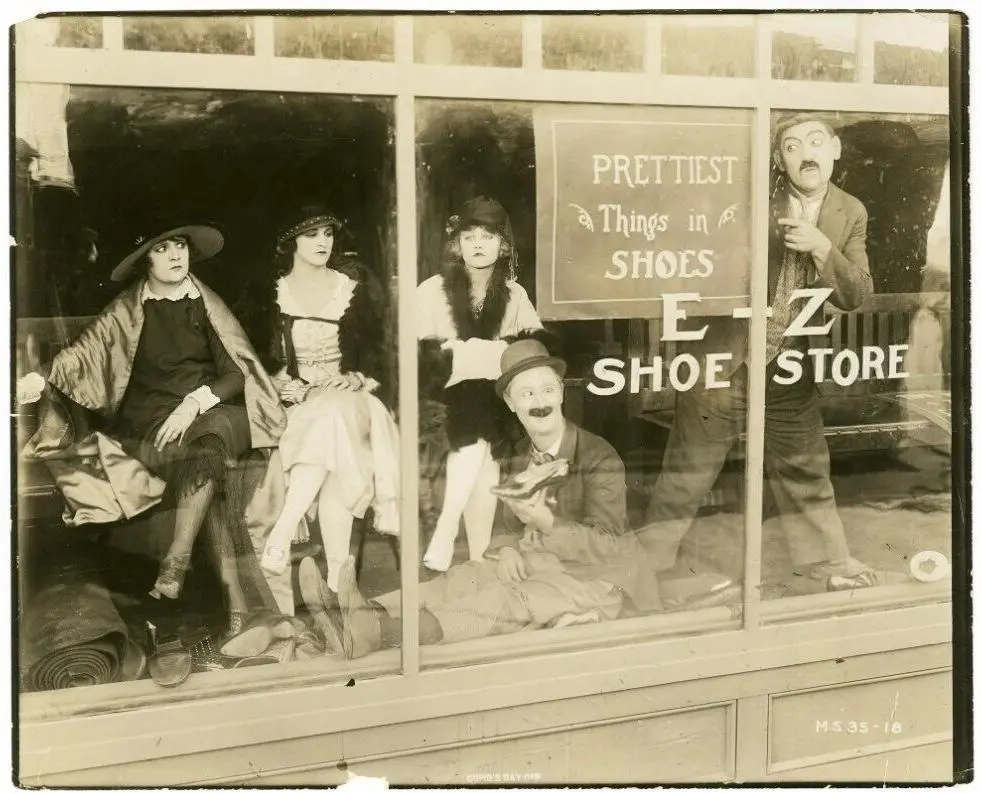
The cast, a vibrant ensemble of silent film stalwarts, brought Sennett's vision to life with remarkable energy. Ben Turpin, as the central figure, is an absolute marvel. His cross-eyed gaze, a natural physical characteristic that became his comedic trademark, lent an inherent absurdity to every expression. Turpin's physical dexterity and timing were impeccable, allowing him to execute elaborate pratfalls and frantic chases with effortless grace. He wasn't just a comedian; he was a living cartoon, embodying the spirit of kinetic, visual humor. His performance here solidifies his status as a unique and unforgettable presence in silent cinema, a true master of the exaggerated reaction and the bewildered glance.
The supporting players, too, contribute significantly to the film's comedic tapestry. Eva Thatcher, often typecast as stern or formidable figures, likely provided a wonderful foil to Turpin's antics, her reactions amplifying the comedic impact of his mischief. Tom Kennedy and Bert Roach, both seasoned comedians, would have added their own brand of burly bumbling or exasperated authority to the mix, creating a rich dynamic within the ensemble. Alice Lake and Harriet Hammond, often seen in more glamorous or ingénue roles, would have brought a touch of elegance or romantic interest, perhaps becoming unwitting participants or targets of the central duo's schemes. The inclusion of more exotic names like Abdul the Turk and Zalla Zarana hints at the era's fascination with diverse character types, often used for visual gags or to represent the broader societal fabric that the protagonists so gleefully disrupt. Figures like Don Marion, Heinie Conklin, and Hughie Mack rounded out the ensemble, each bringing their unique comedic personas and physical attributes to bear, ensuring that every frame was packed with visual interest and potential for hilarity. This collective talent, under Sennett's guidance, transformed a simple plot outline into a vibrant, living spectacle, a testament to the collaborative nature of silent filmmaking.
'Cupid's Day Off' is more than just a historical curiosity; it's a vibrant example of how silent cinema mastered the art of comedic storytelling through purely visual means. The film's core premise – characters who playfully defy societal norms and find joy in the ensuing chaos – is a timeless comedic trope. It speaks to a universal human desire to break free from convention, to inject excitement into the mundane, and to laugh in the face of authority. This spirit of playful rebellion can be seen echoed in later comedic works, but its roots are firmly planted in the fertile ground of early slapstick, a genre championed by Sennett and perfected by performers like Turpin.
Comparing 'Cupid's Day Off' to its contemporaries, one observes its distinct flavor. While films like A Square Deal might have explored themes of fairness and justice with a more earnest tone, 'Cupid's Day Off' leans into the delightful unfairness, the sheer audacity of its protagonists. The film doesn't preach; it simply presents a world where the rules are suggestions, and the pursuit of a 'merry game' is the ultimate objective. Similarly, in contrast to the often dramatic portrayals of ambition and self-discovery in films such as The Rise of Susan, our protagonists here are content not with rising through the ranks, but with continually outwitting them. Even the intricate narratives of personal struggle in Wanted: A Mother or the complex political machinations of The Battle of Ballots stand in stark relief to the lighthearted, almost whimsical anarchy present in this film. The film's enduring appeal lies in its unpretentious joy, its commitment to pure, unadulterated comedic entertainment, eschewing deeper social commentary for the immediate gratification of a well-executed gag.
The cinematic language of the silent era, with its reliance on visual cues, exaggerated acting, and fast-paced editing, found its perfect expression in films like 'Cupid's Day Off.' The absence of dialogue forced filmmakers to be incredibly inventive with their staging, their characterizations, and their narrative progression. Every gesture, every facial contortion, every prop gag had to communicate meaning and elicit a reaction. This film is a masterclass in that art form, showcasing how much could be conveyed without a single spoken word. The energy, the pacing, and the sheer inventiveness of the gags contribute to a timeless quality that allows the film to resonate even with modern audiences, proving that true comedy is universal, transcending the limitations of time and technology.
'Cupid's Day Off' is a joyous romp through the delightful absurdity of early 20th-century cinema. It’s a film that doesn't take itself too seriously, yet it offers a profound insight into the human capacity for mischief, performance, and the endless pursuit of excitement. Ben Turpin, under Mack Sennett's astute direction and writing, delivers a performance that is both iconic and uproariously funny. The film's refusal to neatly resolve its narrative, instead opting for the continuation of a 'merry game,' ensures its lasting charm. It leaves us with the delightful impression that Ben and his partner are still out there, somewhere, turning another quiet business into a cabaret, another respectable establishment into a playground for their ingenious, if illicit, talents. It is a vibrant reminder of the enduring power of slapstick to entertain, to provoke laughter, and to offer a fleeting, yet memorable, escape into a world where chaos reigns supreme, and the game, indeed, is always kept up.
IMDb 5.8
1934
Community
Log in to comment.