DbcultAccessing Vault...
7.1/10
Senior Film Conservator
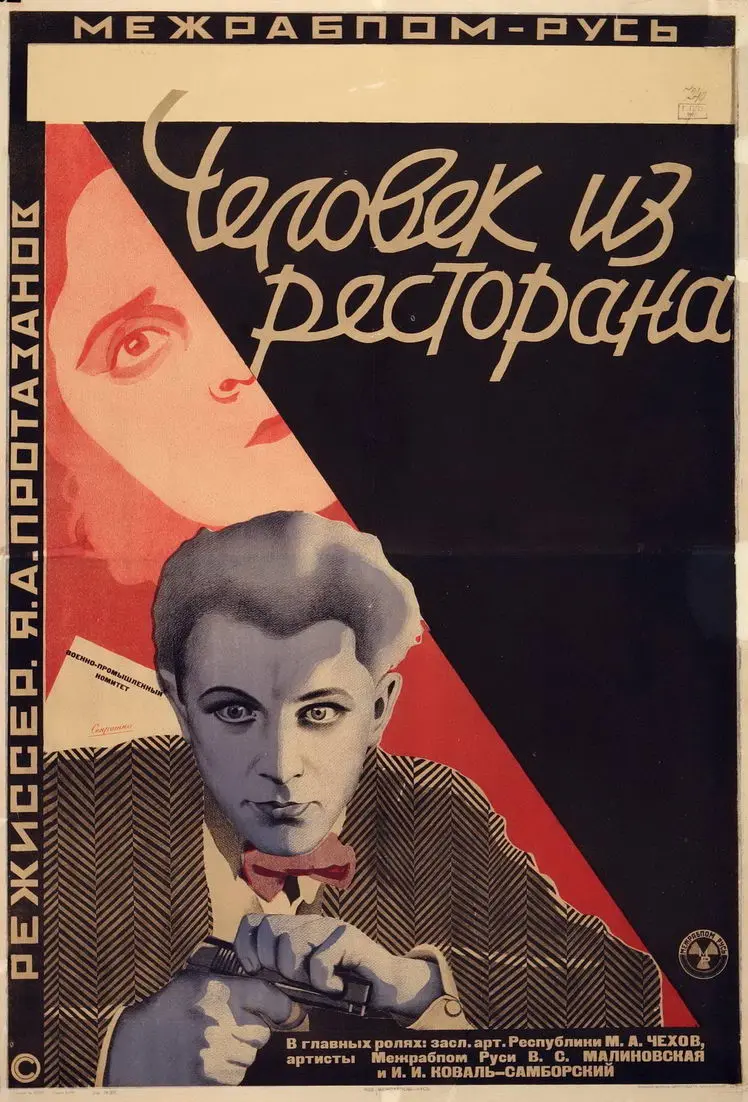
A definitive 7.1/10 rating for a film that redefined the boundaries of cult cinema. Man from the Restaurant remains a cornerstone of transgressive art.
Is 'Man from the Restaurant' a mandatory watch for the modern cinephile? Short answer: Yes, but only if you are willing to trade explosive action for the explosive internal life of a master actor. This film is a definitive requirement for anyone studying the evolution of performance art and Soviet social commentary; it is absolutely not for those who demand the fast-paced, plot-heavy structure of contemporary dramas.
Before diving into the historical weeds, let us be clear about where this film stands. It is a monumental achievement of character acting that occasionally gets bogged down by its own thematic heavy-handedness. It serves as a bridge between the theatrical past and the cinematic future.
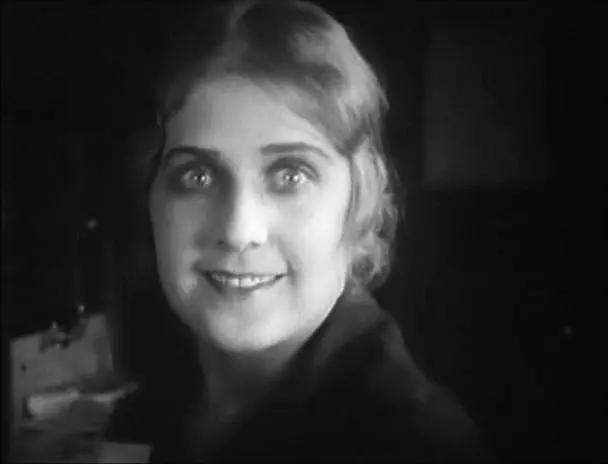
To talk about 'Man from the Restaurant' without focusing on Michael Chekhov is like discussing the Sistine Chapel without mentioning Michelangelo. Chekhov, the nephew of the famous playwright, brings a level of psychological realism here that was decades ahead of its time. Observe the way he handles a tray; it isn't just a prop, it is an extension of his subservience. His movements are clipped, precise, and yet his eyes betray a flickering intelligence that the wealthy patrons never bother to notice.
There is a specific scene mid-way through the film where Skorokhodov receives news from the front while standing in the middle of a bustling dinner service. The camera stays tight on his face. We see the exact moment the light leaves his eyes, yet his body continues the mechanical motions of pouring wine. It is devastating. It makes the slapstick comedy of contemporary films like Cops feel like a different universe entirely. Chekhov doesn't just act; he inhabits the very air around the character.
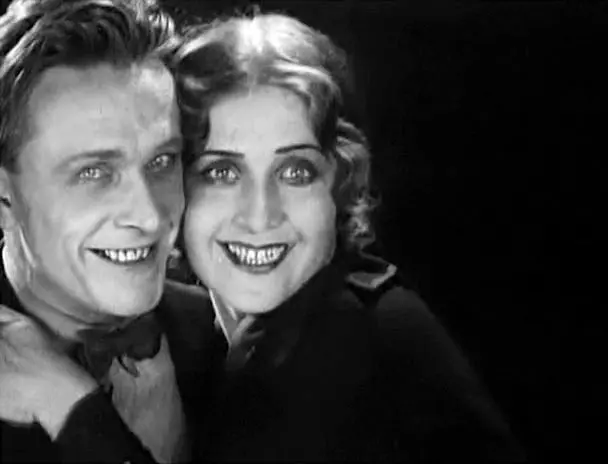
His physicality is a language of its own. In one moment, he is hunched, a literal representation of the weight of the social hierarchy. In the next, within the privacy of his home, his spine straightens. He becomes a father, a husband, a man. This duality is the engine that drives the film. It is a performance that demands your full attention, rewarding you with a depth of emotion rarely found in the 1920s.
Yakov Protazanov was a veteran director by 1927, and his experience shows in the way he constructs the restaurant itself. The set design is oppressive in its luxury. The high ceilings and mirrored walls aren't just for show; they create a sense of panoptic surveillance. Skorokhodov is always being watched, whether by his manager or by the demanding elite. Contrast this with the tight, cluttered, but warm framing of his home life. Protazanov uses space as a weapon.
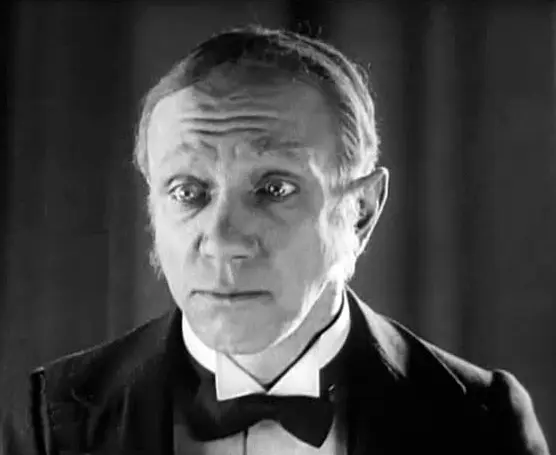
The pacing is deliberate. Some might call it slow. I call it rhythmic. The first half of the film establishes the 'ritual' of the restaurant. We see the cycles of cleaning, serving, and bowing. By the time the war disrupts this cycle, the audience feels the jarring shift in their own bones. It’s a technique Protazanov refined in earlier works like Le brasier ardent, though here it is stripped of avant-garde flair in favor of a more grounded, somber tone.
The cinematography by Anatoli Golovnya is equally vital. The use of shadow in the kitchen scenes creates a hellish, subterranean atmosphere that contrasts sharply with the bright, artificial glare of the dining room. It’s a visual shorthand for the class struggle that doesn't need a single title card to explain. The lighting tells the story. The shadows are where the truth lives.
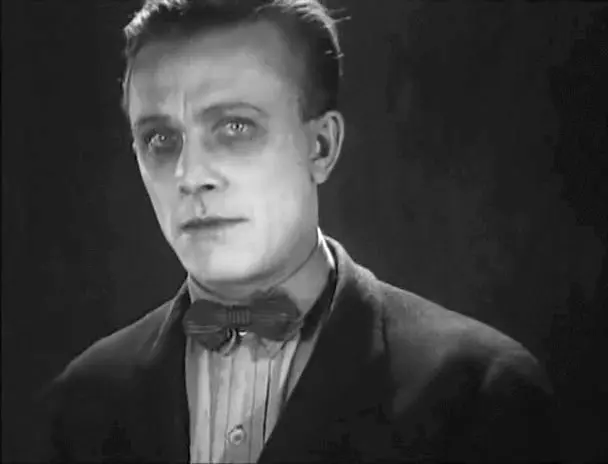
Yes, 'Man from the Restaurant' is absolutely worth watching for anyone interested in the intersection of history and art. It provides a rare look at the transition of Russian society through the eyes of someone who is neither a revolutionary hero nor a villainous aristocrat. It is a film about the 'middle' that often gets lost in historical narratives.
For a modern audience, the film serves as a reminder that the struggles of the working class are timeless. The indignity of having to smile while your heart is breaking is a feeling that resonates as strongly in a modern gig-economy warehouse as it did in a 1914 luxury restaurant. It is a human document first and a political one second.
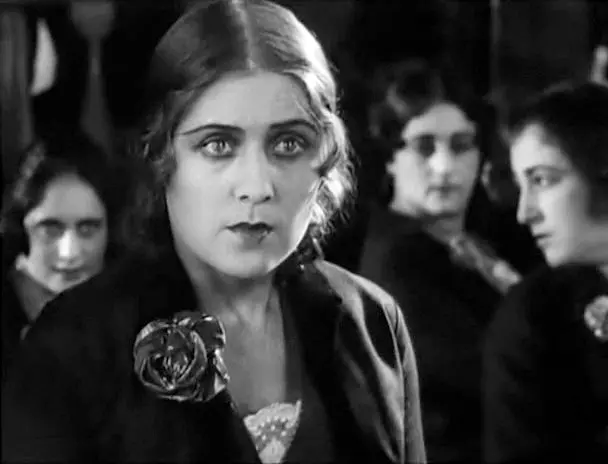
The film excels at showing how luxury is built on the exhaustion of others. There is a sequence where the chefs are preparing a massive sturgeon while the waiters sprint back and forth. The editing here is frantic, almost violent. Then, the camera cuts to a wealthy patron lazily poking at his plate, complaining about the temperature. This isn't just social commentary; it's a gut punch. It’s visceral.
Protazanov avoids the trap of making Skorokhodov a saint. He is a man who is complicit in the system because he has to be. He enjoys the tips. He takes pride in his expertise. This complexity makes his eventual realization all the more painful. He isn't a victim of a single bad person, but of a massive, indifferent machine. The film is a quiet rebellion against that machine.
One of the most surprising observations is how the film handles the 'news from the front.' Instead of showing us trenches and explosions, it shows us the way a piece of paper—a telegram—can carry the force of a bomb. The war is an off-screen monster that devours the characters' lives while they are busy serving hors d'oeuvres. It's a brilliant narrative choice that keeps the focus on the psychological rather than the spectacle.
Pros:
Cons:
'Man from the Restaurant' is a somber, beautiful, and deeply moving piece of cinema. It works. But it’s flawed. It is a film that demands you sit still and look into the eyes of a man who is being slowly erased by his environment. While it lacks the kinetic energy of some of its contemporaries, it more than makes up for it with emotional gravity and intellectual depth.
If you can look past the occasionally creaky conventions of 1920s storytelling, you will find a performance by Michael Chekhov that rivals anything put to film in the hundred years since. It is a haunting reminder of the cost of 'service' and the fragility of hope in a world at war. This is not just a movie; it is a ghost story where the ghost is still alive, wearing a tuxedo, and asking if you’d like more wine. Do not miss it.
IMDb —
1936
Community
Log in to comment.