DbcultAccessing Vault...
Cult Review
Senior Film Conservator
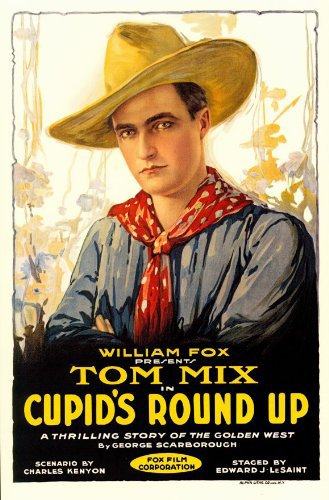
The year 1918 stands as a pivotal epoch in the annals of American cinema, a time when the flickering shadows of the silent era began to coalesce into a sophisticated language of myth and movement. Amidst this transformation, Cupid's Roundup emerged not merely as a genre piece, but as a testament to the burgeoning charisma of Tom Mix. While contemporary audiences might glance back at the silent Western through a lens of perceived simplicity, a closer examination reveals a work of startling kinetic energy and structural irony that defies the primitive labels often assigned to early 20th-century filmmaking.
Tom Mix was more than an actor; he was a phenomenon of physicality. In Cupid's Roundup, his portrayal of Larry Kelly transcends the stoic archetypes established by William S. Hart. Where Hart brought a somber, almost religious gravity to the frontier, Mix introduced a flamboyant, athletic heroism that would define the genre for decades. The narrative impetus—a reluctant groom seeking one last 'fling' before the shackles of matrimony are locked—provides the perfect canvas for Mix’s brand of exuberant masculinity. Unlike the grim realism found in The Life of General Villa, this film leans into the playfulness of the Western mythos, treating the frontier as a stage for romantic subterfuge as much as gunplay.
The central conceit of the film—the double-blind masquerade between Larry and Helen—functions as a sophisticated comedy of manners transplanted into the rugged topography of the ranch. Wanda Hawley, as Helen, provides a performance that is remarkably nuanced for the era. She is not a passive object of the matrimonial contract but an active participant in the deconstruction of her suitor. By donning the apron of a maid, she subverts the power dynamics of the period, exercising a level of agency that feels surprisingly modern. Their interactions are characterized by a sparkling chemistry that manages to permeate the silence, relying on micro-expressions and the rhythmic pacing of the editing to convey a burgeoning intimacy.
One cannot discuss Cupid's Roundup without addressing the technical virtuosity of its action sequences. Director Edward LeSaint utilizes the landscape not just as a backdrop, but as a dynamic obstacle course for Mix’s equestrian prowess. The cattle rustling subplot, while ostensibly a trope, is executed with a grit that contrasts sharply with the lighter romantic elements. It serves as the necessary 'crucible' for Larry, shifting the film from a lighthearted romp into a high-stakes thriller. The accusation of murder and the subsequent flight from justice introduce a tension reminiscent of the psychological weight seen in The Avenging Conscience: or 'Thou Shalt Not Kill', though here the resolution is found through physical catharsis rather than moral torment.
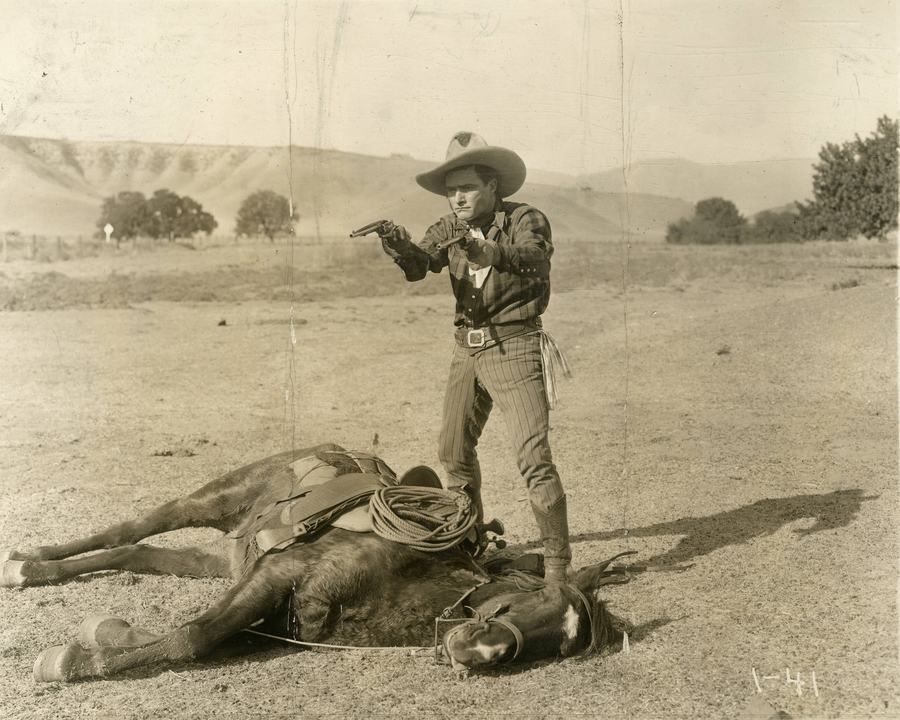
"The climax of the film—the leap from a galloping horse into a moving train—remains one of the most iconic images of the silent era. It is a moment where the boundary between the actor and the character dissolves, leaving only the pure, unadulterated spectacle of the human spirit in motion."
This sequence is not merely a stunt; it is the physical manifestation of Larry’s transition from a boy avoiding responsibility to a man leaping headlong into his future. The locomotive, a symbol of encroaching modernity and the inevitable march of time, becomes the site of the ultimate revelation. When Larry finds himself face-to-face with Helen in the train car, the resolution is both serendipitous and earned. The irony of the situation—that he has spent the entire film running toward the very person he was trying to escape—is handled with a deftness that avoids the saccharine pitfalls of lesser romances.
When placed alongside its contemporaries, Cupid's Roundup occupies a unique middle ground. It lacks the experimental, almost surrealist quality of The Fairylogue and Radio-Plays, yet it possesses a narrative cohesion that many early features struggled to maintain. It shares a certain pastoral DNA with He Fell in Love with His Wife, particularly in its exploration of domesticity within the rural American landscape. However, Mix’s presence ensures that the film never becomes bogged down in sentimentality.
Furthermore, the film’s treatment of justice and the 'wrongly accused' motif provides an interesting counterpoint to the more overtly patriotic or moralistic films of the time, such as The Unbeliever or Her Boy. Larry Kelly’s flight is not motivated by a grand ideological struggle but by a primal need for survival and the restoration of his personal honor. This focus on the individual over the collective is a hallmark of the Western genre, and Cupid's Roundup articulates this theme with remarkable clarity.
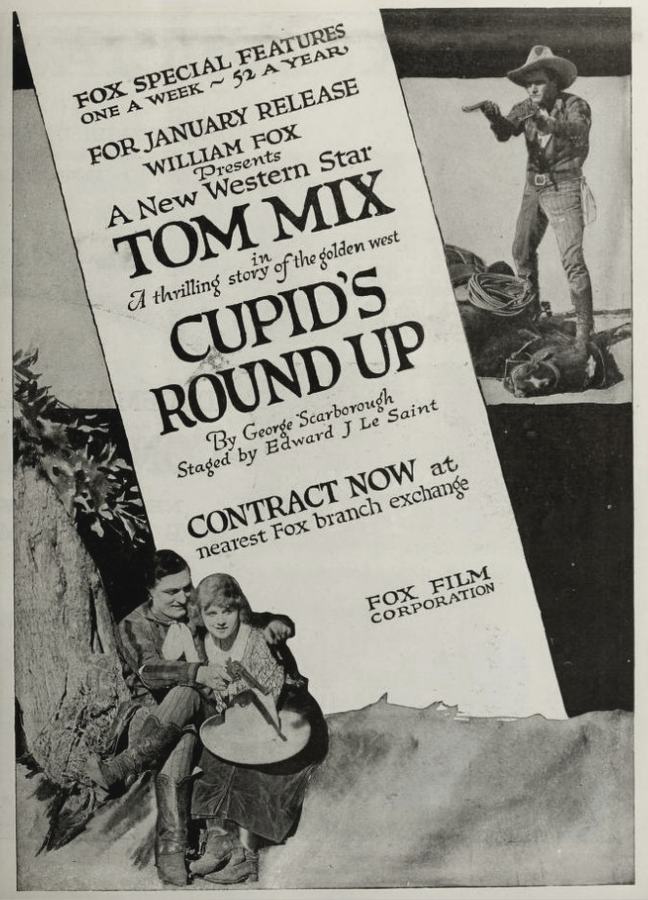
The cinematography, though constrained by the orthochromatic film stock of the era, manages to capture the stark beauty of the American West. The deep shadows and high-contrast lighting heighten the drama of the nighttime scenes, while the wide vistas of the ranch sequences provide a sense of scale that was essential for the 'Big Western' aesthetic. The production design, from the dusty corrals to the opulent interior of the train car, serves to illustrate the clash between the rugged frontier and the encroaching influence of the Gilded Age. This juxtaposition is central to the film’s charm; it is a world where a man can still be a cowboy, but where the train is always waiting to whisk him away to a more civilized existence.
The writing, credited to George Scarborough and Charles Kenyon, is surprisingly tight. The intertitles are used sparingly, allowing the visual storytelling to carry the weight of the plot. This economy of language is a refreshing departure from the more verbose dramas of the period, such as God's Crucible. Instead, the film trusts the audience to interpret the nuances of the characters' deceptions and desires through their actions. This reliance on visual cues is what makes Cupid's Roundup so accessible even over a century later.
In the grand tapestry of film history, Cupid's Roundup serves as a bridge. It bridges the gap between the short, action-oriented 'gallopers' of the early 1910s and the epic, character-driven Westerns of the 1920s. It also bridges the gap between the audience's desire for escapist thrills and their need for a story with emotional resonance. While it may not possess the heavy-handed social commentary of Moderens Øjne or the farcical intensity of Madame la Presidente, it succeeds on its own terms as a masterclass in genre synthesis.
Ultimately, the film is a celebration of the 'Mix magic.' It is a reminder of a time when the cinema was a place of wonder, where a man on a horse could outrun a steam engine and where love, despite all the machinations of meddling parents and cattle thieves, would always find a way to round up its targets. For the modern cinephile, Cupid's Roundup is an essential artifact—a vibrant, pulsating piece of celluloid that captures the very soul of the American frontier as it was being reimagined for the silver screen. It is a work of high lexical diversity in its visual language, a picaresque journey through the heart of the West that remains as captivating today as it was in the waning days of the Great War.
Reviewer's Note: To truly appreciate the rhythmic pacing of this film, one must watch it with a live score that respects the ebb and flow of its dual narrative structure—the frantic energy of the chase and the delicate suspense of the romance.
IMDb 6.7
1932
Community
Log in to comment.