DbcultAccessing Vault...
Cult Review
Senior Film Conservator
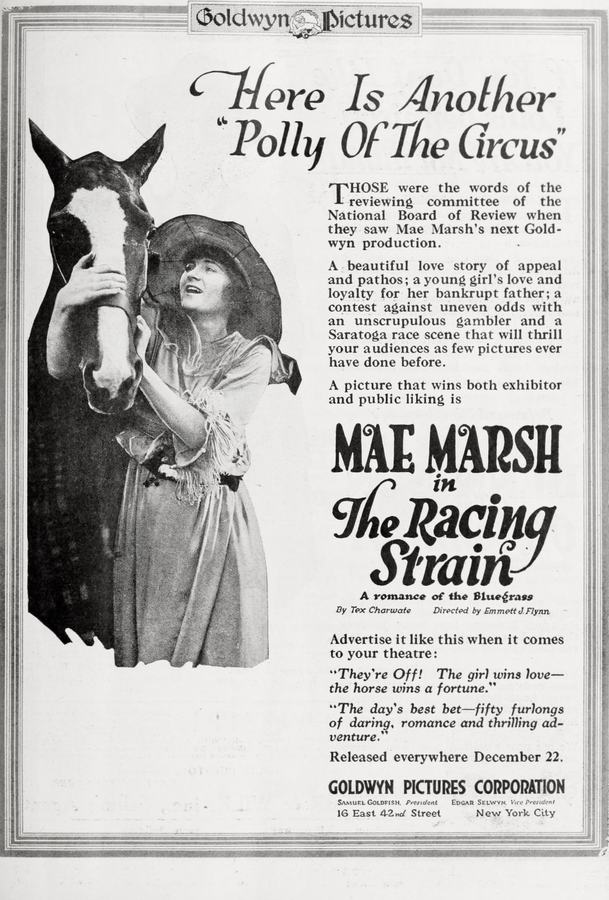
The year 1918 stood as a precipice in the history of American cinema, a moment where the burgeoning language of the silent feature began to shed its primitive skin and embrace a more nuanced, psychological depth. In the midst of this evolution, The Racing Strain, directed by T. Hayes Hunter and starring the ethereal Mae Marsh, emerges not merely as a sports melodrama but as a cultural artifact reflecting the anxieties of a nation caught between the pastoral past and a frantic, mechanized future. To watch this film today is to witness the 'racing strain' of the title as a metaphor for the American spirit—restless, competitive, and deeply rooted in a sense of place that was rapidly being eroded by the machinations of Wall Street and the trauma of the Great War.
Mae Marsh, often remembered for her heart-wrenching vulnerability in the works of D.W. Griffith, brings a different kind of energy to the role of Lucille Cameron. Here, she is the 'spirited daughter,' a character type that would eventually evolve into the flapper, yet she remains tethered to the Victorian ideals of filial piety and land-based honor. Unlike the more static performances found in contemporaries like The Awakening, Marsh’s Lucille is a kinetic force. Her performance is a study in micro-expressions; she conveys the crushing weight of her father’s bankruptcy with a subtle slump of the shoulders, only to ignite with a fierce, atavistic determination when the prospect of the race arises.
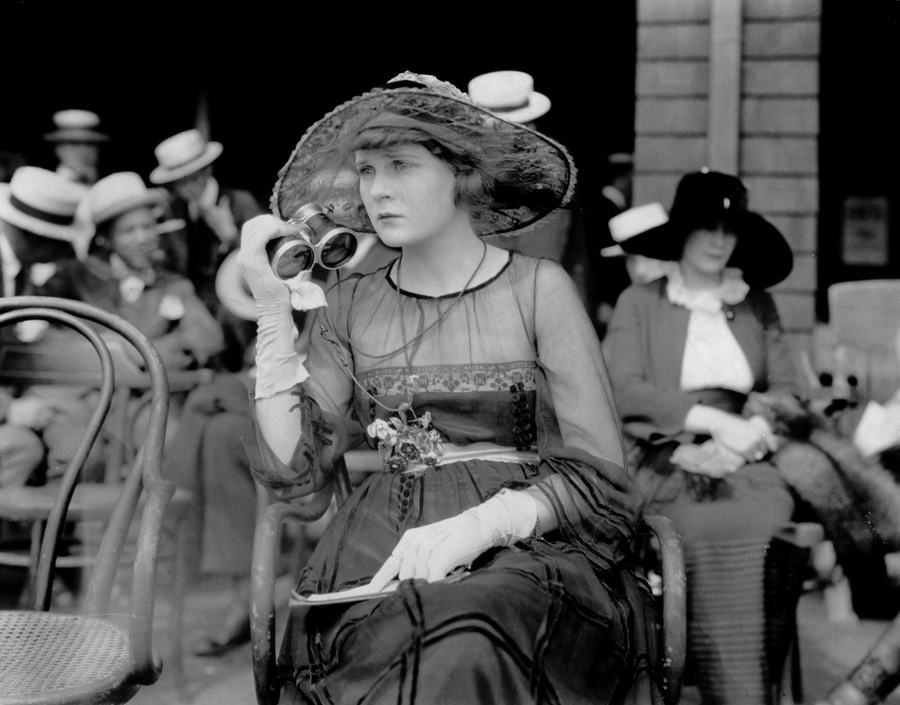
The film’s reliance on Marsh’s face is a testament to her star power. In an era where many actors still relied on the broad gesticulations of the stage—a style occasionally visible in Monsieur Lecoq—Marsh understands the intimacy of the camera. She treats the lens as a confidante, allowing the audience to share in her internal struggle as she balances her burgeoning love for Lieutenant Gregory Haines with the cold, hard necessity of saving the Cameron estate. This internal conflict elevates the film above the standard 'horse race' tropes, grounding the spectacle in a deeply human experience.
Every great melodrama requires a villain whose malice is as much a product of their environment as their character. Jim De Luce, played with a slick, predatory charm by William T. Carleton, represents the 'New York horseman'—a figure of suspicion in the Southern imaginary. He is the embodiment of the stock promoter, a man who deals in paper and speculation rather than the tactile reality of the soil or the flesh-and-blood vitality of the horse. This tension between the 'gentleman' and the 'promoter' is a recurring theme in silent cinema, notably explored through different lenses in A Corner in Cotton and The Sex Lure.
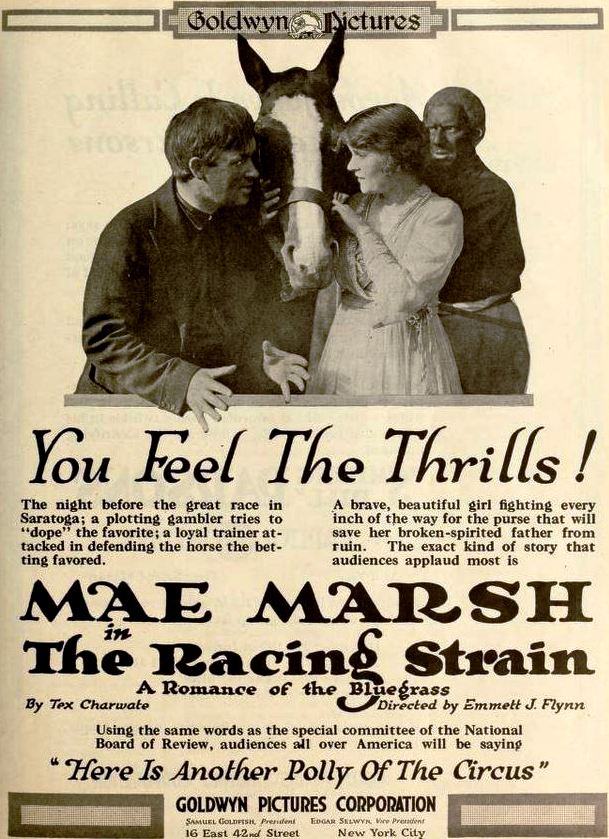
De Luce’s plotting is not merely about money; it is about the subversion of the Southern social order. By targeting the Cameron family, he seeks to dismantle a lineage. The film cleverly uses the Red Cross benefit as a neutral ground where these two worlds collide. The gala, intended to support the war effort, becomes a theater of social warfare. While the Colonel remains oblivious to the sharks circling his legacy, Lucille’s intuition serves as the family’s first line of defense. The film’s script, penned by Tex Charwate, deftly avoids the pitfalls of simple caricature, making De Luce’s machinations feel like an inevitable byproduct of a changing economic landscape.
The inclusion of Lieutenant Gregory Haines, played by Clifford Bruce, adds a layer of contemporary relevance that must have been palpable to 1918 audiences. Coming home from active duty in France to convalesce, Haines is a figure of both tragedy and hope. His presence serves to remind the viewer that while the battle for the Cameron estate is significant, it is part of a larger, global struggle for survival and recovery. The romance between Lucille and Gregory is handled with a delicate touch, avoiding the saccharine excesses that often plagued films like The Gentle Intruder.
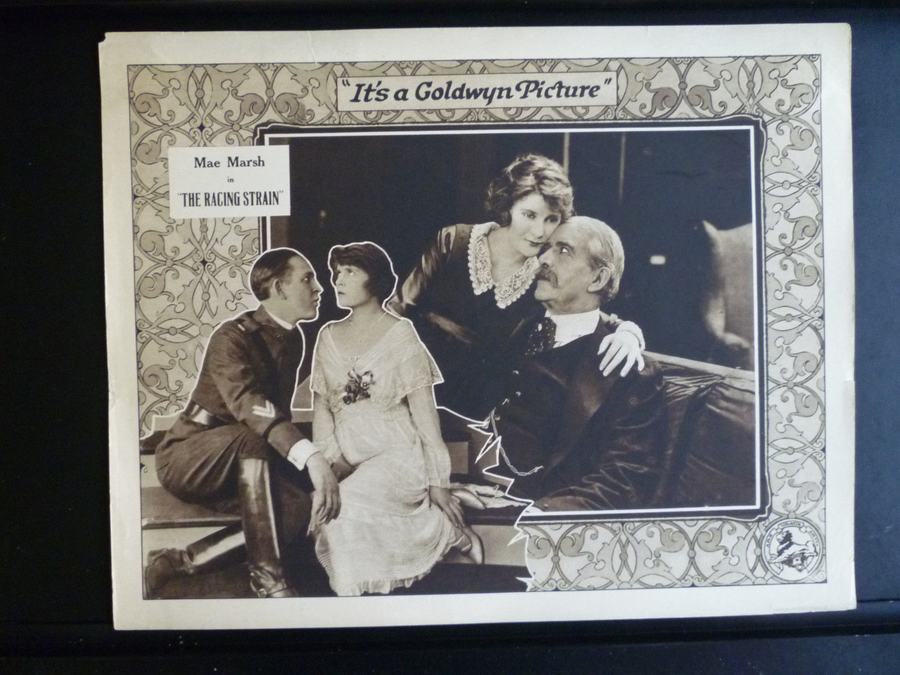
Haines’s convalescence mirrors the state of the Cameron family; both are wounded, both are seeking a path back to strength. The synergy between the soldier’s recovery and the training of the filly, Southern Pride, creates a rhythmic progression toward the climax. It is a narrative masterstroke that links the 'racing strain' of the horse to the 'fighting strain' of the American soldier. In this regard, the film shares a spiritual kinship with How We Beat the Emden, where national pride is inextricably linked to individual heroism.
Where The Racing Strain truly excels is in its visual depiction of the horse race. Capturing the speed and power of thoroughbreds was a significant technical challenge for early cinematographers. Unlike the more static framing seen in Mute Witnesses, Hunter employs dynamic camera placements and rapid editing to convey the visceral thrill of the track. The dust, the lather on the horses, and the frantic energy of the crowd are captured with a realism that prefigures the great sports films of the later 20th century.
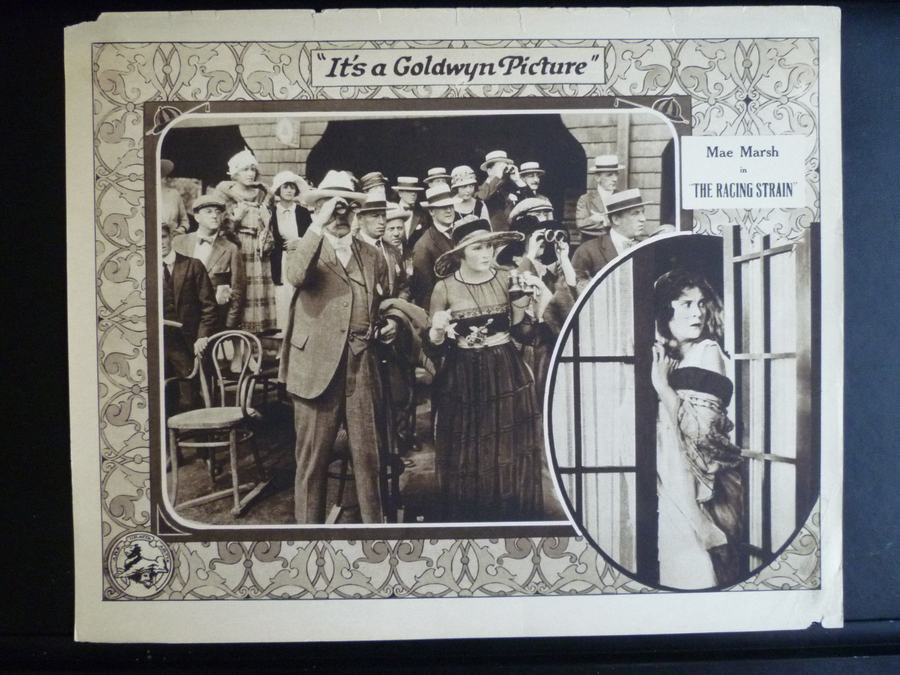
The race is not just a plot device; it is a cinematic set-piece that demands the viewer's total engagement. We see the influence of the 'stunt' films of the era, such as The Americano or His Picture in the Papers, in the way the camera tracks the movement of Southern Pride. There is a sense of genuine peril as De Luce’s plotting threatens to derail the race, making the eventual victory feel earned rather than ordained. The editing during the final stretch is particularly effective, cutting between the galloping hooves, Lucille’s anxious face, and the villain’s narrowing eyes.
When situated alongside other films of its day, The Racing Strain stands out for its thematic cohesion. While a film like The Destroying Angel might lean more heavily into the melodramatic tropes of the femme fatale, or La Broyeuse de Coeur might explore the darker recesses of the human heart, Hunter’s film remains focused on the restorative power of action. It is a film about fixing what is broken—whether it be a family’s fortune, a soldier’s spirit, or a community’s sense of security.
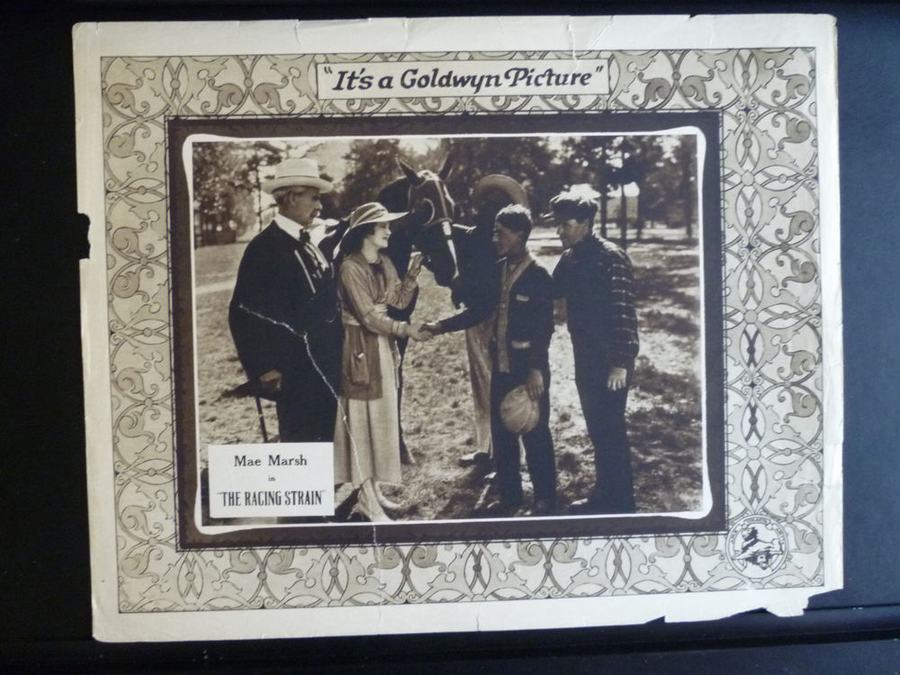
The film also avoids the somewhat disjointed narrative structures found in The Kangaroo or the more whimsical tone of The Firefly of Tough Luck. It possesses a gravity that is rare for equine-centered stories. This is perhaps due to the 'strain' mentioned in the title—a word that implies not just lineage, but effort, tension, and the endurance of pressure. Lucille Cameron is a character who thrives under pressure, much like the protagonists in Jim Grimsby's Boy or The Girl by the Roadside.
Visually, the film is a love letter to the Kentucky landscape. The Cameron estate is presented with a fading grandeur that feels authentic. The use of natural light in the outdoor sequences provides a softness that contrasts sharply with the harsh, artificial lighting often used to depict the 'city' elements of the story. This visual dichotomy reinforces the film’s central conflict: the organic versus the synthetic, the tradition of the horse versus the speculation of the stock market.
The costume design also deserves mention. Lucille’s transition from gala gowns to more practical riding attire mirrors her character’s journey from a protected debutante to a woman of agency. The attention to detail in the military uniforms and the racing silks adds a layer of verisimilitude that helps ground the more fantastical elements of the plot. It is this commitment to a specific, textured world that allows The Racing Strain to transcend its genre origins.
Beneath the surface of the romance and the racing lies a sophisticated critique of early 20th-century capitalism. The film suggests that the 'true' value of something—be it a horse or a family name—cannot be measured by the fluctuating prices on a ticker tape. By having De Luce attempt to manipulate the race, the film posits that the market is often a rigged game, one where honor is the only currency that truly matters. This was a powerful message in 1918, as the United States emerged as a global financial titan while many of its internal traditions were being dismantled.
The resolution of the film, where Gregory wins a wife and Lucille wins a fortune, is more than just a happy ending. It is a restoration of balance. The 'racing strain' has been tested and found true. The film concludes not with a boast of wealth, but with a quiet affirmation of loyalty and love. It is a sentiment that resonates across the decades, reminding us that even in the most turbulent of times, there are certain values that remain evergreen.
A masterful blend of athleticism and heart, The Racing Strain remains a quintessential example of the silent era's ability to turn a simple story into a sweeping epic of the human condition.
IMDb —
1923
Community
Log in to comment.