DbcultAccessing Vault...
Cult Review
Senior Film Conservator
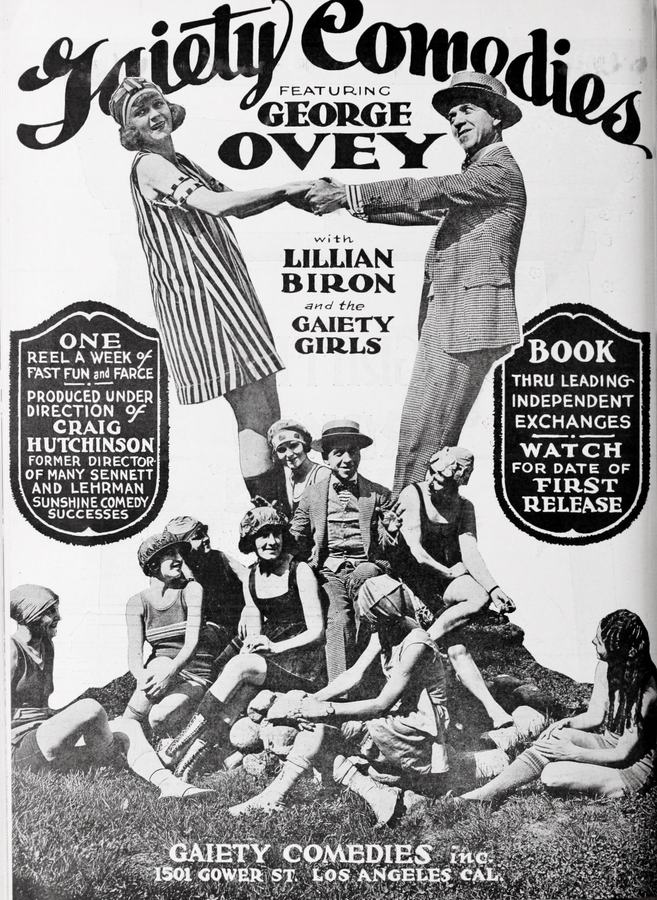
To understand the kinetic architecture of silent comedy is to understand the physics of failure. In Cursed by His Cleverness (1917), George Ovey doesn't just perform stunts; he orchestrates a symphony of self-inflicted disasters that feel remarkably modern in their cynicism.
The year 1917 was a watershed moment for the cinematic medium. While the world was embroiled in the throes of the Great War, the silver screen offered a peculiar refuge of frantic movement and visual poetry. Amidst the giants like Chaplin and Keaton, George Ovey carved out a niche that was uniquely his own—the 'Merry Jerry' persona. In this specific short, the title itself serves as a warning. It is a critique of the man who thinks he can outthink the universe. Unlike the pastoral simplicity found in The Country Mouse, Ovey’s world is one of urban complexity where every object is a potential weapon of slapstick destruction.
Ovey’s physicality is the engine of the film. He possesses a rubber-limbed grace that allows him to transition from a confident stride to a humiliating tumble in a fraction of a second. This isn't just pratfalling for the sake of noise; it's a character study. Jerry believes he is the smartest person in the room. When he attempts to solve a problem—be it wooing a lady or navigating a crowded street—he overcomplicates the solution to a degree that invites catastrophe. This thematic core distinguishes it from the more straightforward narratives of the era, such as The Runaway.
Critical Insight: Lillian Biron’s presence is equally vital. In many shorts of this period, the female lead is a mere trophy. Biron, however, plays the role with a subtle reactive intelligence. Her expressions are the audience’s anchor. While Jerry is losing his mind trying to be 'clever,' Biron’s character represents the grounded reality he keeps tripping over. It’s a dynamic we see echoed in later works like Birds of a Feather.
The pacing of Cursed by His Cleverness is relentless. Directorially, the film leans into the frantic editing styles that were beginning to emerge as the industry moved away from staginess. There is a palpable sense of momentum. When compared to the more static, stage-bound feel of The Thirteenth Chair, Ovey’s short feels like a bullet train. The cinematographer captures the essence of 1917 Los Angeles, using the fledgling city’s streets as a playground for Jerry’s hubris.
To truly appreciate the nuance of Ovey’s work, one must look at the broader landscape of the 1910s. While films like Cleopatra were pushing the boundaries of epic scale and historical melodrama, the short-form comedy was perfecting the art of the 'visual gag.' Cursed by His Cleverness operates on a different frequency than the heavy-handed morality of Her Condoned Sin or the tragic weight of Her Reckoning. It is a film that delights in the present moment, in the immediate impact of a well-timed gag.
Interestingly, the film shares a spiritual DNA with international works of the time. There is a touch of the absurdity found in the Bulgarian Lyubovta e ludost, where the madness of love drives the characters to extremes. Jerry’s 'cleverness' is, after all, often fueled by a desire to impress, a theme that resonates across borders, even surfacing in the Russian satire Lyubov statskogo sovetnika.
However, Ovey’s brand of comedy is uniquely American in its obsession with efficiency and technology. Jerry often interacts with the mechanical world—cars, gadgets, doors—as if they are sentient adversaries. This struggle against the machine age is a precursor to the themes Keaton would later master. In His Muzzled Career, we see a similar struggle with social and professional standing, but Cursed by His Cleverness keeps the stakes purely personal and physical.
The visual humor in this film is not just about the fall; it's about the anticipation of the fall. The director utilizes deep focus to show us the trap Jerry is walking into long before he realizes it. This creates a delicious tension. We are smarter than Jerry, and that superiority is the source of our laughter. It's a sharp contrast to the more mysterious and atmospheric approach of Ein seltsames Gemälde or the dramatic tension in Halkas Gelöbnis.
The set pieces in Cursed by His Cleverness are meticulously constructed. There is a sequence involving a botched attempt at chivalry that rivals the best of the Keystone Cops. The use of space is masterful; Ovey moves through the frame like a pinball, bouncing off the rigid structures of society. It’s a far cry from the desolate, sprawling landscapes of The Flower of No Man's Land, proving that comedy requires a certain level of claustrophobia to function effectively.
Why It Still Matters
In an era of CGI-heavy blockbusters, the raw, unadulterated stunt work of 1917 feels visceral. There are no safety nets here. When Ovey takes a tumble, the impact is real. This authenticity is something that films like Khishchniki sletelis or even the spice-infused comedy of Perils of Paprika attempt to capture in their own respective genres. Cursed by His Cleverness is a testament to the endurance of the human spirit—or at least the endurance of the human body in the face of constant humiliation.
The legacy of George Ovey is often overshadowed by the 'Big Three' of silent comedy, but shorts like this prove he was a formidable talent. His timing is impeccable, and his ability to convey complex internal thoughts through broad physical gestures is a lost art. He doesn't need intertitles to tell us he’s thinking; we see the gears grinding in his head, and we see them jam just as clearly.
As we look back at Cursed by His Cleverness, we see a snapshot of a world in transition. It is a film that bridges the gap between the crude gags of the early 1900s and the sophisticated narrative comedies of the 1920s. It is a work of high energy, incredible technical skill, and a surprisingly deep understanding of the human ego. Whether he is tangling with a simple garden hose or trying to navigate a social faux pas, Jerry remains a relatable figure. We have all been 'cursed by our cleverness' at one point or another, thinking we had the world figured out, only to have it pull the rug out from under us.
In the grand tapestry of silent cinema, this short is a bright, vibrant thread. It lacks the pretension of the era's 'prestige' pictures and instead focuses on the fundamental joy of the moving image: seeing a man move, fall, and get back up again, only to fall even more spectacularly the next time. It is a masterclass in the economy of storytelling, proving that you don't need two hours to explore the depths of human folly. You just need a clever man and a very slippery floor.
REVISITING THE CLASSICS • GEORGE OVEY • SILENT ERA GOLD
IMDb 8.1
1923
Community
Log in to comment.